Ola Electric Fixes ₹1,000 Crore Rights Issue at ₹27 Per Share to Power EV Manufacturing and Gigafactory Scale
By Vikram Malhotra | Published October 8, 2026 | 9 min read
Ola Electric sets the price of its ₹1,000 crore rights issue at ₹27 per share to finance battery cell gigafactory expansion and enhance two-wheeler EV market leadership.
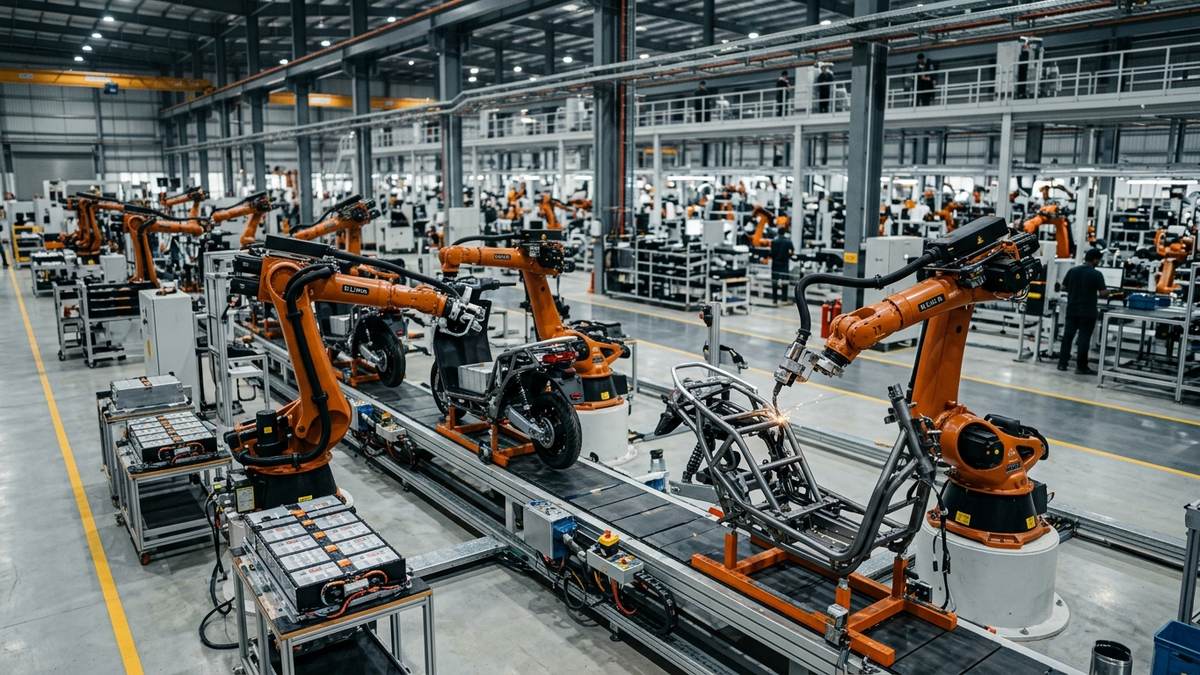
Pure-play electric vehicle manufacturer Ola Electric Mobility Limited has priced its ₹1,000 crore rights issue at ₹27 per equity share, establishing an attractive entry valuation for eligible existing shareholders. The fresh capital commitment represents a vital balance sheet strengthening measure as the company accelerates commercial production of its proprietary 4680 battery cells and scales manufacturing capacity at its flagship Gigafactory in Krishnagiri, Tamil Nadu.
The rights issue follows a period of rigorous public market scrutiny and intensifying competition within India's electric two-wheeler ecosystem. By selecting a rights offering at ₹27 per share, Ola Electric allows long-term institutional stakeholders, domestic mutual funds, and retail shareholders to participate directly in its next phase of vertical integration without diluting ownership to external private syndicates.
Balance Sheet Fortification and Strategic Rationale of the Rights Issue
Capital discipline and cash runway preservation have become paramount themes across India's automotive mobility sector. As original equipment manufacturers (OEMs) navigate evolving subsidy frameworks under the PM E-DRIVE initiative, companies that control their core component supply chains will command superior gross margins.
Ola Electric's board resolved to structure this equity raise as a rights issue to reward loyal public market investors. The ₹27 per share price represents a deliberate pricing discount compared to historical trading averages, ensuring high subscription rates and providing the liquidity required to execute multi-year factory expansion schedules.
"Vertical integration in electric mobility is not merely an engineering choice; it is an existential margin moat,"noted automotive equity analysts. "Securing ₹1,000 crore of dedicated capital allows Ola Electric to insulate its manufacturing timeline from global macroeconomic volatility and accelerate domestic battery cell self-reliance."
This scale-up in advanced domestic manufacturing complements broader hardware and industrial technology investments across India, including Garuda Aerospace's $10M pre-IPO manufacturing expansion and enterprise engineering platforms accelerating automotive simulations.
Operational and Manufacturing Metrics: Ola Electric's Capital Allocation
The table below outlines the planned deployment of capital from the ₹1,000 crore rights issue alongside key manufacturing targets:
| Strategic Allocation Area | Allocated Capital | Operational Target | Strategic Impact |
|---|---|---|---|
| Gigafactory Cell Capex | ₹550 Crore | Ramp Phase-2 4680 Cell Lines to 5 GWh | Localization of Cell BOM & PLI Compliance |
| Service & Experience Infrastructure | ₹200 Crore | Expand Network to 2,000+ Owned Service Centers | Customer Retention & Quality Assurance |
| R&D & Platform Engineering | ₹150 Crore | Next-Gen Gen-3 Architecture & Electric Motorcycles | TAM Expansion & Powertrain Efficiency |
| General Corporate Purposes | ₹100 Crore | Working Capital Buffer & Debt Rationalization | Balance Sheet Deleveraging |
The 4680 Cell Gigafactory: Vertical Integration as a Margin Moat
The cornerstone of Ola Electric's long-term competitive strategy is the domestic commercialization of its proprietary 4680-format cylindrical battery cells. Battery packs historically account for 35% to 45% of the total manufacturing cost of an electric scooter. Currently, the vast majority of Indian EV manufacturers import lithium-ion cells from China, South Korea, or Taiwan, leaving margins exposed to foreign exchange fluctuations, shipping disruptions, and geopolitical tensions.
By manufacturing 4680 cells domestically at its Krishnagiri Gigafactory, Ola Electric aims to reduce battery pack costs by 20% to 30%. Furthermore, domestic cell production enables the company to claim maximum fiscal disbursements under the central government's ₹18,100 crore Advanced Chemistry Cell (ACC) PLI scheme, substantially enhancing operating margins.
Regulatory Filings and Rights Entitlement Process
Ola Electric will submit the final Letter of Offer to the Securities and Exchange Board of India (SEBI), the National Stock Exchange (NSE), and the Bombay Stock Exchange (BSE). The filing will establish the formal record date to determine the eligibility of shareholders.
Once the record date is confirmed, eligible shareholders will receive Rights Entitlements (REs) credited to their demat accounts. Investors will maintain the flexibility to exercise their entitlements to purchase new shares at ₹27, renounce their rights on the open exchange market, or apply for additional shares beyond their baseline allocation.
Future Outlook for India's Electric Two-Wheeler Sector
As electric two-wheeler penetration in India approaches double digits across key state markets, the industry is transitioning from an era of venture-backed market share acquisition into a discipline of manufacturing scale, gross profitability, and after-sales reliability.
By securing ₹1,000 crore through this priced rights issue, Ola Electric secures the runway needed to complete its Gigafactory expansion, establish self-sufficient battery manufacturing, and reinforce its position as a flagship domestic clean-mobility leader.
Frequently Asked Questions
What are the core details of Ola Electric's rights issue?
Ola Electric has priced its ₹1,000 crore rights issue at ₹27 per equity share, allowing existing shareholders of record to subscribe to new shares to fund manufacturing and operational expansion.
How will the proceeds of the ₹1,000 crore rights issue be allocated?
The proceeds will be utilized to finance machinery and phase-two expansion at the Ola Gigafactory in Krishnagiri, scale in-house 4680 battery cell production, expand nationwide service centers, and optimize corporate working capital.
Why is the 4680 cell Gigafactory critical for Ola Electric's unit economics?
Manufacturing battery cells domestically eliminates heavy import dependence on China and Korea, drastically reduces electric two-wheeler bill-of-materials (BOM) costs, and qualifies the company for Advanced Chemistry Cell (ACC) PLI subsidies.
What is the entitlement ratio and record date procedure?
Ola Electric will announce the formal record date and rights entitlement (RE) ratio in its letter of offer filed with SEBI and stock exchanges, enabling eligible shareholders to trade rights entitlements or apply directly.
Primary Sources & Official References
- Securities and Exchange Board of India (SEBI): Rights Issue Regulations and Disclosures
- National Stock Exchange of India (NSE): Corporate Filings - Ola Electric Mobility Limited
- Ministry of Heavy Industries: Production Linked Incentive (PLI) Scheme for Advanced Chemistry Cell (ACC) Battery Storage
- Ola Electric Mobility Limited: Board Resolution and Letter of Offer Briefing