Space-tech startup Pixxel has launched its advanced hyperspectral imaging satellites into low Earth orbit, bringing high-resolution environmental data to global industries.
Executive Key Takeaways
- Space-tech startup Pixxel has launched its advanced hyperspectral imaging satellites into low Earth orbit, bringing high-resolution environmental data to global industries.
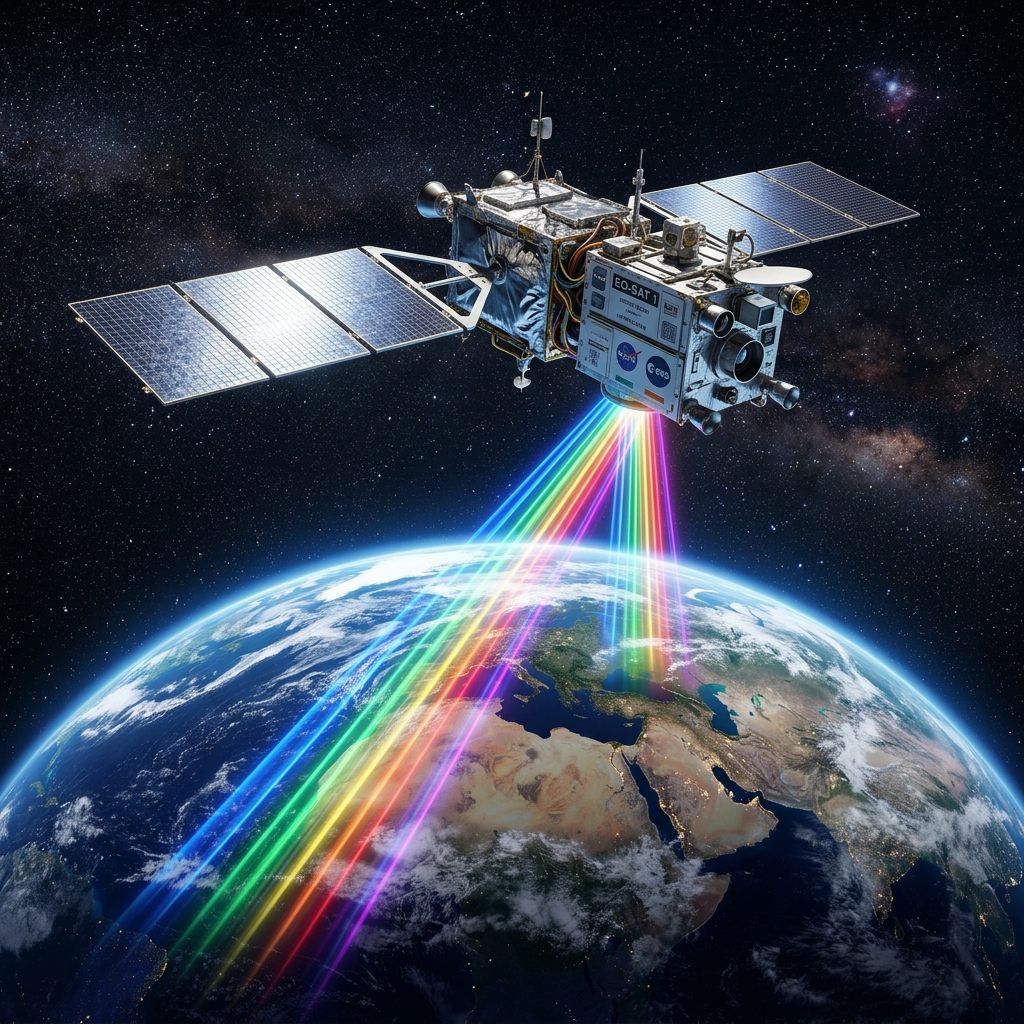
- While traditional satellites capture images in standard red, green, and blue (RGB) wavelengths, hyperspectral sensors divide the electromagnetic spectrum into hundreds of narrow, continuous spectral bands.
In a major milestone for the global Earth observation sector, space-tech startup Pixxel has successfully deployed its latest batch of high-resolution hyperspectral imaging satellites. Launched aboard a commercial rideshare mission, these satellites are now transmitting rich, multi-band spectral data that will help industries monitor environmental changes, agricultural health, and resource distribution with unprecedented detail.
What is Hyperspectral Imaging?
While traditional satellites capture images in standard red, green, and blue (RGB) wavelengths, hyperspectral sensors divide the electromagnetic spectrum into hundreds of narrow, continuous spectral bands. This allows the satellite to detect the unique "spectral signature" of different materials on Earth.
For example, Pixxel's satellites can distinguish between healthy and diseased crops, locate underground water resources, identify methane leaks, and determine the mineral composition of remote terrain from hundreds of kilometers above.
Key Applications of Pixxel's Data
The raw data generated by Pixxel's constellation will serve a variety of commercial and scientific sectors:
1. Precision Agriculture: Farmers can identify crop stress, pest infestations, and soil moisture levels weeks before they become visible to the naked eye.
2. Climate & Leak Detection: Identifying point-source greenhouse gas emissions, such as carbon dioxide and methane leaks in oil and gas pipelines.
3. Mining & Geology: Mapping mineral deposits across vast regions, reducing the cost and environmental impact of ground exploration.
4. Water Quality Monitoring: Tracking toxic algal blooms, chemical runoff, and sedimentation in freshwater reservoirs and coastal regions.
Building a Global Earth Observation Constellation
With these new satellites operational, Pixxel is closer to its goal of establishing a daily-revisit hyperspectral constellation. The startup has already secured contracts with commercial partners and government agencies, including the US National Reconnaissance Office (NRO).
As private space companies continue to lower the cost of orbital access, startups like Pixxel are turning raw orbital space into a highly valuable source of actionable data, proving that space-tech is one of the most lucrative and impactful sectors of the tech startup ecosystem.
Explore India's space startup ecosystem — browse Pixxel, Skyroot, and Dhruva Space on the StartupWire Directory.