AI is Reshaping the Global SaaS Startup Landscape as Founders Race to Reinvent Products Around Agents
By Aarav Sharma | Published August 7, 2026 | 8 min read
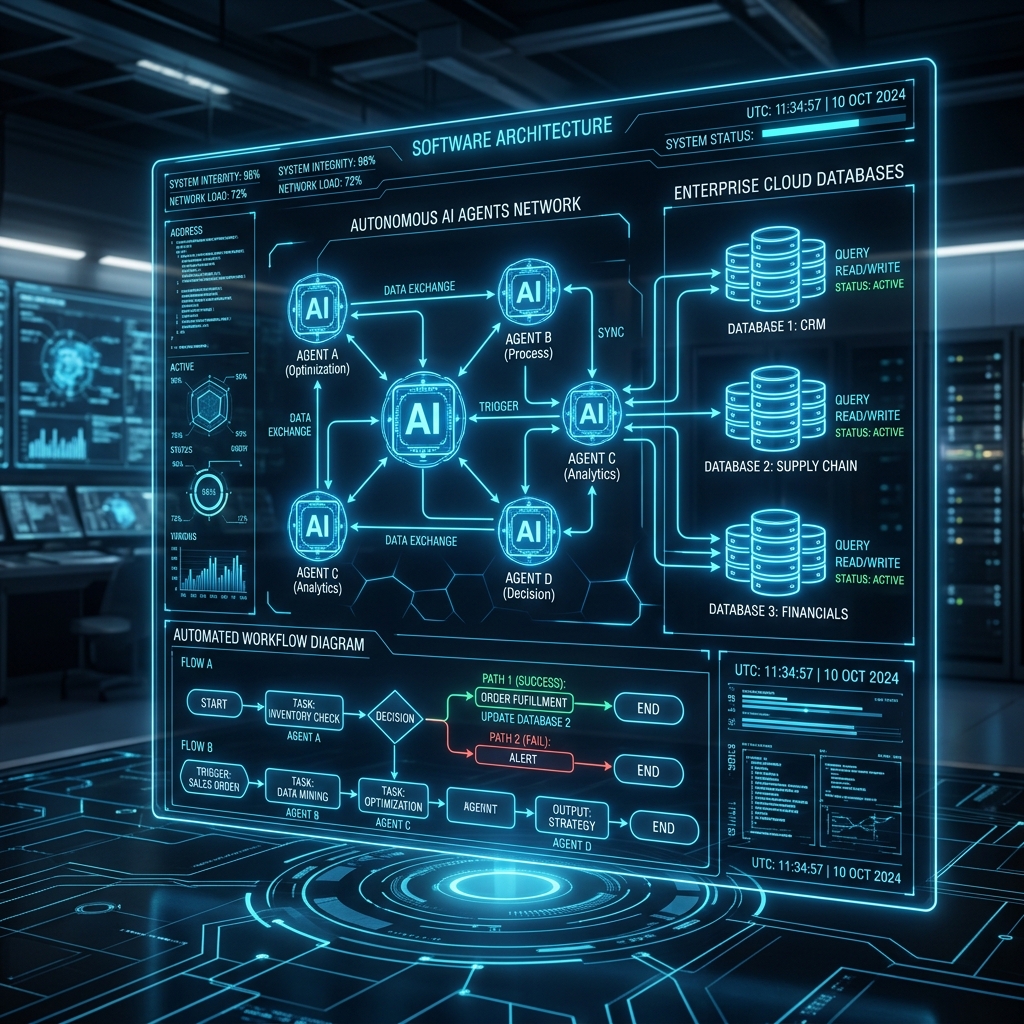
Global SaaS platforms are undergoing a generational paradigm shift, transitioning from passive seat-based CRUD tools to autonomous AI agent workflows that automate end-to-end enterprise tasks.
The global Software-as-a-Service (SaaS) industry is currently undergoing its most profound structural disruption since the transition from on-premise software to the cloud. Founders, venture capitalists, and enterprise architects are racing to reinvent SaaS products around autonomous AI agents, triggering a fundamental shift away from traditional per-seat pricing models toward outcome-based, consumption-driven monetization.
In legacy SaaS models, software served as a digital filing cabinet (CRUD applications) requiring human input to click buttons, fill forms, and route workflows. In the emerging AI-agentic paradigm, software acts as an autonomous digital worker capable of reasoning, executing complex multi-step workflows, and delivering finished business outcomes with minimal human oversight.
From Software-as-a-Service to Service-as-a-Software
This architectural shift is redefining enterprise software valuation multiples and product roadmap strategies:
1. Death of Per-Seat Pricing: As AI agents complete tasks previously assigned to human employees, charging per human seat creates misaligned incentives. Software vendors are pivoting to per-task, per-resolution, or compute-consumption billing.
2. Autonomous Workflow Execution: Modern AI agents combine Large Language Models (LLMs) with tool-calling capabilities, allowing them to interact directly with APIs, database queries, and external services.
3. Hyper-Personalized Interfaces: Rigid dashboard layouts are giving way to dynamic, conversational, and generative user interfaces that construct context-aware views on the fly.
4. Defensibility Shift: UI design is no longer a defensible moat. Moats are shifting toward proprietary workflow data, private domain context, and deep multi-system API integrations.
"The contract between software vendors and enterprise buyers has permanently changed. Buyers no longer want tools to manage work; they want software that actually does the work. Startups that fail to rebuild around autonomous agents risk becoming obsolete within 24 months."
"— Devendra Chaplot, Frontier AI Researcher & Co-Founder"
To understand how developers and enterprise platforms are adapting, see our analysis on Cursor AI transformational coding workflows for Indian engineers and our breakdown of Enterprise AI moving beyond basic chatbots to workflow automation.
Architectural Evolution: Legacy SaaS vs. AI-Agentic SaaS
The table below contrasts traditional cloud SaaS architectures with the next-generation AI agent framework:
| Dimension | Legacy Cloud SaaS (2010–2024) | AI-Agentic SaaS (2025–2030+) | Business Impact |
|---|---|---|---|
| Core Value Proposition | System of Record & Workflow Visibility | System of Action & Autonomous Output | 10x-100x labor productivity boost |
| Primary Interface | Dashboards, Forms & Dropdown Menus | Agentic Canvas & Natural Language APIs | Reduced onboarding & training costs |
| Monetization Model | Per User / Per Seat Monthly Subscription | Value-Based (Per Resolution / Usage) | Alignment between software cost & value |
| Data Interaction | Manual Data Entry & Rigid Relational Tables | RAG, Vector Search & Event-Driven AI | Continuous real-time learning loops |
| Integration Pattern | Webhooks & Static Zapier Triggers | Dynamic Function Calling & Autonomous API Tooling | Self-healing enterprise integrations |
Re-Architecting the Enterprise Tech Stack
Building AI-native SaaS requires fundamental changes to the underlying technology stack. Developers are moving beyond basic wrapper APIs to deploy multi-agent orchestration frameworks (such as LangGraph, AutoGen, and CrewAI), vector databases for long-term memory retrieval, and specialized guardrail layers for safety and auditability.
VCs Double Down on Agentic Workflows
Venture capital allocation reflects this seismic shift. According to recent funding trends across major hubs like San Francisco, London, and Bengaluru, over 65% of seed and Series A software capital is flowing exclusively to startups building agentic automation for customer support, legal contract analysis, financial auditing, and DevOps engineering.
As AI agents continue to evolve from simple co-pilots into fully autonomous digital workers, the SaaS landscape is being radically rewritten—offering unprecedented opportunity for agile startups to disrupt incumbent software giants.