Ex-Toyota and Volvo Engineer’s Bengaluru Startup Builds Indigenous Electric Tractors for Sustainable Indian Agriculture
By Sanjay Patel | Published July 30, 2026 | 9 min read
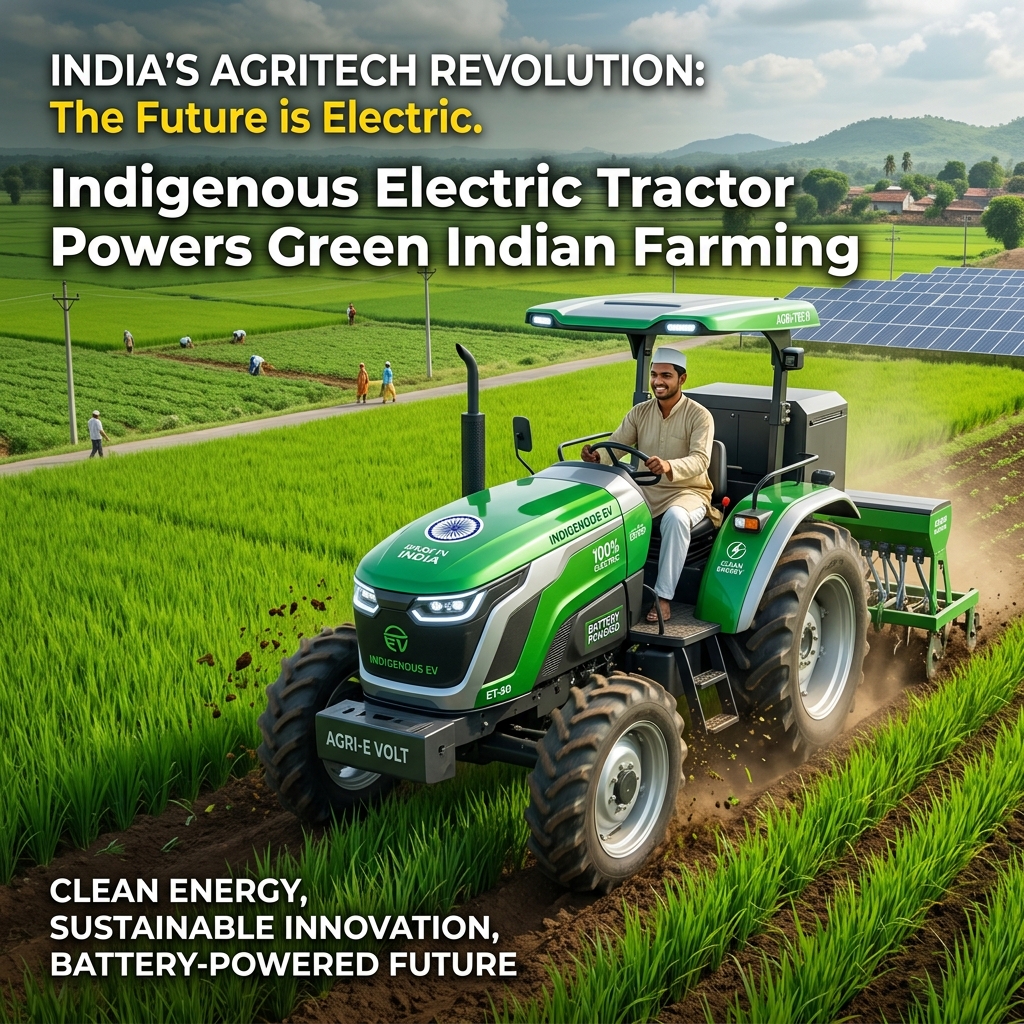
A Bengaluru-based agritech startup founded by former Toyota and Volvo engineers unveils homegrown electric tractors to reduce carbon emissions and farm operating costs.
In a groundbreaking development for sustainable agriculture and electric mobility, a Bengaluru-based agritech startup—founded by veteran engineers formerly with automotive titans Toyota and Volvo—has unveiled an indigenously designed electric tractor tailored specifically for Indian agricultural demands. Rather than pursuing high-speed urban electric cars, the startup's founding team focused their engineering expertise on transforming rural farm equipment, offering smallholder and commercial farmers a high-torque, zero-emission alternative that slashes daily operational costs by up to 75%.
By leveraging homegrown EV power electronics, heavy-duty electric powertrains, and rugged farm telemetry, the venture is addressing local agricultural challenges while contributing directly to India's clean-technology movement.
Heavy-Duty Powertrain Engineering for Rugged Terrain
Unlike passenger electric vehicles, agricultural tractors require continuous high torque at ultra-low speeds to plow dense soil, haul heavy agricultural loads, and operate PTO (Power Take-Off) equipment. The Bengaluru startup engineered a custom dual-motor drivetrain integrated with a heavy-duty multi-speed gearbox, enabling maximum torque delivery right from zero RPM without engine stalling or overheating.
The tractor is powered by localized Lithium Iron Phosphate (LFP) battery packs optimized for thermal stability under high ambient summer temperatures. Furthermore, the modular battery design supports both direct grid solar charging and rapid battery-swapping for uninterrupted field operations during peak harvest cycles.
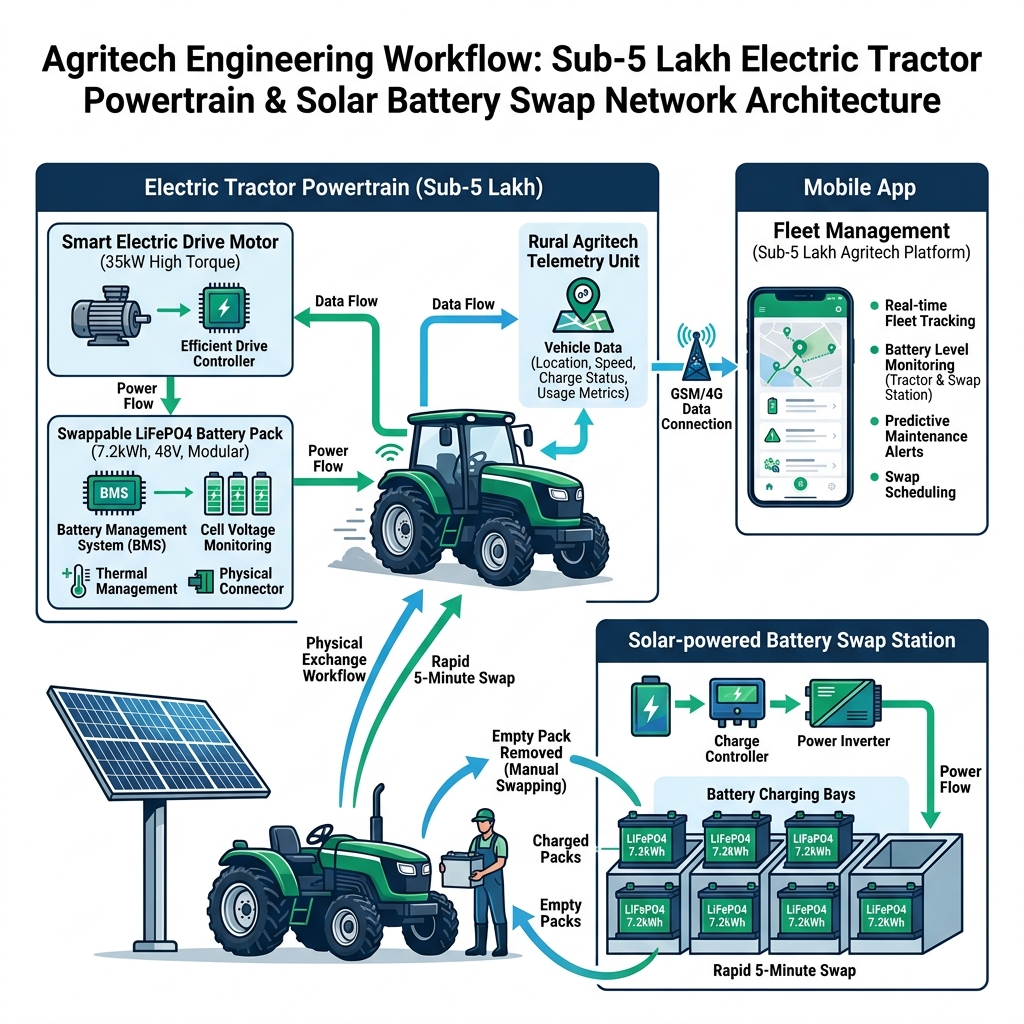
Indigenous Electric Tractor vs Conventional Diesel Tractor Benchmark
| Performance & Operational Metric | Indigenous Electric Tractor | Traditional Diesel Tractor |
|---|---|---|
| Daily Fuel / Energy Cost | ₹80 – ₹120 / day (Grid/Solar) | ₹800 – ₹1,300 / day (Diesel) |
| Torque Delivery Profile | Instant Max Torque at 0 RPM | Delayed Torque Peak (High Engine RPM needed) |
| Maintenance & Servicing Cost | ~65% Lower (No oil filters, clutch plates) | High recurrent engine & transmission maintenance |
| Field Operating Endurance | 10–12 Hours continuous tilling | 50L Diesel Tank capacity |
| Smart Telemetry & IoT | Built-in GPS, soil sensing, & battery health | Standard analog gauge instrumentation |
| Tailpipe Carbon Emissions | Zero Direct Tailpipe Emissions | Significant particulate matter & CO2 output |
Agricultural Economics & Farmer Empowerment
The financial benefits for Indian farmers are transformative. With diesel fuel prices impacting farm margins, transitioning to an electric tractor reduces operating expenditure dramatically, allowing farmers to recover their capital investment within 30 to 36 months of regular field usage.
The startup’s engineering philosophy reflects a growing trend of deep-tech hardware innovation across India, sharing technical synergies with initiatives like Yaanendriya's Autonomous Robotics Navigation Stack, B2B supply logistics seen in Fixxly's Quick-Commerce Expansion, and health hardware ventures such as Deepinder Goyal's Stealth Wearable Startup Temple.
"Indian agriculture doesn't need luxury urban EV gimmicks—it needs rugged, cost-effective engineering built for extreme field conditions,"explained the founder and Chief Engineer. "By applying our experience from Toyota and Volvo to homegrown electric tractors, we are lowering operating expenses for rural farmers while cutting farm carbon emissions."
Commercialization & Pilot Deployment Pipeline
The startup has commenced extensive pilot testing across agricultural clusters in Karnataka, Maharashtra, and Andhra Pradesh, partnering with local farming cooperatives and state agricultural institutes. Serial production is slated to begin at the company's new manufacturing facility near Bengaluru, with initial deliveries prioritized for farm mechanization hubs and custom hiring centers.
As India advances its clean-energy transition, homegrown electric tractor innovations stand as a prime example of how targeted deep-tech engineering can solve local challenges while establishing a scalable blueprint for global green tech.