Adani Enterprises and global electronics manufacturing giant Jabil form a 50:50 joint venture to manufacture AI server blades, power gear, and liquid-cooling hardware in India.
Executive Key Takeaways
- Adani Enterprises and Jabil Inc. have agreed on a 50:50 joint venture to manufacture and assemble AI server blades and data-centre equipment in India.
- The partnership combines Jabil's advanced electronics manufacturing services (EMS) expertise with Adani's massive data-centre footprint under AdaniConneX.
- The venture capitalizes on India's IT Hardware Production-Linked Incentive (PLI 2.0) scheme to substitute imports of critical AI compute and cooling hardware.
Adani Enterprises has signed a definitive joint-venture agreement with global electronics manufacturing services leader Jabil Inc. to establish a 50:50 partnership for manufacturing and assembling enterprise artificial intelligence hardware and hyperscale data-centre infrastructure in India. The venture marks one of the most substantial private commitments to sovereign electronics manufacturing in South Asia, targeting the production of high-density server assemblies, direct-to-chip liquid-cooling distribution units, and heavy power conditioning systems.
As global hyperscalers and domestic tech conglomerates construct massive GPU superclusters to support the generative AI revolution, data centres require unprecedented levels of electrical power density and thermal management. By combining Jabil's century-long global electronics manufacturing precision with Adani's sprawling physical infrastructure, energy transmission grids, and data-centre portfolio, the new venture aims to establish India as a core manufacturing export node for global AI hardware.
Vertical Integration in Hyperscale AI Infrastructure
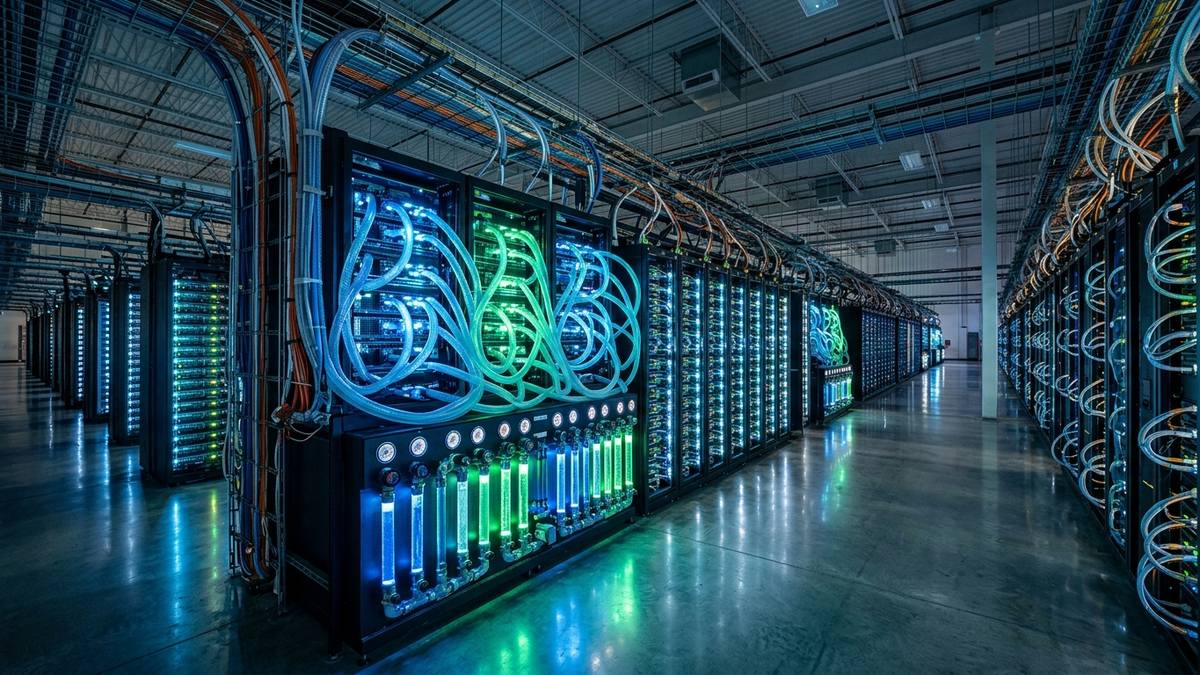
The exponential growth of modern artificial intelligence models has completely transformed the physical architecture of the data-centre industry. High-performance accelerators such as Nvidia H100, Blackwell B200, and AMD Instinct chips draw upwards of 700 to 1,200 watts per processor, pushing server rack densities from historical benchmarks of 10 kilowatts per rack to beyond 100 kilowatts per rack.
Handling these extreme operational thresholds requires specialized hardware that conventional IT assembly lines cannot produce. The Adani-Jabil manufacturing venture will focus specifically on four critical product categories:
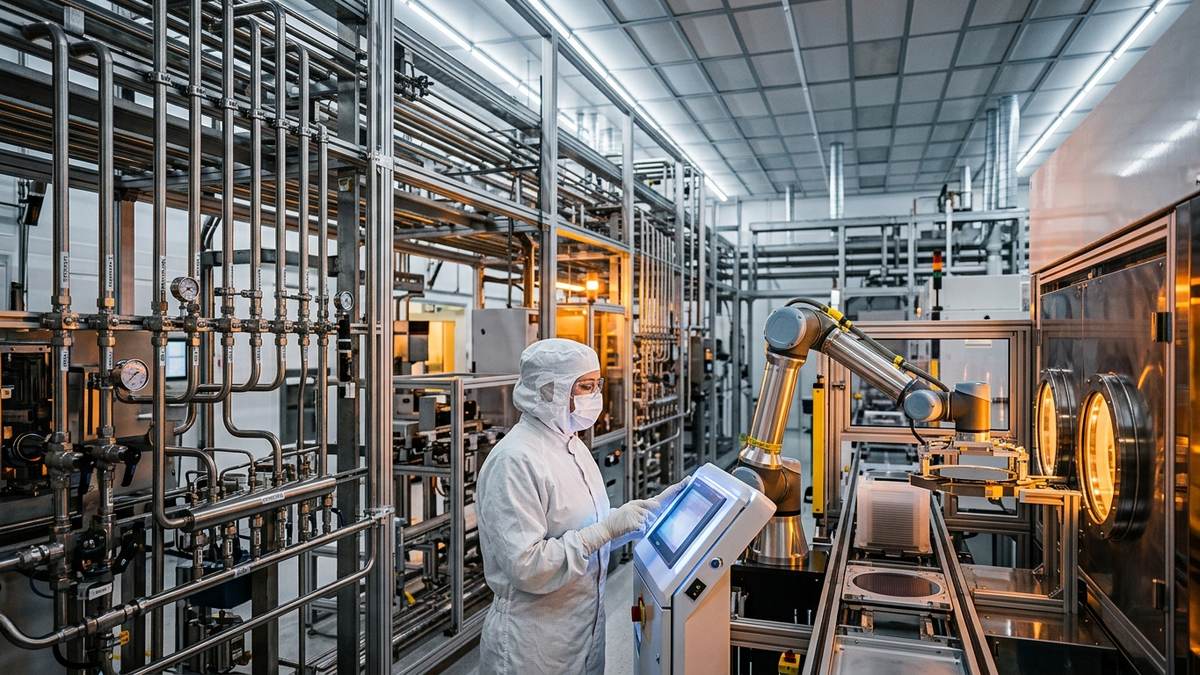
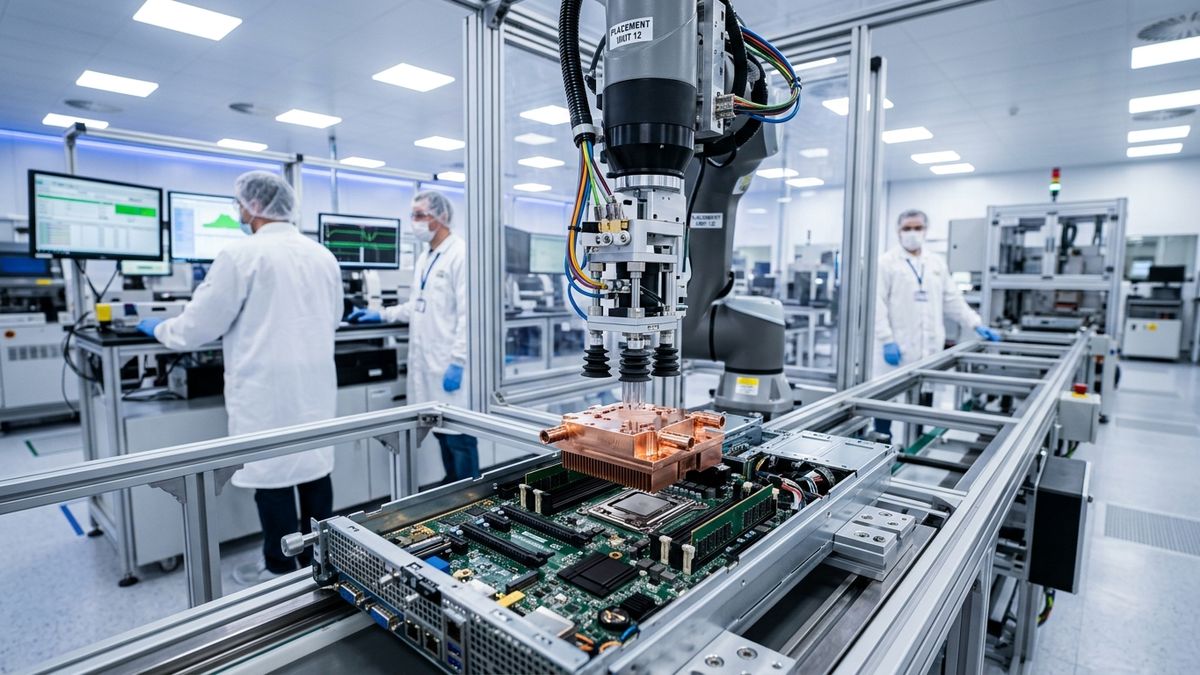
- AI Server Blade Assembly: High-complexity surface-mount technology (SMT) lines fabricating multi-layer printed circuit boards, high-speed optical transceiver interconnects, and accelerator carrier boards.
- Liquid-Cooling Infrastructure: Direct-to-chip cold plate integration, coolant distribution units (CDUs), stainless steel manifold piping, and quick-disconnect leak prevention modules.
- Power Delivery & Distribution: High-efficiency uninterruptible power supply (UPS) cabinets, busways, intelligent power distribution units (iPDUs), and solid-state step-down transformers.
- Modular Data-Centre Enclosures: Factory-fabricated, pre-integrated containerized computing modules optimized for rapid field deployment in hyperscale AI campuses.
This manufacturing capability directly complements the thermal engineering milestones highlighted in our report on /post/india-deploys-high-density-liquid-cooling-for-30-mw-of-ai-capacity, creating a domestic supply chain for high-density cooling systems.
"India's rapid expansion into sovereign artificial intelligence demands resilient, localized physical hardware supply chains,"said corporate leadership involved in the transaction. "By joining forces with Jabil, we are ensuring that the critical servers, power equipment, and advanced thermal management platforms powering India's AI revolution are engineered, assembled, and serviced domestically."
Synergies with AdaniConneX and Make in India
A pivotal commercial beneficiary of this joint venture will be AdaniConneX, the 50:50 partnership between Adani Enterprises and global hyperscale operator EdgeConneX. AdaniConneX is currently constructing a nationwide pipeline of hyperscale data centres across Chennai, Navi Mumbai, Noida, Hyderabad, and Pune, targeting 1 gigawatt (GW) of capacity by 2030.
Historically, Indian data-centre developers have imported more than 80% of their critical mechanical, electrical, and plumbing (MEP) gear and server racks from East Asia and North America, incurring substantial freight overhead, currency volatility, and supply chain lead times. The domestic Jabil-Adani manufacturing ecosystem provides AdaniConneX and competing operators with just-in-time access to localized hardware.
Furthermore, the venture capitalizes on the Government of India's ₹17,000 crore Production Linked Incentive (PLI 2.0) scheme for IT hardware, which provides tiered financial incentives for domestic assembly of enterprise servers, storage equipment, and networking gear.
Operational Benchmarks & Supply Chain Matrix
The structured comparison table below outlines the operational advantages of domestic AI hardware manufacturing versus traditional overseas imports:
| Supply Chain Dimension | Overseas Import Model | Tier-2 Contract Assembly | Adani-Jabil 50:50 Joint Venture |
|---|---|---|---|
| Component Assembly | Multi-Tier Global Sourcing | Basic Box-Build Assembly | End-to-End High-Density SMT & Carrier Fabrication |
| Cooling Integration | Separate Aftermarket Sourcing | Air-Cooled Only | Factory-Integrated Direct-to-Chip Liquid CDUs |
| Procurement Lead Time | 26 to 40 Weeks | 18 to 24 Weeks | 8 to 12 Weeks (Localized Just-In-Time) |
| Fiscal Policy Alignment | Subject to Import Tariffs | Partial Duty Waivers | IT Hardware PLI 2.0 Direct Subsidies |
| Power Density Rating | 15 kW to 35 kW per Rack | Up to 40 kW per Rack | 80 kW to 120 kW High-Density AI Superclusters |
| Testing & Quality Control | Factory Acceptance Overseas | Basic Post-Assembly Power-On | Full Thermal Chamber Burn-In & Optical Interconnect Audits |
Catalyzing India's Deeptech Hardware Ecosystem
Beyond data-centre operators, the venture will stimulate India's broader electronic component ecosystem. Tier-2 and tier-3 component suppliers specializing in high-conductivity copper busbars, precision sheet metal fabrication, industrial liquid valves, and EMI shielding gaskets will find an immediate domestic anchor customer.
The strategic shift mirrors similar high-precision manufacturing investments underway across Indian industry, such as advanced wind turbine blade production covered in /post/suzlon-plans-550-crore-investment-in-ai-powered-factories.
With the preliminary framework finalized, the companies will proceed with site selection in industrial manufacturing corridors offering multimodal logistics connectivity, with pilot assembly lines expected to commence qualification runs within the next twelve months.
Frequently Asked Questions
What is the ownership structure and primary objective of the Adani-Jabil venture?
The venture is a proposed 50:50 joint partnership between Adani Enterprises and Jabil Inc. aimed at manufacturing AI server blades, high-density power distribution systems, and thermal cooling equipment in India.
Where does this hardware fit into the broader AI data-centre supply chain?
The facility will assemble mission-critical hardware required to run AI accelerators, including printed circuit board assemblies (PCBA), rack enclosures, direct-to-chip liquid cooling manifolds, and uninterruptible power supplies.
How does this alliance benefit AdaniConneX?
AdaniConneX, Adani's hyperscale data-centre joint venture with EdgeConneX, gains a domestic, vertically integrated supply chain for server racks and cooling infrastructure, shortening procurement timelines and reducing import duties.
What role does the Government of India's PLI scheme play in this partnership?
The joint venture leverages fiscal incentives under the Modified Scheme for IT Hardware (PLI 2.0), encouraging domestic value addition in high-complexity server electronics assembly.
Primary Sources & Official References
- Adani Enterprises Limited: Stock Exchange Disclosures on Strategic Joint Ventures & Manufacturing Alliances.
- Jabil Inc. Investor Relations: Global Cloud and AI Infrastructure Manufacturing Expansion Filings.
- Ministry of Electronics and Information Technology (MeitY): IT Hardware Production Linked Incentive (PLI 2.0) Scheme Guidelines.
- Central Electricity Authority (CEA): Power Infrastructure Requirements for Hyperscale AI Data Centres.