BITS Pilani Alumni Lead India's Deep-Tech Wave with 140 Startups Founded, Surpassing IIT Bombay & IIT Delhi
By Vikramaditya Sen | Published August 8, 2026 | 6 min read
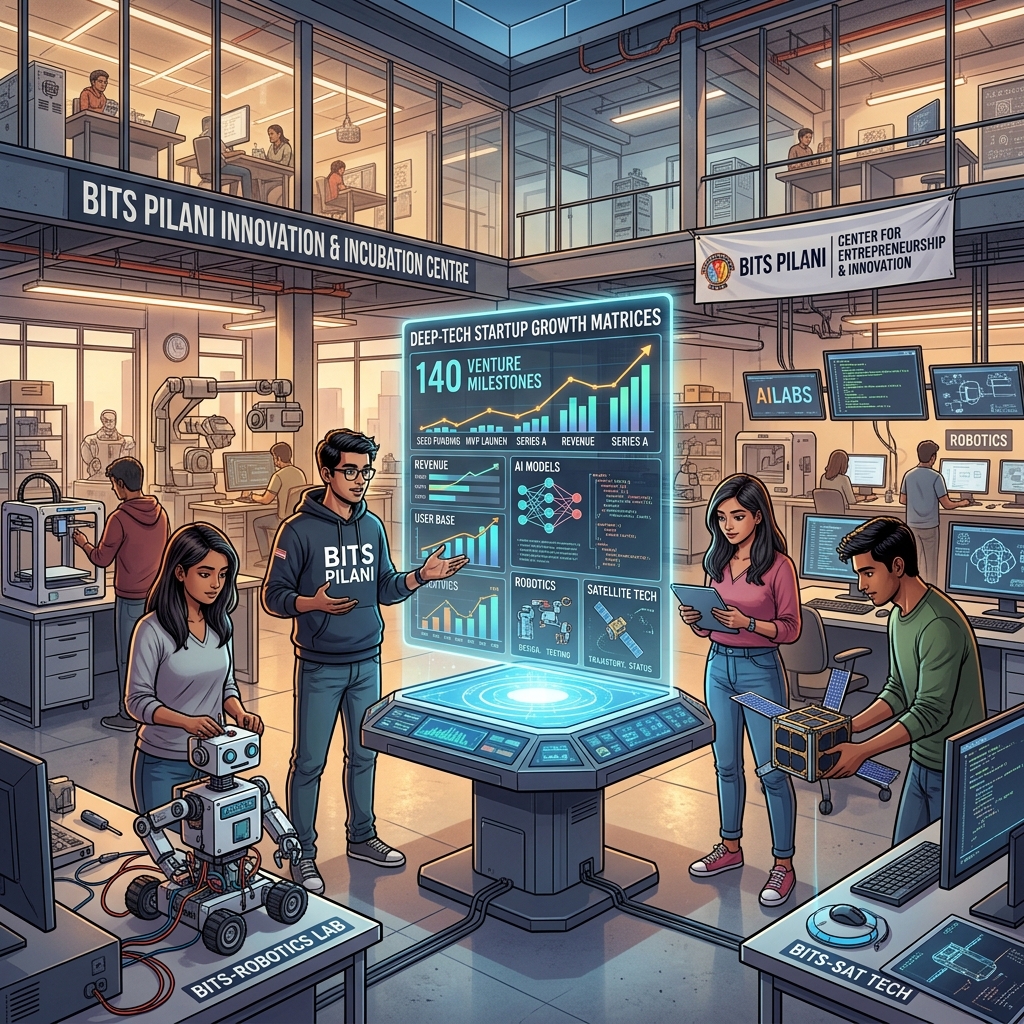
A comprehensive industry benchmark reveals BITS Pilani alumni have founded over 140 deep-tech startups, outpacing leading IITs in science-driven technological entrepreneurship.
Birla Institute of Technology and Science (BITS Pilani) has established itself as the premier nursery for commercial science-driven innovation in India, with its alumni founding over 140 deep-tech companies—putting the institution ahead of legendary legacy tech hubs including IIT Bombay and IIT Delhi, according to a comprehensive ecosystem report released by venture analytics firm DeepTech India Research.
The milestone highlights a structural evolution in India's startup paradigm, where high-impact venture creation is shifting from consumer internet and quick-commerce models toward hard-tech breakthroughs in artificial intelligence, autonomous robotics, synthetic biology, semiconductor design, and space technologies. BITS Pilani's flexible academic curriculum, early emphasis on student-led incubation, and global alumni syndicates have emerged as key catalysts driving this deep-tech leadership.
Decoding BITS Pilani's Entrepreneurial Advantage
The institution's remarkable performance in deep-tech venture creation stems from a combination of academic autonomy and institutional infrastructure. BITS Pilani's Technology Business Incubator (TBI) and its dedicated pre-seed fund PIEDS (Pilani Innovation and Entrepreneurship Development Society) provide student researchers with immediate access to prototyping labs, intellectual property patent counsel, and non-dilutive grant capital.
Furthermore, BITS Pilani's zero-attendance policy for top-performing incubatees and its mandatory six-month industrial Practice School (PS) program allow undergraduate and postgraduate students to gain direct exposure to real-world industrial R&D problems before graduation.
"Deep-tech innovation requires a culture that tolerates high technical risk and encourages interdisciplinary experimentation. The fact that BITS Pilani alumni lead India in founding deep-tech ventures proves that hands-on academic autonomy combined with a tight-knit global alumni network creates a powerful engine for hard-tech entrepreneurship."
"— Dr. V. Ramgopal Rao, Vice-Chancellor, BITS Pilani"
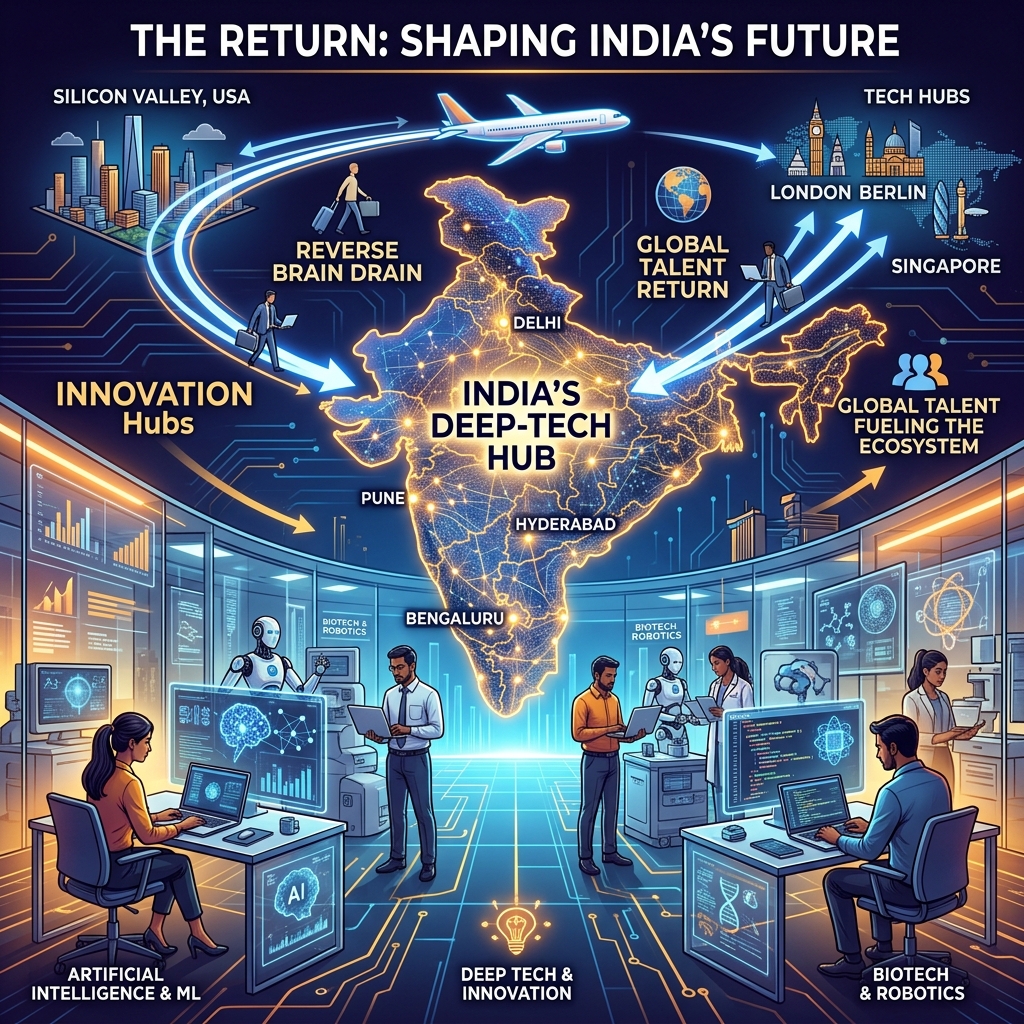
This deep-tech momentum reflects broader trends across top Indian research universities. For deeper insights into deep-tech venture scaling, check out our reporting on how Solinas Integrity secured $5.5M in robotics capital, reverse brain drain fueling high-skilled startup founders returning to India, and IIT Delhi's fabless semiconductor chip design ecosystem.
Institutional Deep-Tech Startup Leaderboard & Metrics
The table below summarizes the key findings of the DeepTech India Research benchmark report, evaluating founder output and venture capital raised across top Indian academic institutions:
| Academic Institution | Deep-Tech Ventures Founded | Top Specialization Sectors | Total Venture Capital Raised | Notable Deep-Tech Successes |
|---|---|---|---|---|
| BITS Pilani | 140+ Startups | AI Systems, SpaceTech, Agritech, Biotech | $1.8 Billion+ | Pixxel, GreyOrange, Agnikul Cosmos (Co-founders) |
| IIT Bombay | 122 Startups | Industrial Automation, Robotics, Cleantech | $1.6 Billion | IdeaForge, Sedemac, Pandorum Technologies |
| IIT Delhi | 115 Startups | Semiconductors, Medical Devices, Edge AI | $1.4 Billion | Staqu, Netradyne, CynLr |
| IIT Madras | 108 Startups | Underwater Robotics, Clean Energy, EV Tech | $1.3 Billion | Ather Energy, Solinas Integrity, Uniphore |
| IISc Bengaluru | 45 Startups | Quantum Computing, Deep Bio, Advanced Materials | $650 Million | QpiAI, String Bio, Bellatrix Aerospace |
Key Takeaways for India's Innovation Ecosystem
1. Rise of Science-Driven Founders: Indian founders are increasingly tackling hard engineering challenges with high IP moats rather than replicating existing business models.
2. Alumni Capital Syndicates: Networks like BITS Spark and BITSian Angel Network play a pivotal role in backing seed-stage deep-tech ventures before institutional VCs step in.
3. Cross-Disciplinary Team Building: More than 65% of BITS-founded deep-tech ventures involve multi-campus co-founders combining computer science, mechanical engineering, and chemical technology expertise.
Shaping Global Innovation Landscapes
As deep-tech startups require longer gestation periods and higher initial capital expenditures, institutional ecosystems that reduce early friction will continue to dominate founder output metrics. BITS Pilani's lead over top IITs signals a healthier, more diverse academic landscape driving India's ambition to become a global deep-tech superpower by 2030.