India Doubles Down on the AI Applications Race: Ashwini Vaishnaw Highlights Application Layer and Clean Energy Data Center Edge
By Elena Rostova | Published August 20, 2026 | 8 min read
Union Minister Ashwini Vaishnaw outlines India's five-layer AI strategy, highlighting domestic leadership in enterprise applications, 250 GW renewable capacity, and modular nuclear power for next-gen data centres.
NEW DELHI — India is aggressively expanding its sovereign artificial intelligence footprint by prioritizing enterprise-grade application deployment, large-scale domestic compute infrastructure, and clean energy-backed data centers, according to Union Minister for Electronics and Information Technology Ashwini Vaishnaw. Speaking on India's strategic roadmap in the global intelligence economy, the Minister outlined a comprehensive five-layer architectural framework designed to transform the nation from a consumer of global algorithms into a dominant exporter of applied AI solutions and sustainable computing capacity.
While global technology giants remain locked in high-capital foundation model training races, India's strategic advantage lies firmly in its deep enterprise software engineering ecosystem, domain-specific application layers, and an installed clean power base of over 250 gigawatts (GW). Supported by policy interventions such as the IndiaAI Mission and the newly proposed Sustainable Harnessing and Advancement of Nuclear energy for Transforming India (SHANTI) Bill, the country is systematically building end-to-end resilience from silicon wafers to enterprise workflows.
Deconstructing India's Five-Layer AI Architectural Framework
Addressing technology leaders, researchers, and policymakers, Minister Vaishnaw articulated that sustainable AI leadership cannot rely on isolated software breakthroughs. Instead, the government is executing coordinated investments across five distinct technological layers:
1. The Application Layer (India's Core Strength): With over 80% of emerging domestic tech startups actively embedding native AI capabilities, India is leveraging its multi-decade IT services heritage to deliver vertical solutions across healthcare, manufacturing, banking, agriculture, and governance.
2. The Model Layer: Fostering open, sovereign, and domain-tuned models—such as the recent breakthroughs in synthetic voice synthesis like Murf AI's Falcon 2 foundation model—that operate reliably on low-compute budgets across India's 22 scheduled languages.
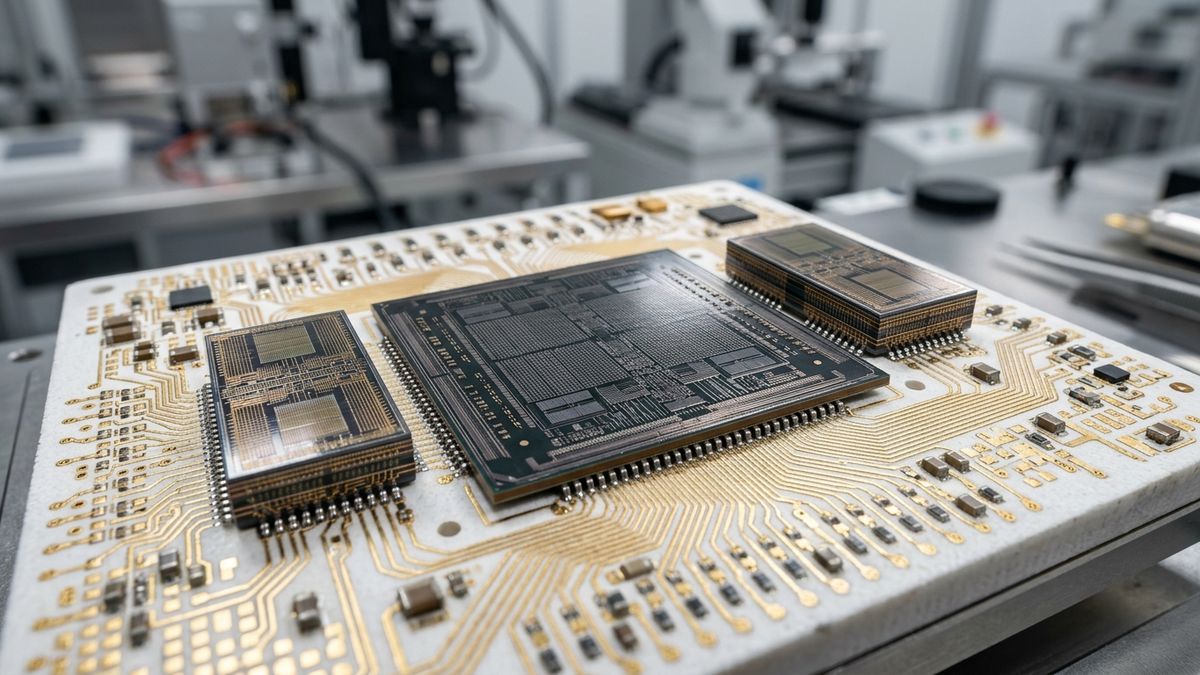
3. The Chip (Semiconductor) Layer: Capitalizing on the fact that 20% of the world's semiconductor design engineers are based in India, while scaling front-end fabrication and advanced packaging under the India Semiconductor Mission.
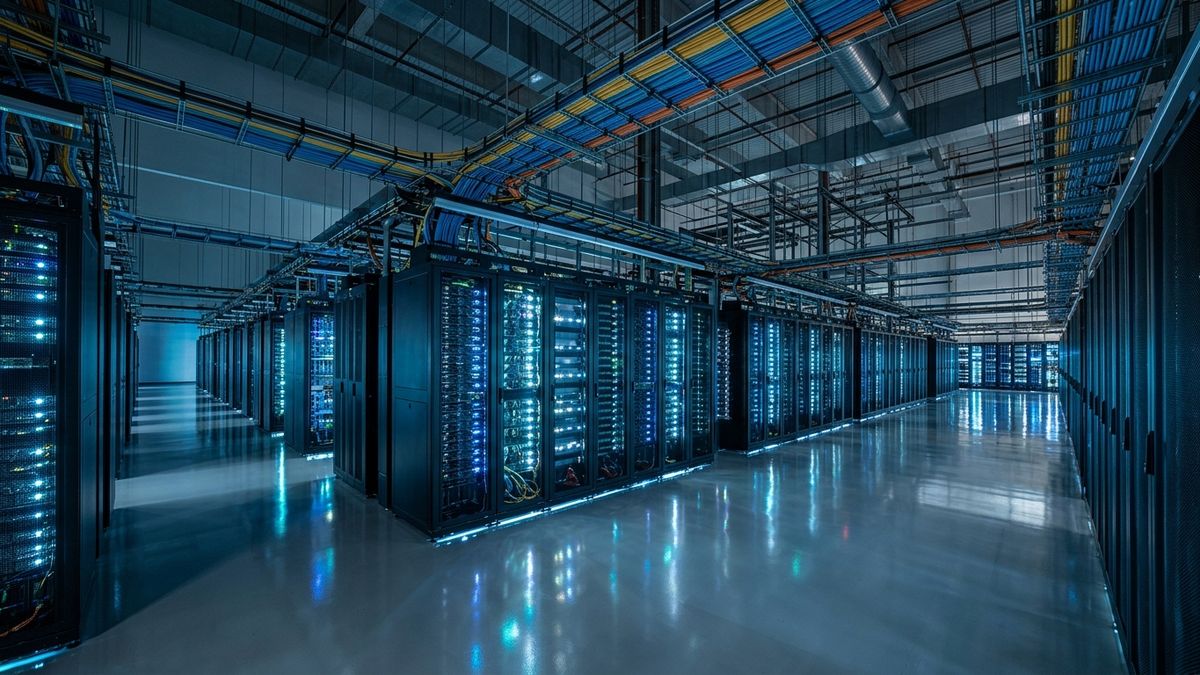
4. The Infrastructure Layer (Data Centres): Accelerating land clearances, optical fiber connectivity, and high-density computing clusters, backed by a planned $200 billion data center investment pipeline and a shared 38,000 GPU public-private compute pool.
5. The Energy Layer: Securing dedicated, base-load green power for hyperscalers through wind, solar, pumped hydro storage, and small modular nuclear reactors (SMRs) to prevent grid strain.
"The world recognizes that algorithms without domain execution create limited economic value. India's greatest strength has always been our ability to take complex technology and apply it seamlessly to enterprise systems,"stated Minister Ashwini Vaishnaw. "By combining our application depth with 250 gigawatts of clean energy and sovereign chip design, India is positioning itself as the most reliable, cost-effective AI hub in the world."
Strategic Comparison: India's AI Architectural Layers
The following structured matrix outlines key priorities, target milestones, and sovereign impact across all five layers:
| Architectural Layer | Core Strategic Focus | Key National Initiative | 2026-2028 Target Output |
|---|---|---|---|
| 1. Application Layer | Vertical enterprise AI, workflow automation, vernacular speech | National AI Portal & Startup India Hub | 10,000+ Production Enterprise AI deployments |
| 2. Model Layer | Multilingual foundation models, domain-specific SLMs | Bhashini AI & Sovereign Model Grants | 22 Official Indian Languages fully modeled |
| 3. Chip Layer | Fabless ASIC/SoC design, ATMP packaging, sovereign IP | India Semiconductor Mission (ISM 2.0) | Commercial rollout of 3+ domestic fabs & packaging hubs |
| 4. Infrastructure Layer | Hyperscale data clusters, compute subsidies for MSMEs | IndiaAI 38,000 GPU Compute Pool | 500+ MW active sovereign AI compute capacity |
| 5. Energy Layer | Carbon-neutral baseload power, captive microgrids | 250 GW RE + SHANTI SMR Framework | 100% renewable-powered Tier-4 data center corridors |
Renewable Energy and Small Modular Reactors (SMRs) as Data Center Anchors
The computational energy density required by next-generation AI training clusters and real-time inference engines has triggered an unprecedented global energy crunch. A single modern hyperscale AI cluster can consume upwards of 100 to 300 megawatts (MW) of continuous power—equivalent to the consumption of mid-sized industrial cities.
India's strategy directly couples data center expansion with green energy corridors. With over 250 GW of non-fossil fuel installed capacity, cloud hyperscalers operating in hubs across Maharashtra, Tamil Nadu, Telangana, and Gujarat can leverage long-term renewable power purchase agreements (PPAs) and open-access green tariffs.
The Role of Small Modular Nuclear Reactors (SMRs)
To address the intermittent nature of solar and wind generation, the Ministry of Power and Department of Atomic Energy are structuring frameworks for captive Small Modular Reactors. SMRs, producing between 50 MW and 300 MW per module, can be co-located directly adjacent to hyperscale data center parks, providing uninterrupted, carbon-free baseload electricity with minimal transmission loss. Legislative support through the SHANTI Bill aims to enable public-private joint ventures for factory-fabricated modular reactors.
Democratizing Compute Access Through Public-Private Partnerships
A critical bottleneck for AI researchers, academic institutions, and early-stage startups has been the exorbitant cost of high-bandwidth memory GPUs. Commercial cloud rental rates for cutting-edge accelerator instances often exceed the budgetary constraints of early-stage ventures.
Under the IndiaAI Mission, the Ministry has rolled out a subsidized compute aggregation platform providing access to 38,000 high-performance GPUs at rates up to 60% below international spot market pricing. Startups building localized diagnostic tools, crop yield optimizers, and automated financial inclusion platforms can submit workload requests to receive state-subsidized compute allocations.
Complementing compute access, initiatives across regional technology hubs—such as the recent Gujarat ₹100 Crore AI Push for Students and MSMEs and quantum computing hardware investments like the QpiAI Quantum Foundry in Karnataka—are ensuring that advanced hardware capabilities extend beyond Tier-1 metropolitan centers.
The Domestic Hardware Manufacturing Mandate
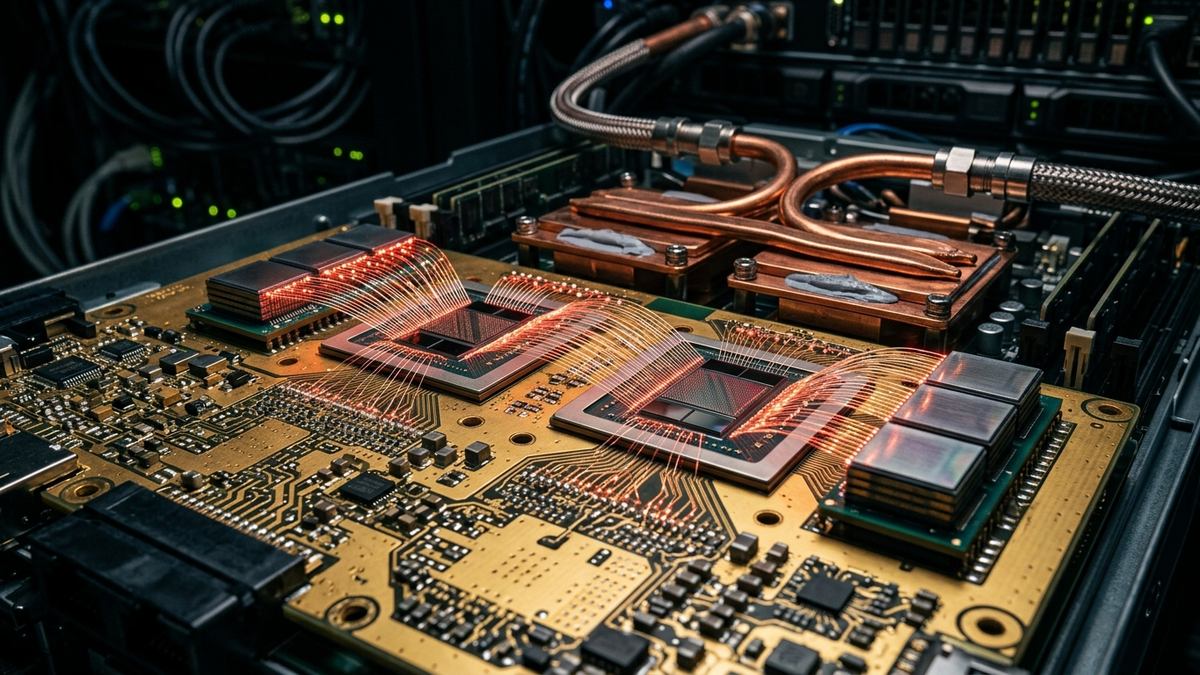
To prevent long-term foreign hardware dependency, the government is extending Production Linked Incentive (PLI) schemes to cover enterprise servers, liquid-cooling distribution units, server racks, and optical interconnects. By manufacturing thermal management and compute chassis domestically, Indian data center operators can reduce capital expenditure by an estimated 15–22% while insulating operations from global geopolitical supply disruptions.
Long-Term Market Impact and Industry Outlook
India's deliberate pivot toward application-layer leadership combined with sustainable infrastructure reflects a mature economic calculus. While foundational frontier models require tens of billions of dollars in recurring compute cycles with rapid obsolescence, enterprise applications generate recurring software revenues, robust unit economics, and immediate productivity gains across industrial sectors.
As global enterprises seek to deploy agentic workflows across supply chains, banking, and customer operations, India's blend of software engineering talent, cost-advantaged green power, and sovereign compute backing positions the subcontinent as an indispensable engine of the fifth industrial revolution.
Key Takeaways for Founders and Enterprise CTOs
- Focus on Vertical Problem Solving: Capital is moving aggressively toward domain-specific AI applications that demonstrate measurable business ROI rather than generic wrapper tools.
- Leverage Sovereign Compute Subsidies: Early-stage startups and research teams should utilize the IndiaAI compute pool to offset heavy inference and fine-tuning expenses.
- Design for Energy Efficiency: As energy regulations tighten globally, applications optimized for lightweight inference and small language models will command superior operating margins.