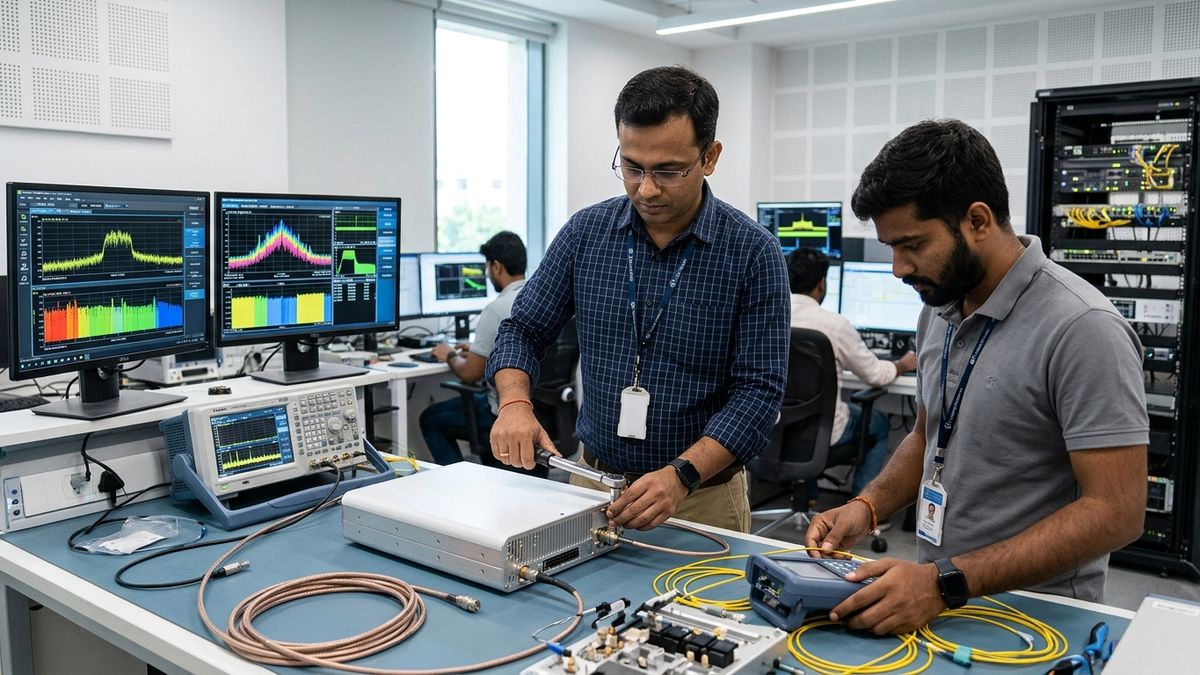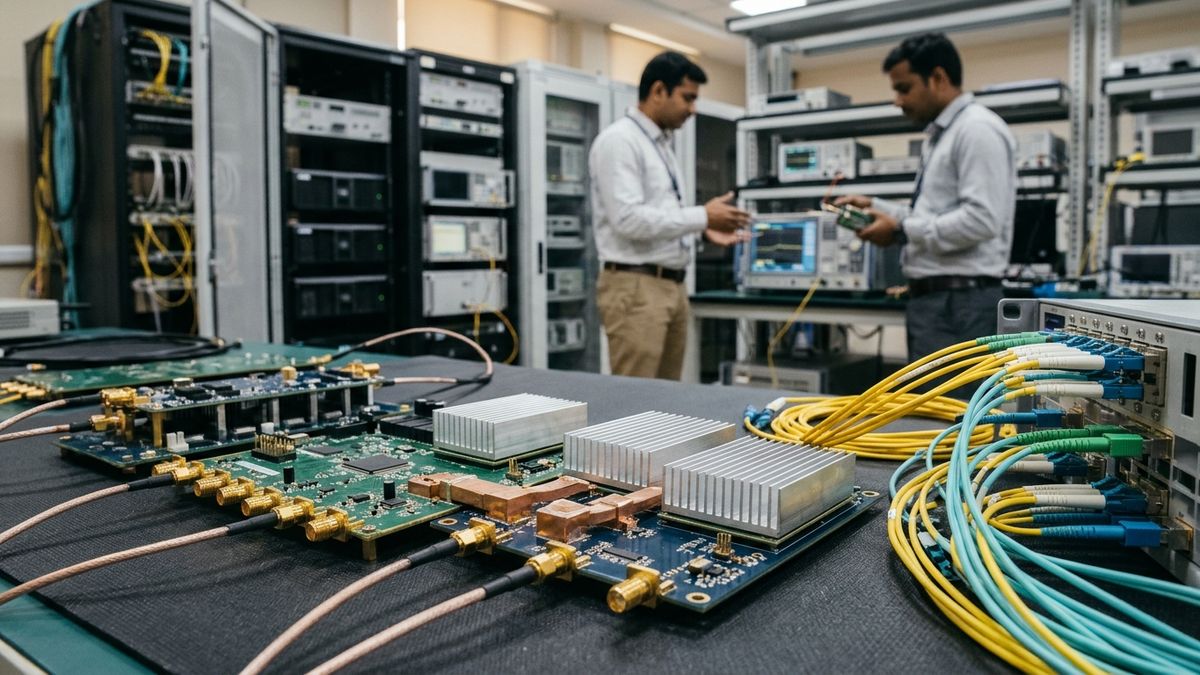
Union Communications Minister Jyotiraditya Scindia announced a dedicated advisory panel to resolve testing, regulatory, and market-access hurdles for Indian telecom startups and MSMEs.
Executive Key Takeaways
- Union Communications Minister Jyotiraditya M. Scindia announced a dedicated advisory panel for telecom startups and MSMEs at the Telecom Startups and MSME Conclave at Bharat Mandapam, New Delhi.
- The advisory group will hold regular meetings with the Ministry of Communications to address operational bottlenecks in product testing, certification, regulatory navigation, and commercial market access.
- The initiative reinforces existing Department of Telecommunications (DoT) programs—including DCIS, TTDF, and TDIP—to build indigenous capabilities across RAN and Core, Chipsets, Applications, Security, and Standards.
The Government of India has announced plans to establish a dedicated advisory panel for telecommunications startups and Micro, Small and Medium Enterprises (MSMEs) to accelerate indigenous technology development and resolve commercialization bottlenecks. Announced by Union Minister for Communications Jyotiraditya M. Scindia at the Telecom Startups and MSME Conclave organized by the Department of Telecommunications (DoT) at Bharat Mandapam in New Delhi, the new advisory group will hold regular consultations with ministry leadership to address challenges in product testing, regulatory compliance, and market access.
What the New Telecom Advisory Panel Aims to Solve
For emerging Indian telecom hardware and software companies, developing a working prototype is rarely the hardest hurdle; navigating mandatory certification, field-trial access, and carrier procurement cycles often determines whether a product reaches commercial deployment. During the New Delhi conclave, domestic founders and MSME executives highlighted these exact friction points—spanning testing infrastructure availability, regulatory clarity, and enterprise market entry.
Under the announced structure, the advisory panel will function as an ongoing institutional bridge between industry practitioners and the Ministry of Communications. Rather than relying on one-off consultations, the group is designed to meet periodically with the Communications Minister to track policy execution and unblock operational bottlenecks.
"The government is committed to acting as an active facilitator for domestic innovators so that India transitions from being a consumer of global telecom equipment to a creator and exporter of indigenous technology."
This shift builds directly on recent policy momentum tracked in our earlier coverage of how the government is strengthening support for telecom startups and MSMEs across India, pairing direct ministerial oversight with existing R&D grant and testing mechanisms.
Five Core Technology Verticals in Focus
At the Bharat Mandapam conclave, the Department of Telecommunications brought together domestic startups, MSMEs, venture investors, telecom operators, and academic researchers to evaluate homegrown solutions across five foundational layers of the modern telecom stack:
- RAN and Core Networks: Indigenous 4G, 5G, and early 6G Radio Access Network base stations, Open RAN (O-RAN) software stacks, and packet-core architectures.
- Chipsets and Silicon: Custom RF front-end modules, baseband processors, and application-specific integrated circuits (ASICs) designed within India.
- Telecom Applications: Enterprise private-network software, network slicing orchestration, and AI-driven network telemetry tools.
- Network Security: Sovereign encryption, zero-trust telecom gateway solutions, and supply-chain assurance tools aligned with national security directives.
- Global Standards: Active Indian intellectual property contributions to 3GPP, ITU, and next-generation 6G standard-setting bodies.
Developing domestic silicon and RF hardware also intersects closely with India's broader semiconductor ecosystem—as seen in recent cross-border collaborations like GlobalFoundries' investment in Cyient Semiconductors for Indian ASIC design and rising sovereign deeptech venture capital funds.
How the Panel Complements Existing DoT Schemes
The advisory panel is not a standalone grant body; instead, it sits atop the Department of Telecommunications' existing financial and regulatory architecture to ensure funded technologies actually reach deployment.
| Initiative / Framework | Administering Body | Primary Mandate | Key Focus for Startups & MSMEs |
| :--- | :--- | :--- | :--- |
| Telecom Startups & MSME Advisory Panel | Ministry of Communications / DoT | Recurring policy & operational review | Resolving testing, regulatory, and market-access hurdles |
|---|---|---|---|
| Telecom Technology Development Fund (TTDF) | Department of Telecommunications | R&D grant & co-funding | Funding indigenous 5G/6G, core, and rural telecom innovation |
| Digital Communication Innovation Square (DCIS) | Department of Telecommunications | Incubation & prototype support | Supporting early-stage startups, MSMEs, and academic spinouts |
| Technology Development & Investment Promotion (TDIP) | Department of Telecommunications | Commercialization & export linkage | Connecting domestic telecom IP with global buyers and capital |
| Telecommunications Act, 2023 | Government of India | Statutory regulatory framework | Streamlining spectrum, right-of-way, and licensing clarity |
Why It Matters for India's Telecom Ecosystem
India operates one of the world's largest mobile broadband networks, yet domestic equipment makers have historically held a modest share of global telecom hardware and core-network spending. While large-scale Production Linked Incentive (PLI) schemes have expanded local electronics assembly, early-stage startups and MSMEs building original intellectual property face longer gestation cycles and high capital costs for lab validation.
By pairing statutory clarity under the Telecommunications Act, 2023 with direct ministerial troubleshooting through the new advisory panel, the DoT is targeting the "lab-to-market" valley of death. For more reporting on India's hardware, telecom, and infrastructure policy shifts, explore our Technology coverage.
Frequently Asked Questions
Why is the Indian government forming an advisory panel for telecom startups and MSMEs?
The Department of Telecommunications (DoT) is establishing the advisory panel to create a direct, recurring channel between domestic telecom innovators and the Communications Minister, helping resolve bottlenecks in product testing, regulatory approvals, and commercial procurement.
Which technology verticals are prioritized under India's indigenous telecom push?
At the Telecom Startups and MSME Conclave in New Delhi, the DoT highlighted indigenous technology development across five core verticals: Radio Access Network (RAN) and Core systems, Applications, Chipsets, Security, and Telecom Standards.
What existing DoT schemes support Indian telecom startups alongside the new panel?
The new advisory panel complements existing DoT initiatives including the Telecom Technology Development Fund (TTDF), Digital Communication Innovation Square (DCIS), and Technology Development and Investment Promotion (TDIP), operating alongside the Telecommunications Act, 2023.
How does this advisory group help MSMEs reach commercial scale?
By bringing testing agencies, policymakers, and industry stakeholders into a structured review cadence, the panel aims to shorten lab-to-market timelines and reduce compliance friction for smaller domestic hardware and software vendors.
Primary Sources & Official References
- Press Information Bureau (PIB) & Department of Telecommunications: Official proceedings and ministerial announcements from the Telecom Startups and MSME Conclave at Bharat Mandapam, New Delhi (Primary Source).
- Ministry of Communications, Government of India: Program guidelines for the Telecom Technology Development Fund (TTDF), Digital Communication Innovation Square (DCIS), and the Telecommunications Act, 2023 (Primary Source).
- The Hindu / Economic Times / Business Standard: Independent reporting on Union Minister Jyotiraditya M. Scindia's address and startup pain-point consultations (Secondary Sources).
Final Takeaway
The formation of a dedicated advisory panel for telecom startups and MSMEs signals a pragmatic shift in India's telecom policy from broad capital incentives toward hands-on execution. If the panel delivers faster testing turnarounds and clearer procurement pathways, domestic startups across RAN, chipsets, and network security stand a far stronger chance of scaling from prototypes into globally competitive telecom suppliers.