AI Meets Industrial Design: How India’s Manufacturing Ecosystem Integrates Agentic AI into Factory Workflows
By Ananya Roy | Published August 12, 2026 | 6 min read
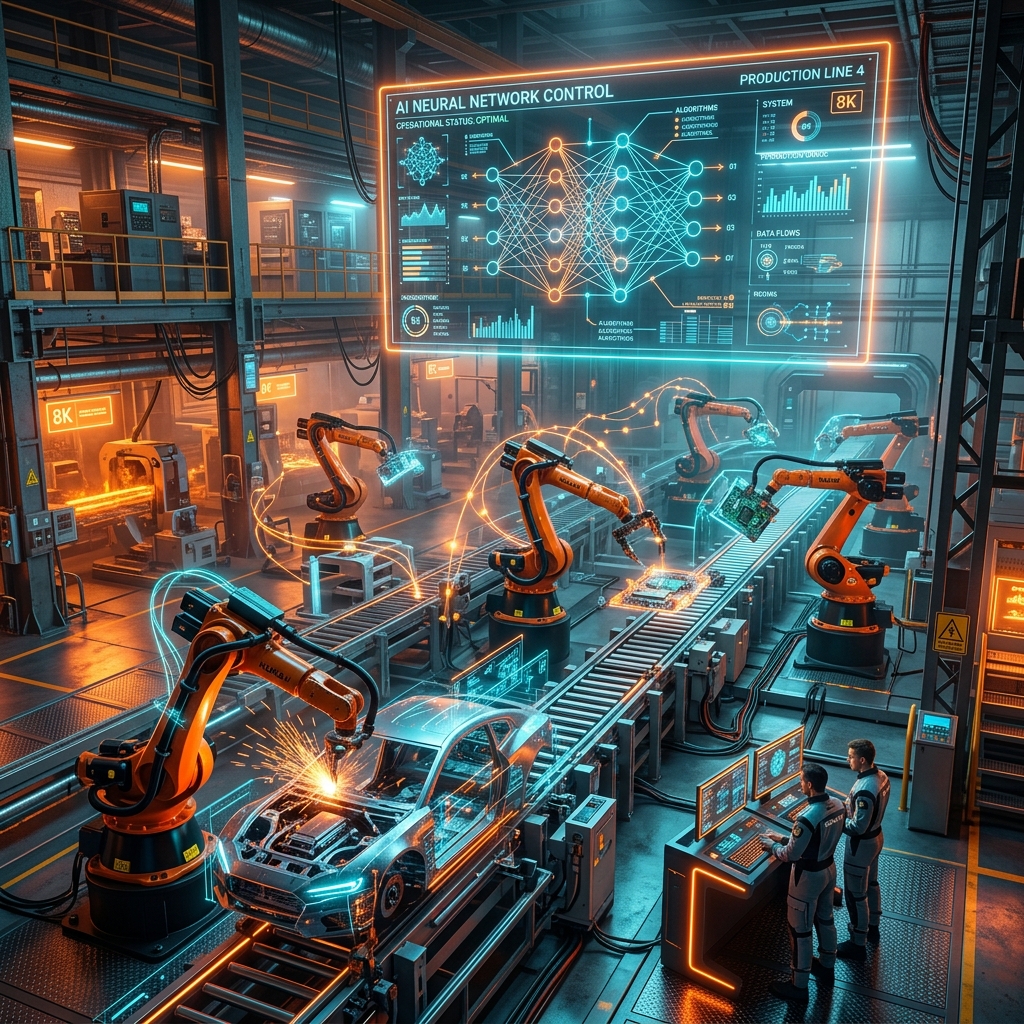
Indian manufacturing leaders combine generative CAD, predictive maintenance, and agentic AI to revolutionize industrial design and smart factory automation.
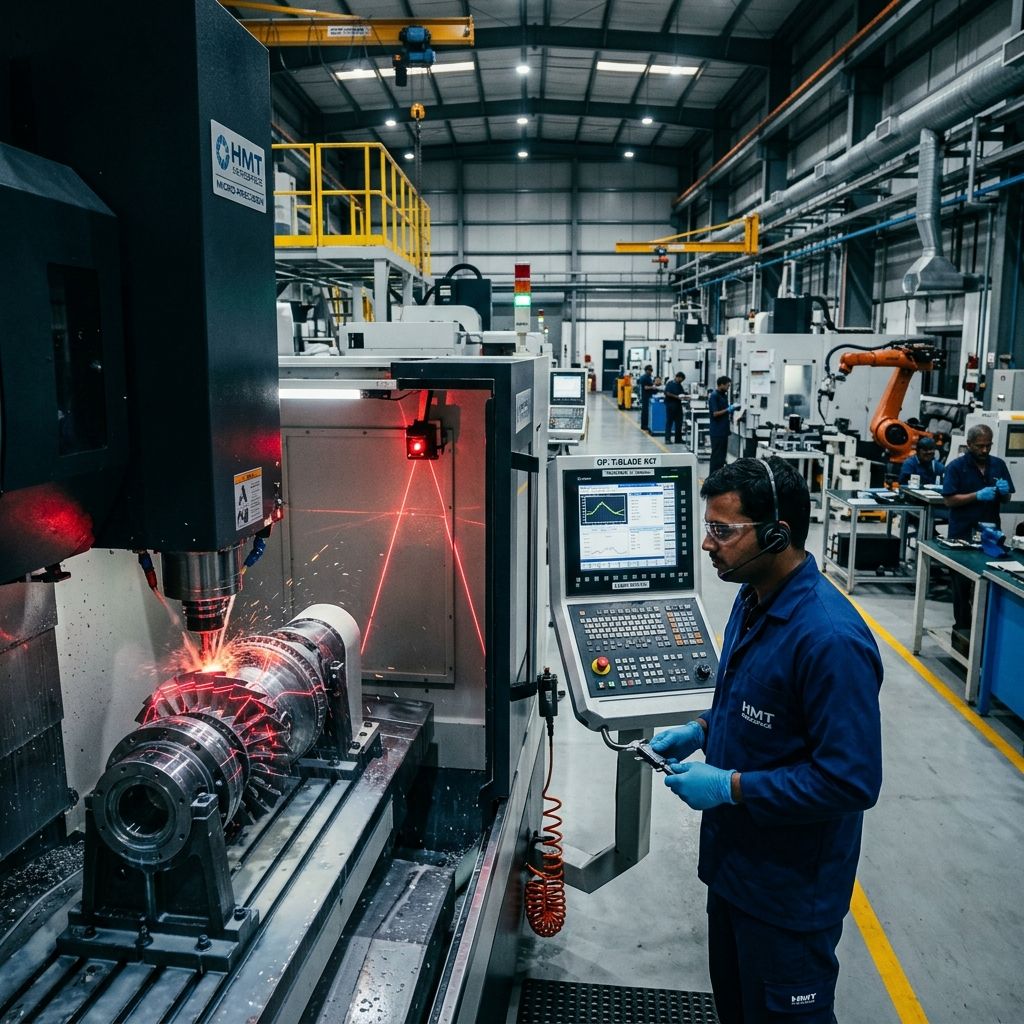
India's industrial manufacturing ecosystem is undergoing a profound technological transformation as manufacturing enterprises, automotive OEMs, defense contractors, and electronics component fabricators aggressively integrate agentic artificial intelligence into core industrial workflows.
From generative CAD component design to real-time robotic cell recalibration and predictive shop-floor maintenance, the convergence of physical engineering and artificial intelligence is reshaping India's manufacturing competitiveness on the global stage.
Intent-First Smart Manufacturing Acceleration
Historically, industrial digital transformation focused on basic IoT sensor installations and reactive data logging. However, the current industrial AI shift goes several steps further by embedding autonomous reasoning agents directly into manufacturing hardware and Product Lifecycle Management (PLM) pipelines.
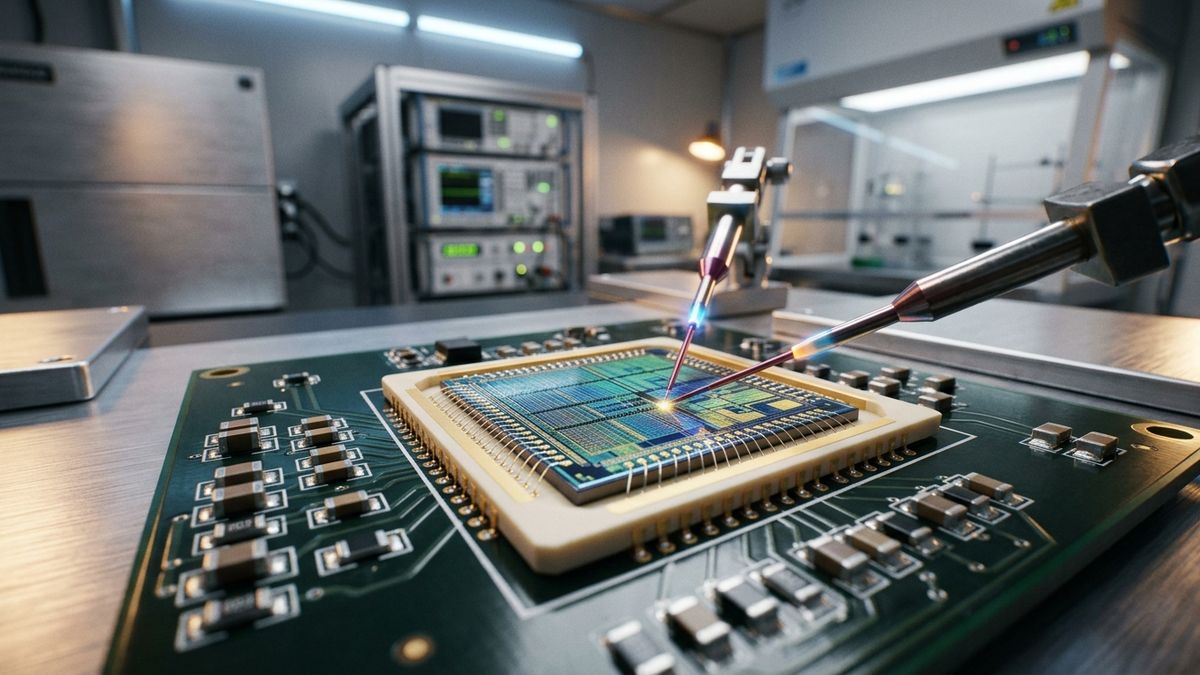
Engineers are leveraging specialized multi-modal models capable of interpreting complex blue-prints, thermal imaging video streams, micro-CT scans, and vibration telemetry to autonomously detect micro-defects during assembly.
"Artificial intelligence is no longer restricted to software screens—it has officially entered the factory floor. By pairing physical precision machinery with real-time agentic reasoning, Indian manufacturers are achieving unprecedented yield rates and production efficiency."
"— Vikramaditya Singhania, Chairman of Industrial Automation Council"
Smart Factory Technology Integration Matrix
The following matrix contrasts traditional industrial manufacturing practices with AI-enabled smart factory workflows across top Indian manufacturing hubs:
| Industrial Workflow | Traditional Manufacturing | AI-Powered Smart Factory | Quantified Productivity Gain |
|---|---|---|---|
| Component Structural Design | Manual CAD drafting & stress tests | Generative CAD agents with topology optimization | 40% weight reduction, 10x faster design |
| Quality Control Inspection | Manual visual sampling (1 in 50) | High-speed AI computer vision (100% inline) | 99.8% defect detection accuracy |
| Robotic Cell Calibration | Static pre-programmed routines | Adaptive AI agents adjusting to part variance | 65% reduction in re-tooling setup time |
| Factory Energy Management | Scheduled manual power-downs | Autonomous load-balancing neural networks | 22% reduction in plant power consumption |
Generative Design & Additive Manufacturing Integration
A standout application of industrial AI in India is generative design for additive manufacturing (3D printing). Engine component manufacturers in Pune and Chennai are utilizing physics-informed AI algorithms to synthesize complex lattice structures for turbofan components, automotive chassis parts, and heat exchangers.
These AI-generated structures are lighter, stronger, and thermally superior to conventionally machined parts.
Furthermore, robotics startups across tech incubators—such as Yaanendriya securing deeptech robotics funding—are supplying Indian manufacturers with autonomous mobile robots (AMRs) guided by edge-AI vision systems.
Future Outlook for Industry 4.0 in India
With the Indian government's 'Make in India' program setting ambitious targets for manufacturing to account for 25% of GDP, the integration of agentic AI into industrial design and production represents a decisive catalyst. Analysts predict that over 40% of tier-1 industrial facilities in India will deploy autonomous agentic workflows by 2028.