India's Precision Engineering Sector Accelerates with Focus on Advanced Manufacturing & Aerospace
By Aarav Sharma | Published August 10, 2026 | 6 min read
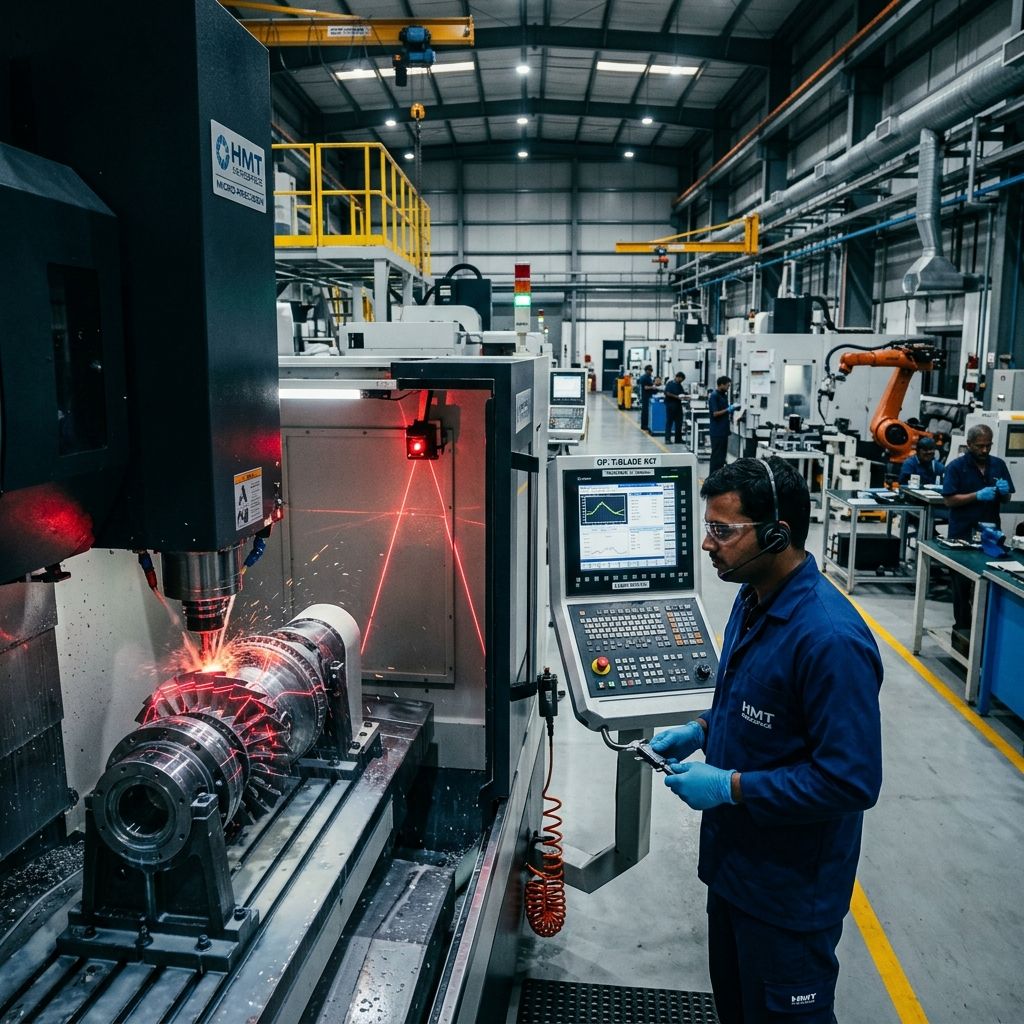
High-precision manufacturing and defense aerospace engineering solidify India's transition into a global tier-1 industrial production power center.
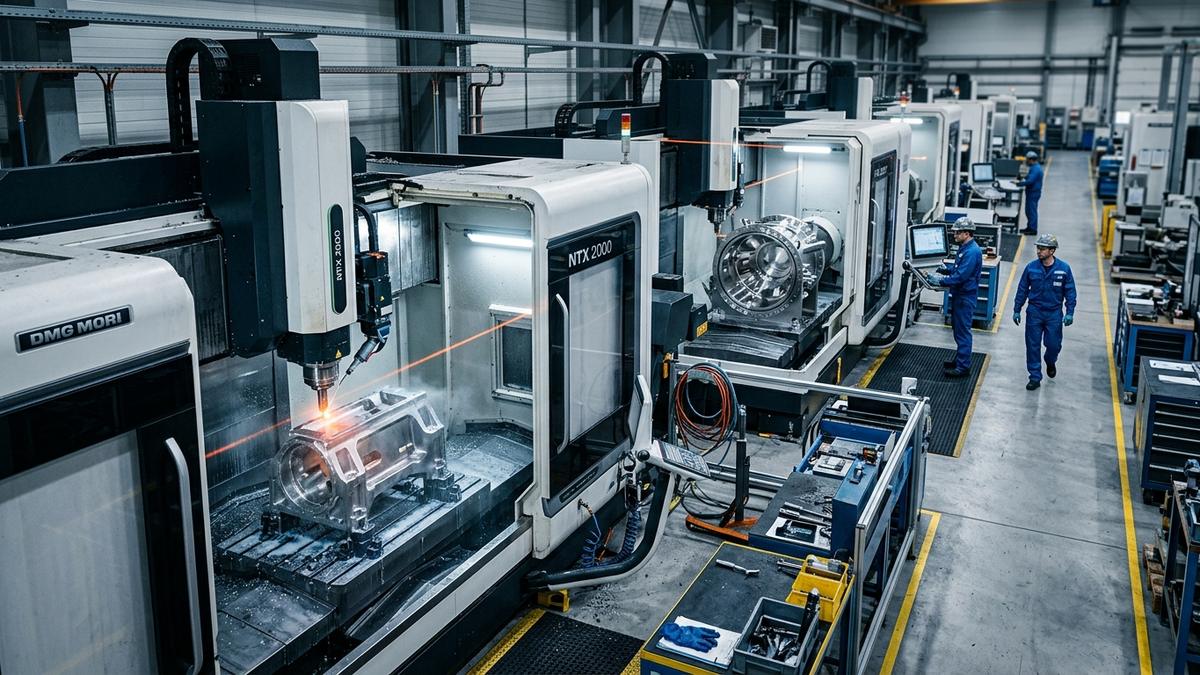
India's industrial engineering sector is experiencing an unprecedented surge in high-precision manufacturing, micro-machining, and aerospace component production, positioning the nation as a primary global tier-1 supplier for global aerospace, defense, and semiconductor OEMs.
Driven by government incentives under the Production Linked Incentive (PLI) schemes and increased private sector capital expenditure, Indian engineering firms are upgrading from low-cost manual assembly to high-precision 5-axis CNC machining, additive titanium manufacturing, and automated quality inspection.
Intent-First Growth Drivers and Sectoral Transformation
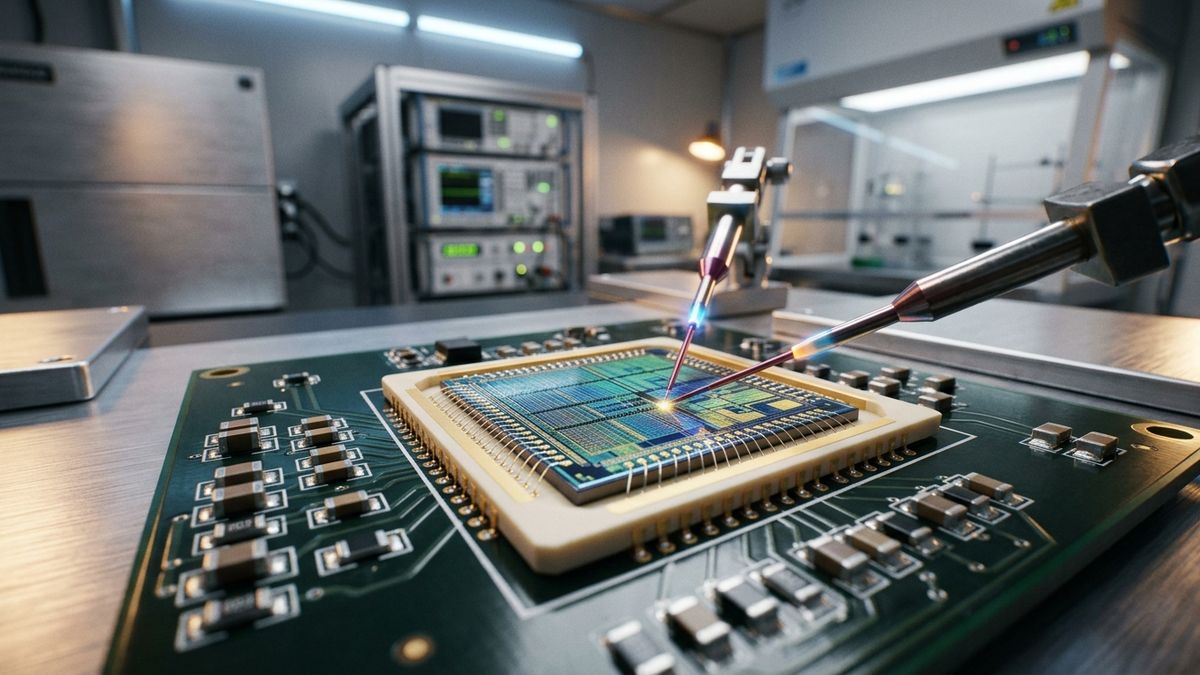
The transformation is led by engineering clusters in Bengaluru, Hyderabad, Chennai, and Pune, where specialized precision shops are producing jet engine turbine blades, satellite structural mounts, medical implants, and semiconductor chamber components with sub-micron tolerances (below 0.5 micrometers).
This structural shift enables global prime contractors—such as Boeing, Airbus, Rolls-Royce, and GE Aerospace—to deepen their strategic sourcing commitments in India.
"India is moving from general engineering to extreme precision engineering. The combination of advanced CAD/CAM software skills, automated robotics, and strict quality certifications is unlocking billion-dollar aerospace export orders."
"— Venkatesh Murthy, President of the Precision Engineering Manufacturers Association"
Precision Engineering Capabilities Matrix
The table below breaks down the technical capabilities, tolerance thresholds, and target market segments within India's advanced engineering ecosystem:
| Industrial Sub-Sector | Key Machining Technology | Precision Tolerance Level | Target Export Components | Primary Industry Standards |
|---|---|---|---|---|
| Aerospace Propulsion | 5-Axis Milling, Wire EDM, Electron Beam Welding | ±0.001 mm (1 micron) | Jet engine turbine disks, fuel nozzles, casing rings | AS9100 Rev D, NADCAP |
| Space Structures | Carbon Fiber Composite Winding, Micro-Drilling | ±0.002 mm (2 microns) | Payload adapters, solar panel deployment hinges | ISRO & ESA qualified |
| Semiconductor Equipment | Ultra-precision turning, electropolishing | Ra < 0.05 µm surface finish | Vacuum chambers, gas delivery manifolds, quartz boats | SEMI E49 standards |
| Medical Devices & Implants | Swiss-Type Lathes, Laser Sintering (3D Metal) | ±0.005 mm (5 microns) | Titanium orthopedic joints, dental implants, surgical drills | ISO 13485 certified |
| Defense & Ordnance | Deep hole drilling, cold forging | ±0.003 mm (3 microns) | Artillery barrel liners, missile guidance fins | Mil-Spec standards |
Synergies with India's Broader Hardware Ecosystem
The rise of precision engineering directly supports adjacent technology sectors across the country. For instance, recent investments in hydroponics device engineering and indigenous hardware innovation rely on domestically fabricated precision components.
Key Milestones Driving the Industrial Surge
1. Domestic Aerospace Sourcing: Over $2 billion worth of precision aero-structures were exported from Indian manufacturing facilities during the first half of 2026.
2. Robotic & Automation Integration: Over 65% of precision machining units have integrated robotic arm loading and automated optical inspection (AOI) to achieve zero-defect manufacturing.
3. Advanced Alloy Synthesis: Local steel and titanium foundries are producing aerospace-grade Inconel, Titanium Ti-6Al-4V, and specialized aluminum alloys domestically.
With continued investments in R&D and workforce skilling, India's precision engineering industry is set to achieve a market valuation exceeding $45 billion by 2030.