Bengaluru Leads India’s Tech Funding Landscape
By Vikram Malhotra | Published September 25, 2026 | 8 min read
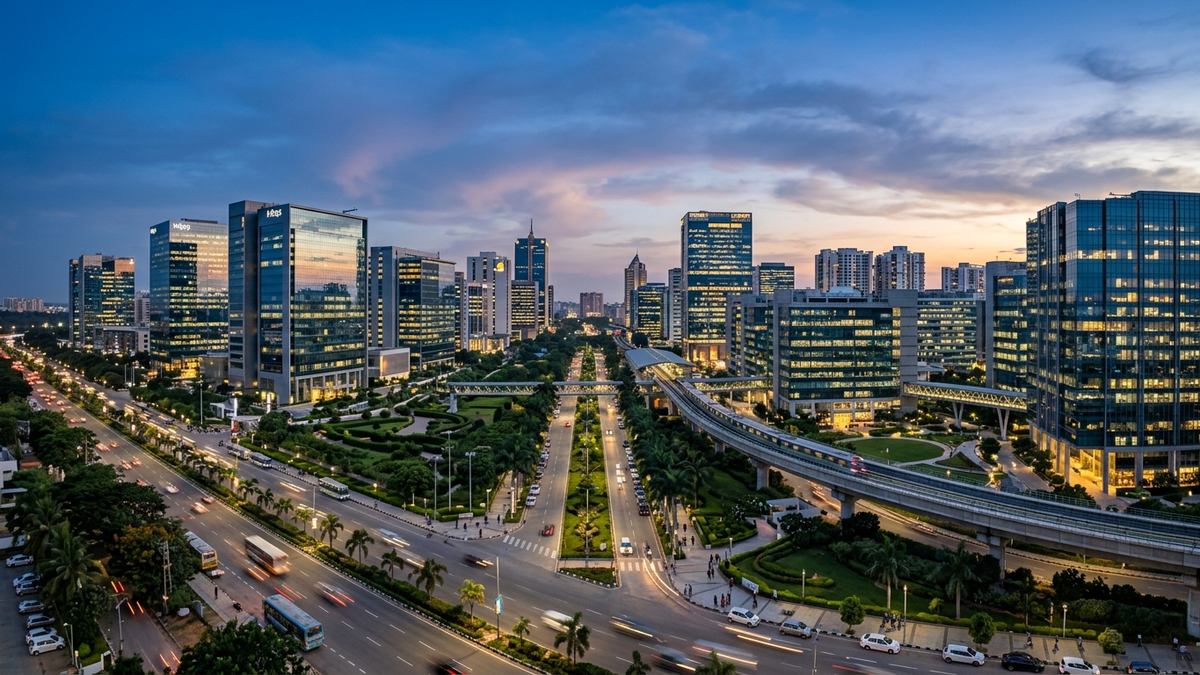
Bengaluru captured 43% of India's total technology funding, attracting roughly $4.4 billion during the first nine months of 2026 as deeptech and enterprise mega-rounds surged.
Bengaluru has solidified its dominance as India's premier technology and venture capital hub, attracting roughly $4.4 billion during the first nine months of 2026. According to the latest comprehensive venture capital tracking telemetry published by market intelligence platform Tracxn and industry data providers, the Karnataka capital accounted for a commanding 43% of all institutional technology financing deployed nationwide.
The city’s capital intake not only outstripped every other regional ecosystem but also surpassed the combined totals of India’s next two largest startup hubs—Mumbai, which secured $2.1 billion (21%), and the Delhi-National Capital Region (NCR), which attracted $1.9 billion (19%).
The Deeptech and Enterprise Pivot: Widening the Geographic Divide
While historical funding waves in 2021 were heavily characterized by consumer e-commerce burn and quick-commerce wars in Gurugram and Bengaluru, the 2026 investment landscape reflects a structurally mature pivot toward deep engineering moats, enterprise AI pipelines, and sovereign hardware.
Bengaluru's concentration of premier engineering institutions, global research facilities, and mature serial founders has made it the primary beneficiary of this institutional transformation. Mega-rounds in enterprise AI foundation architectures—such as Brahma AI's $150M unicorn financing—and orbital rocketry advances like Skyroot Aerospace's $300M funding talks have disproportionately drawn global capital into the southern corridor.
"Bengaluru is no longer competing merely with domestic hubs like Mumbai or Hyderabad; it is competing on global engineering velocity with Silicon Valley, Tel Aviv, and Shenzhen,"commented senior partners at a tier-one venture capital firm in Indiranagar. "Global LPs are directing capital to founders who can build defensible intellectual property in artificial intelligence, semiconductors, and industrial robotics. In India, Bengaluru possesses the dense talent mesh required to execute those visions."
Simultaneously, traditional e-commerce and retail enablement platforms have demonstrated capital discipline by preparing domestic public market listings, as evidenced by AceVector's initial public offering plans.
City-by-City Performance Matrix: India's 9M 2026 Venture Landscape
The structured benchmark table below highlights the distribution of technology venture capital across India's top startup clusters during the first nine months of 2026:
| Tech Hub / City | Total Capital Raised (9M 2026) | National Share (%) | Total Deal Volume | Average Deal Size | Dominant Capital Sectors |
|---|---|---|---|---|---|
| Bengaluru (Karnataka) | $4.4 Billion | 43.1% | 312 Deals | $14.1 Million | Enterprise AI, SpaceTech, SaaS, Semiconductor Tooling |
| Mumbai (Maharashtra) | $2.1 Billion | 20.6% | 174 Deals | $12.1 Million | FinTech, D2C Brands, Clean Energy, Logistics |
| Delhi-NCR (Gurugram/Noida) | $1.9 Billion | 18.6% | 188 Deals | $10.1 Million | Consumer Tech, Quick Commerce, EdTech, B2B Marketplaces |
| Hyderabad (Telangana) | $920 Million | 9.0% | 82 Deals | $11.2 Million | SpaceTech, BioTech / PharmaTech, Defense Systems |
| Chennai (Tamil Nadu) | $580 Million | 5.7% | 56 Deals | $10.4 Million | DeepTech SaaS, Electric Vehicles, Industrial Automation |
| Rest of India (Pune, Jaipur, etc.) | $380 Million | 3.0% | 48 Deals | $7.9 Million | AgriTech, Regional Gaming, EV Components |
Drivers of Bengaluru's Enduring Venture Moat
Three critical structural factors explain why Bengaluru’s share of total Indian tech investment expanded from 38% in 2024 to 43% in 2026:
- Global Capability Center (GCC) Symbiosis: Bengaluru is home to over 450 major multinational GCCs, creating an unparalleled talent flywheel. Senior architects and engineering directors from firms like Google, Microsoft, Emerson, and Intel frequently spin out to launch venture-backed deeptech startups.
- Capital Consolidation in Late-Stage Rounds: Institutional crossover investors like Fidelity, Temasek, and General Catalyst have prioritized companies with clear path-to-profitability and verified revenue, where Bengaluru maintains an overwhelming concentration of market leaders.
- Physical R&D and Prototyping Infrastructure: Beyond software, Bengaluru has emerged as the epicentre of physical testing and industrial instrumentation, underscored by expansions such as Emerson's 50% R&D scale-up in the city.
Funding Stage Dynamics: 9M 2026 Trends
Across the $4.4 billion raised in Bengaluru, early-stage seed rounds accounted for $480 million across 160 deals, demonstrating robust grassroots founder formation. Series A and Series B rounds captured $1.65 billion across 98 deals, representing healthy progression through the product-market fit gauntlet. Late-stage Series C+ and pre-IPO growth rounds absorbed the largest slice at $2.27 billion across 54 mega-financings.
Macroeconomic Outlook and Path to 2027
As global interest rate environments stabilize and domestic institutional allocators increase their exposure to private equity via SEBI-registered Alternative Investment Funds, India’s annual venture investment is on track to cross $14 billion in 2026.
Bengaluru's commanding 43% share underscores that the city remains the quintessential engine of India's knowledge economy. With robust pipelines in sovereign AI, aerospace, and high-value software, the city's tech ecosystem continues to command the confidence of the world's most discerning capital allocators.
Frequently Asked Questions
How much technology funding did Bengaluru attract in the first nine months of 2026?
According to comprehensive data compiled by market intelligence platforms including Tracxn, Bengaluru attracted approximately $4.4 billion in venture and growth capital during the first nine months of 2026, accounting for 43% of all tech funding in India.
How does Bengaluru's capital deployment compare with other major Indian startup hubs?
Bengaluru comfortably outpaced all other Indian hubs. Mumbai secured approximately $2.1 billion (around 21%), while the Delhi-National Capital Region (NCR) registered $1.9 billion (roughly 19%). Bengaluru's total exceeded the combined funding of Mumbai and Delhi-NCR.
Which technology sectors drove Bengaluru's funding leadership?
The dominant growth sectors were Enterprise AI & Foundation Infrastructure, Aerospace & DeepTech Hardware, Fintech & B2B Payments, and Software-as-a-Service (SaaS). Consumer tech rounds were more conservative, emphasizing strict unit profitability.
What structural factors maintain Bengaluru's venture moat?
Bengaluru houses over 40% of India's top engineering talent, hosts the highest concentration of global capability centers (GCCs) and deeptech R&D facilities, and maintains the most mature network of angel syndicates and global tier-one VC offices.
Primary Sources & Official References
- Tracxn India Tech 9M 2026 Geo-Report: Capital Allocation & Hub Velocity Analysis: Comprehensive database reporting investment volume, deal multiples, and regional distributions.
- Indian Venture and Alternate Capital Association (IVCA) & EY: Private Equity and Venture Capital Quarterly Review: Industry survey on institutional investor sentiment, exits, and late-stage capital trends.
- Department for Promotion of Industry and Internal Trade (DPIIT): National Startup Database & Recognized Entity Trends: Ministry of Commerce telemetry tracking corporate formations, DPIIT certificates, and startup employment figures.
- Reserve Bank of India (RBI): Foreign Direct Investment Inflows & Technology Sector Foreign Inward Remittance Bulletin: Official macroeconomic data monitoring inward venture remittances and overseas balance sheet funding.