Skyroot in Talks for Up to $300M Funding
By Meera Krishnan | Published September 25, 2026 | 9 min read
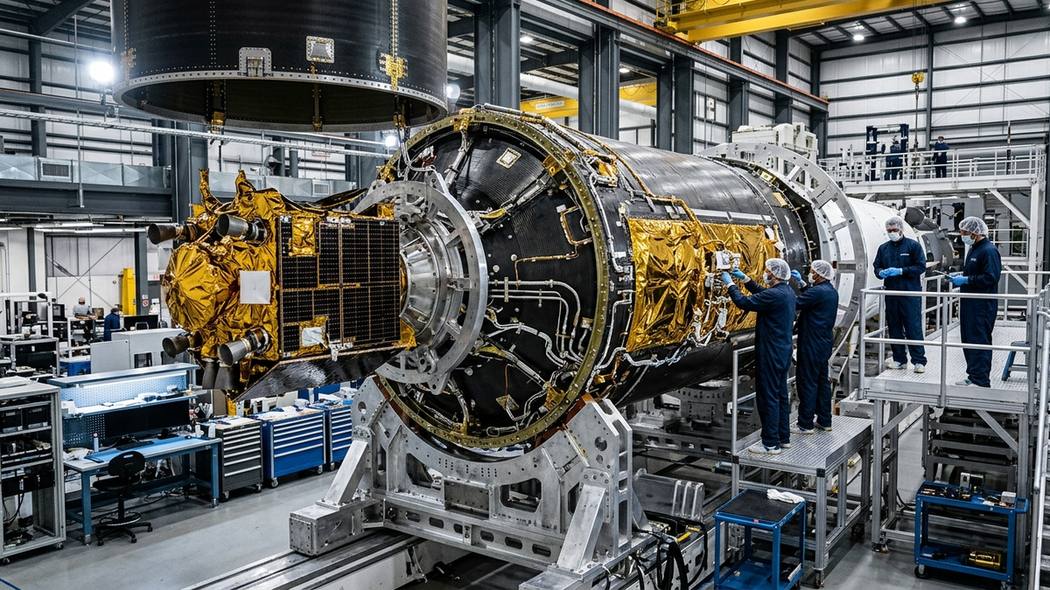
Hyderabad-based space-tech startup Skyroot Aerospace is reportedly in advanced discussions to raise $280–300 million from global investors led by Fidelity, valuing the company at $3B.
Hyderabad-headquartered spacetech pioneer Skyroot Aerospace is in advanced negotiations to raise between $280 million and $300 million in a blockbuster financing round that will elevate the company's valuation to between $2.8 billion and $3.0 billion. The funding round, one of the largest private capital infusions into the global commercial spacetech sector this year, is reportedly anchored by premier global asset manager Fidelity alongside prominent venture firms General Catalyst and Benchmark.
If finalized, the transaction will represent a defining moment for India's burgeoning private space economy. Notably, the inclusion of Silicon Valley institution Benchmark marks the legendary firm’s first-ever direct balance sheet investment in an Indian startup, underscoring how Indian deeptech has evolved from cost-arbitrage software services to premier sovereign hardware innovation.
The Vikram-1 Orbital Catalyst: From Proof-of-Concept to Commercial Fleet
The dramatic acceleration in Skyroot’s valuation—vaulting from $1.1 billion during its $60 million round in May 2026 to near $3 billion today—was triggered by the flawless orbital flight of Vikram-1 on July 18, 2026.
Launching from the Satish Dhawan Space Centre in Sriharikota under IN-SPACe authorization, Vikram-1 accomplished every key flight milestone:
- Carbon-Composite Airframe Rigidity: Validation of the ultra-lightweight, 3D-wound carbon-fiber composite motor casings under maximum dynamic pressure (Max-Q).
- Staged Solid-Rocket Propulsion: Flawless burn profiles across all three solid propellant stages, utilizing proprietary propellant chemistry developed in Hyderabad.
- Raman-II Liquid Upper-Stage Insertion: Multi-ignition restart of the 3D-printed bi-propellant upper stage, placing multiple customer commercial micro-satellites into a precise 280-mile (450 km) Low Earth Orbit (LEO).
"Before Vikram-1 reached orbit, private rocketry outside the United States was viewed by international capital as high-risk engineering speculation,"said an aerospace investment partner familiar with the syndicate. "The July launch proved that Skyroot’s lean manufacturing processes, in-house solid motor casting, and additive manufacturing deliver orbital capability at less than half the capital intensity of Western counterparts. Investors are no longer waiting on technical milestones; they are competing for allocation."
This flight validation aligns with broader deeptech engineering rigor across India's innovation corridor, where deterministic testing and low-level systems engineering—exemplified by platforms like ByteAsk's mission-critical embedded software agents—are rewriting development economics.
Investor Syndicate Breakdown: Landmark Validation
The composition of the investment syndicate reflects rare global institutional harmony across sovereign wealth, mutual funds, and top-tier venture capital:
- Fidelity Management & Research ($170M–$190M): The Boston-based asset management titan is anchoring the round with substantial late-stage growth capital, mirroring its early, defining bets on SpaceX. Fidelity’s participation provides Skyroot with long-term crossover balance sheet stability ahead of an eventual public listing.
- General Catalyst ($70M–$80M): Known for backing critical national security and industrial resilience technologies, General Catalyst continues to expand its Indian footprint following its merger with Venture Highway.
- Benchmark ($20M–$30M): Long celebrated for its highly concentrated, hands-on early-stage model in Silicon Valley (backing Uber, eBay, Twitter, and Snap), Benchmark has historically avoided international branch offices or direct Indian startup investments. Its entry into Skyroot marks an unprecedented strategic endorsement.
Commercial Orbital Launch Vehicle Competitive Matrix
The structured comparison table below evaluates Skyroot’s Vikram launch platform against leading international small-satellite launch vehicles:
| Launch Vehicle | Manufacturer / Country | Payload Capacity to LEO (500 km) | Propulsion Architecture | Estimated Launch Price per Mission | Operational Status |
|---|---|---|---|---|---|
| Vikram-1 | Skyroot Aerospace (India) | 300 kg – 480 kg | 3-Stage Solid + Liquid Upper Stage | ~$4.5M – $5.0M | Operational (Orbital Proven) |
| Vikram-2 (In Dev) | Skyroot Aerospace (India) | 600 kg – 800 kg | Cryogenic Liquid LNG/LOX Upper | ~$7.0M | Targeting 2027 Maiden Flight |
| Electron | Rocket Lab (USA / New Zealand) | 300 kg | 2-Stage Liquid (Electric Rutherford) | ~$7.5M – $8.5M | Operational (High Cadence) |
| Alpha | Firefly Aerospace (USA) | 1,000 kg | 2-Stage Liquid (Reaver / Lightning) | ~$15.0M | Operational |
| SSLV | ISRO (India) | 500 kg | 3-Stage Solid + Velocity Trimming Module | ~$4.0M – $4.5M | Operational (Government) |
Capital Deployment: Industrializing Orbital Flight
The $300 million capital infusion will be allocated across three mission-critical operational pillars:
1. Serial Rocket Production & Gigafactory Buildout: Transitioning from bespoke artisan assembly to continuous automated production at the Skyroot MAX-Q manufacturing campus in Hyderabad, targeting an output cadence of one completed Vikram rocket every 30 days.
2. Propulsion Testing Infrastructure: Expanding private static test firing stands, cryogenic fluid handling facilities, and vacuum test chambers in southern India to eliminate testing backlogs.
3. Global Launch Pad Partnerships: While launching primarily from ISRO's spaceport in Sriharikota, Skyroot is evaluating launch agreements with international spaceports in Australia (Equatorial Launch Australia) and the North Sea to offer varied orbital inclinations for international constellation operators.
The Macro Horizon: India's Space Economy Targets $44B
India's commercial space sector has entered an aggressive growth trajectory following the 2023 National Space Policy and progressive regulatory deregulation enacted by IN-SPACe. With global satellite operators seeking resilient alternatives to congested European and American launch manifests, Skyroot is positioned to capture substantial international market share.
At a $3 billion valuation, Skyroot not only solidifies its standing as India's premier spacetech unicorn but also establishes a new valuation ceiling for Asian commercial rocketry. The company's rapid progress proves that Indian private enterprise can design, manufacture, and commercialize orbital space flight at a fraction of global development costs.
Frequently Asked Questions
What is the reported size and valuation of Skyroot Aerospace's new funding round?
Skyroot Aerospace is in advanced discussions to secure between $280 million and $300 million. The mega-round is expected to value the Hyderabad-based spacetech startup at approximately $2.8 billion to $3.0 billion, up from $1.1 billion achieved earlier in May 2026.
Which prominent international venture funds and asset managers are leading the round?
The financing is reportedly led by Fidelity Management & Research, which is contributing $170–$190 million, alongside General Catalyst committing $70–$80 million, and legendary Silicon Valley venture firm Benchmark deploying $20–$30 million.
Why is Benchmark's participation considered historic for the Indian startup ecosystem?
Benchmark has traditionally maintained a concentrated, domestic investment thesis and previously avoided making direct investments in Indian companies. Its direct participation in Skyroot marks its maiden bet in India, signaling international institutional validation of Indian deeptech engineering.
What operational milestone catalyzed this massive investor interest?
The surge in investor demand followed the successful launch and orbital payload insertion of Vikram-1 on July 18, 2026. Proving end-to-end orbital insertion, stage separation, and 3D-printed cryogenic upper-stage relight shifted Skyroot from an experimental laboratory to an operational commercial launch provider.
Primary Sources & Official References
- Indian National Space Promotion and Authorization Centre (IN-SPACe): Commercial Orbital Launch Authorization Telemetry: Regulatory documentation detailing flight authorizations, safety clearances, and launch permits.
- ISRO Commercial Launch Registry: Small Satellite Launch Vehicle (SSLV) & Private Orbit Insertion Records: Official flight registries tracking private orbital insertions and launch vehicle performance.
- Skyroot Aerospace Corporate Investor Presentation: Vikram Series Launch Manifest & Infrastructure Scaling: Executive telemetry on manufacturing throughput, payload delivery SLAs, and capital expenditure roadmaps.
- PitchBook & Space Capital: Global Space Launch Vehicle Valuation Multiple & Private SpaceTech Index: Institutional research covering private aerospace venture valuations, launch unit economics, and capital flow.