Demoverse Raises $600K for AI-Powered Product Creation
By Meera Krishnan | Published September 24, 2026 | 7 min read
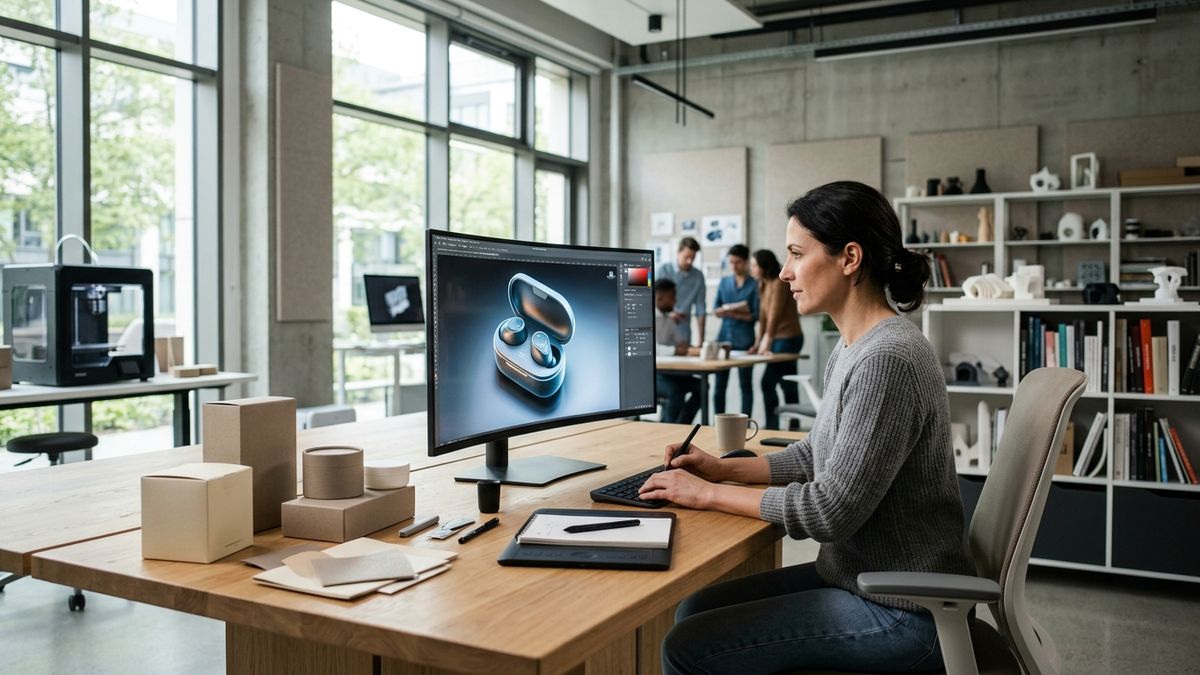
Indian AI venture Demoverse secures $600,000 in seed capital to expand its collaborative generative platform allowing consumer brands to co-create and validate products.
Indian artificial intelligence startup Demoverse has successfully raised $600,000 in seed funding to expand its cutting-edge collaborative product creation and market validation platform. The round drew participation from early-stage venture funds, seasoned direct-to-consumer (D2C) founders, and deeptech angel investors. Demoverse plans to utilize the capital injection to expand its engineering team, scale its proprietary 3D neural generation engines, and onboard leading enterprise consumer brands across fashion, beauty, packaging, and lifestyle goods.
In today's hyper-competitive consumer marketplace, bringing a new physical product to shelf remains a fraught, expensive, and protracted process. Brands routinely invest months and hundreds of thousands of dollars in physical sampling, focus groups, and pilot manufacturing runs—only to discover that customer reception falls short of expectations. Demoverse tackles this systemic inefficiency head-on by integrating generative AI with real-time consumer co-creation.
De-Risking Product Launches Through Virtual Co-Creation
The traditional retail product development lifecycle averages anywhere from 12 to 24 weeks. Industrial designers develop initial CAD models, factories produce physical prototype samples, logistics carriers ship iterations back and forth across continents, and marketing teams conduct backward-looking surveys.
Demoverse fundamentally compresses this cycle into a matter of days. By harnessing text-to-3D diffusion architectures, interactive real-time neural rendering, and predictive consumer analytics, the platform allows brands to generate interactive virtual prototypes that consumers can customize, critique, and pre-order in a hyper-realistic digital sandbox.
"The future of consumer brands belongs to continuous, data-driven validation before a single physical unit is manufactured,"remarked retail technology investors following the funding announcement. "Demoverse replaces guesswork and intuition with definitive, upfront consumer voting and behavioral telemetry, safeguarding brand balance sheets from inventory waste."
This paradigm shift aligns closely with how fast-scaling retail brands are leveraging technology to optimize unit economics, as examined in our coverage of D2C brand expansion strategies across Indian omnichannel retail.
The Demoverse Architecture: From Prompt to Verified Pre-Order
The Demoverse software suite operates as an end-to-end virtual product incubator featuring three core technical layers:
- Generative Neural Prototyping: Brands input functional specifications, aesthetic preferences, and material constraints. The AI engine instantly generates photorealistic 3D interactive models, including physical surface textures, lighting reflections, and ergonomic dimensions.
- Consumer Co-Creation Sandbox: Target consumer cohorts are invited to customize colors, textures, and features in an engaging browser-based web experience without requiring specialized 3D software or virtual reality headsets.
- Predictive Demand & Willingness-to-Pay Scoring: As consumers interact with the digital concepts, the platform captures granular behavioral signals—dwell times, feature alterations, price sensitivity thresholds, and pre-order intent—translating raw telemetry into an algorithmic commercial viability score.
Comparison: Traditional Product Pipeline vs. Demoverse AI Co-Creation
The following structured table highlights the dramatic efficiency gains achieved through AI-native product validation:
| Operational Metric | Traditional Physical Development | Demoverse AI-Powered Platform | Measurable Improvement |
|---|---|---|---|
| Concept-to-Design Turnaround | 60 to 90 Days | 48 to 72 Hours | 95% reduction in cycle time |
| Physical Prototype Cost | $5,000 – $25,000 per iteration | < $150 per digital twin set | 90%+ Capex cost savings |
| Validation Sample Size | 20 – 50 focus group participants | 5,000 – 25,000 verified consumers | 200x broader statistical power |
| Inventory Overproduction Risk | 30% – 45% dead stock write-down | Minimized via pre-committed demand | Up to 40% margin protection |
| Design Revision Agility | 3 – 4 weeks per physical tooling change | Real-time parametric software updates | Instantaneous iteration |
Expanding Use Cases Across Fashion, Cosmetics, and Electronics
Demoverse is experiencing strong organic traction among fast-moving consumer goods (FMCG) conglomerates and venture-backed D2C brands:
- Beauty & Personal Care: Rapidly testing packaging aesthetics, applicator designs, and sustainable refill containers prior to tooling multi-million-unit production molds.
- Fashion & Accessories: Allowing community followers to vote on seasonal color palettes, fabric textures, and silhouette styles, producing only the verified winning SKUs.
- Consumer Hardware & Gadgets: Evaluating industrial enclosure ergonomics, button placements, and accessory finishes among tech enthusiasts before committing to injection-molding tooling.
Strategic Roadmap and Ecosystem Impact
With the $600,000 seed round secured, Demoverse is preparing to release automated factory export plugins. These integrations will automatically translate validated virtual prototypes into standardized STEP, OBJ, and CAD files ready for immediate CNC machining and 3D printing.
By democratizing product validation and aligning manufacturing output with authentic consumer desire, Demoverse is laying the groundwork for a more agile, profitable, and ecologically sustainable consumer products ecosystem.
Frequently Asked Questions
What core problem does Demoverse solve for consumer and D2C brands?
Demoverse eliminates the expensive, slow trial-and-error cycle of physical product manufacturing. Historically, brands spend tens of thousands of dollars and months creating physical molds and packaging samples that may ultimately fail in the market. Demoverse enables brands to generate photorealistic digital prototypes and validate demand with target consumers prior to tooling.
How does the Demoverse consumer co-creation workflow operate?
Brands input design prompts, product specifications, and target audience parameters. Demoverse's generative design engine produces interactive 3D virtual prototypes and digital twins. Real consumers then interact with, customize, vote on, and pre-order concepts, delivering statistically verified demand data.
Who participated in Demoverse's $600K funding round and how will funds be deployed?
The seed round was backed by prominent early-stage venture capital funds, consumer brand founders, and angel syndicates. Capital is earmarked for expanding proprietary 3D neural generation research, growing the brand onboarding sales pipeline, and scaling community engagement tools.
How does pre-manufacturing AI validation impact inventory risk?
By identifying winning variants, packaging designs, and pricing thresholds before mass manufacturing runs, brands reduce inventory write-offs and dead stock by up to 45%, directly boosting operating gross margins.
Primary Sources & Official References
- Demoverse Inc.: Official Seed Funding & Platform Telemetry Release: Company announcement on seed financing, product architecture, and enterprise pilot results.
- Venture Intelligence: Q3 2026 Indian Consumer-Tech and AI Seed Stage Investment Tracker: Comprehensive transaction record of deeptech and generative AI seed rounds.
- Bain & Company: Generative AI in Consumer Goods & Rapid Prototyping Report: Research on digital product twins and accelerated go-to-market cycles.
- Federation of Indian Chambers of Commerce & Industry (FICCI): D2C Product Lifecycle Benchmarks: Industry data detailing average inventory write-downs and tooling costs in Indian retail.