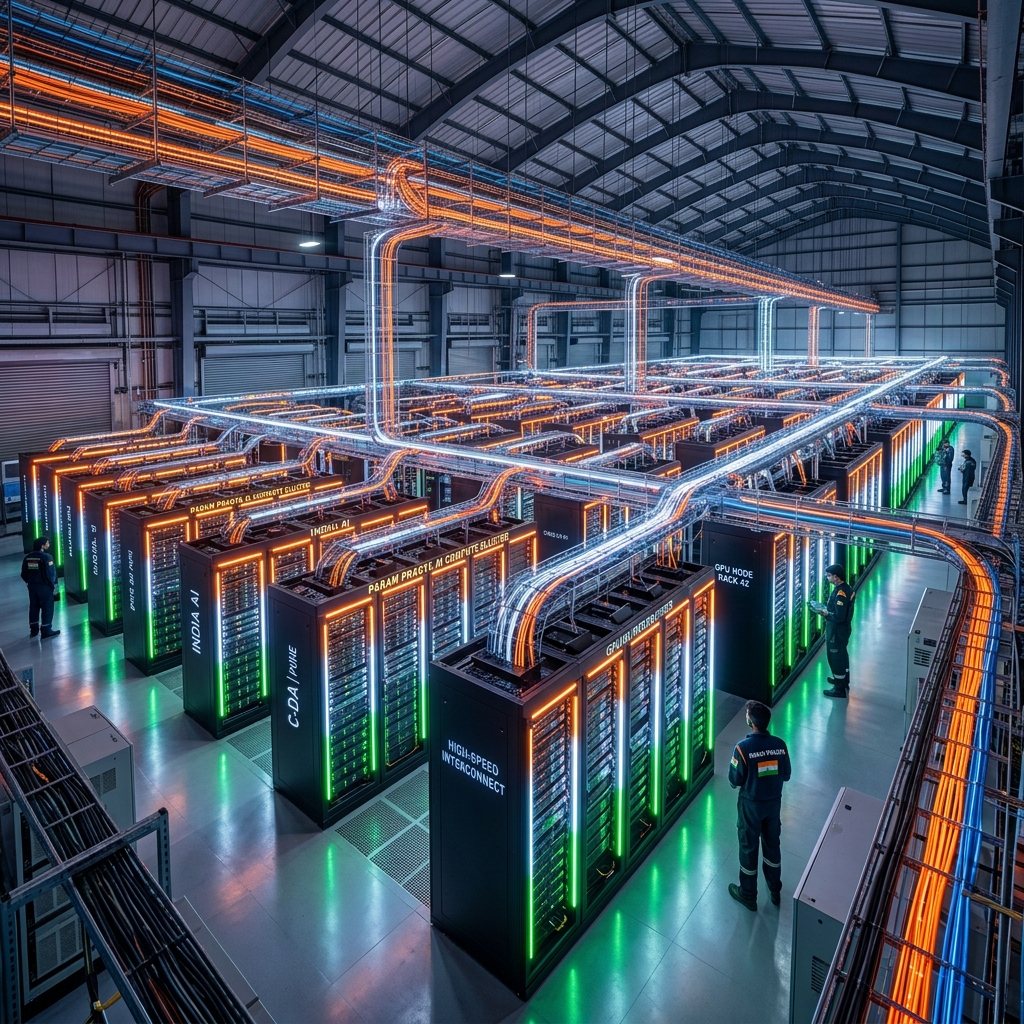
India Accelerates Sovereign AI Push with Expanded Param Pragya Supercomputing Infrastructure
By Ishaan Verma | Published August 12, 2026 | 6 min read
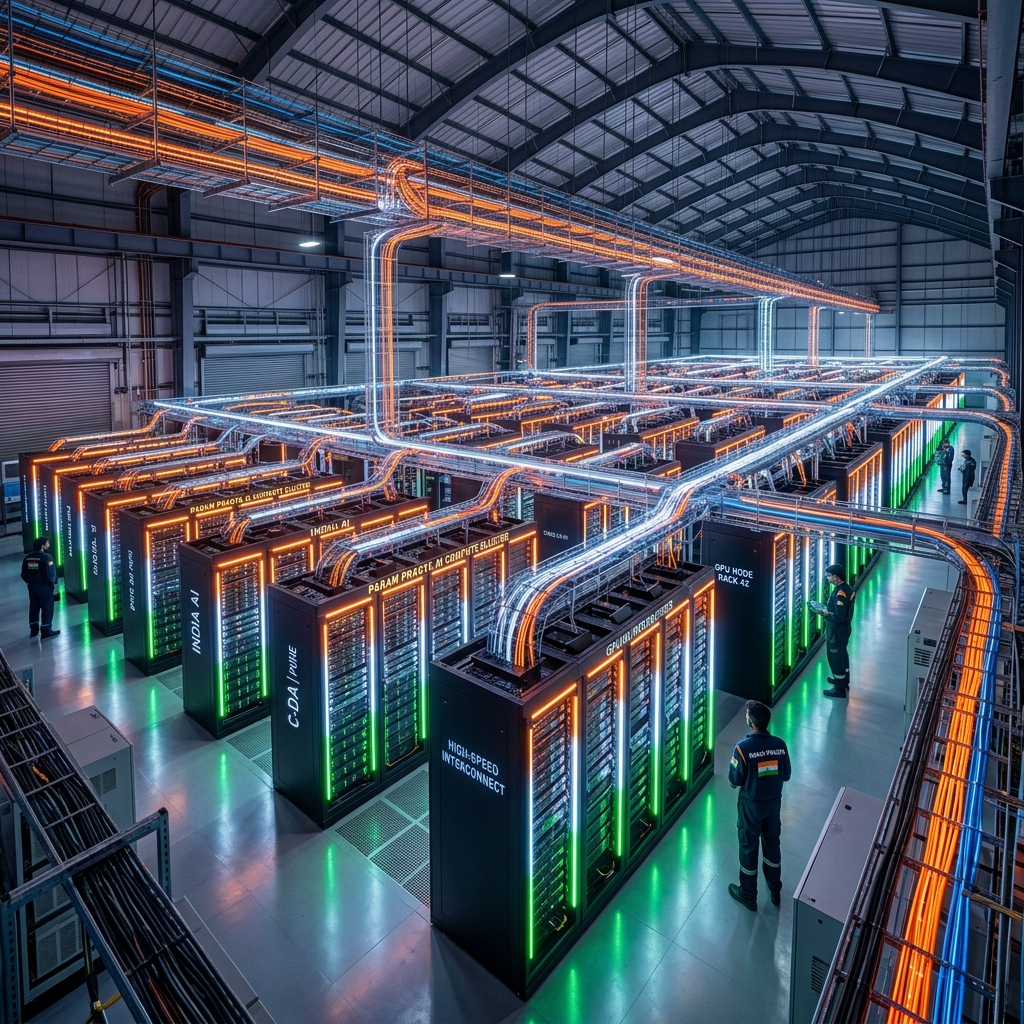
India scales Param Pragya supercomputing infrastructure and homegrown AI compute clusters, empowering domestic researchers and deeptech startups.
India is making major strides toward achieving self-reliance in high-performance computing (HPC) and artificial intelligence infrastructure, highlighted by the expansion of the Param Pragya supercomputing cluster under the National Supercomputing Mission (NSM).
Spearheaded by the Centre for Development of Advanced Computing (C-DAC) in collaboration with the Indian Institute of Science (IISc), Param Pragya has been upgraded with state-of-the-art indigenous liquid-cooled compute nodes, high-bandwidth interconnects, and dedicated GPU accelerators.
The initiative provides sovereign, low-cost compute access to Indian AI startups, university researchers, defense laboratories, and climate scientists.
Intent-First Sovereign AI Strategy and National Compute Grid
The drive toward sovereign AI infrastructure stems from the realization that computational independence is vital for national technological sovereignty. Relying entirely on foreign public cloud providers for AI model training exposes domestic enterprises to geopolitical supply chain risks, high foreign exchange outlays, and data localization concerns.
Through the Param Pragya infrastructure upgrade, Indian AI founders can train multi-billion parameter foundation models tuned specifically for Indic languages, specialized healthcare diagnostics, agricultural forecasting, and defense modeling locally within sovereign borders.
"Sovereign compute is the foundational bed-rock of AI independence. With Param Pragya and our national supercomputing grid, we are ensuring that Indian researchers and startups have the compute horsepower needed to build world-class AI models right here in India."
"— Prof. M. S. Raghunathan, Director of Supercomputing Infrastructure, C-DAC"
Param Pragya Upgrade Specs & Compute Allocation Matrix
The table below presents the technical specifications and workload allocation across the expanded Param Pragya supercomputer ecosystem:
| Architectural Component | Initial Spec (Phase I) | Upgraded Param Pragya (Phase II) | National Research Benchmark |
|---|---|---|---|
| Peak Computational Capacity | 3.0 Petaflops | 14.5 Petaflops (AI Compute) | Top 100 Global Supercomputers |
| GPU Acceleration Pods | 80 Enterprise GPUs | 480 High-Bandwidth AI Accelerators | Optimized for LLM & Physics |
| Interconnect Speed | 100 Gbps Trinetra | 400 Gbps Indigenous Optic Fabric | Sub-microsecond latency |
| Primary Domain Allocation | Climate & Molecular Dynamics | Indic LLMs, GenAI, Semiconductor Design | 45% capacity reserved for startups |
Empowering Indic Language LLMs & Deeptech Startups
A primary beneficiary of the Param Pragya compute allocation is India's ecosystem of open-source Indic AI foundation model builders. Startups developing foundational models for Hindi, Tamil, Telugu, Bengali, Marathi, and Kannada are utilizing Param Pragya's multi-petaflop clusters to execute multi-week pre-training runs without incurring prohibitively expensive cloud bills.
Furthermore, as reported in our analysis of PM Modi highlighting deeptech innovation support, the government plans to establish ten additional Param-series supercomputing centers across tier-2 academic institutes by late 2027.
Technological Self-Reliance Outlook
The successful scaling of Param Pragya positions India as a leader in sovereign compute infrastructure among developing nations. By combining indigenous hardware engineering, open-source AI models, and subsidized compute grants for young innovators, India is laying the foundation for long-term tech independence in the global artificial intelligence economy.