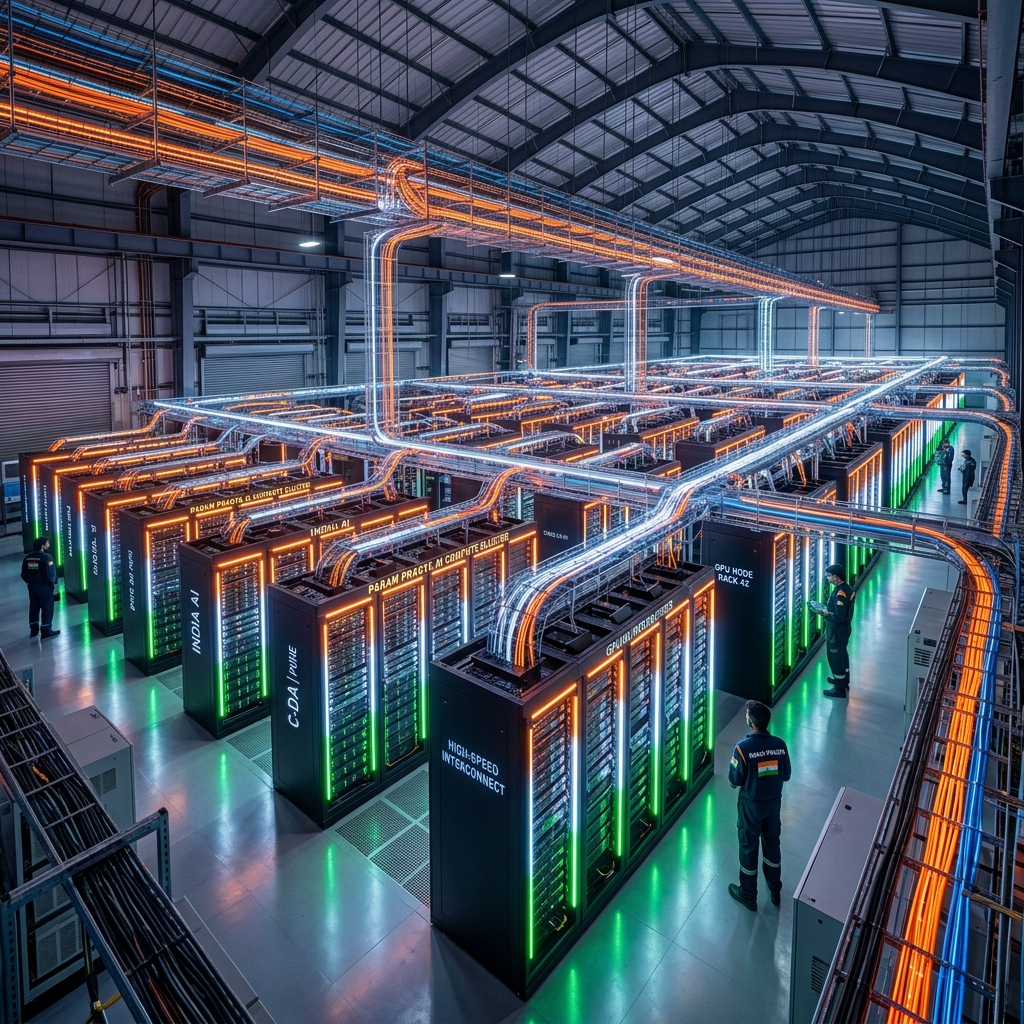
Sovereign Compute Bottleneck: India’s AI Ambitions Challenge Domestic Chip & GPU Infrastructure Supply
By Rohan Varma | Published August 12, 2026 | 7 min read
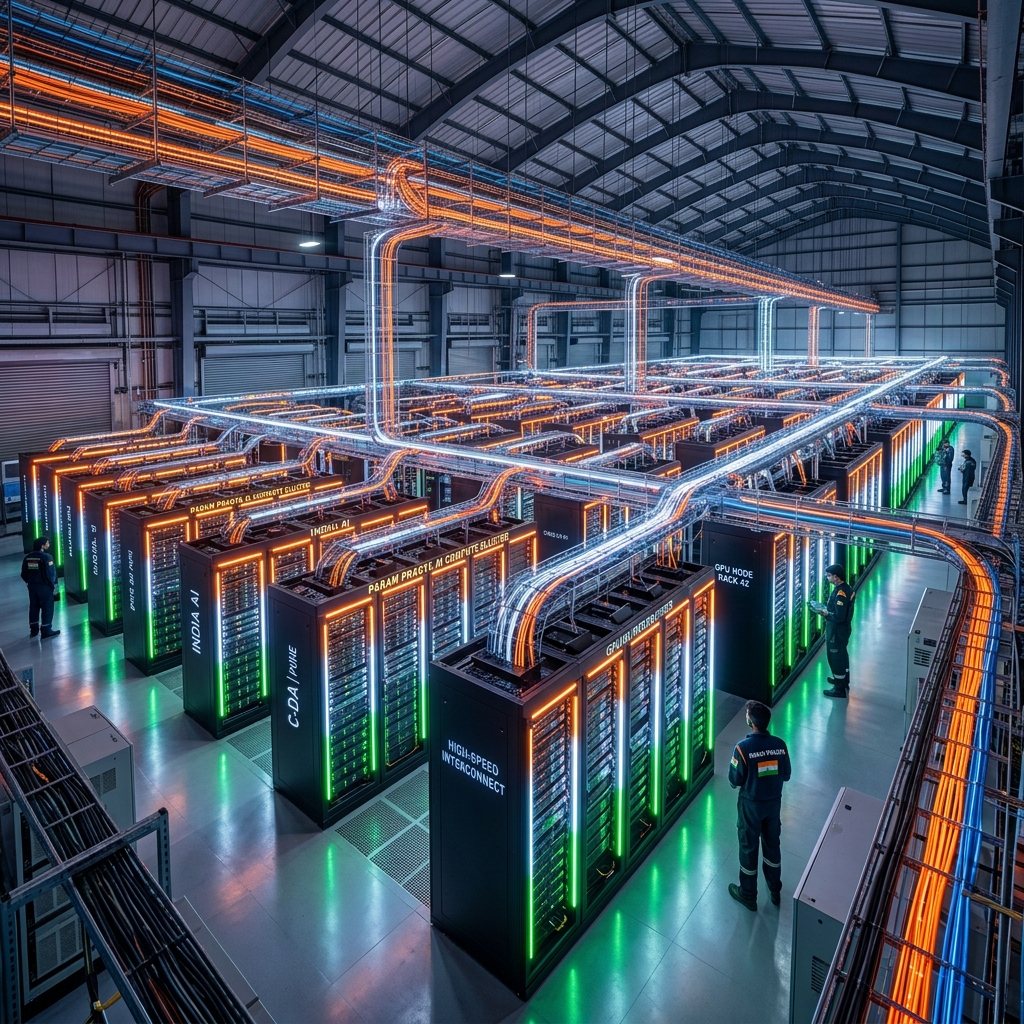
As demand for AI model training soars, India faces GPU supply constraints, pushing government and private sectors toward indigenous compute hardware.
As India accelerates its national drive to establish sovereign artificial intelligence capability, technology leaders, researchers, and venture capitalists are pointing to a critical bottleneck threatening the country's AI ambition: a severe domestic shortage of high-performance GPU compute clusters and sovereign silicon infrastructure.
While India boasts an unmatched developer base of over 13 million programmers, local access to enterprise-grade AI training hardware—such as NVIDIA H100, H200, and Blackwell GPU clusters—remains heavily constrained. Most Indian AI startups and university labs are forced to rent expensive cloud compute from overseas data centers in Singapore, Europe, or the United States, driving up capital burn rates and introducing latency challenges.
Intent-First Infrastructure Crisis and Capital Outflows
The compute deficit comes at a time when foundational model training and enterprise AI deployment require massive computational clusters running continuously for weeks. A single pre-training run for a 70-billion parameter Indic language LLM requires thousands of interconnected high-bandwidth GPUs and liquid-cooled data center facilities.
Industry estimates reveal that Indian AI startups spend over 40% of their total venture capital funding on foreign cloud compute providers, creating significant capital flight out of the domestic tech ecosystem.
"Data is the new oil, but compute is the refinery. If India does not rapidly build domestic GPU clusters and sovereign semiconductor fabrication facilities, our AI startups will remain dependent on foreign infrastructure providers."
"— Dr. S. K. Narayanan, Director of National Compute Grid Initiative"
India AI Compute Infrastructure Gap Analysis
The table below contrasts India's current AI compute infrastructure availability against global benchmarks and target 2027 national goals under the IndiaAI Mission:
| Compute Parameter | Current Domestic Status (2026) | Target National Benchmark (2027) | Global Leader Benchmark (US/China) |
|---|---|---|---|
| Enterprise GPUs Installed | ~22,000 GPUs (Public & Private) | 100,000+ Sovereign GPUs | 1,500,000+ Active GPUs |
| Max Cluster Size | 2,048 Interconnected GPUs | 16,384 Interconnected GPUs | 100,000+ Interconnected Cluster |
| Avg. Compute Cost / GPU Hr | $3.80 – $4.50 (Overseas Cloud) | $1.50 – $2.00 (Subsidized National Grid) | $1.20 – $1.80 (Localized Power) |
| Sovereign Chip Design | RISC-V prototypes & fabless design | Indigenous AI NPU tape-outs | Commercial AI accelerator dominance |
Public & Private Sector Countermeasures: The IndiaAI Mission
To address the shortage, the Indian Ministry of Electronics and Information Technology (MeitY) has initiated the IndiaAI Compute Capacity Pillar under the ₹10,372 crore IndiaAI Mission. The government is issuing public tenders to contract 10,000+ GPUs to be made available to domestic researchers and startups at heavily subsidized rates.
Simultaneously, data center titans such as Yotta Data Services, AdaniConnex, Reliance Jio, and Tata Communications are investing billions to establish mega AI data centers in Navi Mumbai, Greater Noida, and Hyderabad equipped with direct liquid cooling (DLC) architectures.
Furthermore, deeptech semiconductor initiatives—such as Gujarat launching RISC-V LoRa semiconductor chip fabrication and IIT Delhi expanding fabless chip design labs—aim to develop homegrown AI accelerator chips over the next 3 to 5 years.
Strategic Outlook for National AI Independence
While private data center build-outs will significantly ease GPU availability by late 2027, experts emphasize that long-term strategic independence requires domestic fabless chip design ecosystems and local energy infrastructure to power energy-intensive AI compute clusters.