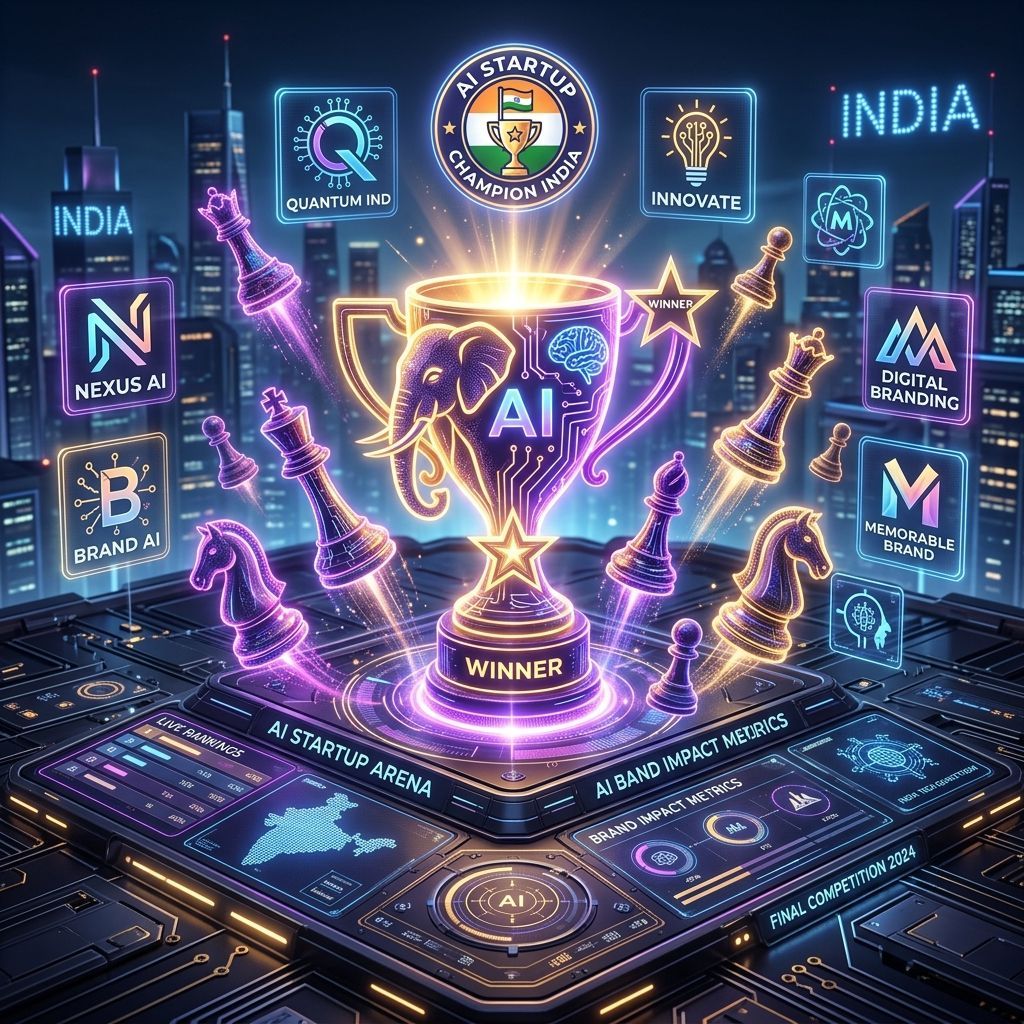
With innovation booming, AI companies are now competing to build memorable brands—not just better products.
Executive Key Takeaways
- With innovation booming, AI companies are now competing to build memorable brands—not just better products.
- Key Benchmark: **Primary Differentiator** — Model accuracy & feature speed
- While early AI success was defined by product speed and raw model performance, long-term category leaders are winning through brand equity, enterprise trust, and emotional resonance.
India's artificial intelligence boom has produced hundreds of feature-rich products over the past two years. However, as core technological capabilities homogenize thanks to shared underlying foundation models, AI startups are encountering a novel challenge: building a defensible, memorable brand.
While early AI success was defined by product speed and raw model performance, long-term category leaders are winning through brand equity, enterprise trust, and emotional resonance.
The Paradigm Shift: From Product Features to Brand Loyalty
In traditional SaaS, product features and technical moat could protect a startup for years. In AI, wrapper products and incremental feature additions are easily replicated within weeks.
| Dimension | Product-Centric Era (2023-2024) | Brand-Centric Era (2025-2026) |
|---|---|---|
| Primary Differentiator | Model accuracy & feature speed | Trust, brand identity, & domain authority |
| Customer Retention Driver | API pricing & latency | Ecosystem integration & brand affinity |
| Marketing Focus | Benchmark scores & technical specs | Customer success stories & thought leadership |
| Moat Defense | Proprietary prompts | Institutional credibility & mindshare |
| Sales Cycle | Bottom-up developer trials | Top-down C-suite relationship building |
The 4 Pillars of a Memorable AI Brand
To stand out in an increasingly crowded market, leading Indian AI startups are executing on four crucial branding strategies:
1. Radical Transparency & Security Trust
Enterprise buyers remain cautious about data privacy, model hallucinations, and compliance. Brands that lead with ISO certifications, SOC-2 compliance, and transparent data usage policies build immediate enterprise trust.
2. Founder-Led Thought Leadership
In high-tech sectors, founders who regularly publish technical breakdowns, white papers, and industry perspectives build authentic trust. Customers buy into the vision of the founder as much as the software.
3. Vertical Domain Specialization
Generic "AI assistant" tools struggle to build strong brand identities. Startups that brand themselves as the definitive AI platform for specific verticals (e.g., "AI for Legal Discovery" or "AI for Automotive Design") capture dominant market mindshare.
4. Human-Centric UI & Design Aesthetics
Visual design, intuitive micro-interactions, and premium aesthetics set top-tier AI tools apart from raw developer utilities. A sleek interface signals quality and enterprise readiness.
Brand Strength vs. Market Adoption Across AI Sectors
A survey of enterprise buyers evaluating Indian AI software reveals how brand perception impacts contract value:
| AI Category | High Brand Mindshare Startups | Commodity / Unbranded Tools | Valuation Premium for Top Brands |
|---|---|---|---|
| Enterprise Customer Care AI | $450k Avg ACV | $65k Avg ACV | 6.9x |
| Financial Risk & Compliance AI | $620k Avg ACV | $95k Avg ACV | 6.5x |
| Developer Productivity & Code AI | $180k Avg ACV | $35k Avg ACV | 5.1x |
| Healthcare Diagnostics AI | $380k Avg ACV | $80k Avg ACV | 4.75x |
Conclusion
As the Indian AI ecosystem matures, tech talent alone is no longer a sufficient barrier to entry. AI founders must invest in brand identity, enterprise storytelling, and customer trust from day one to build generational companies.