India’s Semiconductor Push Creates New Supply-Chain Opportunities
By Sanjay Patel | Published September 26, 2026 | 8 min read
India's chip ambitions expand beyond mega-fabs, unlocking a $15B ancillary supply-chain market in specialty chemicals, high-purity gases, and substrates.
India's semiconductor mission has reached an inflection point, expanding its strategic focus from headline-grabbing wafer fabrication facilities toward the foundational, multi-billion-dollar ancillary supply chain. While commercial fabrication plants like the Tata-PSMC facility in Dholera and advanced packaging (ATMP) units in Sanand and Morigaon represent essential milestones, industry analysts and government policymakers recognize that true semiconductor sovereignty requires an unshakeable domestic network of specialty chemical suppliers, electronic gas refiners, precision substrate manufacturers, and automated testing equipment vendors.
According to joint estimates by the India Electronics and Semiconductor Association (IESA) and global industry bodies, the addressable market for semiconductor materials, chemicals, and ancillary manufacturing components in India is projected to exceed $15 billion by 2030, offering massive diversification opportunities for Indian industrial conglomerates and specialized chemical manufacturers.
The Hidden Complexity of Semiconductor Chemistry and Materials
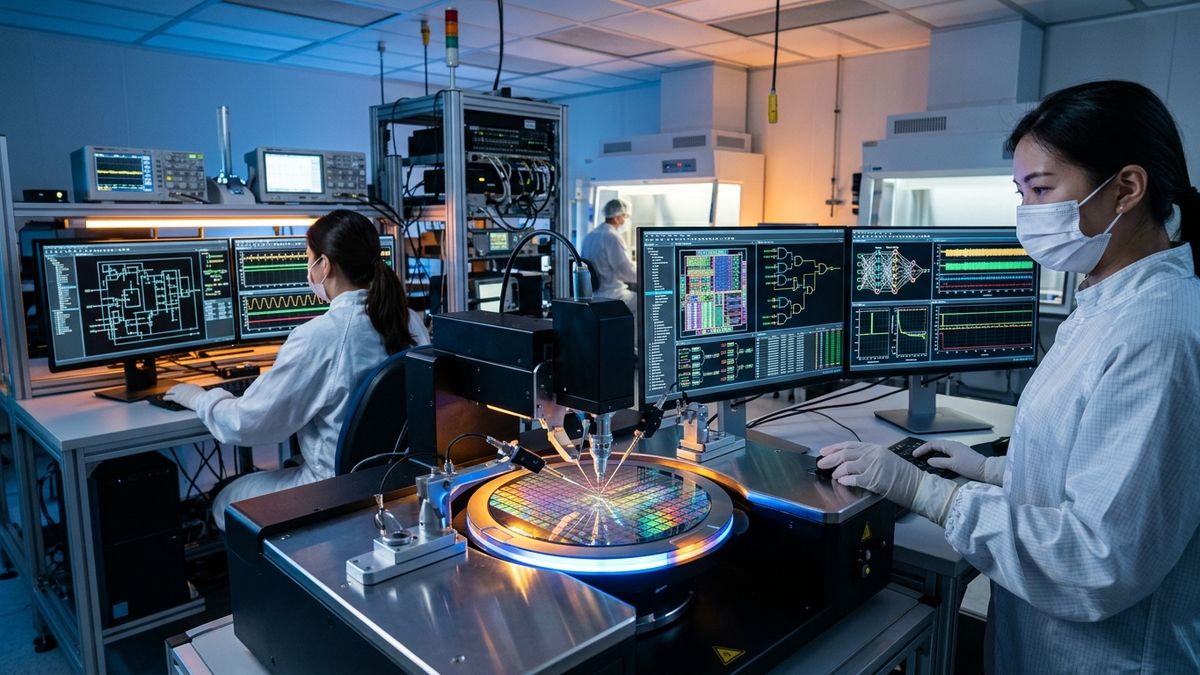
To the public, semiconductor manufacturing appears to be an exercise in laser photolithography and microchip design. In reality, a wafer fab is fundamentally a massive, ultra-precise chemical and materials processing plant.
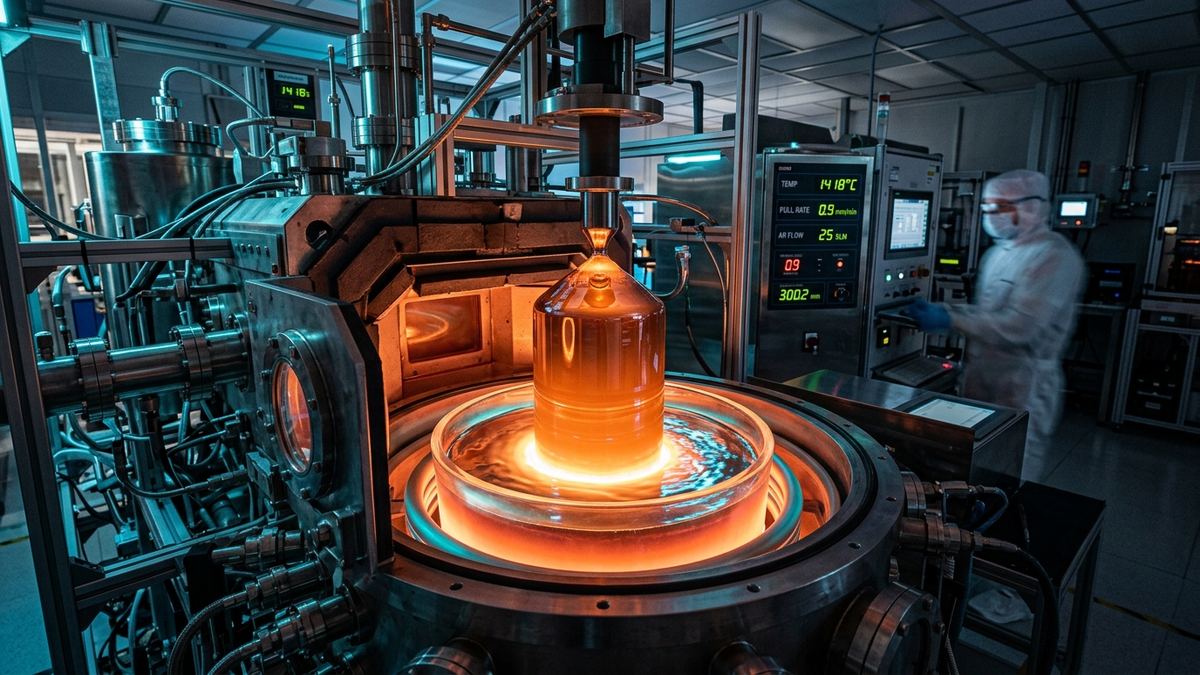
Fabricating a single integrated circuit requires hundreds of sequential chemical processes, including photolithography, acid etching, chemical mechanical planarization (CMP), and chemical vapor deposition (CVD). Each of these steps demands raw materials with purity levels exceeding 99.9999999% (nine nines), where a single contaminant particle measured in parts per trillion can ruin an entire batch of silicon wafers.
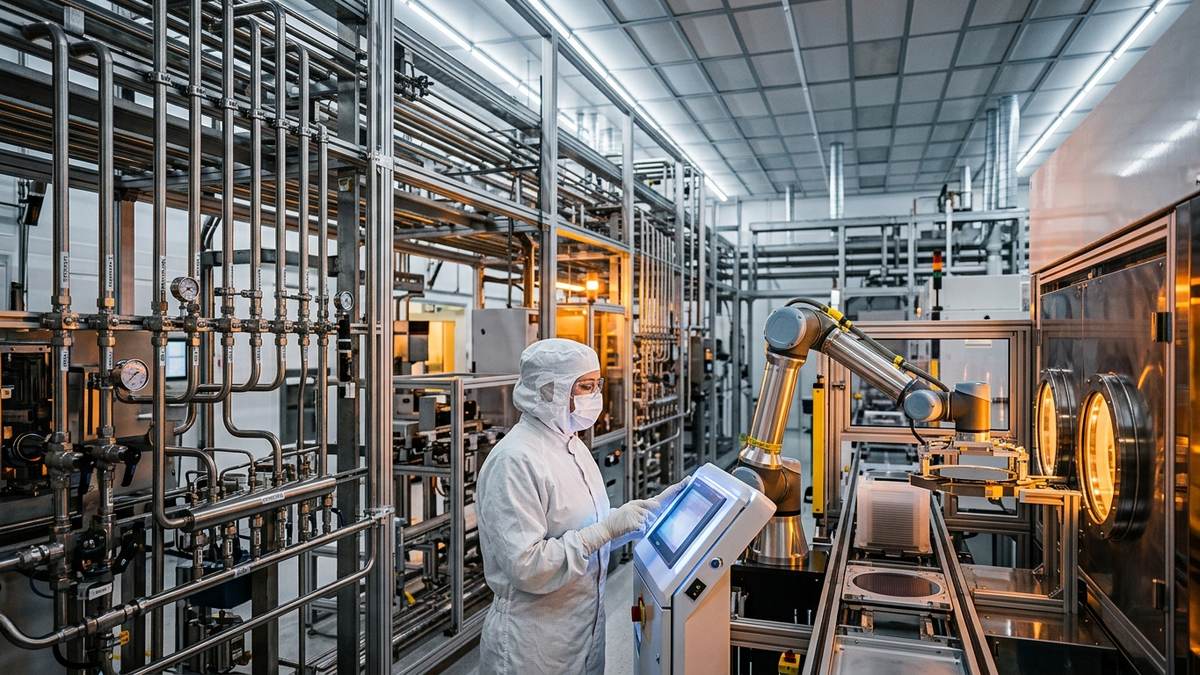
Historically, India imported virtually all electronic-grade chemicals and specialty gases from Japan, South Korea, Germany, and the United States. Transporting volatile gases like silane or highly corrosive electronic-grade hydrofluoric acid across international sea lanes introduces severe shipping delays, customs bottlenecks, and temperature-degradation risks.
"A multi-billion-dollar semiconductor fab is essentially paralyzed if it runs out of electronic-grade nitrogen or CMP polishing slurry for even twenty minutes,"observed a senior manufacturing advisor to the India Semiconductor Mission. "By localizing the production of high-purity industrial gases, wet chemicals, and packaging substrates, India is securing the operational lifeline of its emerging silicon foundries."
This upstream material localization complements domestic silicon software tools, such as Swadeza's AI-native electronic design automation platforms and frontier compute centers like Mythic AI's analog engineering hub.
Key Ancillary Sectors Experiencing High Growth
Indian industrial players and international joint ventures are actively deploying capital across several critical supply chain segments:
- Electronic-Grade Specialty Gases: Cryogenic air separation units and gas purification facilities producing ultra-high-purity (UHP) nitrogen, oxygen, argon, helium, and silane for wafer chamber purging and deposition.
- Wet Process Chemicals: Domestic manufacturing of electronic-grade sulfuric acid, hydrochloric acid, ammonium hydroxide, and high-purity isopropyl alcohol (IPA) used for wafer cleaning and residue removal.
- Packaging Substrates and Leadframes: High-density interconnect (HDI) organic substrates, copper leadframes, and epoxy molding compounds required by domestic OSAT facilities (Micron, Kaynes, CG Semi).
- Semiconductor Testing Equipment and Sockets: Precision automated test equipment (ATE), probe cards, and socket modules that verify microchip electrical performance under extreme operational conditions.
Upstream Semiconductor Materials & Ancillary Supply Chain Segments
The structured matrix below details the primary supply chain opportunities, purity specifications, and market projections across India's semiconductor ancillary ecosystem:
| Supply Chain Vertical | Key Chemical / Component | Purity & Technical Threshold | Projected Domestic Market (2030) |
|---|---|---|---|
| Electronic Gases | UHP Nitrogen, Argon, Silane, NF3 | 99.9999% (6N to 7N Purity) | $3.2 Billion |
| Wet Chemicals & Slurries | CMP Slurries, Electronic H2SO4, IPA | Parts-Per-Trillion (PPT) Contaminants | $2.8 Billion |
| IC Substrates & Frames | ABF Substrates, Copper Leadframes | Sub-10 micron trace spacing | $4.1 Billion |
| Cleanroom Consumables | Wafer Cassettes, FOUPs, Ultra-pure Filters | Class 1 / ISO Class 3 Cleanliness | $1.6 Billion |
| Testing & Metrology | Precision Probe Cards, Burn-in Sockets | High-frequency signal integrity (>10GHz) | $3.3 Billion |
State-Level Infrastructure: Dedicated Chemical Corridors
Recognizing that semiconductor-grade chemical plants have unique safety, environmental, and utility requirements, state governments are designating specialized chemical zones adjacent to planned fab nodes.
In Gujarat, the Dholera Special Investment Region (SIR) has allocated dedicated industrial parcels for specialty gas synthesis and chemical blending, backed by common effluent treatment plants (CETP) capable of zero-liquid discharge (ZLD). Similar corridors are being operationalized in Sriperumbudur and Hosur in Tamil Nadu, and along the Bengaluru-Mysuru industrial corridor in Karnataka.
These industrial parks provide automated hazardous materials transport corridors, redundant 220kV power substations, and dedicated industrial water pipelines, eliminating the infrastructure hurdles that previously discouraged global chemical giants like Linde, Air Liquide, and Merck from localizing production in India.
The Long-Term Sovereign Security Dividend
Developing a robust domestic semiconductor supply chain provides dividends far beyond commercial profitability. During periods of global trade friction or geopolitical supply chain disruptions, countries lacking sovereign control over basic electronic chemicals can find their critical manufacturing industries abruptly halted.
By cultivating domestic suppliers capable of manufacturing semiconductor-grade precursors, packaging substrates, and testing fixtures, India is insulating its electronics manufacturing, aerospace, and automotive industries against foreign supply disruptions.
As global chipmakers continue to adopt "China+1" supply chain diversification strategies, India's twin focus on front-end wafer fabs and upstream raw materials positions the nation as an indispensable anchor of the global microelectronics ecosystem.
Frequently Asked Questions
Why is the ancillary supply chain critical to India's semiconductor ambitions?
A semiconductor fabrication plant cannot operate in isolation. Fabs require a continuous, localized supply of electronic-grade specialty gases, ultra-pure chemicals, cleanroom equipment, and precision packaging materials. Importing these materials inflates logistics costs, creates supply vulnerability, and risks wafer contamination.
What are the most attractive supply chain opportunities for domestic industrial manufacturers?
The most lucrative verticals include electronic-grade specialty gases (nitrogen, argon, silane), high-purity wet chemicals (sulfuric acid, hydrogen peroxide, isopropyl alcohol at parts-per-trillion purity), IC substrates, leadframes, probe cards, and specialized automated optical inspection (AOI) testing hardware.
How are state governments facilitating semiconductor chemical and gas infrastructure?
States like Gujarat (Dholera, Sanand), Tamil Nadu (Sriperumbudur, Oragadam), and Karnataka (Electronics City, Kochanahalli) are establishing specialized chemical industrial zones with zero-liquid discharge (ZLD) effluent facilities, hazardous material transit corridors, and uninterrupted mega-utility pipelines.
How does the Design Linked Incentive (DLI) scheme complement materials manufacturing?
While the capital subsidy under ISM supports physical materials plants, the DLI scheme supports domestic fabless design startups that design the microchips, ensuring steady domestic demand for locally sourced wafers, packaging materials, and testing facilities.
Primary Sources & Official References
- India Semiconductor Mission (ISM): Ancillary Ecosystem Development & Supply Chain Guidelines
- India Electronics and Semiconductor Association (IESA): Domestic Materials & Equipment Market Forecast 2026-2030
- Ministry of Chemicals and Petrochemicals: Electronic-Grade Chemicals & Specialty Gases National Roadmap
- SEMI Global Semiconductor Supply Chain Assessment: Upstream Materials & Chemical Logistics