India’s Software Exports Cross $221 Billion in FY26 as US Enterprise Demand Accounts for 54.1%
By Vikram Malhotra | Published September 20, 2026 | 8 min read
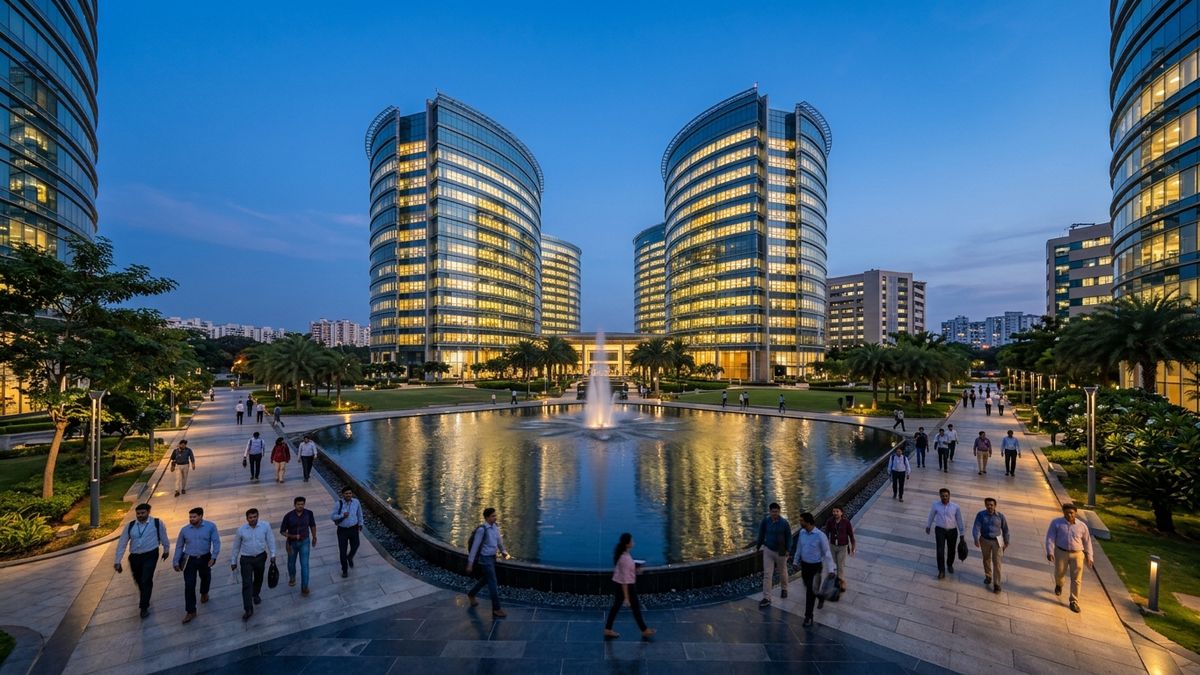
India’s software and computer services exports climbed to a record $221.4 billion in FY26, driven by enterprise AI modernization and cloud migrations, with the US representing 54.1%.
India’s premier knowledge export engine has reached an unprecedented economic milestone, with software and computer services exports climbing to a record $221.4 billion in fiscal year 2026. Official telemetry released by the Reserve Bank of India (RBI) confirms that despite global macroeconomic uncertainty, elevated interest rate cycles, and corporate IT budget reprioritization, Indian technology enterprises demonstrated remarkable agility, capturing critical market share across cloud modernization, artificial intelligence engineering, and enterprise cyber resilience.
The United States cemented its position as India’s dominant technology export destination, generating 54.1% of aggregate export revenues, equivalent to approximately $119.8 billion. The data underscores the structural interdependence between American Fortune 500 corporations and Indian technology engineering hubs, as US enterprises aggressively partner with Indian system integrators and SaaS vendors to execute comprehensive digital and AI transformations.
Geography of Indian Software Exports: Market Share Analysis
While North America remained the core revenue anchor, Indian technology providers expanded their global footprint across Europe, the Asia-Pacific, and Latin American corridors:
| Export Destination | Share of FY26 Exports (%) | Approximate Value ($B) | Primary Growth Drivers |
|---|---|---|---|
| United States | 54.1% | $119.8B | Enterprise generative AI adoption, cloud FinOps, healthtech |
| Continental Europe | 18.6% | $41.2B | Automotive software, green energy telemetry, SAP S/4HANA |
| United Kingdom | 12.4% | $27.5B | Banking modernization, fintech rails, public sector digital services |
| Asia-Pacific & Japan | 8.7% | $19.3B | Telecom automation, semiconductor CAD engineering, e-commerce |
| Rest of World | 6.2% | $13.6B | Middle East sovereign digital corridors, mining & logistics automation |
The High-Margin Shift to Generative AI and Agentic Orchestration
A decisive factor behind the resilience of India's $221.4 billion export milestone was the structural shift away from legacy application maintenance contracts toward high-value digital engineering and AI orchestration:
- Enterprise AI Integration: Leading Indian system integrators—including TCS, Infosys, HCLTech, and Wipro—reported expanding multi-million-dollar AI contract pipelines, designing proprietary enterprise retrieval-augmented generation (RAG) systems and automated customer support agents.
- Cloud Infrastructure & FinOps: As global enterprises completed primary cloud migrations, demand shifted to cloud cost optimization (FinOps), Kubernetes microservice management, and multi-cloud resilience architectures.
- Cybersecurity & Threat Detection: Indian global delivery centers evolved into round-the-clock Security Operations Centers (SOCs), managing zero-trust network access (ZTNA) and automated vulnerability remediation for multinational banks.
"Crossing $221 billion during a period of global IT budget scrutiny proves that India's software sector has completed its pivot from cost-arbitrage staff augmentation to mission-critical architectural innovation,"observed technology equity analysts. "American and European enterprises are trusting Indian engineering teams with their deepest digital transformations."
This enterprise strength parallels macro trends highlighted in recent coverage on Satya Nadella spotlighting India's developer engine as the world's largest by 2030 and domestic AI data centre buildouts securing multi-thousand-crore institutional debt.
Productized SaaS and Global Capability Centres (GCCs)
Beyond traditional IT services providers, two auxiliary forces contributed significantly to the $221.4 billion tally:
- B2B Enterprise SaaS: Homegrown software-as-a-service platforms targeting vertical niches—such as logistics orchestration, HR payroll management, and conversational commerce—expanded their American annual recurring revenue (ARR), proving that Indian software products can command global pricing power.
- Global Capability Centres (GCCs): Over 1,600 multinational corporations now maintain dedicated engineering centers in Bengaluru, Hyderabad, Pune, and Chennai. GCCs contributed over $45 billion to aggregate export figures, transitioning from administrative back-offices into global headquarters for core product engineering, chip design, and advanced algorithmic research.
Economic Resilience and Future Projections
The $221.4 billion milestone provides substantial macroeconomic stabilization for India's balance of payments, financing a major portion of the nation's merchandise trade deficit and bolstering foreign exchange reserves.
Looking ahead to FY27, industry analysts project software services exports to maintain a steady 6% to 8% compound annual growth rate, driven by expanding deployments of physical AI, autonomous supply-chain robotics, and specialized healthcare diagnostics. With Indian engineering talent deeply embedded in the world's leading technology platforms, the nation's software export trajectory remains one of the most resilient growth pillars in the global digital economy.
Frequently Asked Questions
What was the total value of India's software exports in FY26?
According to the Reserve Bank of India (RBI), India's software and computer services exports reached $221.4 billion in FY26, reflecting resilient global demand for enterprise engineering.
What percentage of India's software exports went to the United States?
The United States accounted for 54.1% of total exports, translating to approximately $119.8 billion in revenue, driven by Fortune 500 digital transformations and AI orchestration.
Which technology sectors generated the highest export revenue?
High-margin digital engineering, enterprise cloud modernizations, generative AI integration services, cybersecurity threat management, and SaaS application platforms drove the highest growth.
How are Indian IT services companies shifting away from traditional low-cost labour models?
Tier-1 Indian IT firms are pivoting toward outcome-based IP creation, AI agentic copilot deployment, proprietary cloud accelerators, and specialized industry-specific AI models.
Primary Sources & Official References
- Reserve Bank of India (RBI): Annual Survey on Computer Software and Information Technology Services Exports: Balance of payments and bilateral service export statistics.
- Ministry of Commerce and Industry: Foreign Trade Telemetry & Services Export Performance Report: Export realization benchmarks.
- NASSCOM Strategic Review: Enterprise Digital Transformation & AI Export Outlook: Annual industry performance and talent analysis.
- World Trade Organization (WTO): Global Telecommunications, Computer, and Information Services Report: Global market share comparisons.