India’s AI Opportunity Gets Microsoft Backing: Satya Nadella Spotlights World’s Largest Developer Engine by 2030
By Elena Rostova | Published September 18, 2026 | 8 min read
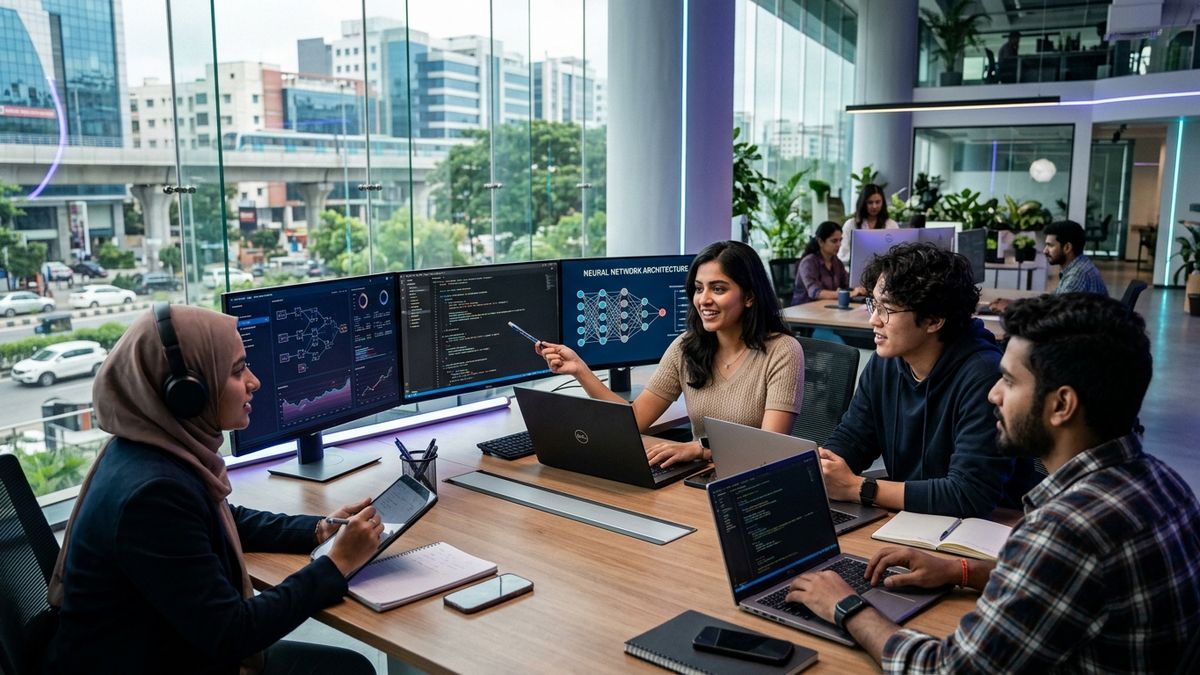
Microsoft CEO Satya Nadella reinforces India’s sovereign AI potential, highlighting rapid GitHub developer growth projected to overtake the US by 2030.
Microsoft Chairman and Chief Executive Officer Satya Nadella has reiterated Microsoft’s aggressive long-term backing of India’s artificial intelligence transformation, spotlighting the nation’s unparalleled engineering talent velocity and projecting that India is on track to host the world's largest developer community on GitHub by 2030. Addressing global technology leaders, enterprise developers, and founders, Nadella underscored that India is no longer merely an execution base for offshore digital workflows, but the primary crucible where generative AI applications, agentic software pipelines, and domain-specific foundation models are being built at planetary scale.
GitHub’s telemetry reveals that India's developer population has surged past 15.4 million engineers, growing at an annual pace exceeding 30 percent. If current growth trajectories hold, India will surpass the United States in absolute developer headcount before 2030, establishing the subcontinent as the undisputed nerve center of global open-source software and generative artificial intelligence development.
The Developer Flywheel: From Code Repositories to Generative Agents
The explosive growth of India's developer base is fundamentally different from previous IT services expansions. While earlier waves focused on enterprise maintenance and testing, the new cohort of Indian engineers is building natively with large language models, agentic frameworks, and multi-modal AI APIs.
Nadella highlighted three critical dimensions accelerating this transition:
* Generative Copilot Penetration: Indian developers exhibit one of the highest global adoption rates for GitHub Copilot, reporting average productivity gains of 35 to 55 percent in code authoring, automated testing, and legacy refactoring.
* Democratization of Foundation Model Fine-Tuning: Access to open-weight models (such as LLaMA, Mistral, and domestic Indic models) via cloud APIs has enabled individual developers and college students to deploy specialized AI agents without requiring billion-dollar capital expenditure.
* Open-Source AI Contributions: Indian repositories focused on LangChain, LlamaIndex, PyTorch, and Indic natural language datasets have climbed into GitHub’s global top 5 percent by stars and pull-request frequency.
"India has an unprecedented opportunity to lead the global AI wave,"noted Satya Nadella. "The sheer velocity of human capital and engineering curiosity here is unmatched. By 2030, India will not only have the world’s largest developer community on GitHub, but will be the proving ground for how artificial intelligence transforms healthcare, agriculture, governance, and enterprise productivity at population scale."
Microsoft’s Multi-Pronged Capital and Infrastructure Commitment
Backing this vision, Microsoft is expanding its sovereign hyperscale cloud regions across Pune, Mumbai, and Chennai, while constructing a multi-hundred-megawatt hyperscale campus in Hyderabad. These investments ensure that Indian developers and enterprises have low-latency access to Nvidia HGX GPU clusters, high-bandwidth interconnects, and enterprise-grade Azure OpenAI services.
Furthermore, Microsoft's ADVANTA(I)GE INDIA initiative has committed to equipping over two million individuals across Tier-2 and Tier-3 cities with foundational AI skills, prompt engineering certifications, and cloud architecture capabilities by the end of the decade.
This massive scale aligns directly with enterprise innovations explored in our analysis of former Infosys CEO Vishal Sikka’s Hang Ten Systems raising $53M for enterprise foundation models and the rapid emergence of Factory's $5B autonomous coding agent droids.
Ecosystem Benchmark: India AI Developer Growth Projections (2024–2030)
The comparative matrix below outlines the projected expansion of India's developer base, enterprise AI adoption, and national cloud compute capacity:
| Metric Indicator | 2024 Baseline | 2027 Midpoint | 2030 Projection | Strategic Significance |
|---|---|---|---|---|
| GitHub Active Developers | 13.2 Million | 21.5 Million | 32.0+ Million | World's #1 largest national developer base |
| Global AI Repo Contributions | ~7% Share | ~14% Share | ~22% Share | Major driver of open-source AI innovation |
| Enterprise Copilot Adoption | 18% of IT Firms | 62% of IT Firms | 90%+ Across Sectors | Near-universal assisted software engineering |
| Trained AI Engineers (MeitY/MS) | 350,000 | 1,800,000 | 4,500,000+ | Sovereign talent pool for global enterprise AI |
| Hyperscale Cloud AI Capacity | ~450 MW | ~1,200 MW | ~3,200+ MW | Powering regional LLM inference and training |
Building for the "Next Billion" in Multilingual India
A core differentiator of India’s AI opportunity is the imperative to solve linguistic diversity. Standard Western models trained predominantly on English fail to capture India's 22 official languages and hundreds of colloquial dialects.
Under Microsoft Research India’s initiatives—including Project Karya and collaboration with the Bhashini project—engineers are building token-efficient, multilingual speech models that power conversational voice bots for rural banking, crop insurance advisories, and telemedicine consultations. These efforts parallel TCS’s 1 GW AI data centre campus in Hyderabad designed to host national Indic AI models.
Future Outlook: From Technology Consumer to AI Superpower
With active backing from global technology giants and strong domestic policy support under the IndiaAI Mission, India is positioning its 15-million-strong developer workforce as the world's most agile software engine. As generative agents move into enterprise deployment, the developers authoring those systems will increasingly be based in Bengaluru, Hyderabad, Pune, and beyond.