Made-in-India Chips Power Major Space Missions: How Indigenous Radiation-Hardened Silicon is Securing ISRO’s Deep-Space and Satellite Future
By Sanjay Patel | Published August 24, 2026 | 8 min read
Indigenous space-grade semiconductors and radiation-hardened microprocessors developed by ISRO, SCL, and Indian fabless startups power Chandrayaan, Aditya-L1, and navigation satellites.
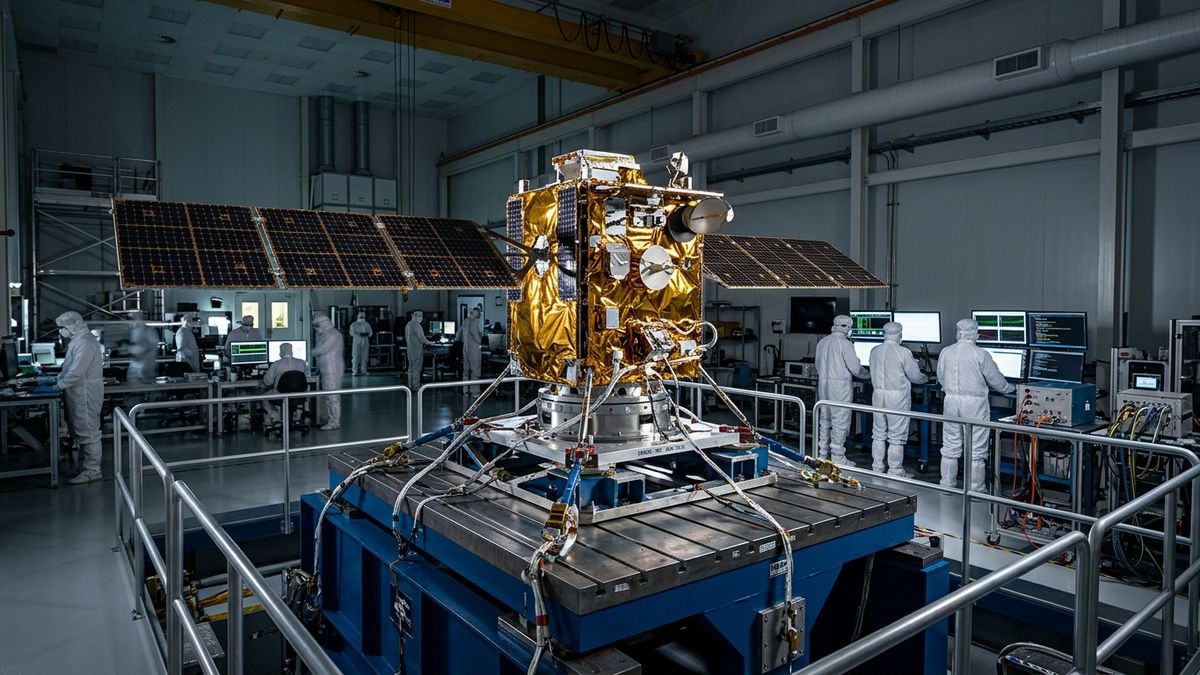
BENGALURU — In a monumental stride toward complete technological self-reliance in extraterrestrial exploration, Made-in-India semiconductor chips and custom radiation-hardened microcontrollers have taken center stage in powering India’s premier space missions, including the historic Chandrayaan-3 lunar lander, the Aditya-L1 solar observatory, and the Next-Generation NavIC satellite constellation.
Developed through close collaboration between the Indian Space Research Organisation (ISRO), the Semiconductor Laboratory (SCL) in Mohali, and a pioneering cohort of domestic fabless deeptech design ventures, these indigenous chips replace previously imported, export-controlled components. The deployment of sovereign space silicon ensures that India’s ambitious interplanetary roadmap—including the upcoming Chandrayaan-4 lunar sample return and the Gaganyaan human spaceflight mission—remains entirely insulated from global supply chain chokeholds and geopolitical sanctions.
#
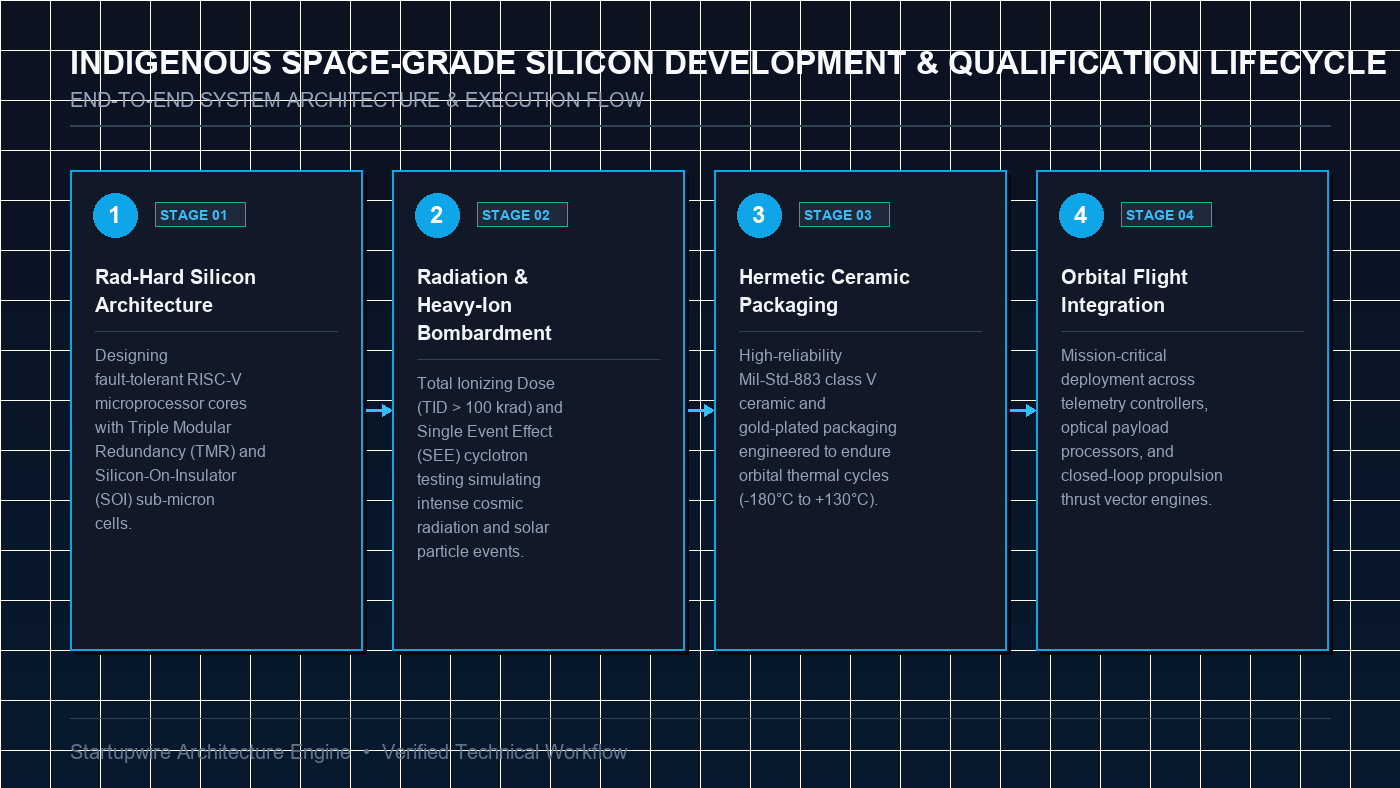
Figure 1.0: End-to-end design, radiation stress testing, hermetic packaging, and orbital qualification pipeline for Made-in-India space semiconductors.
The Extreme Physics of Space Silicon
Terrestrial microprocessors are designed to optimize raw clock speed and power efficiency under benign atmospheric conditions. In the vacuum of outer space, however, electronics face hostile physical environments:
- Total Ionizing Dose (TID): High-energy cosmic rays and solar protons generate trapped charges in silicon oxide layers, causing progressive threshold voltage shifts and catastrophic transistor leakage.
- Single Event Effects (SEE): Heavy ion strikes can flip bit states in memory registers (Single Event Upsets) or trigger destructive parasitic latch-up (Single Event Latch-up), instantly burning out integrated circuits.
- Extreme Thermal Oscillations: Spacecraft surfaces cycle from +125°C in direct solar exposure to -150°C in planetary shadows every 90 minutes.
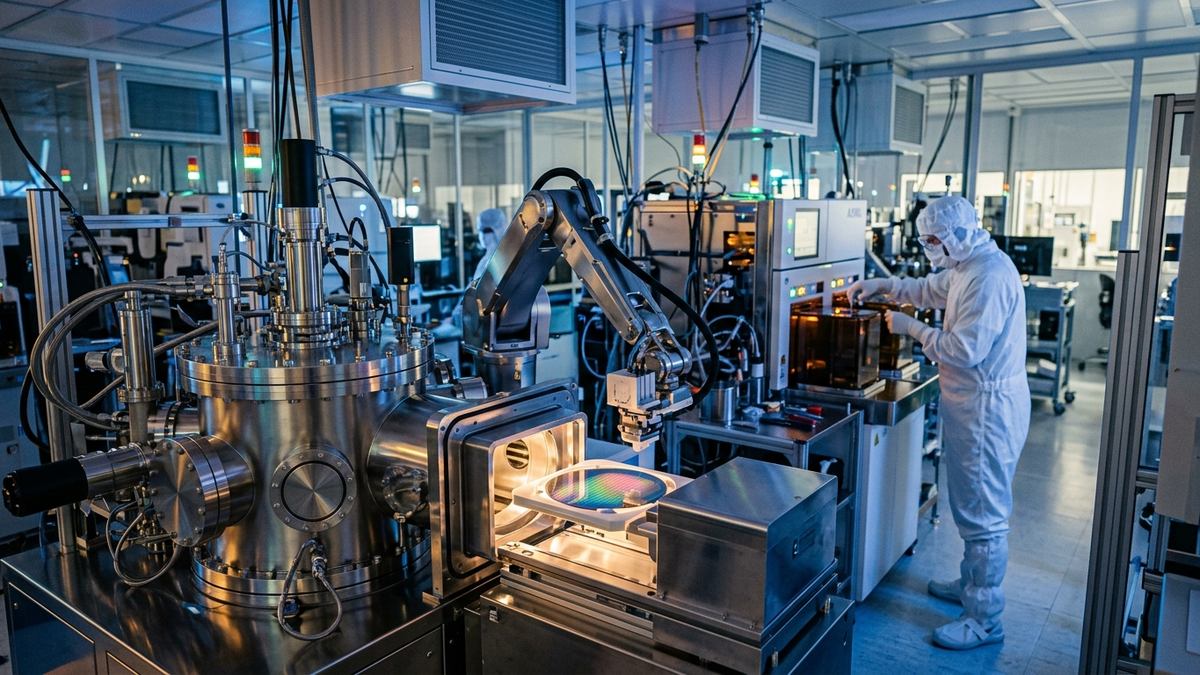
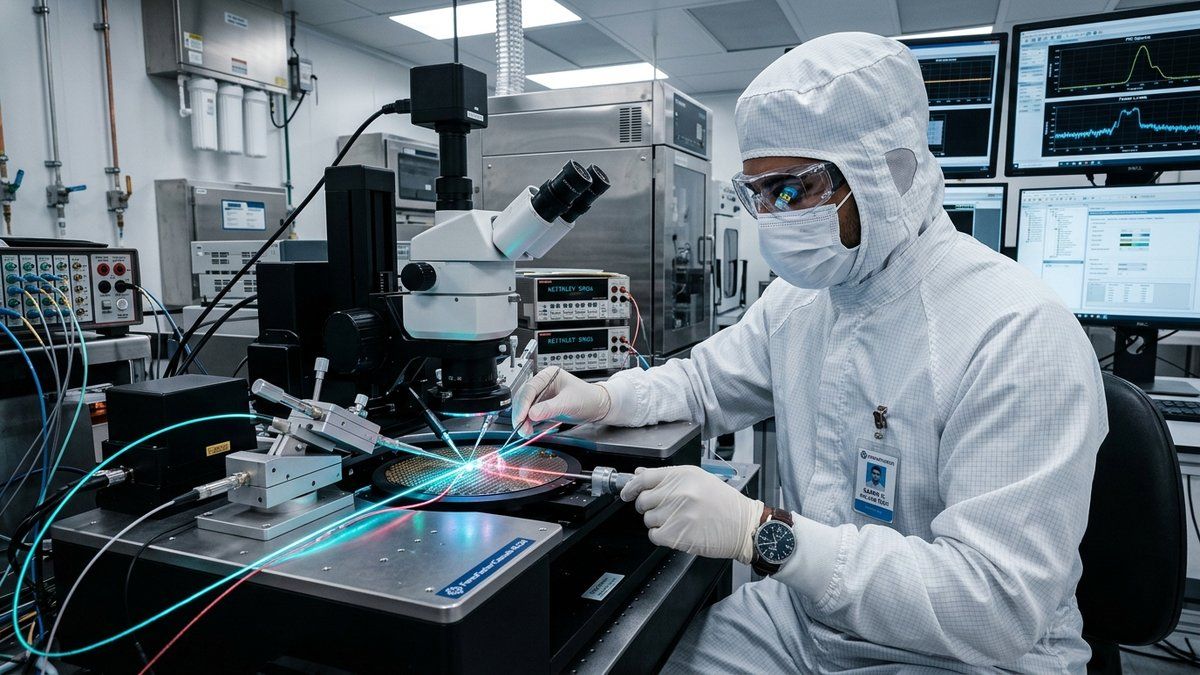
To survive decades in orbit without physical maintenance, Indian aerospace engineers developed radiation-hardened by design (RHBD) architectures utilizing Triple Modular Redundancy (TMR), specialized guard rings, and SOI (Silicon-on-Insulator) substrate fabrication.
"A single flipped bit caused by a high-energy cosmic proton can divert a lunar lander thruster or corrupt orbital telemetry,"stated a senior scientist at ISRO's Liquid Propulsion Systems Centre (LPSC). "Our indigenous radiation-hardened microprocessors and ASIC sensor interfaces have demonstrated zero single-event latch-ups across millions of mission operating hours. Achieving silicon sovereignty in orbit is the foundation of our long-term lunar and deep-space autonomy."
Performance & Architectural Benchmark: Space Silicon vs Commercial ICs
The technical divergence between standard commercial electronics, legacy imported aerospace processors, and India’s indigenous space-grade silicon is outlined in the comparative benchmark table below:
| Architectural Metric | Commercial Off-The-Shelf (COTS) Silicon | Legacy Imported Space Chips (e.g., RAD750) | Made-in-India Space Silicon (ISRO/SCL/Fabless) | Mission Advantage |
|---|---|---|---|---|
| Radiation Tolerance (TID) | < 5 krad (Si) (Fails in deep space) | 100 – 300 krad (Si) | > 150 – 300 krad (Si) (Space-Qualified) | 15+ Year Orbital Longevity |
| Single Event Latch-Up (SEL) Threshold | Non-existent (< 10 MeV-cm²/mg) | > 75 MeV-cm²/mg | > 85 MeV-cm²/mg (Immune to Solar Flares) | Zero destructive latch-up risk |
| Processor Architecture | Proprietary x86 / ARM Closed Core | Proprietary PowerPC (133 MHz) | Open-Standard 64-bit Rad-Hard RISC-V | Complete Sovereign Code Auditability |
| Operating Temperature Range | 0°C to 70°C (Commercial) | -55°C to +125°C (Mil-Grade) | -65°C to +150°C (Hermetic Ceramic) | Endures Extreme Lunar Nights |
| Supply Chain & Export Controls | ITAR & EAR Unrestricted (Fragile) | Heavy ITAR & Strict US Export Control | 100% Sovereign Domestic IP & Packaging | Zero Geopolitical Embargo Risk |
| Unit Fabrication & Lead Time | Fast (Mass Consumer Scale) | 18 – 24 Months Backlog ($250k+/chip) | < 6 Months Domestic Turnaround | 70% Lower Mission Electronics Cost |
Expanding Beyond Space into Defense and DeepTech
The maturation of indigenous space-grade silicon has sparked massive spillover benefits across India's broader hardware and defense manufacturing sectors. The same radiation-tolerant microcontrollers and high-voltage power ICs powering ISRO spacecraft are now being integrated into stratospheric surveillance platforms, such as those analyzed in Red Balloon Aerospace’s Near-Space Stratospheric Flight Systems.
Furthermore, the domestic fabless ecosystem is attracting heavy institutional interest and international acquisitions, highlighted by the strategic takeover analyzed in Infineon Acquires Bengaluru-Based C2i Semiconductors.
These semiconductor achievements also align directly with upstream material manufacturing milestones, including Raana Semiconductors' ₹100 Crore Series A for 12-Inch Silicon Crystal Ingot Growth.
The Roadmap: Commercial Foundries and Next-Gen Spacecraft
With the India Semiconductor Mission (ISM) currently setting up multi-billion-dollar commercial semiconductor fabrication plants and packaging hubs across Dholera, Sanand, and Morigaon, the domestic production of space silicon is set to scale dramatically:
1. Commercial Foundry Migration: Transitioning space ASIC tapeouts from 180nm specialty nodes to 28nm and 40nm high-density automotive/aerospace lines for 10x higher compute density.
2. AI-Enabled Onboard Payloads: Developing low-power neuromorphic inference accelerators to process hyperspectral satellite imagery directly on orbit, reducing downlink bandwidth bottlenecks.
3. Constellation Mass-Production: Supplying standardized, radiation-hardened flight computers to the burgeoning private Indian space startup ecosystem (Skyroot, Agnikul, Pixxel, and GalaxEye).
By mastering the extreme physics of radiation-hardened silicon, India has proven that its domestic engineering can build chips capable of enduring the harshest frontiers of the solar system.