Prodoc AI Raises Seed Funding to Build Healthcare AI Intelligence Layer for Hospitals
By Elena Rostova | Published October 1, 2026 | 8 min read
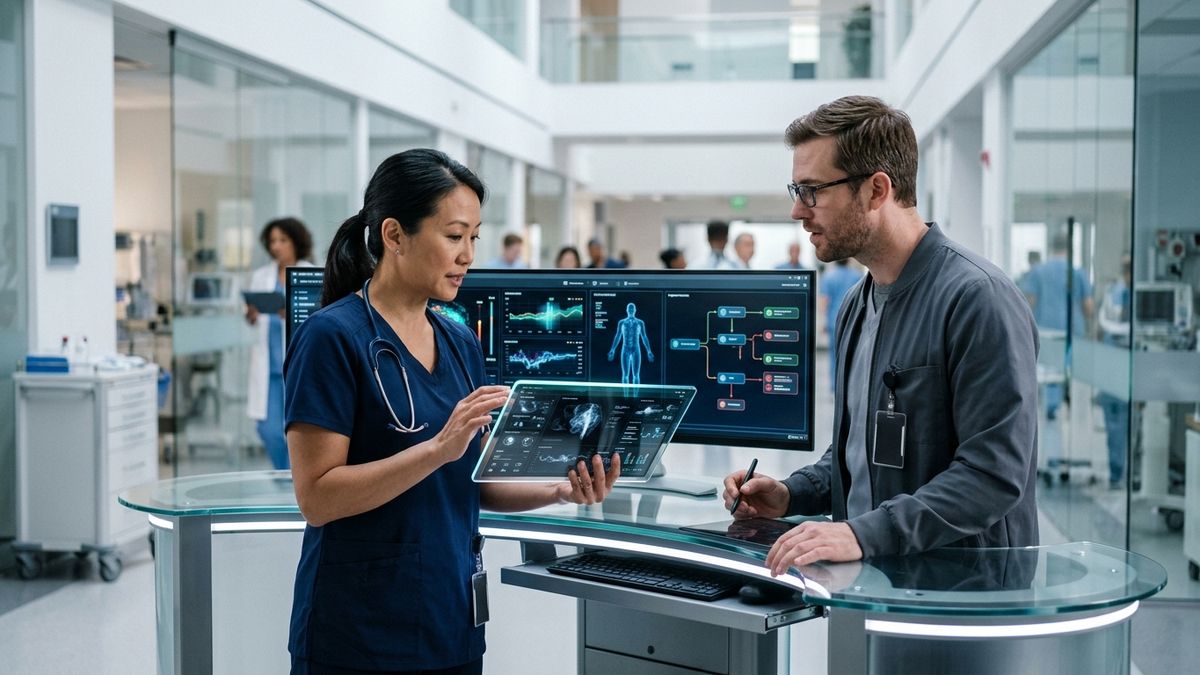
Bengaluru-based Prodoc AI secures seed funding to engineer an autonomous clinical intelligence layer streamlining hospital workflows, diagnostics, and documentation.
Bengaluru-based healthcare artificial intelligence startup Prodoc AI has successfully raised seed funding to build an intelligent, ambient AI clinical layer for hospitals and healthcare systems. The investment will accelerate the deployment of the startup's proprietary clinical language models, streamline hospital operational workflows, and relieve physicians from onerous administrative overhead that currently consumes over a third of their working hours.
The digitization of Indian healthcare under the Ayushman Bharat Digital Mission (ABDM) has driven rapid adoption of Electronic Medical Records (EMRs) and Hospital Information Systems (HIS). However, legacy clinical software often transforms doctors and nurses into data-entry clerks, creating severe clinician burnout. By applying specialized generative models, startups are transforming clinical workflows, mirroring the paradigm shift where ventures move from superficial features to foundational AI infrastructure.
Prodoc AI addresses this critical friction by deploying an ambient clinical intelligence engine that listens securely during doctor-patient consultations, synthesizes clinical dialogue into structured SOAP (Subjective, Objective, Assessment, Plan) notes, and cross-references medication orders in real time.
Architectural Innovation: The Hospital Clinical Intelligence Layer
Unlike generic commercial voice transcription software, medical clinical workflows demand extreme accuracy, contextual understanding of pharmacology, and strict regulatory governance. Prodoc AI's technology stack comprises three integrated pillars:
- Ambient Clinical Transcription: Multimodal acoustic models trained on Indian clinical interactions, seamlessly deciphering medical terminology across English and regional language code-switching.
- Automated Clinical Summarization: Deep semantic parsing that synthesizes patient symptoms, medical histories, vitals, and lab orders into standardized hospital electronic documentation.
- Real-Time Billing & Diagnostic Compliance: Instantaneous mapping of clinical diagnoses to international ICD-10 and SNOMED CT coding systems, eliminating insurance billing discrepancies and claim rejections.
"A physician's attention belongs entirely with the patient, not buried behind a monitor typing clinical notes,"said the founding team at Prodoc AI. "Our seed financing enables us to deploy a silent, reliable AI assistant across outpatient clinics, intensive care units, and emergency triage floors, freeing doctors to focus entirely on compassionate healing."
Hospital Operations: Legacy EHR Challenges vs. Prodoc AI Automation
The implementation of specialized clinical AI represents an urgent operational necessity for high-volume Indian hospital networks managing thousands of daily admissions. The table below details the performance comparison between legacy hospital documentation workflows and Prodoc AI's ambient intelligence layer:
| Operational Metric | Legacy Hospital EHR Workflow | Prodoc AI Clinical Intelligence Layer | Measured Impact |
|---|---|---|---|
| Documentation Latency | 8 – 15 minutes per patient consultation | Under 45 seconds (Real-time generation) | 60% reduction in doctor charting time |
| Discharge Summary Turnaround | 3 – 5 hours average waiting period | Under 15 minutes automated synthesis | Faster bed turnover and patient throughput |
| Medical Billing Code Accuracy | 78% – 84% (Frequent manual omissions) | 98.4% (Direct ICD-10 / SNOMED mapping) | Dramatic reduction in insurance claim denials |
| Linguistic Adaptability | English-only typing keyboards | Multilingual Indian clinical code-switching | Seamless regional dialect comprehension |
| Regulatory Compliance | Fragmented local database silos | Native ABDM and DPDP Act data encryption | Sovereign clinical governance adherence |
Sovereign Privacy Standards and DPDP Act Adherence
Given the sensitivity of personal electronic health records, Prodoc AI has architected its deployment model to prioritize sovereign data governance. All clinical voice processing, entity extraction, and summarization pipelines operate within secure domestic data boundaries, aligning with India's sovereign enterprise data center mandates.
All identifiable demographic markers are scrubbed before inference execution, and clinical audio streams are discarded immediately following verified note generation. Hospitals maintain sovereign ownership of all training weights and clinical notes, ensuring strict non-custodial data ethics.
Expansion Strategy and Clinical Trials
The fresh capital will be deployed to expand Prodoc AI's clinical engineering team, integrate directly with premier Hospital Information System vendors, and execute multi-centre clinical validation trials across tier-1 hospital networks in Bengaluru, Hyderabad, and Chennai. The company is also collaborating with academic medical centres to fine-tune specialized diagnostic support modules for oncology, cardiology, and paediatric triage.
As hospital administrators face rising operational overhead and acute nursing shortages, automated clinical intelligence layers like Prodoc AI represent a foundational pillar for sustainable, technology-enabled healthcare delivery across India.
Frequently Asked Questions
What is Prodoc AI and what core problem does it solve?
Prodoc AI is an Indian healthtech startup building a clinical AI intelligence layer that operates on top of hospital electronic medical record systems. It automates physician note-taking, clinical summarization, bed handover logs, and billing codes, drastically reducing administrative burden.
How does Prodoc AI integrate with existing hospital information systems (HIS/EHR)?
Prodoc AI connects non-intrusively via standardized HL7 FHIR and ABDM APIs, functioning as an ambient overlay on existing hospital terminals and mobile clinical tablets without requiring hospitals to replace legacy database backends.
How does the platform ensure patient data privacy and DPDP Act compliance?
All clinical audio and text streams are processed using on-premise or sovereign domestic cloud infrastructure with strict de-identification, end-to-end encryption, and role-based access control conforming to India's Digital Personal Data Protection (DPDP) Act.
What are the operational efficiency gains reported by healthcare providers using the system?
Partner hospitals report a 60% reduction in physician administrative charting time, 35% faster patient discharge turnarounds, and over 98% accuracy in medical billing code classification.
Primary Sources & Official References
- Prodoc AI Institutional Seed Round Investment Disclosure: Corporate Capital Release
- National Health Authority (NHA): Ayushman Bharat Digital Mission (ABDM) Guidelines
- Indian Medical Association (IMA): Survey on Clinician Administrative Workload
- Journal of Medical Internet Research: Ambient AI in Acute Clinical Practice