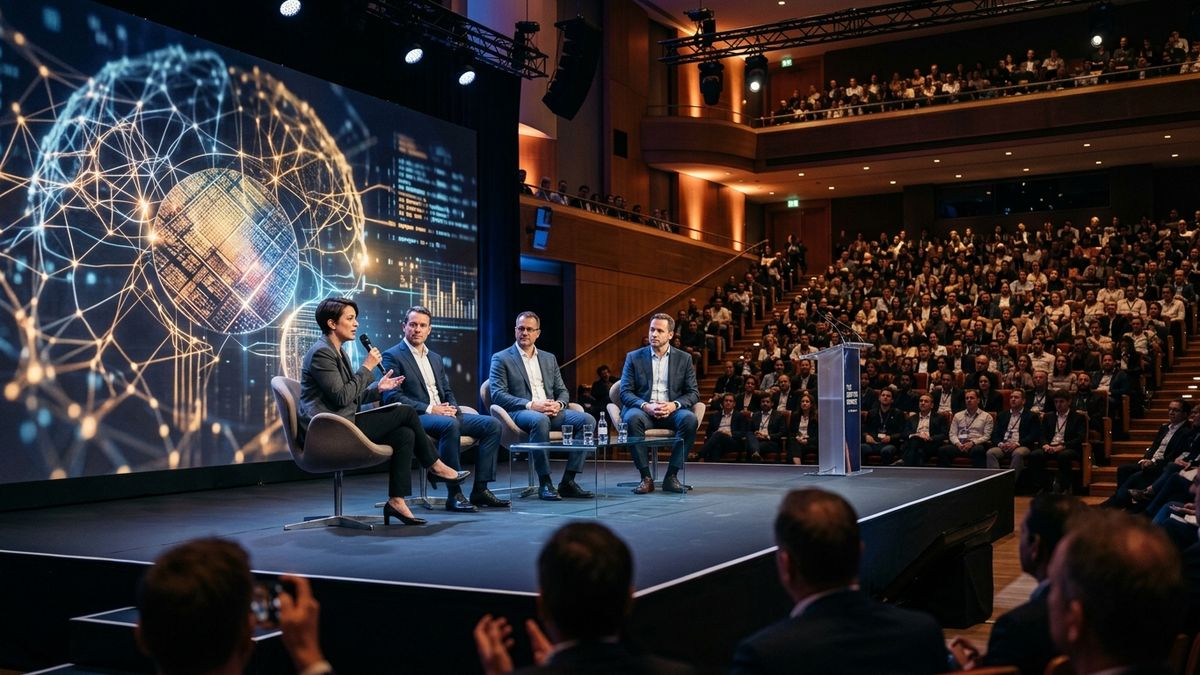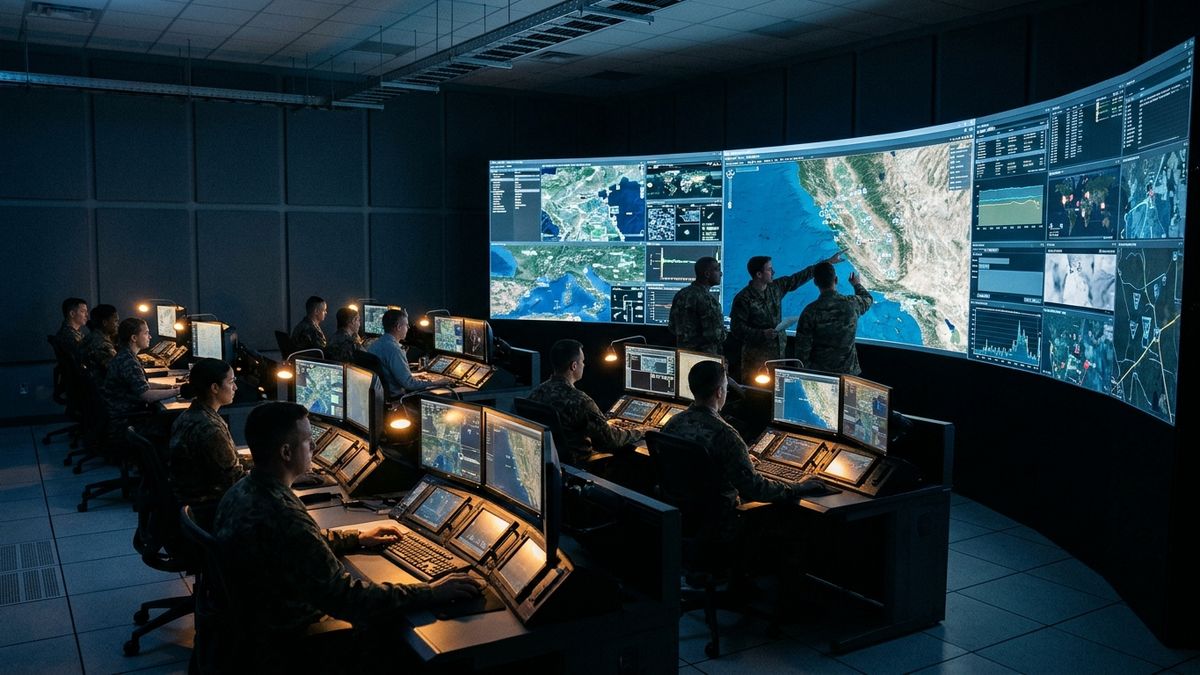
Sarvam AI enters defence technology with a dedicated military AI division to deliver sovereign decision-support, edge computer vision, and multi-sensor intelligence.
Executive Key Takeaways
- Sarvam AI has expanded into defense technology with 'Chanakya', an air-gapped sovereign military AI division designed for tri-service armed forces operations.
- The defense architecture prioritizes on-premise, ruggedized edge compute and localized Indic multilingual intelligence across high-stakes tactical environments.
- Core operational capabilities include real-time multi-sensor data fusion, automated geospatial intelligence, and low-latency decision-support pipelines.
Frontier generative artificial intelligence company Sarvam AI has officially formalized its strategic entry into defense technology, inaugurating a dedicated national security division engineered to deliver sovereign AI systems across the Indian Armed Forces. The initiative represents a pivotal maturation in India's sovereign deeptech ecosystem, transitioning foundational models from commercial consumer language interfaces into hardened, mission-critical defense operational environments.
The expansion comes as modern military doctrine increasingly treats computational supremacy, automated sensor-to-shooter telemetry, and algorithmic decision advantage as decisive factors in multi-domain deterrence. By deploying purpose-built models directly on air-gapped military infrastructure, Sarvam AI aims to provide the Indian Army, Indian Navy, Indian Air Force, and tri-service commands with completely sovereign software architectures impervious to external algorithmic kill-switches or foreign intelligence backdoors.
The Chanakya Division: Air-Gapped Sovereign AI Architecture
At the operational core of Sarvam AI's defense vertical is Chanakya, an isolated, high-security organizational unit established specifically for defense, homeland security, and strategic intelligence missions. Chanakya was conceived to resolve the fundamental dilemma facing modern defense establishments: the necessity of leveraging frontier artificial intelligence while preserving absolute operational secrecy and data sovereignty.
Commercial large language models (LLMs) developed by foreign hyperscalers pose insurmountable security risks in military contexts. Queries routed to remote public cloud data centers can expose operational intent, while foreign proprietary weights can be remotely modified, throttled, or abruptly embargoed during geopolitical crises. In contrast, Sarvam AI's defense architecture is designed from the ground up to operate entirely on domestic sovereign hardware:
- Complete Air-Gapped Deployability: Chanakya's foundational models and inference pipelines are optimized to execute on on-premise military server clusters and tactical field command nodes without requiring external internet connectivity.
- Ruggedized Edge Quantization: Utilizing advanced 4-bit and 8-bit model quantization, complex multi-modal intelligence engines are compressed to run on low-power, ruggedized edge processors mounted on forward tactical reconnaissance vehicles, unmanned aerial systems (UAS), and naval combat platforms.
- Adversarial Hardening and Tamper Resistance: Defense models undergo rigorous penetration testing against prompt injection, data poisoning, adversarial optical perturbation, and algorithmic hallucination to ensure reliable execution in high-stakes kinetic theaters.
"True military self-reliance in the twenty-first century cannot end with domestic steel and indigenous airframes; it must extend to the underlying algorithms that process battlefield data,"stated defense technology analysts. "Sarvam AI's entry into sovereign defense computing ensures that India's tactical command loops are steered by indigenous algorithmic intelligence."
This strategic defense focus directly reinforces broader national defense modernization pacts, such as Sarvam AI's five-year collaboration with the Integrated Defence Staff and parallels large-scale domestic industrial initiatives like Uttar Pradesh's PRAGATI robotics and defense automation corridors.
Tactical Operational Domains: Beyond Generic Language Models
While Sarvam AI gained prominent industry recognition for developing state-of-the-art Indic language models—such as the Saaras multilingual speech stack and Bulbul voice architectures—its defense deployment expands far beyond conversational text processing. Modern military engagements generate petabytes of unstructured, multi-spectral data that quickly overwhelm human operators. Sarvam AI's defense technology is targeted at three primary operational challenges:
1. Multi-Sensor Data Fusion and Real-Time Perception
Modern battle spaces are saturated with disparate sensor feeds, including satellite synthetic aperture radar (SAR), thermal infrared imagery from forward observation posts, optical video feeds from loitering munitions, and intercepted radio frequency (RF) emissions. Chanakya deploys multimodal transformer architectures that fuse these divergent data streams into a unified, coherent situational map in milliseconds, highlighting anomalous adversary maneuvers before they are discernible to human watch officers.
2. Tactical Edge Dialect Processing and Signals Intelligence
Electronic warfare and border surveillance require rapid translation and entity extraction from intercepted communications across dozens of regional languages, tribal dialects, and tactical code phrases. Leveraging its proprietary Indic pre-training corpus, Sarvam AI's edge voice models transcribe, translate, and perform automated sentiment and threat triage directly at tactical listening stations in forward border regions.
3. Accelerated Sensor-to-Shooter Decision Support
By automating routine target classification, battle-damage assessment (BDA), and logistics replenishment tracking, Sarvam AI's decision-support models compress the sensor-to-shooter cycle from minutes to seconds, providing operational commanders with clear tactical recommendations while preserving strict human-in-the-loop oversight.
Sovereign Defense AI vs. Commercial Foundation Models
The comparative matrix below illustrates the structural divergence between commercial generative AI frameworks and Sarvam AI's dedicated sovereign defense stack:
| Architecture Dimension | Commercial Enterprise AI | Sarvam AI Sovereign Defence Architecture | Tactical Advantage |
|---|---|---|---|
| Compute Infrastructure | Distributed public cloud hyperscalers | Air-gapped on-premise military servers & tactical edge nodes | Zero dependency on external networks or foreign cloud APIs |
| Data Sovereignty | Data processed across multi-tenant global clusters | 100% sovereign domestic training and inference data | Complete immunity from foreign surveillance and data interception |
| Latency Profile | Variable network round-trip latency (300ms–2000ms) | Sub-50ms deterministic local edge inference | Instantaneous situational awareness in kinetic engagements |
| Language Specialization | Predominantly English with secondary multilingual adaptation | Deeply native Indic languages, border dialects, and tactical jargon | Flawless transcription of regional military radio telemetry |
| Model Verification | Black-box commercial proprietary weights | Open-audit sovereign weights vetted for security backdoors | Verified mathematical reliability for command decision loops |
Strengthening the Atmanirbhar Defence Ecosystem
Sarvam AI's strategic foray into military technology marks an essential evolution for India's domestic defense industrial base. Under the Ministry of Defence's Artificial Intelligence in Defence (AIDef) roadmap and the Innovations for Defence Excellence (iDEX) initiative, the Indian Armed Forces have actively sought collaborations with domestic deeptech startups to replace legacy, proprietary Western and Russian defense electronics.
By establishing high-performance, domain-adapted foundational models, Sarvam AI creates a software substrate upon which domestic defense public sector undertakings (DPSUs) such as Bharat Electronics Limited (BEL), Hindustan Aeronautics Limited (HAL), and private defense innovators like Zen Technologies and ideaForge can build next-generation autonomous systems.
Furthermore, this development aligns closely with parallel technological transformations across Indian industry, including enterprise AI adoption among tier-1 IT services giants and the development of next-generation semiconductor engineering hubs that will ultimately supply the domestic silicon needed to power tactical AI hardware.
Strategic Outlook: The Future of Algorithmic Deterrence
As global military powers aggressively operationalize artificial intelligence across autonomous swarms, hypersonic interception, and automated cyber defense, algorithmic capability has become an inseparable pillar of national defense sovereignty.
By dedicating substantial research capital and specialized engineering talent to defense applications, Sarvam AI is proving that India's premier artificial intelligence startups can transition seamlessly from commercial consumer software to the most demanding sovereign national security platforms in the world.
Frequently Asked Questions
What is the strategic objective of Sarvam AI entering defence technology?
Sarvam AI is deploying sovereign, indigenous foundational AI models tailored for the Indian Armed Forces to ensure data sovereignty, reduce dependence on foreign technology stacks, and enhance tactical decision superiority across modern multi-domain battlefields.
What is the role of Sarvam AI's Chanakya division?
Chanakya operates as an air-gapped, high-security operational division within Sarvam AI dedicated solely to national security, tactical sensor fusion, ruggedized edge computing, and classified tri-service military deployments.
How does sovereign AI differ from commercial generative AI models?
Unlike commercial models hosted on public cloud fabrics subject to foreign data jurisdictions, sovereign military AI is trained on secure domestic telemetry, verified against adversarial attacks, and runs locally on air-gapped military hardware without external network dependencies.
What core technical capabilities are being deployed for military commands?
The technology includes multi-sensor intelligence fusion (radar, optical, infrared, RF signals), localized Indic voice and dialect transcription for border reconnaissance, automated target identification, and tactical situation-awareness knowledge graphs.
Primary Sources & Official References
- Ministry of Defence: Framework for Artificial Intelligence in Defence (AIDef) & Innovation for Defence Excellence
- Headquarters Integrated Defence Staff (HQ IDS): Tri-Service Joint Doctrine & Technology Roadmap
- Sarvam AI: Corporate Mission Statement and Sovereign Defense Computing Strategy
- Centre for Joint Warfare Studies (CENJOWS): Sovereign Compute and Autonomous Systems in Modern Warfare