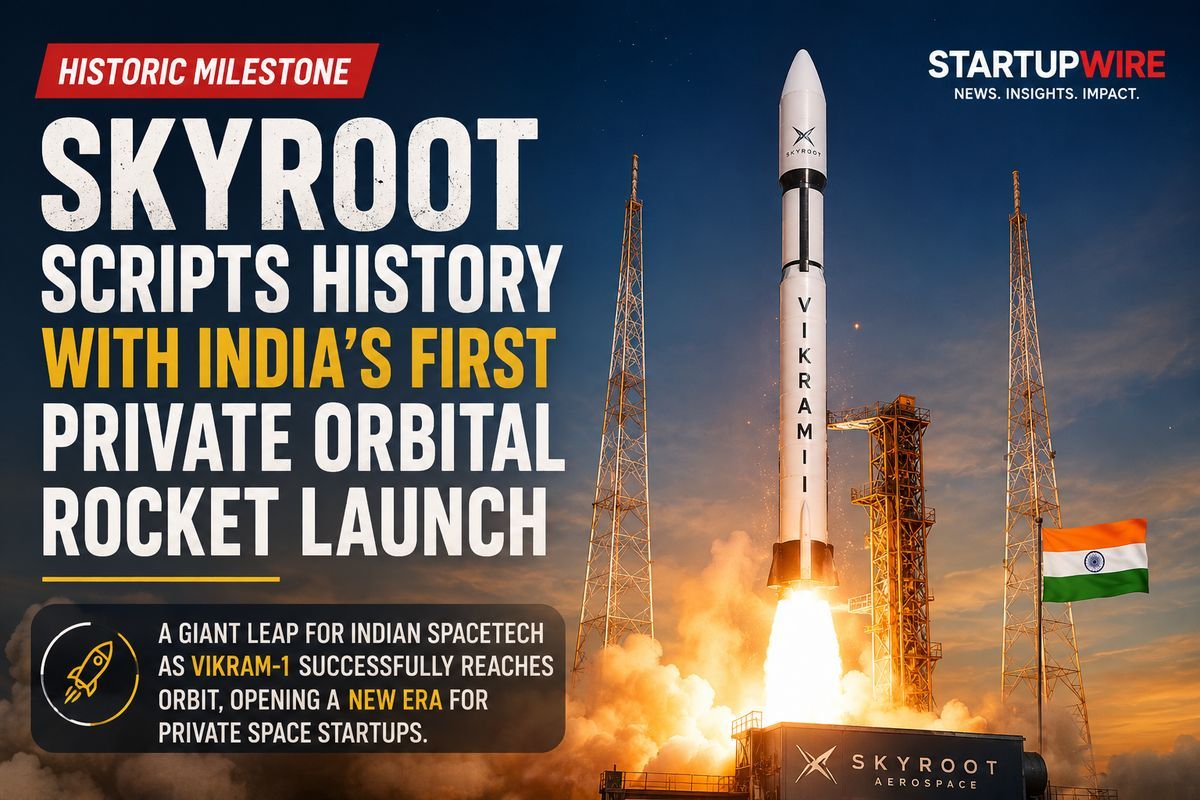
India's first privately built orbital rocket, Vikram-1, is scheduled for launch between July 12 and August 4, marking a major milestone for India's private space industry.
Executive Key Takeaways
- India's first privately built orbital rocket, Vikram-1, is scheduled for launch between July 12 and August 4, marking a major milestone for India's private space industry.
- For decades, space exploration in India was exclusively the domain of the state-run Indian Space Research Organisation (ISRO).
Skyroot Aerospace, one of India's leading space-tech companies, is gearing up for a historic event. The launch window for India's first privately built orbital rocket, Vikram-1, has been scheduled between July 12 and August 4. This event represents a monumental shift for India's private space industry, demonstrating the capability of private startups to design, build, and deploy reliable orbital launch systems.
A New Era for Indian Aerospace
For decades, space exploration in India was exclusively the domain of the state-run Indian Space Research Organisation (ISRO). However, with the establishment of regulatory facilitators like IN-SPACe (Indian National Space Promotion and Authorization Center), private players are finally stepping into the spotlight.
The Vikram-1 launch is not just a test flight; it is a full-fledged orbital mission designed to deploy customer satellites into low Earth orbit. This launch aims to prove that cost-effective, rapid-turnaround launch vehicles can be built outside government agencies.
Technical Innovations in Vikram-1
Vikram-1 is a multi-stage launch vehicle that incorporates cutting-edge engineering techniques:
- Carbon Composite Structure: High-strength, lightweight carbon fiber construction allows for optimal payload-to-weight ratios.
- 3D Printed Engines: The rocket uses 3D printed cryogenic and liquid engines, reducing manufacturing time from months to days.
- Solid Fuel Propulsion: Robust and reliable solid propellant stages ensure stable performance during the initial launch phase.
- Agile Payload Integration: A modular payload fairing designed to accommodate multiple small satellites, catering to the growing global demand for rideshare launches.
Commercial Implications
Global satellite operators are constantly seeking affordable launch options. If Vikram-1 is successful, Skyroot will position itself as a major competitor in the international small-satellite launch market, offering customized orbital insertion services at a fraction of the cost of legacy space corporations.
Analyze Skyroot's funding and compare it with other spacetech startups on the Startup Compare Tool.