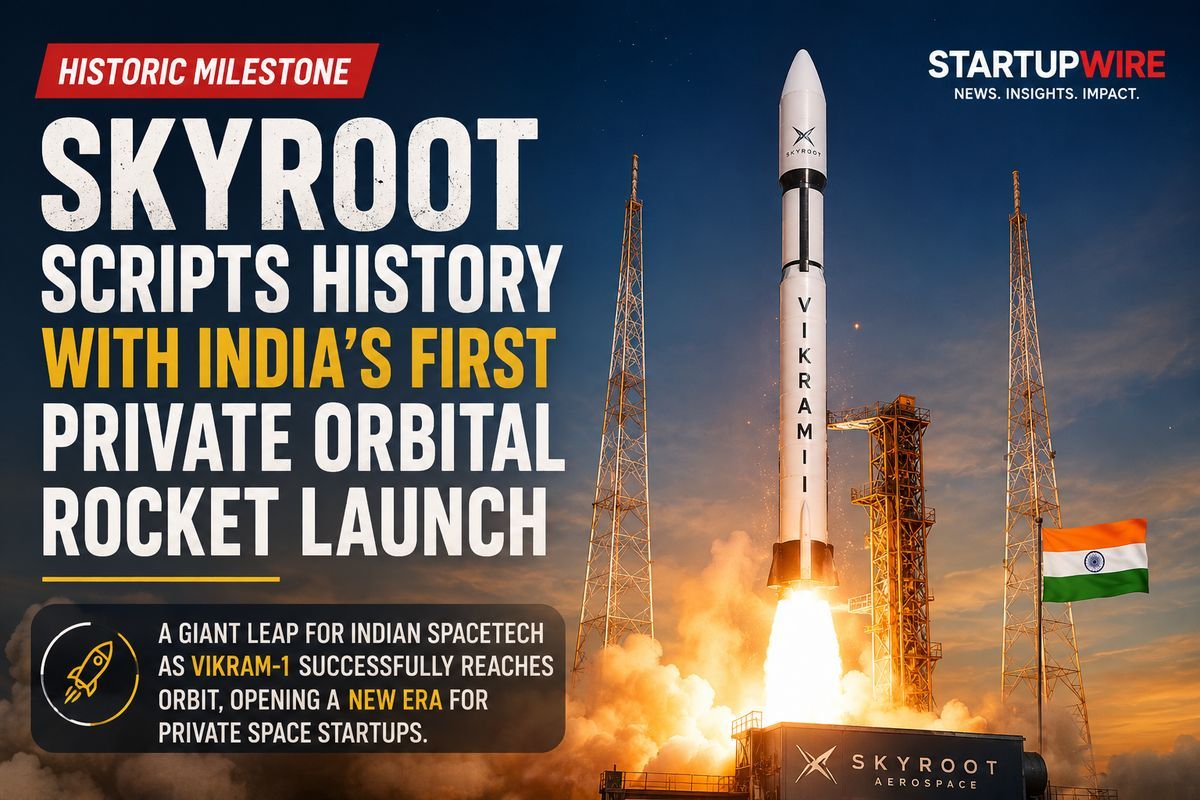
India's private space race hits a major milestone as Skyroot prepares to launch the Vikram-1 orbital rocket.
Executive Key Takeaways
- India's private space race hits a major milestone as Skyroot prepares to launch the Vikram-1 orbital rocket.
- Key Benchmark: **Vikram-1** — 3 Solid + 1 Liquid Stage
- The Vikram-1 is a multi-stage launch vehicle designed to carry payloads of up to 300 kilograms into Low Earth Orbit (LEO).
Hyderabad-based space-tech pioneer Skyroot Aerospace is preparing for the highly anticipated maiden orbital launch of its Vikram-1 rocket. This launch marks a historic milestone in India's private space industry, transitioning from suborbital demonstration to full commercial orbital capability.
The Vikram-1 is a multi-stage launch vehicle designed to carry payloads of up to 300 kilograms into Low Earth Orbit (LEO). Built with carbon-fiber structures and advanced 3D-printed liquid engines, the rocket represents a major leap in cost-effective manufacturing and quick turnaround capabilities.
Technical Specifications of Vikram-1
The Vikram series is built to offer launch-on-demand services for small satellites. Below is the technical breakdown of the Vikram-1 launcher compared to its upcoming successors:
| Launcher Model | Stages | Max Payload (LEO) | Structure | Engine Technology |
|---|---|---|---|---|
| Vikram-1 | 3 Solid + 1 Liquid Stage | 300 kg | Full Carbon Fiber | Kalam Solid Motors + Raman Liquid Engine |
| Vikram-2 | 3 Solid + 1 Liquid Stage | 525 kg | Carbon Composite | Cryogenic fuel upgrades |
| Vikram-3 | 3 Solid + 1 Liquid Stage | 815 kg | Heavy Carbon Composite | Cluster Engine configuration |
Disrupting the Small Satellite Market
Traditionally, small satellite operators had to ride-share on massive rockets like ISRO's PSLV or SpaceX's Falcon 9. This meant waiting for months, if not years, to align with primary payloads and accepting sub-optimal orbits.
Skyroot's launch-on-demand model promises to solve this bottleneck. By using solid fuel stages that require minimal storage overhead and can be assembled in a matter of days, Skyroot aims to bring down launch integration times from months to less than 72 hours.
"Our goal is to make space launches as regular and reliable as booking a cab. Vikram-1 is the first major step towards that vision," said Pawan Kumar Chandana, Co-founder and CEO of Skyroot Aerospace.
The Role of Regulatory Reforms
This launch comes on the heels of the Indian government's liberalization of the space sector. With the establishment of IN-SPACe (Indian National Space Promotion and Authorization Center) and the release of the Space Policy, private entities now have a streamlined framework to utilize ISRO's launch pads and tracking networks.
The success of Vikram-1 is expected to unlock significant global venture interest. Having already raised over $95 million in capital, Skyroot is positioned at the forefront of the South Asian private space boom, paving the way for other deep-tech players like Agnikul Cosmos and Pixxel.
To check how space-tech and other deep-tech ideas rank on viability, check the Startup Idea Scorecard.