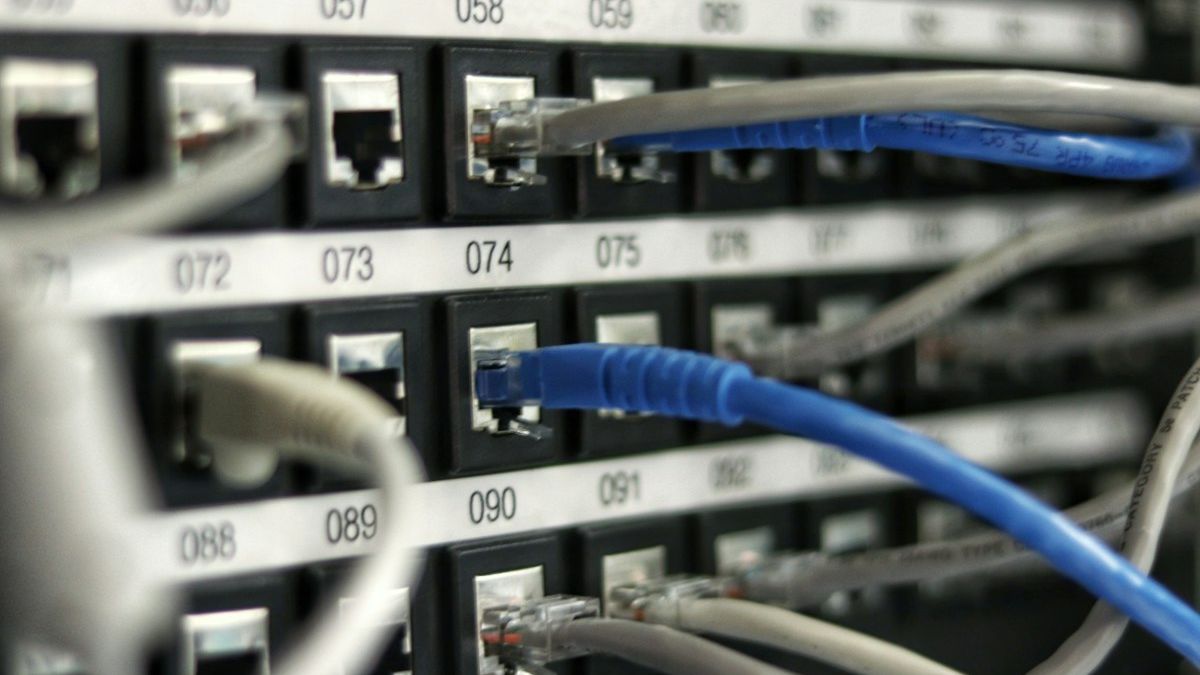
Tata Communications commits $450M to construct a dedicated 10,000-km AI connectivity fabric and 6 Pbps network linking hyperscale data centers across India.
Executive Key Takeaways
- Tata Communications is deploying $400M–$450M (₹4,350 crore) to build an ultra-high-speed 'AI Super Highway' optical connectivity network across India.
- The multi-phase rollout spans 10,000 km of new long-haul fiber, injecting 6 petabits per second (Pb/s) of dedicated AI data center interconnect capacity.
- Funded entirely via operational cash flows, the network bridges major compute corridors including Mumbai–Pune–Hyderabad–Chennai and emerging western hubs like GIFT City.
Tata Communications has announced a massive strategic investment of $400 million to $450 million (approximately ₹4,350 crore) to construct an ultra-high-speed, low-latency "AI Super Highway" optical fiber network across India. Designed to address the exponential compute demands of artificial intelligence clusters, the multi-phase infrastructure project will deploy roughly 10,000 kilometers of new long-haul optical fiber, injecting an unprecedented 6 petabits per second (Pb/s) of incremental transmission capacity across India's premier hyperscale data center corridors.
The initiative represents one of the largest private digital infrastructure bets in Indian telecommunications history. By interconnecting major regional GPU halls, subsea cable landing stations, and edge computing facilities, Tata Communications aims to eliminate network latency bottlenecks that currently constrain distributed AI model training and real-time enterprise inference.
The AI Compute Bottleneck: Why Optical Interconnects Matter
As foundation models expand into trillions of parameters, the computational challenge of artificial intelligence has transitioned from purely local processor density to distributed interconnect throughput. Clusters comprising tens of thousands of accelerated processors cannot operate cohesively without ultra-low latency, jitter-free data pipes capable of handling continuous Remote Direct Memory Access (RDMA) and multi-terabit synchronization bursts.
In India, where hyperscalers and domestic neo-cloud providers are racing to build massive GPU campuses, data center-to-data center connectivity has emerged as an existential infrastructure dependency alongside power and water cooling.
"AI compute cannot scale in isolation without a matching leap in optical network architecture,"observed telecommunications industry executives. "Connecting modern data halls requires massive multi-terabit optical fabrics that behave as unified backplanes. This $450 million deployment transforms India's domestic transit corridors into an interconnected AI supercomputing grid."
This infrastructure surge aligns directly with national digital expansions, complementing recent advancements such as India's six-state semiconductor manufacturing footprint and accelerating institutional capital highlighted in Goldman Sachs' forecast of a $100 billion India AI market cap.
Multi-Phase Execution Architecture and Regional Corridors
Tata Communications has structured the capital rollout across three execution phases spanning the next three to five years, strategically aligning with anticipated operational timelines of major hyperscaler server halls:
The structured table below details the execution phases, geographic routes, and technological benchmarks of the AI Super Highway:
| Rollout Phase | Geographic Corridor | Core Hubs & Cable Landing Stations | Strategic Architectural Objective |
|---|---|---|---|
| Phase 1 | Western & Southern Transit Spine | Mumbai, Pune, Hyderabad, Chennai | Interconnecting premier landing stations with primary cloud server clusters |
| Phase 2 | Eastern Coastal Extension | Hyderabad, Visakhapatnam, Chennai | Establishing secondary subsea redundancy and expanding regional failover corridors |
| Phase 3 | Emerging Industrial & Western Hubs | Bengaluru, GIFT City, Ahmedabad, Jamnagar, Bhubaneswar | Delivering low-latency edge AI transit to financial hubs and industrial complexes |
Integration with Global Hyperscaler Fabrics
The domestic AI super highway is engineered for seamless interoperability with Tata Communications' international subsea cable network. With over 500,000 kilometers of subsea fiber infrastructure globally, the company will link domestic Indian enterprise clusters directly to overseas AI hubs in Singapore, the Middle East, and Europe.
This unified topology directly serves global hyperscalers, large banking institutions, Global Capability Centres (GCCs), and emerging AI infrastructure operators such as domestic ventures profiled in Simplismart's high-efficiency inference orchestration.
Financial Prudence: Funding from Operational Cash Flows
Significantly, Tata Communications confirmed that the entire $400 million to $450 million capital program will be funded organically through its operational cash flows rather than external debt issuances. Over recent fiscal quarters, the enterprise connectivity major has maintained healthy operating EBITDA margins and strong deleveraging momentum, granting it balance sheet flexibility to self-fund strategic, multi-year sovereign infrastructure assets.
With commercial data center interconnect demand projected to surpass $1 billion domestically over the medium term, the project secures Tata Communications' position as the foundational transport layer for India's emerging artificial intelligence economy.
Frequently Asked Questions
What is the Tata Communications AI Super Highway?
The AI Super Highway is an ultra-low-latency, high-capacity long-haul optical fiber network being deployed by Tata Communications with a $400M to $450M investment to interconnect hyperscale AI data centers across India.
How much capacity will the new AI network fabric add?
The infrastructure will introduce approximately 6 petabits per second (Pb/s) of incremental bandwidth capacity between FY2030 and FY2036, supporting dense distributed GPU training and inference workloads.
Which geographic corridors are covered in the phased rollout?
Phase 1 covers Mumbai–Pune–Hyderabad–Chennai; Phase 2 connects Hyderabad–Vizag–Chennai; and Phase 3 expands into western and eastern hubs including Bengaluru, Ahmedabad, Jamnagar, and GIFT City.
How is Tata Communications financing this $450 million digital infrastructure investment?
The company is funding the entire capital expenditure program organically through internal operating cash flows, preserving balance sheet strength without taking on dedicated long-term debt.
Primary Sources & Official References
- Tata Communications Limited: Regulatory Stock Exchange Filing & Press Briefing
- Telecom Regulatory Authority of India (TRAI): Recommendations on Data Center Interconnect and Digital Infrastructure
- Ministry of Communications (DoT): National Broadband Mission and Optical Backbone Updates
- Gartner & IDC Market Analysis: High-Performance Networking Requirements for AI Workloads