Microsoft Opens Fourth India Cloud Region in Hyderabad: Expanding Hyperscale AI Infrastructure and Sovereign Compute
By Rohan Varma | Published September 22, 2026 | 8 min read
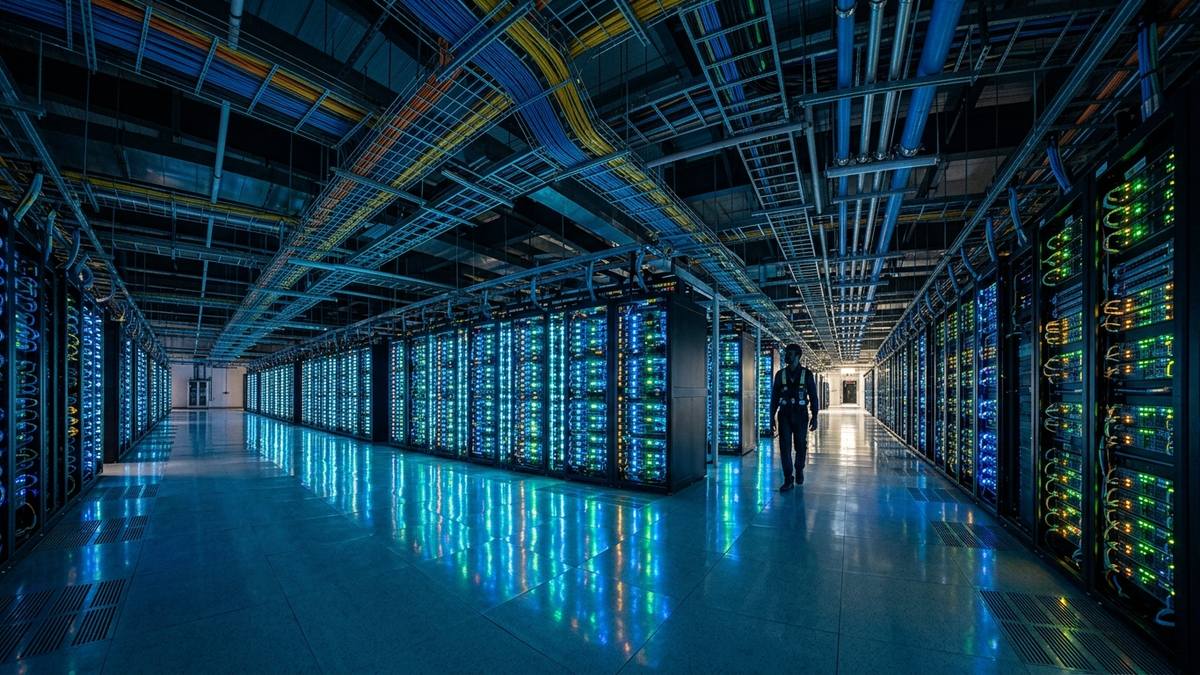
Microsoft officially launches its fourth hyperscale cloud region in Hyderabad, engineered with high-density liquid-cooled AI compute clusters to complement existing Pune, Chennai, and Mumbai nodes.
Microsoft has officially inaugurated its fourth hyperscale cloud region in Hyderabad, Telangana, marking its most ambitious infrastructure investment in South Asia and significantly expanding India's domestic artificial intelligence compute capacity. The state-of-the-art campus joins Microsoft’s three existing commercial cloud regions in Pune (Central India), Chennai (South India), and Mumbai (West India), establishing an ultra-resilient, quad-region geographic mesh across the subcontinent.
The Hyderabad launch arrives at a pivotal inflection point. As Indian enterprises, financial institutions, government ministries, and deeptech startups accelerate generative AI adoption, demand for specialized AI infrastructure—particularly dense GPU clusters, ultra-high-bandwidth optical fabrics, and massive sovereign storage pools—has outstripped existing datacenter capacity.
By designing the Hyderabad facility from the ground up to support power-hungry AI training and low-latency inference, Microsoft is cementing its role as a premier infrastructure backbone for India’s digital economy.
Strategic Architecture: Why Hyderabad and Why Now?
Hyderabad has rapidly transformed into one of Asia’s premier technology corridors, buoyed by progressive state infrastructure policies, reliable electric power grids, high seismic stability, and deep concentrations of enterprise engineering talent.
Microsoft already maintains its largest research and development campus outside Redmond in Hyderabad. Adding a dedicated hyperscale cloud region creates an integrated innovation loop, linking Azure engineering teams directly with local hardware testbeds.
The new region features multiple physically separated Availability Zones (AZs). Each zone is equipped with independent power substations, dedicated fiber conduits, and physical security perimeters. This architecture allows mission-critical enterprises to design active-active failover topologies with single-digit millisecond latency, meeting the highest tiers of corporate disaster recovery and business continuity mandates.
"India's appetite for artificial intelligence compute is accelerating faster than almost any market globally,"stated cloud infrastructure analysts. "Microsoft’s quad-region architecture—anchored by this AI-dense Hyderabad campus—provides enterprises and government agencies with the sovereign computing scale needed to run frontier models without sending a single packet of sensitive data overseas."
AI-First Engineering: High-Density Liquid Cooling and Optical Fabric
Traditional enterprise cloud datacenters were designed to support standard CPU server racks consuming between 8 and 15 kilowatts (kW) of electrical power. In contrast, modern AI workloads powered by high-performance GPU clusters generate intense thermal loads, drawing anywhere from 40 to over 80 kW per rack.
To support these dense workloads, Microsoft has engineered the Hyderabad campus with cutting-edge datacenter innovations:
- Closed-Loop Direct-to-Chip Liquid Cooling: Chilled dielectric fluids circulate directly across GPU microprocessors, extracting thermal energy far more efficiently than legacy forced-air cooling.
- Ultra-High-Speed Optical Switching Fabric: Utilizing non-blocking InfiniBand and Ultra Ethernet interconnects, the datacenter supports distributed multi-thousand-node model training runs with near-zero packet drop.
- Zero-Water Consumption Cooling: The facility utilizes advanced closed-loop adiabatic cooling systems that eliminate continuous evaporative water consumption, preserving municipal water resources in Telangana.
- 100% Renewable Power Alignment: Microsoft has contracted long-term power purchase agreements (PPAs) with domestic solar and wind developers to power operations with zero-carbon energy.
Microsoft Azure India Infrastructure Footprint: Regional Capability Matrix
The table below illustrates the technical focus, workload specialization, and sovereign compliance posture across Microsoft's four Indian cloud regions:
| Cloud Region | Location & Node | Availability Zones | Primary Workload Specialization | Sovereign Compliance Standards |
|---|---|---|---|---|
| India South Central (New) | Hyderabad, Telangana | 3 Availability Zones | High-Density AI Training, LLM Inference, Hyperscale Analytics | MeitY Empaneled, ISO 27001, SOC 2, DPDP Aligned |
| Central India | Pune, Maharashtra | 3 Availability Zones | Core Enterprise ERP, Financial Clearing, Multi-Tier DBs | RBI Banking Guidelines, MeitY Empaneled |
| South India | Chennai, Tamil Nadu | 3 Availability Zones | SaaS Hosting, Subsea Cable Landing Ingress, Global Exports | Global Transit, GDPR, ISO 27701 |
| West India | Mumbai, Maharashtra | Standard Enterprise Node | Capital Markets Trading, Stock Exchange Direct Connect | SEBI Trading Floors, BSE/NSE Express Connect |
Data Sovereignty and Sovereign Compliance
A driving motivation for the launch is the urgent demand for domestic data sovereignty. Under India's Digital Personal Data Protection (DPDP) Act and regulatory circulars from the Reserve Bank of India (RBI) and the Securities and Exchange Board of India (SEBI), critical personal and financial records must reside within Indian borders.
With four fully independent regions, Microsoft offers Indian organizations true intra-country disaster recovery without cross-border replication. A national bank in Mumbai, for instance, can replicate its core transactional databases between Pune and Hyderabad in real time, ensuring that even a catastrophic regional outage will not disrupt financial services or violate sovereign data laws.
This focus on sovereign compliance and secure infrastructure reinforces ongoing enterprise security protocols, complementing lessons from frontier AI cybersecurity evaluations and fueling India’s $221 billion software export economy.
Synergies with Southern Datacenter and Hardware Corridors
The opening of Microsoft's Hyderabad cloud region creates powerful industrial ripple effects across Southern India's technology ecosystem. Hyperscale cloud campuses require vast quantities of high-density fiber cables, power transformers, server racks, and semiconductor components.
This infrastructure surge connects directly with regional hardware manufacturing initiatives, complementing Tata Electronics' semiconductor wafer fab and OSAT packaging networks and aligning with bilateral commitments ratified during SEMICON India 2026.
As Indian enterprises continue their historic transition from experimental AI pilots to industrial-scale generative software deployments, Microsoft’s fourth hyperscale region provides the essential computational bedrock to power the nation’s digital future.
Frequently Asked Questions
What is significant about Microsoft's new Hyderabad cloud region?
The Hyderabad region represents Microsoft's largest datacenter investment in India, featuring modern multi-availability-zone infrastructure optimized specifically for AI workloads. It complements existing facilities in Pune, Chennai, and Mumbai, offering ultra-low latency, comprehensive disaster recovery, and sovereign compute capacity.
How is this facility engineered specifically for AI workloads?
Unlike traditional datacenters engineered for 10–15 kW per rack, the Hyderabad campus incorporates high-density power distribution of up to 40–80 kW per rack, closed-loop direct-to-chip liquid cooling systems, and non-blocking InfiniBand/Ultra Ethernet optical fabrics necessary to train and serve massive LLMs and agentic systems.
Which industries will benefit most from the Hyderabad launch?
Heavily regulated sectors—including public sector government agencies, banking and financial institutions (BFSI), healthcare networks, defense contractors, and fast-growing Indian AI startups—will gain access to frontier AI compute while complying with strict on-soil data residency regulations.
How does this impact Microsoft's carbon and sustainability commitments?
The Hyderabad cloud region is designed to operate on 100% renewable energy contracts, utilizing advanced adiabatic cooling techniques that drastically reduce water consumption, aligning with Microsoft's global commitment to be carbon negative by 2030.
Primary Sources & Official References
- Microsoft Corporate Announcement: Opening of the Hyderabad Hyperscale Cloud Region: Executive disclosures on capital investment and regional architecture.
- Government of Telangana Department of Information Technology, Electronics & Communications (ITE&C): Strategic Infrastructure Partnership Brief: Official state documentation on power allocation and datacenter park infrastructure.
- Ministry of Electronics and Information Technology (MeitY): Cloud Service Provider (CSP) Empanelment and Sovereign Data Compliance Directory: Regulatory certifications and data residency accreditations.
- International Data Corporation (IDC): India Hyperscale Datacenter & Enterprise AI Workload Forecast: Independent research on cloud computing capacity and enterprise AI infrastructure spending in India.