Mumbai Deeptech Pioneer Techno Defence Develops Indigenous Miniature Cryocooler for Defense Infrared Sensors
By Sanjay Patel | Published August 20, 2026 | 8 min read
Developed with DRDO's Solid State Physics Laboratory, Techno Defence’s ultra-compact 10-gram Joule-Thomson cryocooler achieves <10 second rapid cooling for advanced missile seekers.
MUMBAI / THANE — In a major breakthrough for India's sovereign defense electronics and precision engineering capabilities, Mumbai-based deeptech company Techno Defence Private Limited has successfully engineered and delivered an indigenous miniature Joule-Thomson (JT) cryocooler designed specifically for high-performance infrared (IR) sensors in tactical missile seekers. Developed in close technical collaboration with the Solid State Physics Laboratory (SSPL)—a premier research wing of the Defence Research and Development Organisation (DRDO)—the project was supported by the DRDO Technology Development Fund (TDF).
The ultra-compact cryogenic cooler, weighing a mere 10 to 15 grams, solves one of the most demanding thermal physics challenges in modern precision-guided munitions: cooling sensitive thermal imaging sensor arrays down to cryogenic temperatures (between -175°C and -196°C, or 77 Kelvin) in less than 10 seconds from missile launch initiation. Successful handover and verification trials with DRDO establish India among an elite group of nations possessing indigenous manufacturing capabilities for critical miniature cryogenic seeker components.
The Physics of Seeker Cryogenics: Why Cryocooling is Critical
Modern electro-optical and infrared (EO/IR) guided missiles—including anti-tank guided missiles (ATGMs), short-range air-to-air missiles (AAMs), and precision surface-to-air interceptors—rely on quantum photon detectors such as Mercury Cadmium Telluride (MCT) and Indium Antimonide (InSb) focal plane arrays.
At ambient temperatures (25°C to 50°C), thermal excitation inside the semiconductor detector lattice generates overwhelming electronic noise ("dark current"). This thermal noise obscures faint infrared signatures emitted by distant aerial targets, armored vehicle engine compartments, or stealth exhaust plumes.
To achieve extreme tracking sensitivity and lock-on range, the detector must be rapidly plunged to liquid nitrogen temperatures (77 K). The miniature JT cryocooler achieves this through the Joule-Thomson effect: high-pressure gas (Nitrogen or Argon at ~300 bar) flows through micro-machined heat exchange coils and expands through a precision micro-orifice, causing instantaneous thermodynamic temperature drop and liquefaction directly behind the sensor array.
"Developing a cryocooler that fits within a pencil-thin missile dome, weighs only 10 grams, withstands 100G launch shocks, and drops 270 degrees Celsius in under 10 seconds represents the pinnacle of precision thermodynamics and micro-machining,"stated defense engineering specialists. "With Techno Defence's breakthrough, Indian missile systems no longer need to depend on restricted foreign sub-assemblies."
Engineering Breakthroughs: Dual-Flow Micro-Machining and Shock Resilience
Led by alumni from IIT Bombay and backed by Technocraft Industries, Techno Defence's R&D center in Thane, near Mumbai, overcame several complex manufacturing hurdles to achieve qualification:
1. Dual-Flow Rapid Thermodynamic Cycle: Traditional single-flow JT coolers suffer from sluggish initial cooling. Techno Defence implemented an advanced dual-flow architecture featuring a high-mass initial flush for sub-10-second cooldown, which automatically throttles back to a low-consumption steady state once 77 K is reached, preserving onboard gas reservoir volume.
2. Ultra-Lightweight 10–15 Gram Mass Budget: Built using specialized titanium and stainless steel micro-tubing, the cooler fits into tightly constrained missile seeker gimbals without degrading gyroscopic stabilization or aerodynamic balance.
3. Extreme G-Force and Vibration Immunity: The assembly is hardened to endure violent acceleration forces exceeding 100 Gs, high-altitude acoustic turbulence, and rapid thermal cycling without structural degradation or micro-orifice clogging.
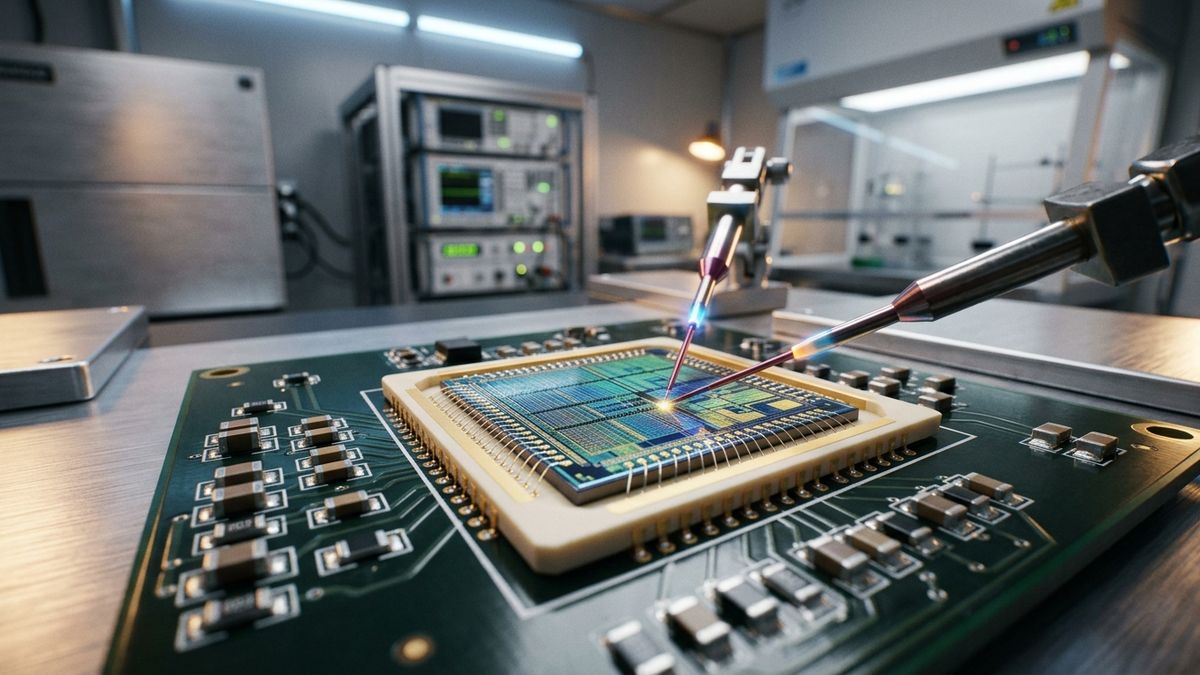
4. Hermetic Laser Micro-Welding: Ultra-precision laser welding and micro-filtration ensure that zero particulate contaminants or moisture freeze inside the micro-nozzle, guaranteeing 100% mission reliability on the battlefield.
Technical Performance Matrix: Techno Defence Cryocooler vs. Global Benchmarks
The table below details the performance parameters achieved by Techno Defence's indigenous miniature JT cryocooler:
| Technical Parameter | Global Defense Standard | Techno Defence Indigenous Spec | Strategic Operational Advantage |
|---|---|---|---|
| Operating Cryogenic Temperature | 77 Kelvin (-196°C) to 80 K | 77 K to 85 K (-196°C to -188°C) | Optimal noise reduction for InSb/MCT arrays |
| Cooldown Time to 77 Kelvin | < 15 Seconds | < 10 Seconds (Dual-Flow) | Faster lock-on before launch & immediate firing |
| Total Cooler Assembly Mass | 20 – 35 Grams | 10 – 15 Grams (Micro-Form) | Frees up payload mass for guidance optics |
| Operating Gas Media | High-Purity N₂ or Argon | High-Purity Nitrogen / Argon | Standardized domestic gas logistics |
| Maximum Storage Pressure | 250 – 350 Bar | Up to 350 Bar | High thermodynamic efficiency & long shelf life |
| Shock & Acceleration Tolerance | 50G – 75G | > 100G Multi-Axis | Compatible with rocket launches & gun-launched rounds |
Strengthening India's Sovereign Defense Tech Ecosystem
Techno Defence's achievement highlights the vital catalytic role played by DRDO's Technology Development Fund (TDF). By providing direct financial grants, technical mentoring, and military test range access to Indian private deeptech startups, the TDF scheme is systematically replacing critical imported subsystems with domestic intellectual property.
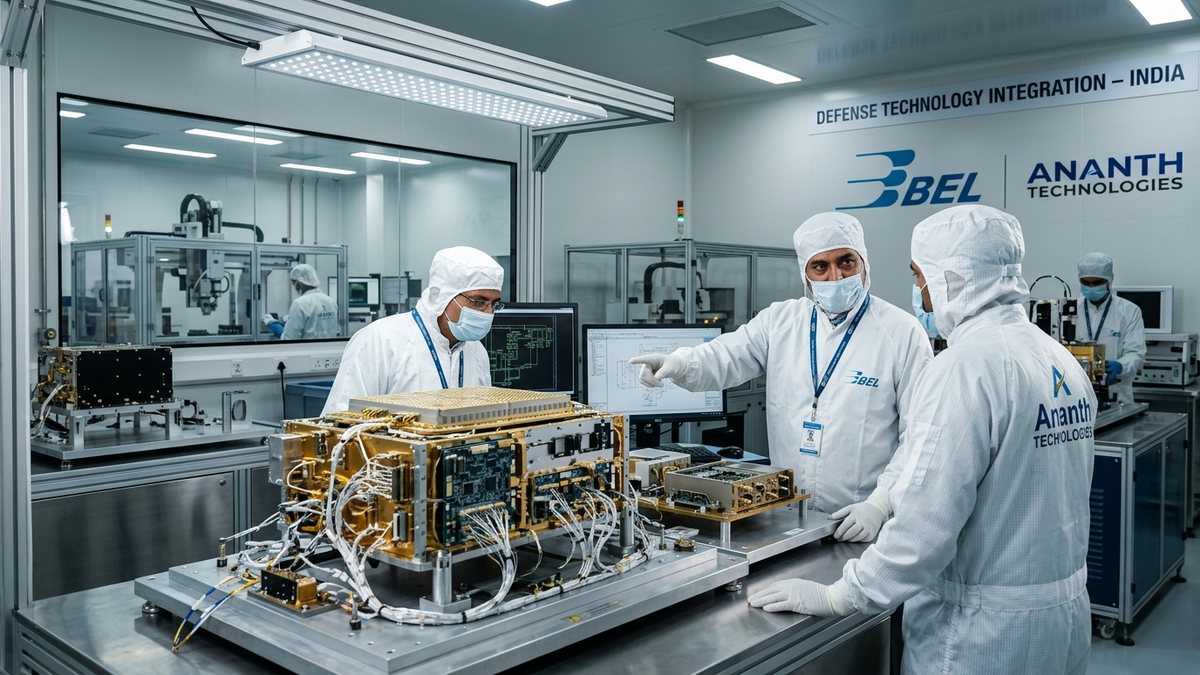
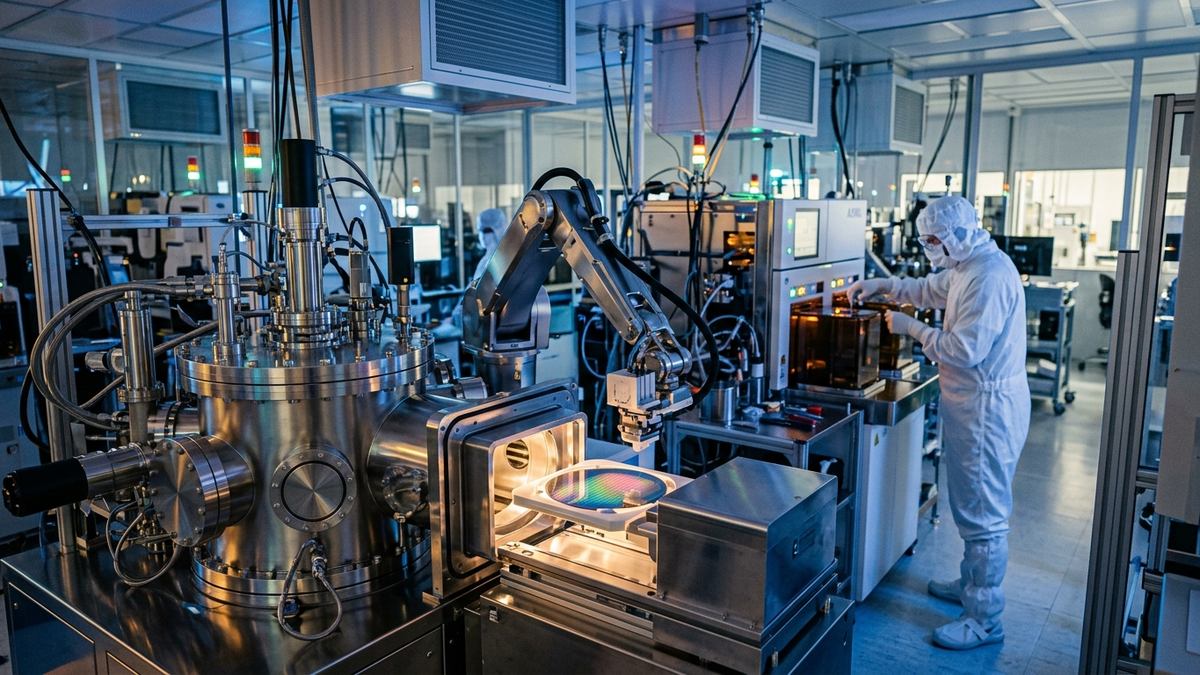
This breakthrough complements other major defense and aerospace milestones across the country, such as the strategic collaboration between Bharat Electronics (BEL) and Ananth Technologies for satellite and radar payloads, geospatial intelligence advancements by NeoGeo's satellite analytics, and semiconductor packaging breakthroughs being showcased at SEMICON India 2026.
Future Roadmap: Scaling to Quantum and Space Applications
Following the successful validation trials of its miniature missile cryocooler, Techno Defence is expanding its cryogenic and optoelectronic engineering capabilities into adjacent high-value frontiers:
- Space-Grade Closed-Cycle Stirling Coolers: Developing long-life micro-Stirling and pulse-tube cryocoolers for low-earth orbit (LEO) earth observation satellites and thermal surveillance payloads.
- Quantum Computing Dilution Stage Components: Engineering ultra-low-vibration cryogenic cooling interfaces for superconducting quantum processors, aligning with initiatives under the National Quantum Mission and facilities like the QpiAI Quantum Foundry in Karnataka.
- Commercial Semiconductor Metrology: Applying micro-thermodynamic sensor packaging to industrial wafer defect inspection tools and specialized scientific instruments.
Key Takeaways for the Defense Tech Industry:
- TDF Proves Effective for Hard Tech: The DRDO Technology Development Fund provides an effective framework for private engineering firms to build critical defense intellectual property.
- Micro-Machining is a Strategic National Capability: Precision micro-thermodynamics, laser micro-welding, and cryogenic testing are foundational capabilities required for sovereign missile and aerospace superiority.
- Aatmanirbhar Bharat Moves Up the Value Chain: Indian defense manufacturing is transitioning rapidly from basic structural fabrication to high-value sensor and seeker core sub-assemblies.