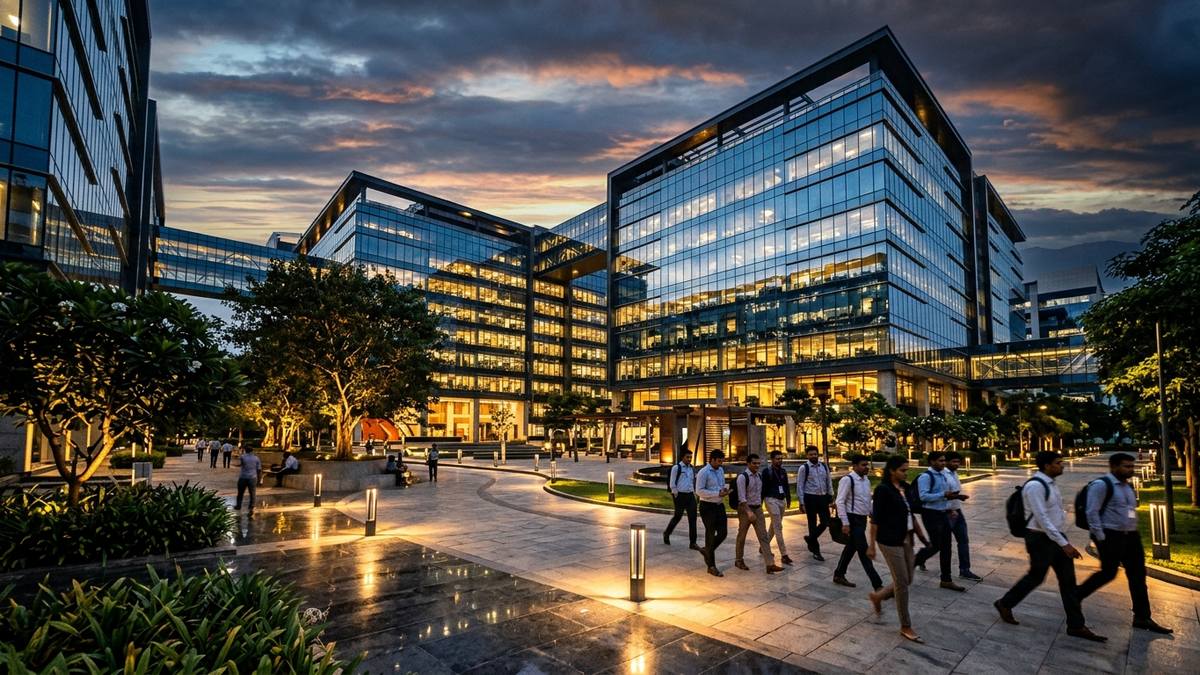
Uber's global restructuring impacts Indian technology and shared services centers as the mobility leader streamlines corporate overhead and automates customer operations.
Executive Key Takeaways
- Uber's global restructuring impacts Indian technology and shared services centers as the mobility leader streamlines corporate overhead and automates customer operations.
- Global technology leaders are standardizing operational workflows around centralized automation and AI-assisted dispute resolution, remarked corporate restructuring and technology labor analysts. Companies are eliminating redundant intermediate coordination roles to maintain peak operating leverage in a disciplined interest rate environment.
- Key Benchmark: **Customer Support & Disputes** — Reduce cost-per-ticket via automated resolution
HYDERABAD & BENGALURU — Global ride-hailing and logistics technology giant Uber Technologies has initiated a targeted corporate restructuring that has impacted portions of its India workforce, primarily across its engineering hubs, shared services divisions, and regional operational support centers in Hyderabad and Bengaluru. While the Silicon Valley-headquartered mobility company has not publicly released regional headcount breakdowns, internal communications and sources familiar with the matter indicate that dozens of functional positions have been eliminated or consolidated as part of a worldwide initiative to streamline corporate overhead and flatten operational management layers.
The workforce adjustments come at an intriguing moment in Uber's corporate trajectory. Rather than reacting to financial distress, the company has generated record free cash flow and consecutive quarters of GAAP operating profitability. The restructuring reflects a calculated strategic pivot: consolidating regional administrative roles, automating high-volume customer dispute resolution through conversational AI systems, and reallocating capital toward autonomous vehicle (AV) commercial partnerships and edge routing infrastructure.
This corporate realignment mirrors efficiency mandates observed in the quick commerce sector in Quick Commerce 2.0: Zepto, Blinkit, and Instamart Battle for High-Margin Categories and reflects workforce automation trends highlighted in The Agentic Shift in Indian IT.
Anatomy of the Realignment: Strategic Drivers and Impacted Units
Uber’s operations in India are bifurcated between its commercial ride-hailing business—which competes fiercely with domestic rivals Ola Consumer and Rapido—and its Global Tech & Shared Services Centers of Excellence (CoEs). These facilities in Hyderabad and Bengaluru employ thousands of software engineers, data scientists, and operational analysts who build core global products, ranging from driver dispatch.
Strategic Realignment & Automation Streams
The restructuring streamlines operations across two primary tracks:
- Operational Automation Track: Transitioning manual customer dispute workflows to automated GenAI resolution pipelines.
- Engineering Rebalancing Track: Concentrating tech talent on autonomous vehicle (AV) routing, platform telemetry, and high-margin ad tech.
The current restructuring touches specific functional silos:
1. Tier-1 Customer & Driver Operations: Low-complexity customer support workflows, dispute reconciliations, and ticket triage are increasingly handled by automated generative AI agents, reducing the need for large manual shared services teams.
2. Mid-Level Operational Redundancies: Regional marketing, partner support, and administrative management roles have been consolidated into centralized global reporting lines to accelerate decision-making cycles.
3. Engineering Rebalancing: Discontinuation of non-core exploratory software initiatives, with engineering headcount redeployed toward high-priority platform services, advertisement monetization systems, and autonomous fleet integration tools.
"Global technology leaders are standardizing operational workflows around centralized automation and AI-assisted dispute resolution,"remarked corporate restructuring and technology labor analysts. "Companies are eliminating redundant intermediate coordination roles to maintain peak operating leverage in a disciplined interest rate environment."
Comparative Operational Matrix: Global Drivers vs. India Impact
The table below provides a structured overview of the strategic objectives guiding Uber's global efficiency program and their localized operational manifestations across India:
| Functional Area / Division | Global Corporate Objective | India Center Operational Manifestation | Transition / Evolution Path |
|---|---|---|---|
| Customer Support & Disputes | Reduce cost-per-ticket via automated resolution | Downsizing in Hyderabad & Vizag shared services | Migration to GenAI conversational agent workflows |
| Regional Driver Onboarding | Digitize identity verification and vehicle compliance | Streamlining field operation desks across metros | Full self-service mobile KYC & automated document OCR |
| Core Platform Engineering | Consolidate microservices and eliminate legacy stacks | Targeted team realignments in Bengaluru tech hub | Increased focus on high-margin Uber One & Uber Ads |
| Corporate Overhead & HR | Flatten span of control from 1:5 to 1:8 manager ratios | Consolidation of mid-tier coordination roles | Centralized APAC reporting lines out of Singapore |
| Autonomous Mobility R&D | Expand third-party AV integrations (Waymo, Cruise) | Scaling backend telemetry & fleet routing services | Technical hiring reoriented to AV simulation & teleoperation |
Competitive Pressures Across the Indian Ride-Hailing Battlefield
The operational pruning also reflects the cutthroat economics of India’s domestic ride-hailing and urban transit market. While Uber maintains a dominant footprint in premium four-wheeler airport and corporate commutes, domestic competitors are reshaping competitive boundaries:
- Rapido’s Two-Wheeler & Auto Dominance: Rapido has leveraged low-cost auto-rickshaw and bike-taxi fleets to capture daily budget commutes across Tier-1 and Tier-2 Indian cities, challenging Uber’s entry-level transit offerings.
- Ola Consumer’s Electric Transition: Bhavish Aggarwal’s Ola Consumer continues to aggressively push its vertically integrated electric two-wheeler and four-wheeler fleets, seeking lower per-kilometer operating expenditures.
- Zero-Commission Community Apps (Namma Yatri / ONDC): Open mobility networks that charge drivers a nominal flat SaaS fee or zero commission have gained substantial traction in Bengaluru, Hyderabad, and Kolkata, creating competitive pressure on Uber's take rates.
Shifting Focus: Autonomous Fleets and Next-Generation Mobility
Despite the localized workforce adjustments, India remains one of Uber’s most vital engineering and operational talent hubs worldwide. The engineering teams in Bengaluru and Hyderabad are actively architecting the software infrastructure that will power Uber’s next decade of growth: integrating autonomous robotaxis from partners like Waymo, scaling real-time dynamic pricing models, and managing complex multi-modal dispatch systems spanning tens of millions of rides per day.
The restructuring illustrates a broader macroeconomic reality across tech: sustainable profitability and operational lean-ness have replaced unrestrained headcount expansion as the primary indicators of corporate health.