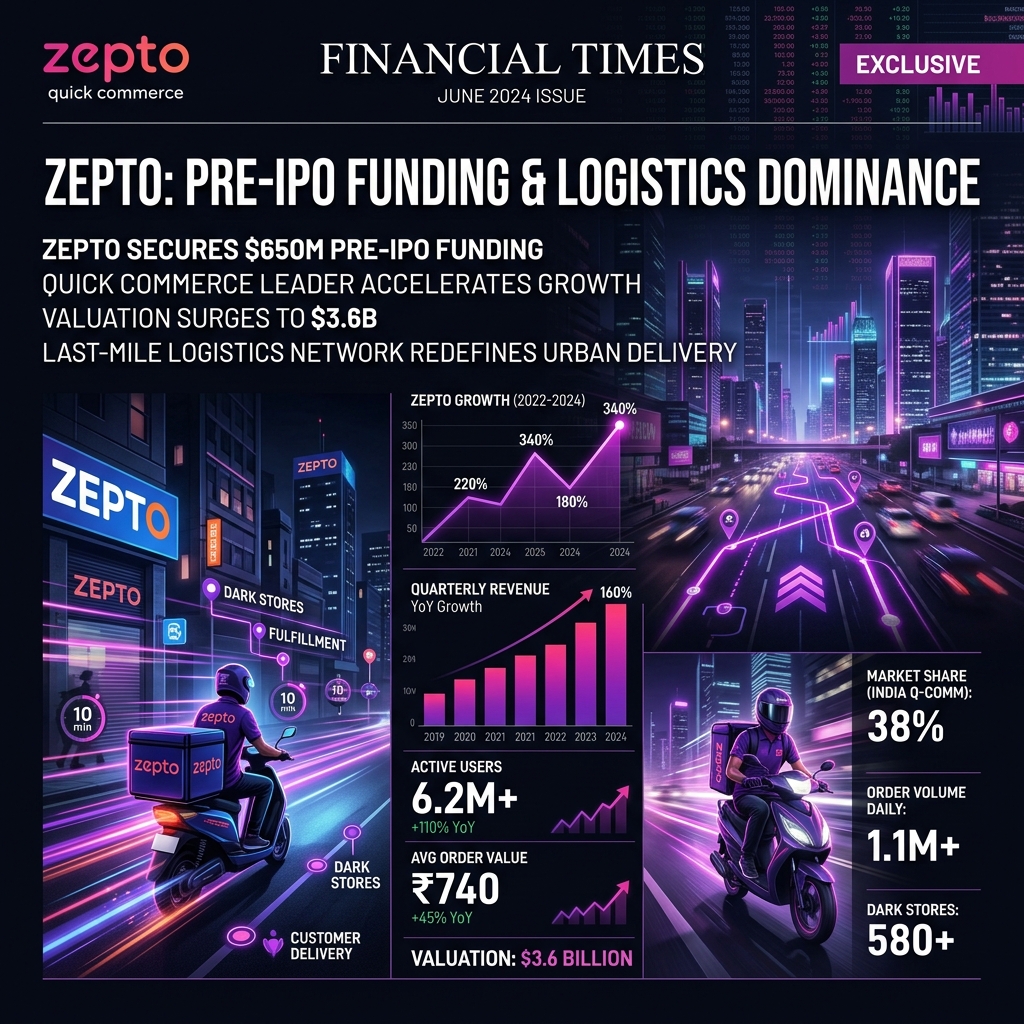
India's quick commerce giants are transforming dark stores into hyper-local supermalls, expanding into electronics, apparel, and pharma to drive contribution margins positive ahead of blockbuster IPOs.
Executive Key Takeaways
- India's quick commerce giants are transforming dark stores into hyper-local supermalls, expanding into electronics, apparel, and pharma to drive contribution margins positive ahead of blockbuster IPOs.
- Every incremental ₹100 increase in basket size drops straight to the operating contribution margin because delivery logistics costs remain fixed, noted institutional retail equity analysts. Delivering a ₹4,000 pair of noise-canceling headphones costs the platform essentially the same as delivering a carton of milk.
- Key Benchmark: **Average Order Value (AOV)** — ₹380 – ₹420
BENGALURU & GURGAON — India’s fiercely contested quick-commerce battlefield is undergoing a fundamental economic makeover. What originated as a low-margin race to deliver milk, bread, and coriander in 10 minutes has transformed into Quick Commerce 2.0—a high-density, multi-category retail juggernaut where Zepto, Zomato’s Blinkit, and Swiggy Instamart are battling for dominant share in high-margin electronics, beauty, fashion, and OTC pharmacy.
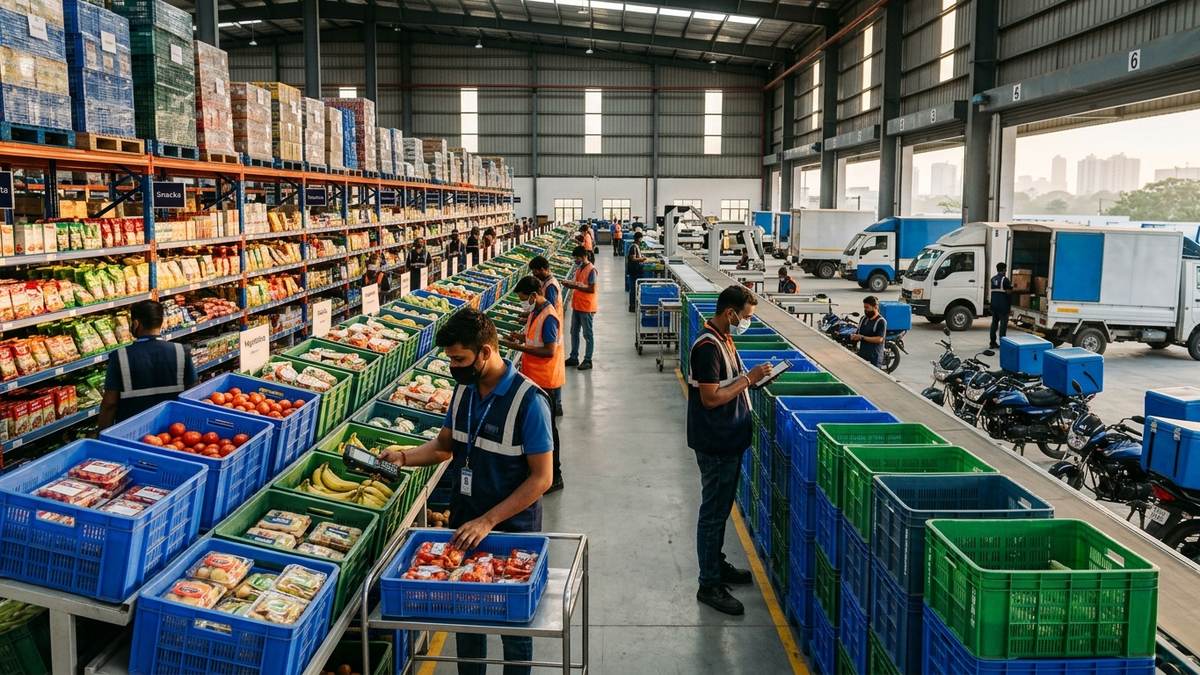
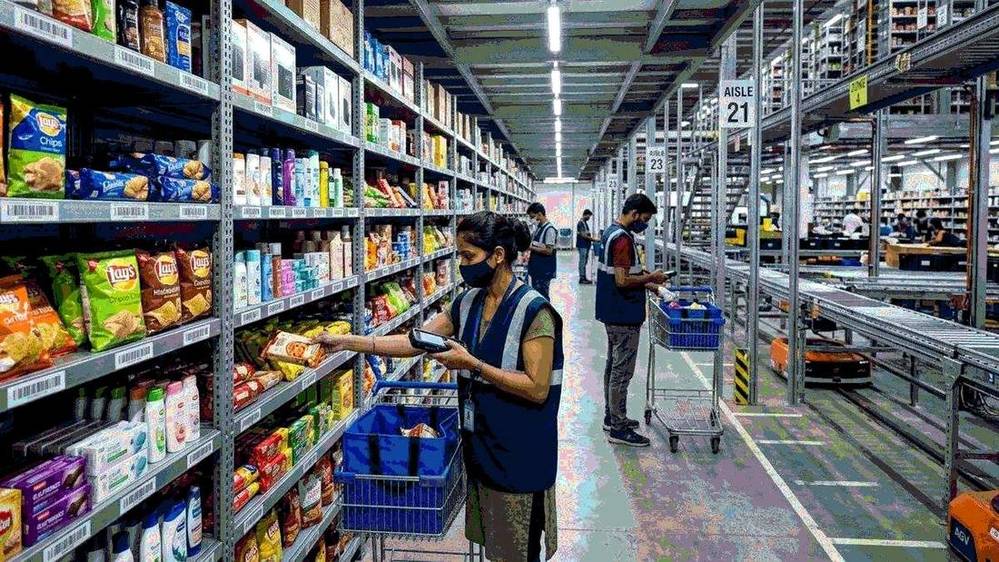
With Zepto and Swiggy preparing for landmark domestic public market listings and Blinkit driving the bulk of Zomato’s enterprise valuation surge, the operators are aggressively expanding their micro-fulfillment centers (dark stores) from 2,500 sq. ft. grocery depots into 6,000–8,000 sq. ft. mechanized urban warehouses stocking upwards of 25,000 unique SKUs.
This supply chain expansion echoes the logistics transformation analyzed in Airbound Raises $37 Million for Blended-Wing Autonomous Cargo Drones and the broader venture capital momentum tracked in Indian Tech Startups Raise $207 Million in Weekly Funding.
The Unit Economics Evolution: Expanding Beyond Low-AOV Groceries
The structural vulnerability of initial quick-commerce operations was rooted in small Average Order Values (AOV of ₹350–₹450) and razor-thin gross margins on fresh vegetables (8–12%). Quick Commerce 2.0 solves this equation by transforming dark stores into localized mini-supermalls carrying smartphones, wireless earphones, luxury cosmetics, and diagnostic health kits:
Quick Commerce 2.0 Fulfillment Architecture
The modernized quick commerce supply chain functions through a two-tiered logistics pipeline:
1. Central Mother Warehouse: Regional distribution hub holding 50,000+ long-tail SKUs with dynamic automated replenishment algorithms.
2. Mechanized Metro Dark Store: 6,000–8,000 sq ft fulfillment nodes stocking 25,000 high-velocity SKUs.
3. High-AOV Multi-Category Staging: Integrated storage for consumer electronics, beauty, OTC pharmaceuticals, and fresh groceries.
4. Sub-10-Minute Hyperlocal Dispatch: Algorithmic batch picking and rider dispatch within 120 seconds of order placement.
"Every incremental ₹100 increase in basket size drops straight to the operating contribution margin because delivery logistics costs remain fixed,"noted institutional retail equity analysts. "Delivering a ₹4,000 pair of noise-canceling headphones costs the platform essentially the same as delivering a carton of milk."
Financial Benchmarks: Quick Commerce 1.0 vs. Quick Commerce 2.0
The comparison matrix below highlights the rapid structural shift in operational unit economics across Tier-1 Indian metropolitan clusters:
| Unit Economic Dimension | Quick Commerce 1.0 (2022–2023) | Quick Commerce 2.0 (2026) | Structural Shift |
|---|---|---|---|
| Average Order Value (AOV) | ₹380 – ₹420 | ₹850 – ₹1,250 | +160% Higher Basket Size |
| Store Footprint & SKU Depth | 2,500 sq. ft. (~3,000 SKUs) | 7,000 sq. ft. (~25,000 SKUs) | 8x Product Catalog Variety |
| High-Margin Non-Grocery Mix | 8% – 12% | 35% – 45% | Electronics, Beauty, Home & Health |
| Blended Gross Margin | 12% – 15% | 22% – 26% | +1,000 bps Margin Expansion |
| Dark Store EBITDA Breakeven | 18–24 Months | 4–6 Months | Accelerated Payback Cycles |
| Ad Monetization Revenue | Negligible (< 1% GMV) | 3.5% – 5.0% GMV | High-Margin Retail Media Network |
Advertising and Retail Media Networks: The Silent Margin Driver
Beyond product markup, quick commerce operators have built one of the most profitable advertising media engines in digital India. Brand manufacturers—from FMCG giants like Hindustan Unilever and ITC to electronics brands like boAt and Apple authorized distributors—pay significant premiums for top search rankings, homepage banners, and "frequently bought together" recommendation carousels.
With intent-to-buy conversion rates exceeding 30% inside quick commerce apps (compared to sub-3% on traditional e-commerce portals), advertising revenue now subsidizes rider incentives and cold-storage operations, enabling mature dark stores to achieve store-level EBITDA margins of 6% to 8%.
Road to 2026 IPOs: Market Consolidation Ahead
As Zepto and Swiggy prepare their regulatory draft prospectuses, public market institutional investors are scrutinizing dark store density, cash burn trajectories, and expansion into Tier-2 cities like Jaipur, Lucknow, and Chandigarh.
With traditional e-commerce platforms like Amazon India and Flipkart forced to launch their own 15-minute delivery services to stem market share erosion, Quick Commerce 2.0 has permanently redrawn the consumer habits of urban India: convenience is no longer a luxury tier—it is the default infrastructure of modern commerce.