Goldman Sachs Identifies 42 Indian Companies Powering Global AI Infrastructure: From Grid Power to Data Centres and Silicon
By Vikram Malhotra | Published September 29, 2026 | 8 min read
Goldman Sachs releases a comprehensive research report naming 42 Indian corporate 'AI enablers' poised to capture multi-billion-dollar capex across power, cooling, and semiconductors.
Global investment banking giant Goldman Sachs has released an exhaustive institutional research report identifying 42 Indian companies as strategic "AI enablers" positioned to capture tens of billions of dollars in multi-year capital expenditure powering the global and domestic artificial intelligence buildout. The report underscores a profound market reality: while public attention remains fixated on generative software applications, the primary economic windfall of the AI era is accruing to the physical infrastructure backbone—specifically electrical utilities, high-voltage grid equipment, precision data center cooling, and specialized electronics manufacturing.
The findings challenge the conventional narrative that India's role in artificial intelligence will be restricted to IT services and software development. By analyzing the massive physical resource requirements of next-generation high-density GPU computing, Goldman Sachs illustrates how domestic industrial titans and component fabricators are uniquely positioned to monetize the global compute bottleneck.
The Compute Bottleneck: Why AI is an Industrial Power Story
The fundamental limiting factor in global artificial intelligence deployment is no longer software algorithms, or even the immediate availability of GPUs—it is electrical power and thermal dissipation.
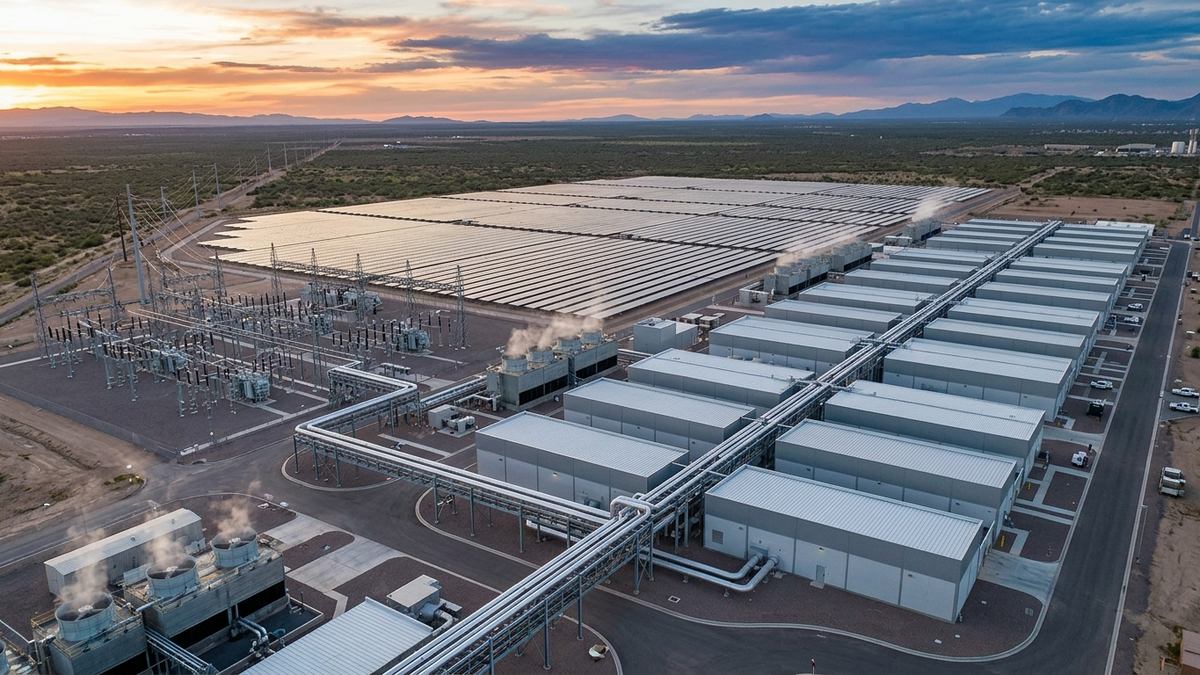
Traditional enterprise cloud servers operate at power densities of 5kW to 15kW per standard rack and rely on conventional chilled-air air conditioning. In contrast, modern AI compute clusters housing Nvidia H100, H200, or Blackwell GB200 systems operate at extraordinary power densities of 80kW to 140kW per rack. Liquid cooling, high-capacity substation transformers, specialized switchgear, and dedicated 24/7 power transmission are non-negotiable prerequisites.
According to International Energy Agency (IEA) estimates cited in the analysis, global data center power consumption is projected to more than double by 2030, exceeding 1,000 terawatt-hours (TWh)—equivalent to the entire electrical consumption of Germany.
"You cannot have artificial intelligence without physical electricity, copper cables, and liquid chillers,"remarked Goldman Sachs' equity research team. "India's industrial champions in power transmission, thermal engineering, and specialized electrical equipment represent the indispensable picks and shovels of the global AI supercycle."
The 42 Enablers: Strategic Segmentation of India's AI Infrastructure Ecosystem
Goldman Sachs categorizes the 42 identified Indian enablers into four vital industrial layers:
| Infrastructure Pillar | Key Industry Segments | Representative Companies | Core AI Value Proposition |
|---|---|---|---|
| Power Generation & Clean Energy | Thermal base load, solar parks, green hydrogen PPAs | NTPC, Tata Power, Adani Green, JSW Energy | Providing round-the-clock (RTC) clean power to multi-hundred megawatt data campuses |
| Grid Transmission & Electrical Gear | Substations, high-voltage transformers, switchgear | Power Grid Corporation, BHEL, Siemens India, ABB India | Delivering high-voltage utility interconnects and mitigating substation congestion |
| Cables, HVAC & Thermal Cooling | Extra-high-voltage (EHV) cables, direct-to-chip chillers | Polycab, Havells, Voltas, Blue Star, Schneider Electric | Preventing overheating in 100kW+ GPU racks and wiring internal data centers |
| Semiconductors & EMS Assembly | OSAT packaging, PCB assembly, rack integration | Kaynes Technology, Dixon Technologies, Tata Electronics | Localizing server blade manufacturing, testing, and component supply chains |
Solving Western Grid Bottlenecks: India's Sovereign Opportunity
A central thesis of the Goldman Sachs analysis is the growing grid congestion across Tier-1 Western data center corridors. In locations like Northern Virginia (the world's largest data center market), Silicon Valley, and Frankfurt, power utilities have instituted moratoria or warned that new high-voltage grid connections may take between 4 to 7 years to energize.
In contrast, India's aggressive national green energy corridor and rapid transmission infrastructure development provide a compelling competitive alternative:
- Abundant Contiguous Land: Industrial land availability along corridors like the Yamuna Expressway in Uttar Pradesh and Sanand in Gujarat allows for multi-hundred-acre modular hyperscale campuses.
- Aggressive Renewable Additions: India is adding tens of gigawatts of renewable solar and wind capacity annually, enabling data center operators to execute long-term Power Purchase Agreements (PPAs) that fulfill corporate net-zero commitments.
- Competitive Capex Costs: Civil construction, electrical engineering labor, and operational overhead in India are 35% to 50% lower than in Western Europe or North America.
To explore how institutional investors are funding dedicated high-density AI data centers in India, see our coverage on /post/nava-eyes-200m-ai-data-centres.
The Semiconductor and Electronics Manufacturing Spillover
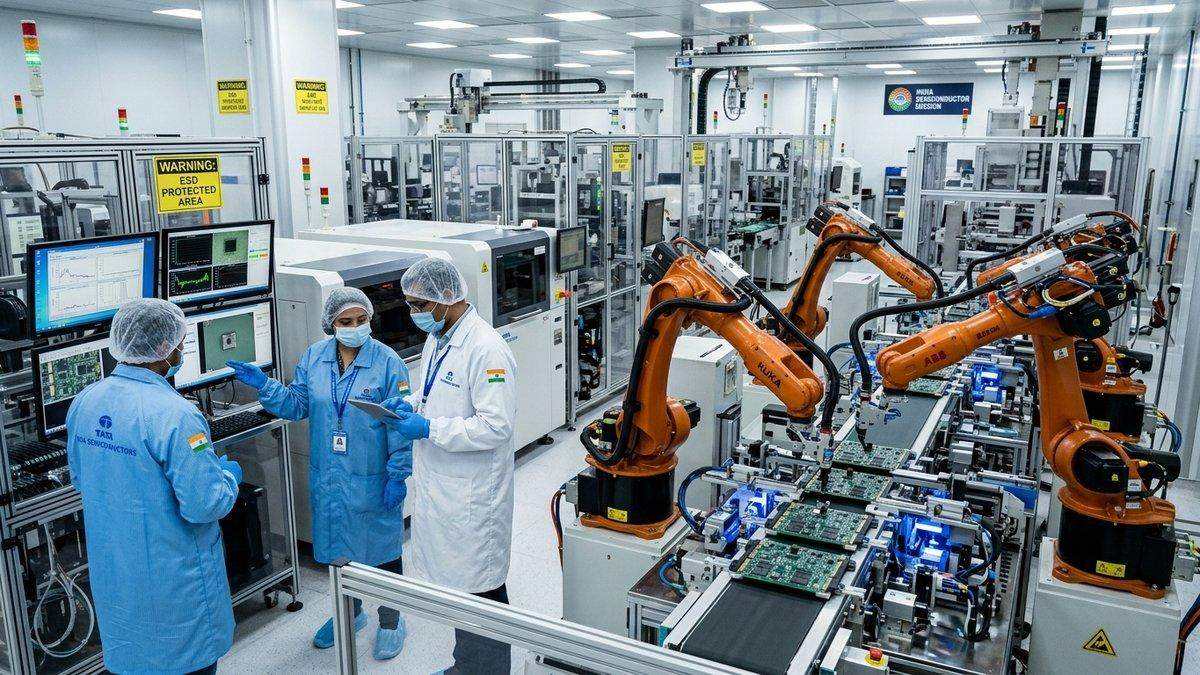
Beyond heavy electrical utilities, the report highlights the critical role of domestic electronics manufacturing services (EMS) providers and semiconductor packaging firms. As hyperscalers and domestic cloud providers deploy sovereign AI clusters, demand for localized server integration, high-density printed circuit boards (PCBs), and specialized cable harnesses is accelerating exponentially.
Firms such as Kaynes Technology, Dixon Technologies, and Tata Electronics are expanding beyond consumer electronics into enterprise server assembly and advanced component testing, capturing higher-margin industrial contracts.
For further insights into how northern states are building infrastructure corridors for semiconductor and electronics hardware, read /post/up-targets-ai-semiconductors-electronics-growth.
Investment Implications for the Next Decade
Goldman Sachs concludes that institutional capital allocators who restrict their AI investments to software companies miss the most durable component of the value chain. As hyperscalers continue their multi-billion-dollar global capital expenditure programs, the 42 Indian companies providing the physical power, copper cables, cooling coils, and silicon packaging will experience sustained, secular revenue expansion for the next decade.
Frequently Asked Questions
What is Goldman Sachs' '42 AI Enablers' report about?
The report from Goldman Sachs Global Investment Research identifies 42 publicly traded and prominent Indian companies across power, industrial equipment, telecommunications, data centers, and electronics manufacturing that supply the physical hardware and energy required to run AI compute clusters.
Why is the power sector so critical to artificial intelligence expansion?
Unlike traditional cloud applications that draw 5kW to 15kW per server rack, high-density AI clusters packed with Nvidia H100/H200 or Blackwell GPUs require 80kW to 120kW+ per rack. This staggering power consumption makes access to reliable high-voltage grids and renewable energy the primary bottleneck for AI data centers.
Which major Indian sectors and companies are highlighted as AI enablers?
Key categories include power generation and transmission (Power Grid Corp, NTPC, Tata Power), industrial electrical equipment and cables (Polycab, Havells, Schneider Electric India), precision cooling and thermal management (Voltas, Blue Star), and electronics manufacturing services (Dixon, Kaynes Technology).
How does India's infrastructure advantage compare to Western markets?
Western data center hubs in Northern Virginia and Frankfurt face severe grid congestion with utility connection backlogs extending 4 to 7 years. India offers vast contiguous land, rapidly expanding renewable energy corridors, and supportive state-level capital subsidies, positioning it as an attractive destination for hyperscale AI compute.
Primary Sources & Official References
- Goldman Sachs Global Investment Research: India AI Enablers & The Infrastructure Supercycle
- Central Electricity Authority (CEA): Power Demand Projections for Commercial Data Centers (2025–2032)
- Ministry of Electronics and Information Technology (MeitY): Sovereign Hyperscale AI Compute Infrastructure Directive
- International Energy Agency (IEA): Electricity 2026 Analysis of Global Data Centres and AI Workload Consumption