82% of Indian Consumers Prioritize On-Device AI in Smartphones, While Battery Life Remains Crucial Deal-Breaker
By Rohan Varma | Published August 20, 2026 | 7 min read
Amazon's 2026 Best in Tech survey reveals 82% of Indian consumers prioritize AI features in smartphones, yet battery longevity outranks novelties as the primary pain point.
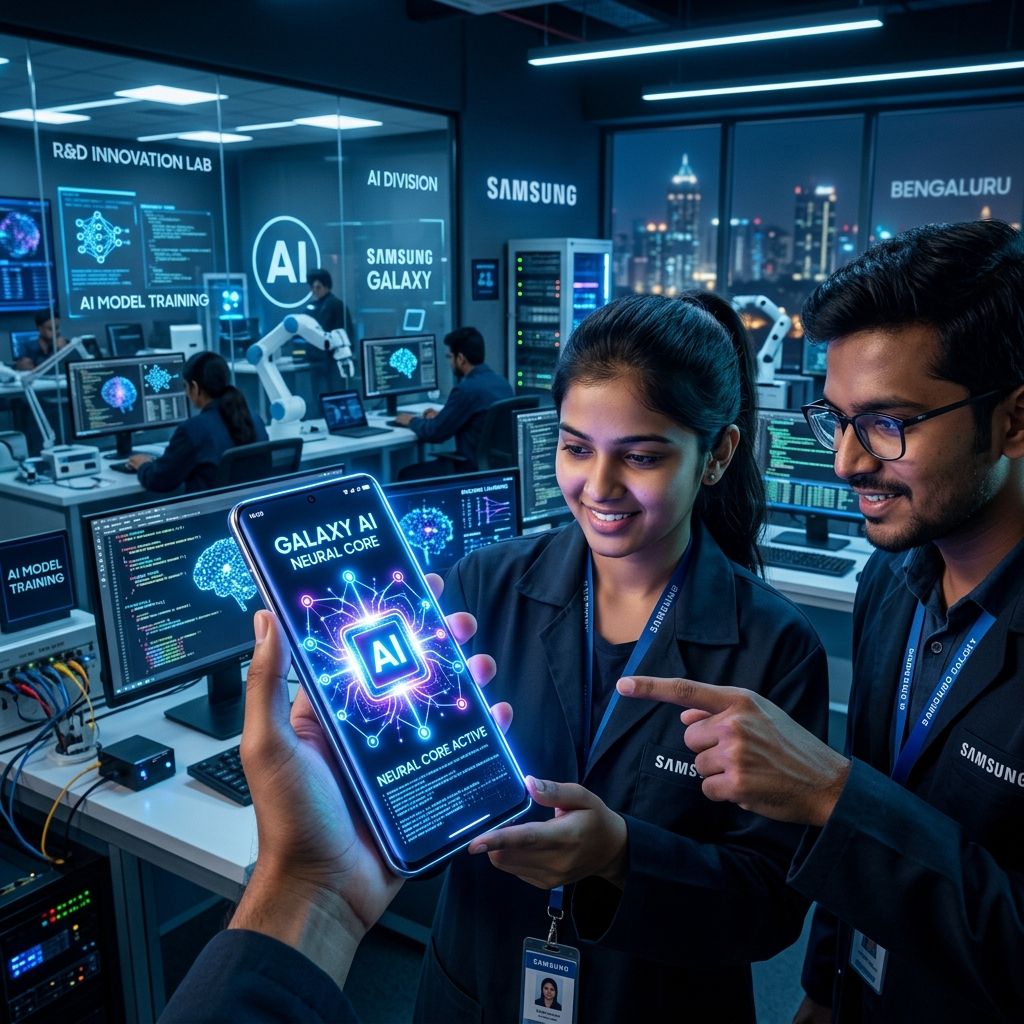
BENGALURU — Artificial intelligence has officially transitioned from an esoteric marketing gimmick into a mainstream purchasing criterion for Indian smartphone buyers, with 82% of consumers stating that AI capabilities actively influence their handset upgrade decisions, according to the Amazon.in Best in Tech 2026 Survey. However, despite the surging consumer fascination with intelligent features, foundational hardware performance remains the ultimate arbiter of purchase satisfaction—with battery longevity emerging as the single most critical deal-breaker and top user pain point across the country.
The comprehensive nationwide study, capturing over 40,000 verified consumer responses across Tier-1, Tier-2, and Tier-3 markets, highlights an increasingly sophisticated Indian smartphone buyer. Consumers are rejecting superficial generative novelty in favor of practical, task-oriented on-device AI tools that enhance daily productivity, optimize battery longevity, and streamline contextual assistance without compromising device endurance.
AI Adoption vs. Hardware Fundamentals: The Consumer Priority Matrix
While 82% of respondents affirmed that AI capabilities influence their purchase considerations, traditional hardware fundamentals continue to anchor overall consumer decision-making:
- Processing Speed & Performance (87%): Remains the top-ranked purchase driver across all demographics.
- On-Device AI Capabilities (82%): Ranks as the fastest-rising influence on upgrade decisions.
- Battery Life & Power Delivery (79%): Deemed the critical daily endurance baseline.
- Camera & Computational Photography (77%): Essential for content creators and social platforms.
- Display Refresh & Outdoor Brightness (64%): Crucial for multimedia and gaming.
Battery Life: The Number One Everyday Pain Point
Despite significant advancements in fast-charging silicon (ranging from 65W to 120W protocols) and silicon-carbon high-density battery chemistries, battery drain remains the primary frustration for Indian smartphone owners.
When asked to identify the single device element they most urgently want to improve in their current smartphone, 22% of respondents named battery longevity, comfortably eclipsing camera limitations (17%) and thermal/lag throttling (12%). The continuous background execution of AI models, high-brightness outdoor displays, and 5G network handshakes have exacerbated power consumption, turning thermal and battery efficiency into the decisive battleground for mobile chipmakers and original equipment manufacturers (OEMs).
"Indian consumers are highly pragmatic. They want the magic of on-device AI—whether it is instant multilingual translation or smart photo editing—but not at the expense of needing to charge their phone twice a day,"noted retail analysts reviewing the survey findings. "Battery endurance is the non-negotiable baseline upon which all next-generation software features must be engineered."
Granular Breakdown: What AI Features Indian Users Actually Value
The survey data provides granular insights into the specific AI applications driving consumer enthusiasm. Rather than generic conversational chatbots, Indian users strongly prefer seamless, embedded features:
| Most-Desired Mobile AI Feature | Consumer Demand Share | Real-World Primary Application |
|---|---|---|
| Contextual On-Screen Assistance | 25% | Proactive calendar syncing, one-tap flight/OTP actions, call summaries |
| Generative Photo Editing & Cleanup | 18% | Magic object removal, reflection elimination, AI portrait remastering |
| Instant Visual Search & Screen Lens | 17% | Circle-to-search products, landmark identification from viewfinder |
| Adaptive Battery & Thermal Management | 11% | Machine-learning background throttling, dynamic refresh optimization |
| Real-Time Vernacular Translation | 10% | Live voice call dubbing and multi-dialect text transcription |
Consumer Preferences vs. Everyday Device Frustrations
The table below contrasts what Indian consumers prioritize when purchasing a new handset against the persistent everyday pain points of their existing devices:
| Smartphone Metric / Feature | Purchase Importance Rank | % Consumers Demanding It | Everyday Frustration Index | Strategic OEM Action Required |
|---|---|---|---|---|
| Battery Life & Longevity | Top Tier (#3 overall) | 79% | #1 Pain Point (22%) | Silicon-carbon 6000mAh+ cells, AI power throttling |
| Performance & Speed | Top Tier (#1 overall) | 87% | #3 Pain Point (12%) | 3nm/4nm NPU-integrated SoCs with low idle draw |
| On-Device AI Capabilities | Top Tier (#2 overall) | 82% | Emerging expectation | Edge NPU processing to preserve privacy & battery |
| Camera & Image Capture | Core Tier (#4 overall) | 77% | #2 Pain Point (17%) | Computational RAW processing + AI generative fill |
| Display & Form Factor | Secondary Tier | 64% | #4 Pain Point (8%) | LTPO 1–120Hz variable refresh displays |
The Engineering Challenge: NPUs and Edge Computing Efficiency
The surging demand for mobile AI has catalyzed an architectural transformation in mobile System-on-Chips (SoCs). Leading silicon architects—including Qualcomm (Snapdragon NPU), MediaTek (Dimensity APU), Apple (Neural Engine), and Samsung (Exynos NPU)—are engaged in a fierce competition to maximize TOPS (Tera Operations Per Second) per watt.
Executing large language models locally on a smartphone requires significant memory bandwidth and computational power. If an AI task relies heavily on cloud servers, it introduces latency and consumes 5G modem power. Conversely, if processed locally on an unoptimized CPU/GPU, it rapidly drains battery reserves and generates thermal heat.
The solution lies in dedicated Neural Processing Units (NPUs) running quantized 2-bit to 4-bit Small Language Models (SLMs) that consume milliwatts rather than watts. This trend mirrors developments in audio foundation models, such as Murf AI's low-footprint Falcon 2 voice architecture, and edge computer vision applications like Bengaluru's dashcam-based AI pothole mapping system.
Strategic Outlook for Smartphone Brands in India
As India solidifies its position as the world's second-largest smartphone market, mobile brands that successfully strike the balance between intelligent features and battery endurance will capture outsized market share.
Key Imperatives for Device Manufacturers:
- Democratize NPUs into Sub-₹20,000 Handsets: While flagship devices boast 45+ TOPS NPUs, the volume segment in India sits between ₹12,000 and ₹25,000. Bringing capable on-device AI silicon to mid-range devices will unlock mass adoption.
- Prioritize Battery-First AI Optimization: Utilize machine learning primarily to extend battery longevity—predicting user sleep cycles, optimizing background 5G radio handoffs, and managing display brightness curves.
- Native Vernacular Language Integration: With millions of non-English first-time smartphone users entering the digital economy, on-device translation and vernacular voice interaction across Hindi, Tamil, Telugu, and Bengali will serve as powerful differentiators.