AI Coding Startup Factory Hits $5B Valuation: Autonomous Software Engineering Platform Secures $200M to Scale Enterprise 'Droids'
By Elena Rostova | Published September 16, 2026 | 9 min read
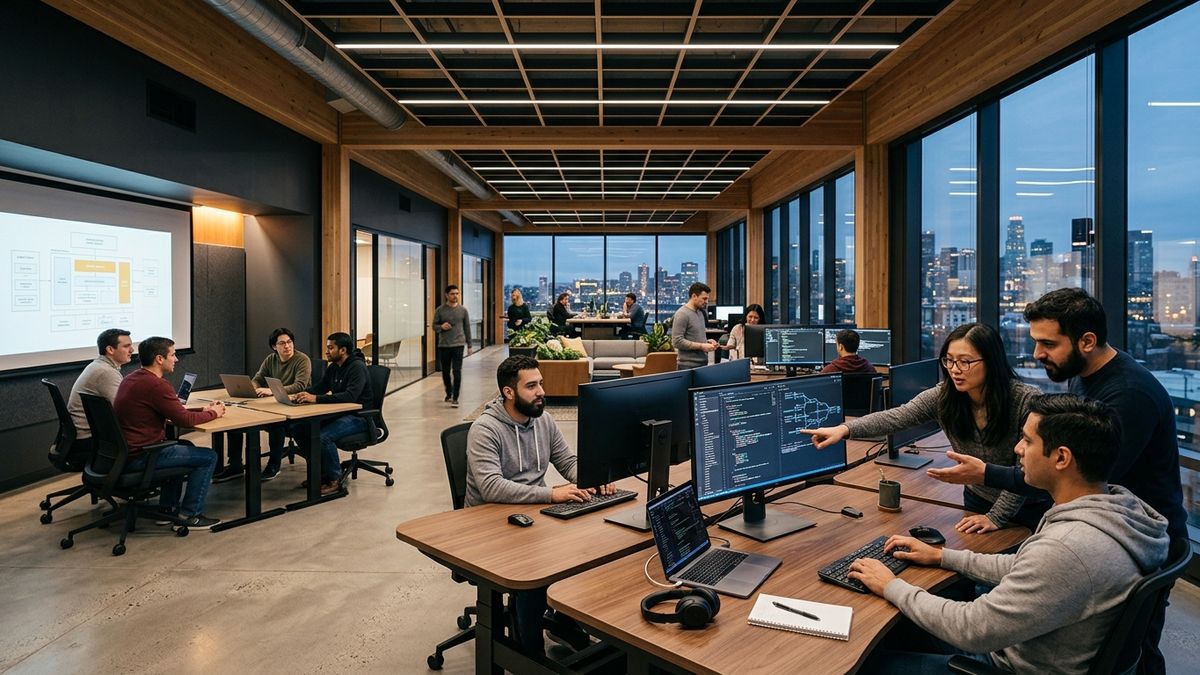
AI software engineering pioneer Factory secures $200M in Series B funding at a $5B valuation to scale autonomous coding agents and enterprise system migration droids.
Silicon Valley artificial intelligence pioneer Factory, the software engineering enterprise behind autonomous developer agents known as "Droids", has officially closed a blockbuster $200 million financing round, catapulting the company’s valuation to $5 billion. The massive capital injection underscores soaring institutional investor conviction in agentic AI platforms capable of taking complete autonomous ownership of complex enterprise software engineering tasks—including architectural refactoring, legacy framework migrations, automated test suite generation, and continuous security compliance.
The mega-round highlights a defining transition in the generative AI software lifecycle: moving beyond first-generation developer copilots that merely autocomplete isolated lines of code toward fully autonomous agentic systems that operate as digital engineering team members. Factory's proprietary Droids integrate directly into modern enterprise software development lifecycles (SDLC), autonomously executing multi-step engineering tickets with minimal human intervention.
Beyond Autocomplete: The Evolution to Autonomous Engineering Droids
When generative AI first entered software development, tools were limited to inline text prediction—offering helpful function completions within a developer's integrated development environment (IDE). While useful, these copilots did not fundamentally change enterprise development velocity because human engineers still had to verify syntax, write unit tests, debug runtime errors, and resolve complex architectural dependencies.
Factory has pioneered an entirely distinct paradigm: multi-agent autonomous execution. Rather than acting as a passive keyboard helper, Factory’s system deploys specialized autonomous "Droids":
* The Code Droid: Receives high-level engineering issues directly from task management systems (such as Jira or Linear), analyzes the entire multi-repository dependency graph, plans code modifications across dozens of files, and writes idiomatic pull requests.
* The Test Droid: Automatically constructs end-to-end integration and unit tests for legacy codebases, executing tests in sandboxed containers, analyzing failure stack traces, and iteratively fixing code until all assertions pass.
* The Migration Droid: Autonomously executes large-scale enterprise codebase migrations—such as converting legacy COBOL or Java 8 applications to cloud-native microservices—compressing multi-year enterprise modernization roadmaps into weeks.
* The Review Droid: Audits incoming code pull requests against enterprise security policies, OWASP vulnerabilities, and architectural style guidelines, functioning as an automated senior code reviewer.
This explosion in enterprise AI automation mirrors the monetization trajectories explored in our analysis of how Pocket FM crossed $500M ARR through generative AI systems and how Indian IT stocks are rebounding as enterprise AI adoption accelerates.
"The future of software engineering is not about typing code faster; it is about delegating entire engineering workflows to autonomous systems,"said Factory leadership following the funding announcement. "Enterprise development teams spend more than 60% of their time on mundane maintenance, dependency upgrades, and repetitive bug fixes. Factory's Droids handle this cognitive overhead autonomously, empowering human engineers to focus on high-leverage product architecture and innovation."
Enterprise Adoption & Unit Economics: Why Wall Street Backs Factory
Factory’s explosive $5 billion valuation is backed by concrete enterprise traction across Fortune 500 corporations, cloud hyperscalers, and global financial institutions. In enterprise environments where technical debt costs organizations billions annually, Factory’s return on investment is immediately quantifiable:
* Accelerated Code Velocity: Enterprise customers report a 40% to 55% reduction in ticket cycle time for maintenance and refactoring tasks.
* Autonomous PR Merges: In mature deployments, over 30% of standard maintenance pull requests authored by Factory Droids are reviewed, approved, and merged with zero manual human code edits.
* Legacy System Modernization: Global financial institutions are deploying Factory's Migration Droid to modernize core banking mainframes, systematically translating legacy routines into containerized Go and Python services with mathematically verified equivalence.
Comparative Matrix: Developer Copilots vs. Factory Autonomous Droids
The structured matrix below contrasts first-generation AI code assistants with Factory's autonomous agentic software engineering platform:
| Capability Dimension | 1st-Gen AI Code Assistants (Copilots) | Factory Autonomous Droids Platform | Enterprise Impact |
|---|---|---|---|
| Operational Modality | Passive inline autocomplete suggestions | Active multi-step autonomous execution | Shifting human role from typist to architectural reviewer |
| Contextual Scope | Single file or localized context window | Entire multi-repo enterprise dependency graph | Understands system-wide architectural constraints |
| Ticket Autonomy | Cannot take Jira/Linear issue assignments | Pulls ticket, plans, codes, tests, and opens PR | Completely automates routine maintenance workflows |
| Self-Correction & Testing | Does not test or verify generated code | Executes sandboxed tests, debugs and self-corrects | Ensures generated code compiles and passes CI/CD |
| Enterprise Migrations | Limited to small code snippets | Migrates hundreds of thousands of lines of code | Slashes multi-million-dollar modernization timelines |
The Future of Enterprise Software Engineering
With $200 million in fresh capital, Factory plans to expand its research teams, deepen integrations with enterprise developer ecosystems, and accelerate the development of domain-specialized Droids for regulated industries.
As software continues to eat the world, the scarcity of senior engineering talent has historically been the primary constraint on technological innovation. By transforming how software is designed, maintained, and deployed, Factory is demonstrating that autonomous AI agents are no longer science fiction—they are rapidly becoming the engine of the global digital economy.