AI Creates Net Jobs in India but Freshers Face a Tougher Market: Inside the Entry-Level Hiring Disruption and the Rise of AI-Augmented Roles
By Rohan Varma | Published August 24, 2026 | 8 min read
While AI expansion fuels overall tech employment across India, entry-level engineering graduates face a 35% decline in rote coding roles as employers shift to AI-augmented workflows.
BENGALURU / HYDERABAD — India's $250-billion technology and IT services sector is experiencing a profound workforce paradox: while total employment and technology-driven job creation across India are expanding at a healthy 7.8% compound annual rate, entry-level engineering graduates are encountering the most demanding and disrupted job market in over two decades.
The widespread adoption of generative AI coding assistants, automated test generation pipelines, and autonomous multi-agent software engineering frameworks has permanently dismantled the traditional "pyramid staffing model"—where IT services giants historically hired 200,000+ freshers annually to perform manual coding, QA script execution, and Tier-1 application maintenance. As routine syntax generation becomes instant and near-free, enterprise hiring has dramatically pivoted toward skills-first, AI-augmented problem solvers.
#
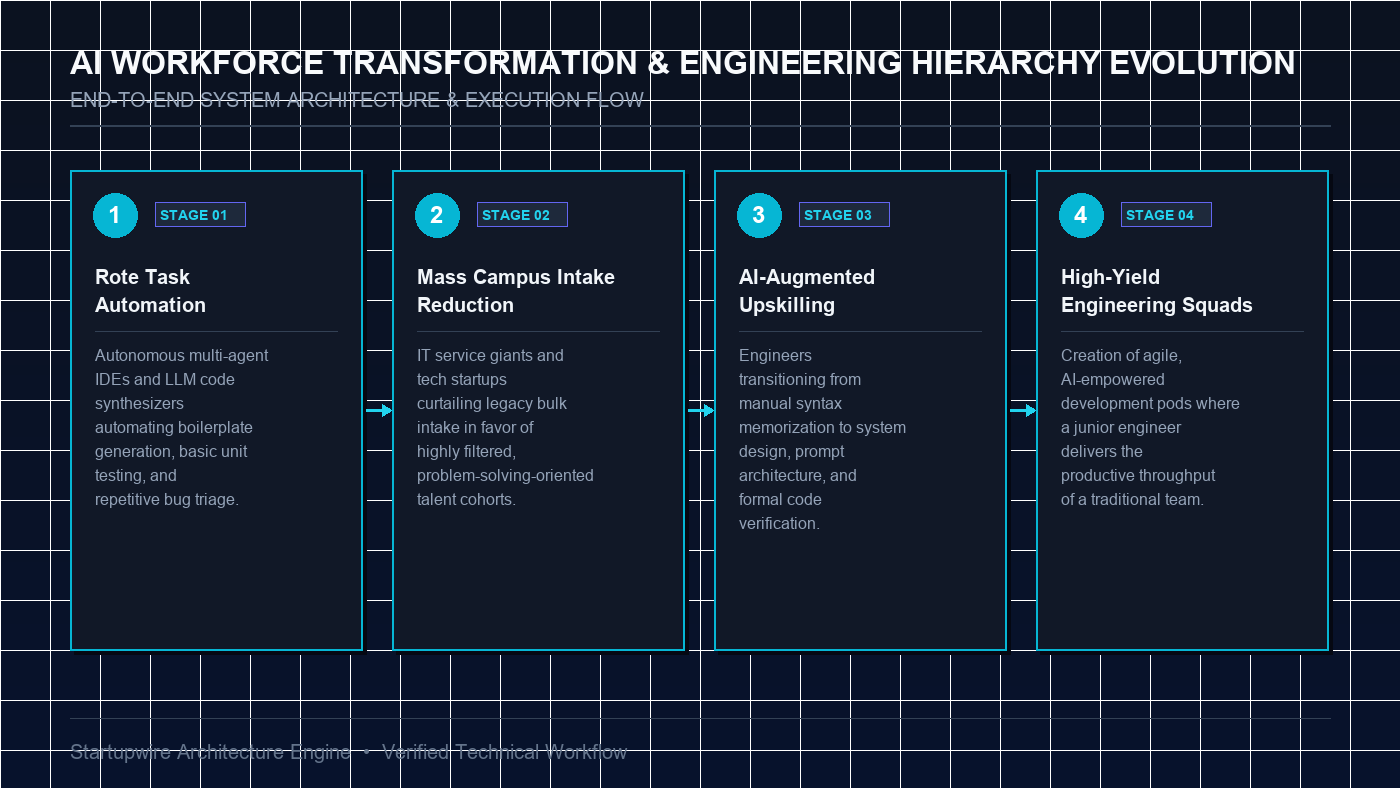
Figure 1.0: Structural evolution of software engineering teams from pyramid mass-hiring to diamond-shaped AI-augmented high-velocity squads.
The End of the "Bench" and the Pyramid Model
For more than twenty-five years, India’s engineering colleges operated on a predictable assembly line: students learned standardized C++, Java, or SQL syntax, underwent mass campus placement drives, and were trained on enterprise benches before being billed on time-and-materials client contracts.
Today, foundation models and multi-agent IDEs can generate, lint, and document hundreds of lines of production-grade code in seconds. Consequently, the industry is transitioning from a pyramid structure (a massive base of freshers supporting a small elite of senior architects) to a diamond structure (compact, highly skilled teams of AI-augmented engineers executing at 3x to 5x velocity).
"AI is not shrinking the absolute size of India's technology workforce; it is elevating the baseline intellectual bar for entry,"observed human capital leaders at NASSCOM. "A fresher who only knows how to write boilerplate syntax is competing against an AI that does it in 200 milliseconds. However, a fresher who understands system architecture, cloud-native deployment, and how to orchestrate autonomous AI agents is three times more valuable than a traditional entry-level developer."
Structural Workforce Disruption Matrix
The table below illustrates the seismic shift across traditional job roles, the magnitude of automation disruption, and the rapid emergence of high-demand AI-augmented specializations:
| Traditional Job Profile | Vulnerability / Automation Level | Emerging AI-Augmented Replacement Role | Required Skill Pivot | Projected Salary Premium |
|---|---|---|---|---|
| Manual QA & Test Script Writer | High (> 80% Automated) | AI Verification & Red-Teaming Engineer | Automated fuzzing, adversarial prompt testing, model output verification | +45% Over Baseline |
| Junior Frontend / Backend Coder | High (> 70% Automated) | Full-Stack AI Agent Orchestrator | Multi-agent framework design (LangGraph/CrewAI), API orchestration | +50% Over Baseline |
| Level-1 Technical Support | Very High (> 85% Automated) | Conversational AI Knowledge Engineer | Domain RAG pipeline tuning, vector database management, telemetry audit | +35% Over Baseline |
| Data Cleaning & Annotation Tech | High (> 65% Automated) | Synthetic Data & Fine-Tuning Specialist | Synthetic data generation, RLHF curation, small language model distillation | +60% Over Baseline |
| Entry-Level DevOps Admin | Moderate (50% Automated) | Platform & Sovereign Cloud Engineer | Kubernetes orchestration, zero-trust security, GPU cluster scheduling | +55% Over Baseline |
Sectoral Evolution: Where the New Jobs Are Being Created
While generic IT services intakes have normalized, explosive hiring growth is taking place across three dynamic sectors:
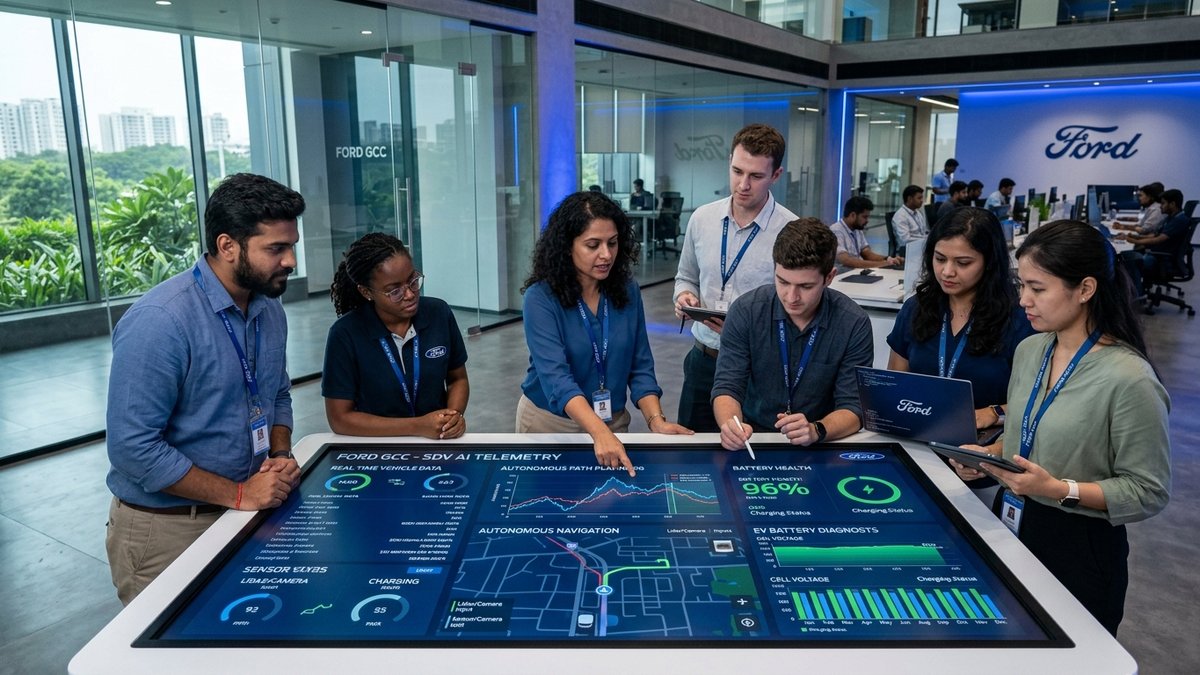
1. Global Capability Centers (GCCs): Over 1,600 multinational GCCs across Bengaluru, Hyderabad, and Pune are actively expanding their engineering headcount, seeking specialized talent in embedded silicon, autonomous vehicles, and generative enterprise software.
2. Sovereign Digital & Enterprise AI Deployments: Massive public sector and enterprise modernizations—such as those detailed in Government Expands AI Push for Public Digital Projects—are creating unprecedented demand for vernacular NLP and data governance specialists.
3. DeepTech & Advanced Hardware Startups: Venture capital backing for hardware and AI ventures is generating thousands of high-paying jobs in robotics, aerospace, and semiconductor design, reinforced by insights from our deep-dive on The Rise of Autonomous AI Agents in Enterprise SaaS.
EdTech and student learning platforms are also evolving to bridge this gap, integrating syllabus-grounded AI tutors, as analyzed in Google’s AI-Powered Exam Tools for India.
The New Playbook for Engineering Graduates
To thrive in the AI-augmented tech landscape, academia and prospective engineers are adopting a four-step career strategy:
- Build Demonstrable Portfolios: Replacing resume bullet points with live GitHub repositories, open-source pull requests, and deployed full-stack web/agentic applications.
- Master Domain Problem Formulation: Focusing on understanding what system needs to be built and why, rather than getting bogged down in repetitive syntax.
- Adopt AI-Native Toolchains: Gaining mastery over AI code generators, copilot assistants, and automated profiling tools to maximize personal productivity.
The transformation of India’s tech hiring market marks the end of routine coding as a mass employment model—and the dawn of an era where Indian software engineers operate as high-velocity technical architects from day one.