MathWorks and MapmyIndia Partner to Accelerate ADAS Simulation and Autonomous Driving Validation for Indian Roads
By Karthik Ramaswamy | Published October 6, 2026 | 8 min read
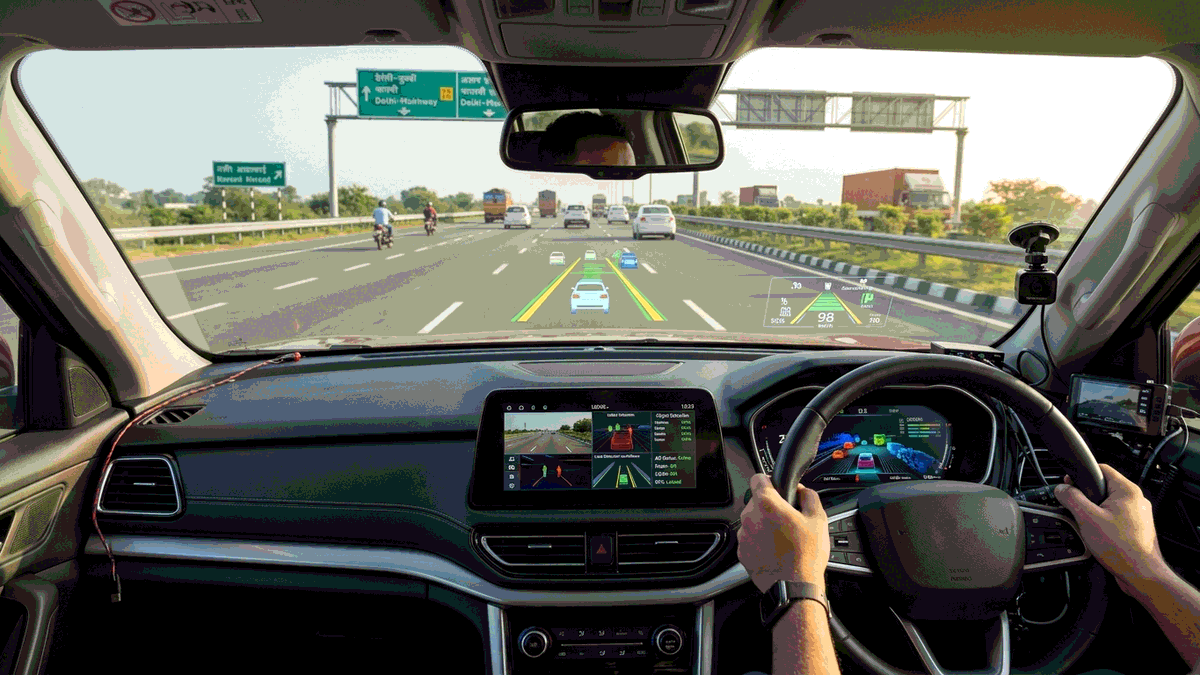
MathWorks and MapmyIndia integrate sub-meter HD maps into MATLAB and Simulink, empowering automotive engineers to validate ADAS systems against complex Indian driving environments.
Mathematical computing and simulation giant MathWorks has forged a landmark engineering partnership with MapmyIndia (C.E. Info Systems), bringing India-specific high-definition (HD) digital twin mapping data natively into MATLAB and Simulink software environments. The technical collaboration enables automotive original equipment manufacturers (OEMs), Tier-1 electronics suppliers, and autonomous mobility startups to simulate, calibrate, and validate Advanced Driver Assistance Systems (ADAS) virtually against the complex, dynamic realities of Indian road networks.
As India's automotive sector rapidly accelerates the adoption of active safety technologies—spurred by rigorous Bharat NCAP safety ratings and surging consumer demand for autonomous emergency braking (AEB), lane-keep assist (LKA), and adaptive cruise control (ACC)—automakers have encountered a severe validation bottleneck. Algorithms calibrated on structured European autobahns or American interstate highways repeatedly suffer false triggers or failure modes when confronted with India's unique traffic conditions.
The Unstructured Driving Reality: Why Standard ADAS Models Fail
Indian driving conditions present one of the world's most intricate perception and planning challenges for autonomous driving software:
- Heterogeneous Mixed Traffic: Expressways and urban arterials are shared simultaneously by high-speed passenger cars, overloaded multi-axle freight trucks, three-wheeled auto-rickshaws, high-density two-wheelers, and pedestrians.
- Unstructured Lane Markings: Faded lane markers, spontaneous road surface repairs, non-standardized speed humps, and unpaved shoulder berms confuse standard optical lane-detection neural networks.
- Micro-Behaviors and Aggressive Cut-Ins: Indian urban driving involves dense lateral proximity, frequent vehicle nudging, and rapid cut-ins that exceed the safety thresholds programmed into Western ADAS software stacks.
Conducting millions of kilometers of physical road testing to validate every software iteration is financially prohibitive, logistically slow, and poses immense physical liability risks.
"True automotive active safety cannot be achieved by copy-pasting software engineered for California or Bavaria into vehicles navigating the Delhi-Mumbai Expressway or Bengaluru ring roads,"stated automotive software leaders. "By embedding MapmyIndia's rich geospatial digital twins directly into MathWorks' industry-standard Simulink pipelines, automotive engineers can rigorously stress-test safety software across thousands of virtual Indian scenarios before turning a single physical wheel."
Architectural Pipeline: From HD Spatial Mapping to Synthetic Simulink Worlds
The table below contrasts the operational parameters, cost profiles, and defect-capture efficiency of traditional on-road physical testing versus MathWorks and MapmyIndia's virtual simulation pipeline:
| Engineering Validation Parameter | Traditional Physical On-Road Fleet Testing | MathWorks + MapmyIndia Virtual Simulation | Efficiency & Safety Gain |
|---|---|---|---|
| Edge-Case Scenario Generation | Accidental / Uncontrolled (High Liability) | Deterministic & Repeatable (Zero Liability) | 100% reproducible edge-case fault analysis |
| Testing Velocity | ~300 km - 500 km per test vehicle per day | Over 50,000 km per server cluster per hour | > 100x acceleration in validation cycle |
| Environmental Diversity | Limited to immediate test region geography | Full digital twins across Pan-India topography | Comprehensive national road representation |
| Bharat NCAP Certification Prep | Multi-month physical proving ground runs | Instant automated regression suite check | Drastic reduction in physical prototype iterations |
| Total Engineering Cost | Millions of USD in fleet fuel & telemetry gear | Cloud compute software license model | Estimated 65% reduction in overall R&D CapEx |
Technical Ingestion: OpenDRIVE Formats and Synthetic Sensor Streams
The technical integration leverages open, standardized automotive engineering data exchanges:
1. ASAM OpenDRIVE Export: MapmyIndia converts its sub-meter aerial LiDAR surveys, mobile mapping vehicle telemetry, and 360-degree street views into standard ASAM OpenDRIVE road network descriptions.
2. Automated Driving Toolbox Ingestion: MATLAB and Simulink dynamically ingest road geometry, lane-level curvatures, banking angles, surface friction coefficients, and 3D roadside landmarks.
3. Synthetic Perception Feeds: Engineers configure virtual radar, LiDAR, and camera sensors with realistic lens distortion, rain noise, and headlight glare, evaluating how perception algorithms process real Indian traffic cut-ins.
4. Hardware-in-the-Loop (HIL) Execution: Validated control logic is automatically compiled onto automotive electronic control units (ECUs) and tested in real-time HIL benches for production sign-off.
This automotive software milestone synergizes directly with broader domestic hardware and physical intelligence initiatives, aligning with the Physical AI industry data standards push, indigenous vision processing silicon designed by BigEndian Semiconductors, and robotics hardware scaling seen at Addverb Technologies.
Industry Impact and the Bharat NCAP Horizon
With the Ministry of Road Transport and Highways (MoRTH) progressively tightening automotive safety standards, the MathWorks-MapmyIndia partnership provides Indian automotive manufacturers with an indispensable engineering weapon.
By democratizing access to high-fidelity virtual validation, the alliance ensures that passenger vehicles engineered in Pune, Chennai, and Gurugram can achieve world-class active safety, protecting millions of Indian road users while solidifying India's position as a global automotive software powerhouse.
Frequently Asked Questions
What is the core technical deliverable of the MathWorks and MapmyIndia partnership?
The collaboration directly connects MapmyIndia's sub-meter precision high-definition (HD) maps and digital twin road networks with MathWorks' MATLAB and Simulink simulation environments, enabling virtual synthetic testing of automotive perception and control algorithms.
Why do Western ADAS validation algorithms struggle on Indian roads?
Western simulation models assume predictable lane markings, standard signage, and disciplined single-file traffic. Indian driving conditions feature mixed traffic (two-wheelers, auto-rickshaws, heavy trucks), unstructured lane boundaries, non-standard speed bumps, and spontaneous pedestrian crossings that require localized validation.
How does virtual simulation accelerate Bharat NCAP compliance?
Automakers can simulate millions of edge-case safety scenarios (such as autonomous emergency braking for cut-in vehicles or blind-spot warnings) virtually in hours, refining algorithmic decision logic before deploying physical prototypes on physical test tracks.
Which automotive companies will utilize this integrated software stack?
The platform is aimed at domestic automotive OEMs (such as Tata Motors, Mahindra & Mahindra, Maruti Suzuki), Tier-1 automotive electronics suppliers, and electric vehicle startups designing localized autonomous systems.
Primary Sources & Official References
- MathWorks Inc.: Automated Driving Toolbox and Simulation Integration Whitepaper
- MapmyIndia (C.E. Info Systems): High-Definition Geospatial Infrastructure Disclosures
- Ministry of Road Transport and Highways (MoRTH): Bharat New Car Assessment Program (B-NCAP) Directives
- Society of Indian Automobile Manufacturers (SIAM): Automotive Software Engineering Report