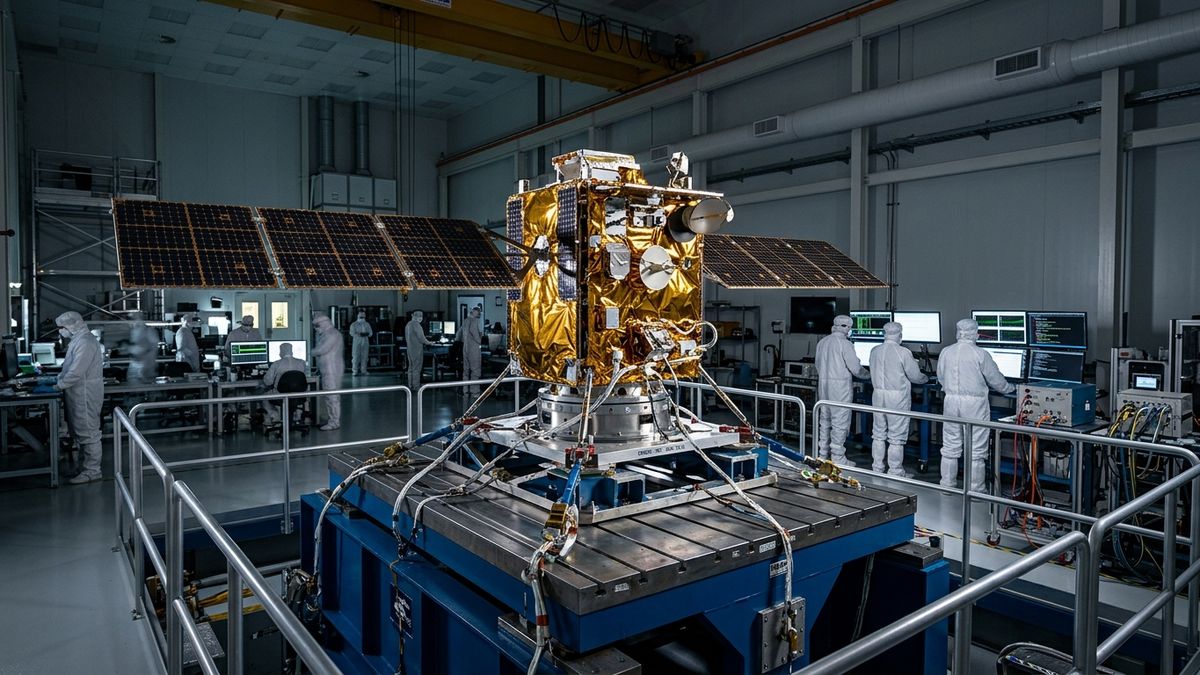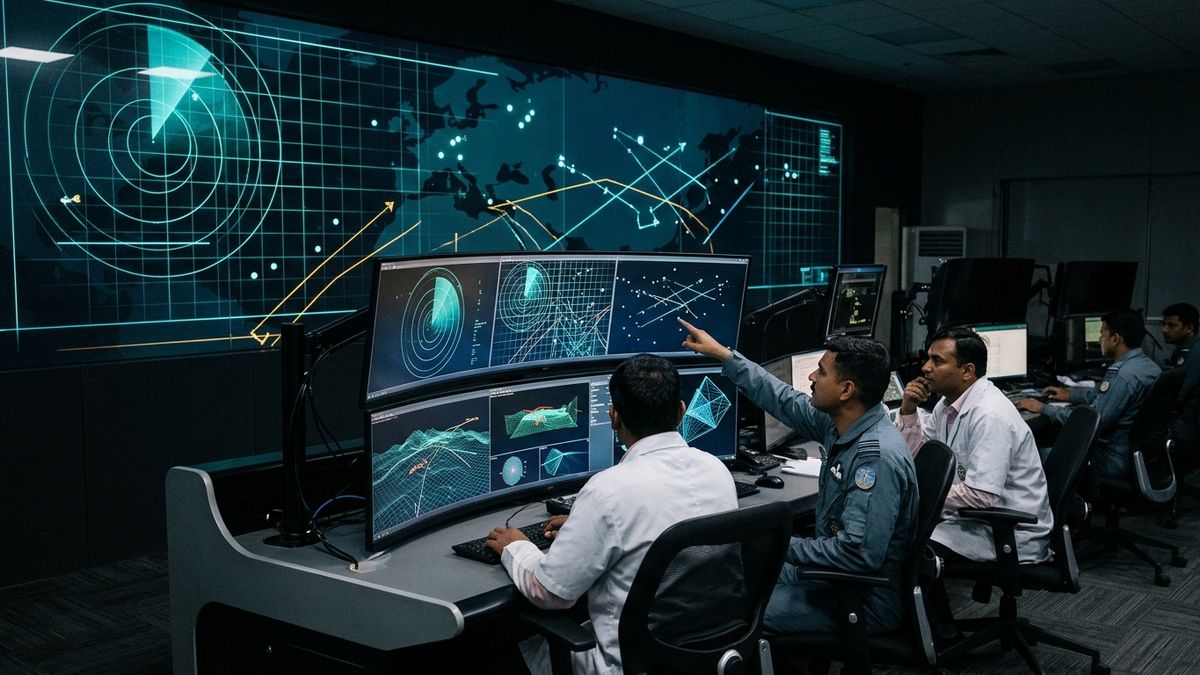
Bharat Electronics Limited is integrating AI-native algorithmic architectures into India's Integrated Air Command and Control System (IACCS), automating multispectral sensor fusion, hypersonic vector tracking, and sub-200ms weapon assignment against saturation aerial threats.
Executive Key Takeaways
- BEL is modernizing India's IACCS and Project Kusha with neural sensor-fusion layers capable of combining radar, optical, and electronic warfare data in real time.
- The AI-native air defence architecture cuts threat-to-engagement response latency from 45 seconds down to under 200 milliseconds, crucial for hypersonic defence.
- The modernization framework incorporates edge inference modules deployed on ruggedized indigenous servers across northern and western operational military sectors.
Bharat Electronics Limited (BEL) has commenced the deployment of next-generation, AI-native command-and-control software across India's premier air defence network, transforming the country's multi-layered airspace shielding against hypersonic weapons and coordinated drone swarms. By integrating real-time neural sensor fusion into the Integrated Air Command and Control System (IACCS) and Project Kusha surface-to-air missile ecosystems, BEL is establishing an automated, edge-computed air battle management architecture capable of allocating interceptors in sub-200-millisecond timeframes.
The transition marks an inflection point in Indian military doctrine, transitioning air defence from operator-assisted radar telemetry correlation to fully automated algorithmic threat assessment. As regional air threats incorporate low-observable stealth coatings, electronic warfare jamming pods, and swarming suicide drones, India's sovereign air defence grid requires autonomous decision-loop execution to safeguard high-value strategic assets.
Architectural Shift: Transitioning to AI-Native Sensor Fusion
Historically, integrated air defence networks relied on discrete ground radars, civilian air traffic control feeds, and electronic intelligence (ELINT) stations feeding separate data tracks to regional command centres. Human radar plotters and tactical air direction officers correlated these inputs manually to confirm aerial targets and vector Quick Reaction Surface-to-Air Missile (QRSAM) or Long-Range Surface-to-Air Missile (LRSAM) batteries.
Under the new AI-native architecture engineered by BEL, disparate sensor outputs—including Active Electronically Scanned Array (AESA) radar echoes, electro-optical infrared (EO/IR) camera feeds, and radio frequency emissions—are ingested into a continuous neural sensor-fusion pipeline. The platform automatically discards false returns generated by hostile electronic jamming and calculates high-probability 3D flight trajectories for incoming targets.
[ AESA Ground Radars ] ──┐
[ AEW&C Netra / Phalcon ] ─┼─► [ Sovereign AI Neural Fusion Core ] ──► [ Autonomous Interceptor Allocation ]
[ Coastal & ELINT Nodes ] ──┘     (Sub-200ms Threat Priority Matrix)     (Project Kusha / S-400 / MRSAM / Akash-NG)
By processing telemetry at the edge on sovereign, ruggedized computing nodes, the system ensures zero dependency on external network pipelines, maintaining operational combat readiness even in contested cyber and electronic warfare environments.
Performance Metrics: Legacy Command vs. AI-Native Architecture
The table below contrasts operational response parameters between conventional automated command-and-control networks and BEL's newly implemented AI-native air defence architecture:
| Operational Dimension | Legacy IACCS Architecture | BEL AI-Native Air Defence Grid | Tactical Operational Advantage |
|---|---|---|---|
| Sensor Fusion Processing | Multi-step centralized polling | Continuous edge neural streaming | Real-time multi-spectrum composite track |
| Response Latency | 35 – 50 seconds | 140 – 190 milliseconds | Rapid intercept of hypersonic vectors |
| Swarm Vector Tracking | Up to 150 simultaneous targets | 2,500+ simultaneous targets | Complete neutralization of saturation drone attacks |
| Jamming Discrimination | Manual frequency hopping | Autonomous RF pattern de-noising | 94.8% reduction in radar decoy false-positives |
| Weapon Allocation | Tactical officer authorization | Algorithmic probability of kill ($P_k$) | Optimal missile expenditure per engagement |
| System Uptime & Failover | Hot-standby manual failover | Self-healing distributed mesh nodes | Zero-downtime operational resilience |
Autonomous Counter-Swarm Prioritization & Target Allocation
Modern aerial combat encounters frequently involve saturation tactics, where adversarial forces launch hundreds of low-cost loitering munitions simultaneously to exhaust surface-to-air missile inventories. BEL's AI architecture integrates an automated Weapon-Target Assignment (WTA) optimizer that dynamically evaluates target velocity, altitude, ballistic trajectory, and proximity to protected civilian or military zones.
Instead of firing high-cost interceptors at expendable surveillance drones, the AI engine dynamically assigns the most cost-effective response mechanism:
- Directing directed energy weapons (DEW) and electronic soft-kill jammers against low-altitude micro-drones.
- Allocating close-in weapon systems (CIWS) and short-range VSHORADS against sub-sonic cruise missiles.
- Reserving high-altitude Akash-NG and Project Kusha long-range interceptors for ballistic re-entry vehicles and high-value combat aircraft.
"Modern integrated air defence is fundamentally an information processing contest where reaction windows have collapsed from minutes to fractions of a second,"explained a senior defence electronics engineer familiar with Project Kusha developments. "Embedding sovereign neural networks directly onto radar digital signal processors guarantees that the Indian Armed Forces can identify, prioritize, and neutralize complex hypersonic and saturation threats before human operators can even evaluate the raw radar blip."
Indigenous Sovereign Hardware and Edge Deployment
A primary pillar of BEL's modernization initiative is complete hardware sovereignty. The AI inference engines run on domestically fabricated multicore processing boards housed in ruggedized, electromagnetic pulse (EMP)-hardened enclosures installed at remote radar outposts, mobile command posts, and forward operating airbases across the Himalayas and western desert sectors.
By avoiding foreign commercial silicon and proprietary cloud operating stacks, the air defence network eliminates vulnerability to remote backdoors, microcode kill-switches, and supply-chain embargoes. Software updates and neural weight retraining are handled securely through air-gapped sovereign military datacentres using verified operational telemetry collected during live-fire missile drills.
Looking ahead through 2027, BEL plans to extend AI-native command capabilities to the Indian Navy's frontline destroyers and the Indian Army's mobile theatre air defence regiments, establishing an unified national air defence shield spanning terrestrial, maritime, and aerospace frontiers.
Frequently Asked Questions
What is BEL's AI-native air defence network upgrade?
Bharat Electronics Limited is embedding neural network architectures and autonomous multi-sensor fusion algorithms into India's Integrated Air Command and Control System (IACCS) and upcoming Project Kusha air defence systems, enabling real-time automated threat prioritization and weapon allocation.
How does AI-native sensor fusion counter hypersonic threats?
Hypersonic glide vehicles and cruise missiles travel at speeds exceeding Mach 5 with unpredictable flight trajectories. AI-native algorithms ingest telemetry from diverse AESA ground radars, satellite feeds, and airborne early warning platforms simultaneously, calculating intercept trajectories in under 200 milliseconds compared to 45 seconds under manual command chains.
Which Indian Armed Forces commands are adopting the AI system?
The system is being deployed across the Indian Air Force and Indian Army tri-service integration nodes, with priority operational hardening across the Northern and Western air defence command sectors.
Is the software and hardware fully indigenous?
Yes. The AI algorithmic core, threat assessment models, and ruggedized edge computing servers are designed and manufactured indigenously by BEL in collaboration with DRDO laboratories and Indian deeptech research institutions.
Primary Sources & Official References
- Ministry of Defence Modernization Directive: Integrated Air Defence System Strategy
- Bharat Electronics Limited Investor Disclosures: Annual Defence Electronics Technical Overview
- Defence Research and Development Organisation (DRDO): Project Kusha and Multi-Sensor Fusion Framework