Kuehne+Nagel Inaugurates Global Technology Centre in Chennai to Engineer Next-Gen Digital Logistics Architecture
By Sanjay Patel | Published October 6, 2026 | 8 min read
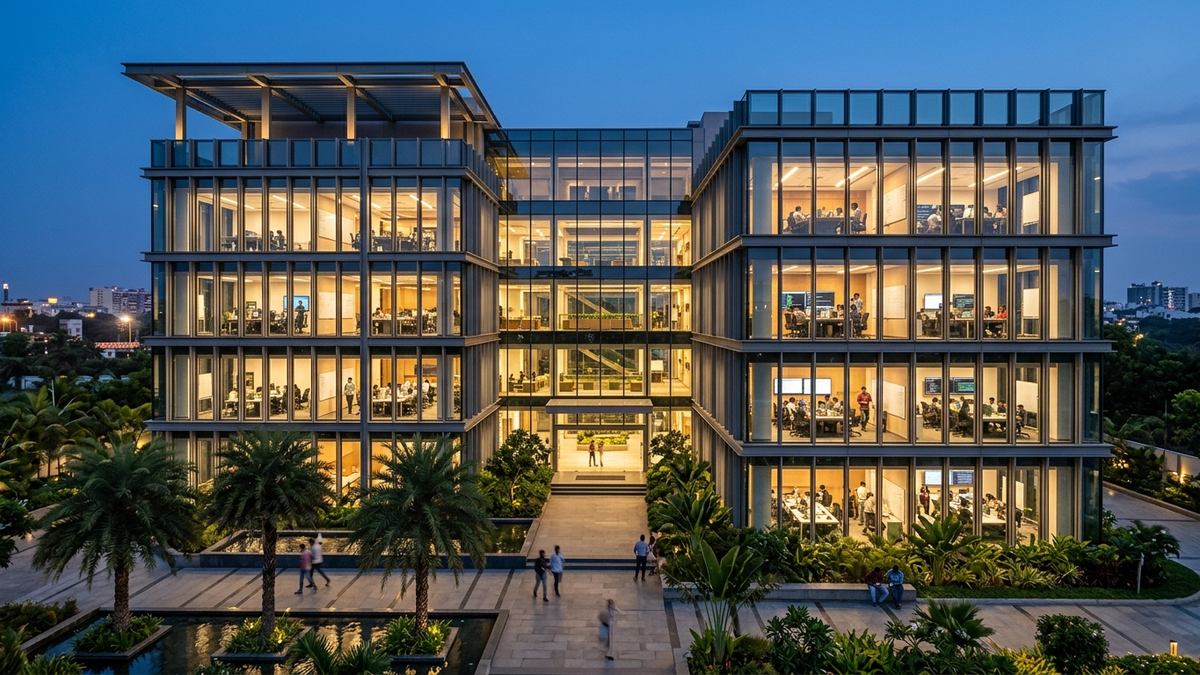
Swiss logistics powerhouse Kuehne+Nagel launches a premier digital technology centre in Chennai, hiring hundreds of software engineers to develop AI supply chain platforms.
Swiss logistics and freight forwarding titan Kuehne+Nagel has officially inaugurated a major Global Technology Centre in Chennai, Tamil Nadu, significantly expanding its internal digital engineering capabilities and cementing India's role as a core engine of its worldwide enterprise software transformation. The newly unveiled campus will house hundreds of software engineers, cloud architects, data scientists, and product designers tasked with engineering next-generation, AI-powered supply chain platforms that manage millions of global freight movements across air, sea, rail, and road.
The expansion signals a structural evolution in how multinational industrial leaders view India. Once perceived primarily as destinations for back-office transactional support and routine business process outsourcing (BPO), India's Global Capability Centres (GCCs) have transformed into high-value engineering headquarters where global corporations build their core intellectual property and mission-critical cloud software.
Modernizing Global Supply Chains Through Enterprise Software Engineering
Global freight forwarding is undergoing the most profound technological transformation in its history. Geopolitical tensions, Red Sea shipping diversions, climate-induced canal bottlenecks, and post-pandemic supply chain shocks have made static freight scheduling obsolete.
Kuehne+Nagel's Chennai Technology Centre has been established to engineer software platforms that address these systemic challenges:
- Predictive ETA and Dynamic Routing: Machine learning models that ingest real-time automatic identification system (AIS) vessel tracking, port terminal crane wait times, weather forecasts, and geopolitical airspace advisories to predict shipping delays days before they occur.
- Automated Customs and Document Parsing: Multimodal foundation models capable of parsing multilingual customs declarations, commercial invoices, and bills of lading in seconds, drastically reducing clearance dwell times at major container terminals.
- Maritime Decarbonization Analytics (Seaexplorer): Sophisticated carbon accounting engines that calculate precise CO2 emissions per container-kilometer, enabling Fortune 500 shippers to optimize cargo routes for minimum carbon footprint.
- Internet of Things (IoT) Cold-Chain Monitoring: High-frequency telemetry platforms that track temperature, vibration, and humidity for sensitive pharmaceutical vaccines and perishable goods in transit across international sea lanes.
"Logistics is no longer just about moving physical steel containers across oceans; it is fundamentally an information science problem,"said Kuehne+Nagel technology executives during the Chennai inauguration. "Our Chennai centre is an engine of pure software innovation, where top Indian engineering talent will build the digital nervous system orchestrating global trade."
Operational Domain Architecture: Chennai Technology Centre Focus
The table below outlines the core engineering challenges, software technologies, and measurable business impacts driven by the specialized engineering teams at the new Chennai facility:
| Logistics Operational Domain | Core Engineering Challenge | Chennai Centre Technical Solution | Measurable Global Business Impact |
|---|---|---|---|
| Ocean Freight Logistics | Vessel congestion & container port dwell | Real-time predictive AIS machine learning models | 18% reduction in buffer stock inventory costs |
| Air Cargo Charter Routing | Dynamic fuel prices & airspace restrictions | High-throughput algorithmic load & route balancing | Up to 12% optimization in jet fuel expenditure |
| Customs & Trade Compliance | Multilingual, non-standard paper manifests | Transformer-based computer vision & NLP ingestion | 75% faster cross-border customs documentation |
| Pharma & Cold Chain | Spoilage risk in temperature-sensitive cargo | Edge IoT sensor pipelines & automated alerts | Near-zero temperature-excursion spoilage rates |
| ESG & Carbon Reporting | Inaccurate scope 3 supply chain emission data | Certified carbon accounting microservices stack | Full compliance with EU CSRD corporate directives |
Why Chennai Emerged as the Preferred Engineering Capital
Kuehne+Nagel's decision to anchor its primary technology center in Chennai was driven by the state's mature engineering ecosystem:
1. Exceptional Software Talent Density: Chennai is home to a world-renowned software engineering and SaaS corridor (spanning OMR and Guindy), producing thousands of top-tier computer science graduates annually from premier institutions including IIT Madras, Anna University, and SSN.
2. Proximity to Major Industrial Maritime Gateways: As one of India's preeminent port cities with massive automotive, electronics, and heavy manufacturing clusters, Chennai provides software developers with immediate, real-world access to operational freight terminals and supply chain operations.
3. Progressive GCC Policy Framework: Tamil Nadu's proactive Global Capability Centre Policy provides streamlined regulatory clearances, high-speed fiber connectivity, and dedicated industrial infrastructure support through Guidance Tamil Nadu.
This establishment mirrors the structural transformation taking place across India's broader technology workforce, reflecting patterns documented in Nasscom's landmark report on tech revenue decoupling from linear hiring, expanding automated fulfillment seen in Addverb's robotic warehouse deployments, and sovereign cloud developments highlighted across enterprise banking infrastructure.
Long-Term Strategic Outlook
As global trade continues to experience volatility and regulatory demands for supply chain transparency intensify, Kuehne+Nagel's Chennai Technology Centre positions the logistics giant at the leading edge of digital operations.
By empowering Indian software architects and data scientists to build global platforms from Tamil Nadu, Kuehne+Nagel is proving that the future of world commerce will be engineered and commanded from India.
Frequently Asked Questions
What is the strategic purpose of Kuehne+Nagel's new Chennai Technology Centre?
The Chennai Technology Centre serves as a core global engineering hub for Kuehne+Nagel, tasked with developing cloud-native supply chain platforms, predictive cargo tracking algorithms, AI routing optimization, and maritime decarbonization analytics.
What technical engineering profiles is the centre recruiting in Chennai?
The facility is actively hiring software engineers, cloud architects, distributed systems developers, data scientists, machine learning engineers, and cybersecurity specialists.
Why did Kuehne+Nagel select Chennai over other global and domestic locations?
Chennai provides a dense ecosystem of premier software engineering talent, world-class university research pipelines, a thriving SaaS and industrial engineering community, and strong state government policy support under Tamil Nadu's GCC framework.
How does digital logistics software optimize global freight operations?
By analyzing real-time vessel AIS feeds, port congestion metrics, weather forecasts, and historical shipping bottlenecks, AI platforms dynamically reroute maritime containers, cutting transit delays, fuel burn, and carbon emissions.
Primary Sources & Official References
- Kuehne+Nagel International AG: Corporate Press Release and Global Technology Strategy Brief
- Guidance Tamil Nadu / Department of Information Technology: Global Capability Centres Policy Directives
- Nasscom: India GCC Landscape 2026 - Evolution into Global Engineering CoEs
- World Shipping Council: Digitalization and Decarbonization in Maritime Logistics Report