CityMall Eyes ₹400–500 Crore Funding at ₹4,000 Crore Valuation to Accelerate Tier-2 and Tier-3 Bharat Value Commerce
By Meera Krishnan | Published September 21, 2026 | 8 min read
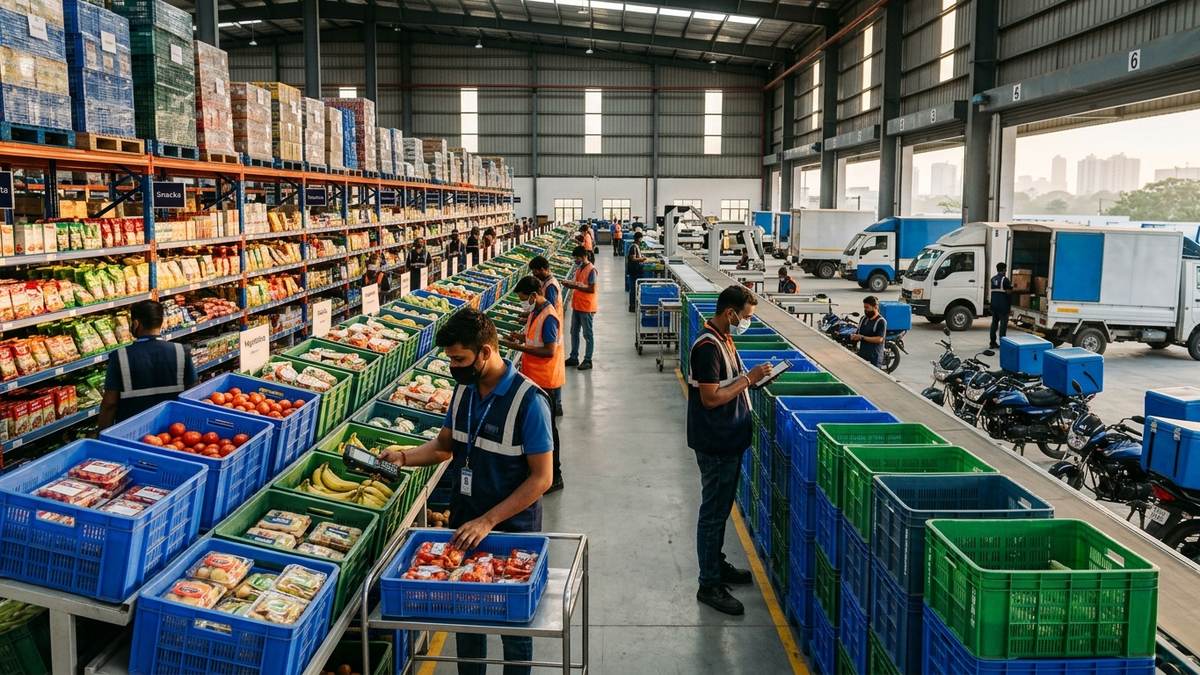
Gurugram-based value-commerce startup CityMall is in advanced talks to secure ₹400–500 crore in a new round led by Jungle Ventures, valuing the company at ₹4,000 crore.
In a strong validation of India's non-metro digital consumption story, Gurugram-headquartered value-commerce platform CityMall is in advanced discussions to secure between ₹400 crore and ₹500 crore ($48M to $60M) in a fresh equity funding round. The impending round is being spearheaded by existing venture backer Jungle Ventures, with participation from current institutional shareholders including Elevation Capital, Accel, and WaterBridge Ventures, as well as select incoming sovereign and growth-stage funds.
The transaction is projected to peg CityMall's post-money valuation at approximately ₹4,000 crore (~$480 million), representing a meaningful step-up from its Series D round in September 2025, where the startup secured $47 million at a valuation of approximately $320 million (around ₹2,814 crore at the time). The new capital infusion comes as CityMall delivers stellar operational traction, with operating revenue nearly doubling from ₹534 crore in FY25 to approximately ₹1,000 crore in FY26.
The Bharat Consumption Thesis: Winning Beyond the Metro Quick-Commerce Bubble
While India's tier-1 metropolitan centers have become fierce battlegrounds for 10-minute quick-commerce services burning capital on real estate and rider density, CityMall has engineered an entirely distinct operating architecture tailored to the 500 million consumers residing in Tier-2, Tier-3, and Tier-4 towns across Haryana, Uttar Pradesh, Rajasthan, and Madhya Pradesh.
These consumers are intensely price-sensitive, planned in their grocery replenishment habits, and historically underserved by organized modern trade. Rather than attempting to force a high-overhead dark-store model onto dispersed semi-urban neighborhoods, CityMall relies on a community-driven e-commerce flywheel:
- Next-Day Batch Fulfillment: Instead of expensive sub-15-minute dispatchers, CityMall aggregates daily household orders onto centralized night delivery runs, maximizing drop-density per vehicle.
- Community Leader Micro-Distributors: Local entrepreneurial residents and neighborhood shop owners act as pick-up nodes and trust anchors, driving hyper-local word-of-mouth adoption while dramatically minimizing customer acquisition costs (CAC).
- Direct-from-Source Supply Chains: CityMall bypasses multi-tier mandi brokers and regional wholesalers, procuring staples, pulses, oils, and packaged foods directly from mills and FMCG manufacturers.
"The true long-term prize in Indian retail does not lie in subsidizing midnight ice-cream deliveries in South Delhi or Bengaluru,"observed growth-stage venture partners tracking the deal. "It lies in building dependable, low-cost logistics conduits that save ₹400 on monthly pantry baskets for middle-class families in towns like Rohtak, Bareilly, and Alwar. CityMall's financial trajectory demonstrates that value commerce can achieve massive scale with sensible unit economics."
This expansion reflects a broader resurgence in investor appetite, echoing how Indian startup funding crossed $392 million with strong consumer and wellness inflows and aligning with national strategic priorities where regional supply chains take center stage across India's economic corridors.
Operational Metrics & Financial Trajectory
CityMall's financial performance highlights a sharp divergence from earlier community group-buying platforms that shuttered during the post-2022 funding winter. By rationalizing unprofitable delivery zones and doubling down on grocery-led essentials, the company achieved strong operating leverage over the past 24 months.
| Strategic Metric | FY24 Benchmark | FY25 Actual | FY26 Estimated / Run-Rate | Strategic Impact |
|---|---|---|---|---|
| Operating Revenue | ₹312 Crore | ₹534 Crore | ~₹1,000 Crore | ~87% year-on-year revenue expansion |
| Implied Valuation | ~$220 Million | $320 Million (Series D) | ~₹4,000 Crore (~$480M) | Sustained valuation premium driven by scale |
| Private Label Share of Grocery NMV | 12% | 22% | ~33% (One-Third) | High-margin product mix insulating gross margins |
| Geographic Footprint | 25 Towns | 45 Towns | 80+ Towns across North & Central India | Deep cluster-density model in Tier-2/3/4 towns |
| Order Fulfilment Turnaround | 24–36 Hours | Next-Day Scheduled | Next-Day Morning Slot (7 AM–11 AM) | Predictable replenishment tailored to Bharat households |
The Private-Label Engine: Powering Gross Margin Expansion
The core engine underpinning CityMall’s path to operational profitability is its aggressive private-label strategy. Branded packaged goods from multinational FMCG players offer thin distribution margins—often hovering between 8% and 12%—which leave little margin buffer once warehousing, fuel, and community incentives are deducted.
In response, CityMall developed an extensive suite of proprietary brands spanning packaged staples (wheat flour, basmati rice, lentils, unrefined mustard oil), spices, daily cleaning products, and dry fruits. In-house brands deliver gross margins between 25% and 35%, granting the platform pricing flexibility while boosting basket margins. By FY26, private labels accounted for approximately one-third of the startup's total grocery Net Merchandise Value (NMV), a milestone that few Indian e-commerce players outside of mature supermarket chains have achieved.
Allocation of Fresh Capital & Strategic Horizons
The incoming ₹400–500 crore funding tranche will be directed toward four high-impact growth pillars:
- Automated Regional Distribution Centers: Upgrading regional hubs in Lucknow, Jaipur, and Panipat with semi-automated sorting conveyors, palletized racks, and computerized inventory tracking to compress order processing latency.
- Deepening Cluster Density in Existing States: Rather than recklessly scattering operations across southern or eastern states, CityMall will saturate tier-3 and tier-4 districts within 150 km radii of existing distribution hubs, minimizing secondary transport overheads.
- Supply Chain Direct Sourcing: Expanding direct agricultural contracts with farmer producer organizations (FPOs) and regional grain processing units across Haryana and Madhya Pradesh.
- Technology & Demand-Forecasting Algorithms: Deploying localized AI forecasting tools to predict daily grocery procurement volumes down to individual pincodes, reducing perishable inventory write-offs to below 1.5%.
As traditional brick-and-mortar kiranas in semi-urban India look to modernize their product assortments, CityMall is increasingly emerging not merely as a B2C retail app, but as the foundational digital supply spine of Bharat’s consumer economy, illustrating how India looks beyond metro hubs for sustainable commercial innovation.
Frequently Asked Questions
What is CityMall's core business model and target consumer base?
CityMall operates a community-led, grocery-first value-commerce platform designed specifically for price-sensitive households in Tier-2, Tier-3, and Tier-4 Indian cities. By partnering with local community leaders, managing centralized bulk procurement, and orchestrating regional micro-fulfillment nodes, it delivers groceries and daily essentials at significantly lower costs than traditional retail or metro quick commerce.
Who is leading CityMall's new ₹400–500 crore funding round?
The round is being spearheaded by Singapore- and India-focused venture capital firm Jungle Ventures, with active participation from both existing institutional backers such as Elevation Capital, Accel, and WaterBridge Ventures, alongside selective new growth-stage investors.
How has CityMall performed financially leading into this capital raise?
CityMall experienced rapid revenue growth, with operating revenue nearly doubling from ₹534 crore in FY25 to approximately ₹1,000 crore in FY26. Concurrently, operational efficiencies and higher private-label mix helped the company sharply compress burn rates across northern Indian clusters.
Why are private labels pivotal to CityMall's unit economics?
Private labels currently represent approximately one-third (33%) of CityMall's grocery Net Merchandise Value (NMV). Because in-house brands command gross margins of 25–35% compared to single-digit margins on branded FMCG staples, private labels provide the essential margin cushion needed to subsidize regional last-mile delivery.
Primary Sources & Official References
- Economic Times Intelligence: CityMall in Advanced Negotiations to Secure ₹400–500 Crore Growth Round Led by Jungle Ventures: Regulatory reporting and capital raise telemetry.
- Entrackr Financial Research: CityMall Operating Revenue Doubles to ₹1,000 Crore in FY26 as Unit Economics Improve: Comprehensive income statement breakdown and burn rate dynamics.
- Jungle Ventures Investment Thesis: Unlocking Discretionary and Essential Consumption in Bharat Tier-2+ Ecosystems: Strategic whitepaper on consumer internet unit economics.
- Tracxn Private Capital Telemetry: CityMall Corporate Registry, Cap Table Breakdown, and Series D Historical Disclosures: Equity ownership analysis and cap-table milestones.