Deeptech Funding Continues to Gain Momentum Across India as Investors Back AI, Robotics & Infrastructure
By Dr. Ananya Roy | Published August 7, 2026 | 8 min read
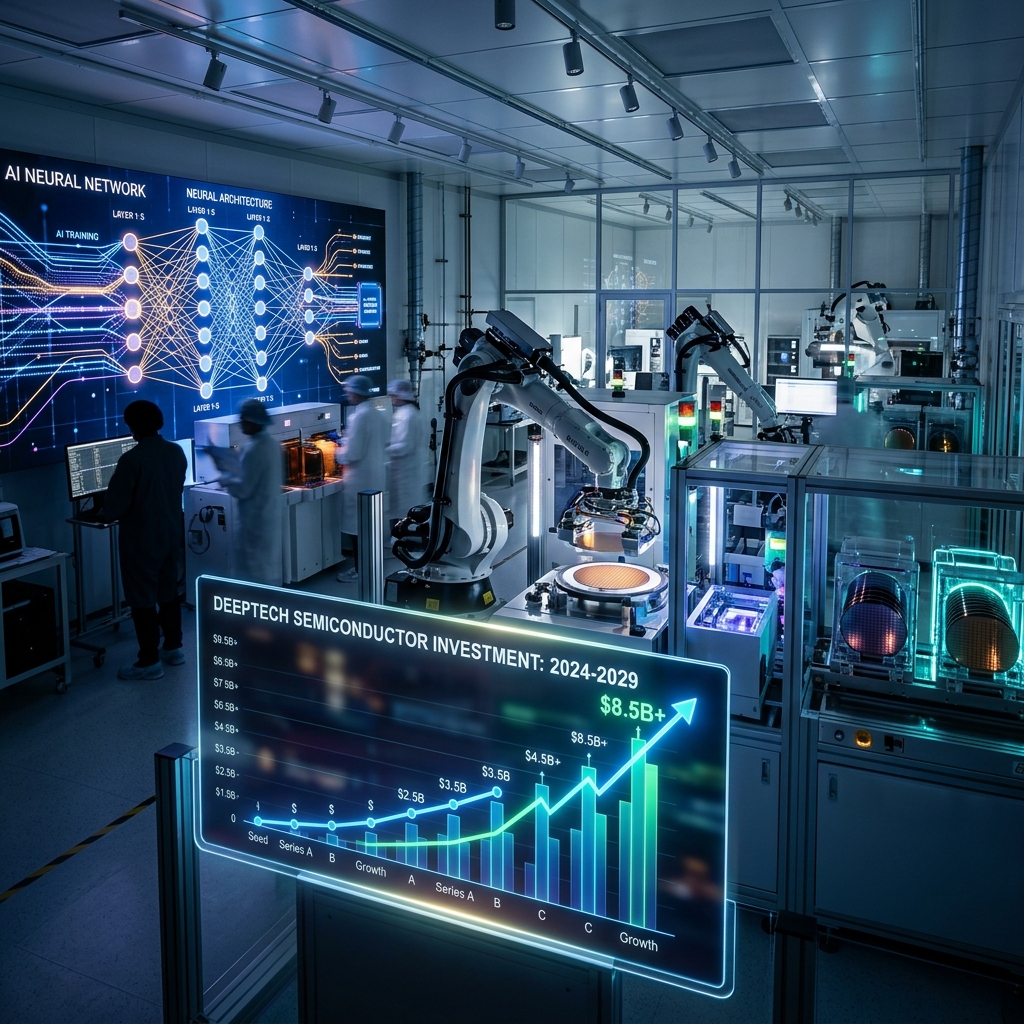
Venture capital in India experiences a massive structural shift towards deeptech, with record capital deployed into artificial intelligence, industrial robotics, semiconductors, and hard-tech infrastructure.
Venture capital deployment across India’s startup landscape is undergoing a decisive structural migration. Deeptech funding has reached record velocity in 2026, with institutional investors, corporate VCs, and sovereign backed funds pouring over $1.8 billion into artificial intelligence, industrial robotics, fabless semiconductor design, and critical infrastructure ventures during the first seven months of the year.
Unlike previous market cycles dominated by consumer internet and hyper-delivery apps, global capital is concentrating into IP-heavy, capital-intensive engineering startups. VC firms including Peak XV Partners, Lightspeed India, Blume Ventures, and Accel have launched dedicated deeptech funds, while government initiatives such as the Electronics Development Fund 2.0 have injected sovereign co-investment capital into native hardware laboratories.
Macro Funding Drivers: Why Capital Is Flowing to Hard Tech
Several structural catalysts are driving this sustained deeptech funding supercycle:
1. Sovereign Semiconductor & Tech Mandates: Government subsidies under the India Semiconductor Mission (ISM) have significantly derisked early-stage silicon and fabless design ventures.
2. Maturation of Indian Engineering Talent: Senior architects returning from Silicon Valley and top academic research labs (IITs, IISc) are building enterprise-grade hardware and AI models.
3. Enterprise Demand for Sovereign AI: Domestic and global corporations are seeking tailored LLMs and on-premise AI acceleration chips designed for specific language and compliance constraints.
4. Resilient Exit Pipelines: Early deeptech pioneers like Pixxel and Skyroot Aerospace demonstrating clear defense, space, and commercial traction have proven high-multiple return potential.
"We are witnessing the transformation of India from an IT services hub into a global deeptech foundry. Investors are no longer spooked by 3 to 5-year R&D timelines because the IP barrier to entry and long-term margins in robotics, AI chips, and infrastructure tech are unmatched."
"— Karthik Reddy, Managing Partner, Blume Ventures"
To contextualize this growth, review our macro analysis on Indian startups raising $7.2 billion in H1 2026 alongside our breakdown of PM Modi's deeptech innovation support programs.
Sector-Wise Deeptech Investment Breakdown (2026 YTD)
The matrix below highlights key funding distribution and growth trajectory across core deeptech verticals in India:
| Deeptech Sub-Sector | YTD Funding Volume (2026) | YoY Growth (%) | Lead Investor Focus | Notable Recent Deals |
|---|---|---|---|---|
| Enterprise & Sovereign AI | $680 Million | +142% | Peak XV, Lightspeed, Microsoft | Sarvam AI, Superleap, Volta AI |
| Robotics & Industrial Automation | $410 Million | +95% | Blume, Athera, IvyCap | Solinas Integrity, Yaanendriya |
| Semiconductors & RISC-V Chips | $320 Million | +210% | EDF Fund, Speciale Invest | Gujarat Semtech, Mindgrove |
| Spacetech & Defense Hardware | $260 Million | +68% | Capital A, Elevation, ISRO Fund | Skyroot Aerospace, Pixxel, Agnikul |
| Biotech & Climatetech | $180 Million | +54% | Aramco Ventures, Omnivore | Mitti Labs, Arboreal Bio |
Fabless Semiconductors & RISC-V Architecture Surge
A standout sector within deeptech is fabless chip design. Startups leveraging open-source RISC-V architecture are designing specialized silicon for IoT devices, automotive ECUs, and edge-AI vision processing. With state-level support like the Gujarat RISC-V IoT initiative, domestic chipmakers are cutting reliance on foreign IP.
Defense & Infrastructure Tech Adoption
Indian defense public sector undertakings (DPSUs) and municipal bodies have increasingly opened procurement channels to domestic startups. From autonomous pipeline robotics to satellite imagery analytics for disaster management, government contract wins are providing deeptech founders with steady recurring revenue prior to global expansion.
As capital allocation continues to prioritize high-barrier engineering solutions, India’s deeptech ecosystem is firmly positioned to drive the next decade of technological leadership.