India enters the September 12 BRICS Summit positioning deeptech innovation, cross-border digital public infrastructure, and resilient supply chain corridors as central pillars.
Executive Key Takeaways
- India enters the September 12 BRICS Summit positioning deeptech innovation, cross-border digital public infrastructure, and resilient supply chain corridors as central pillars.
- The fundamental challenge confronting emerging economies today is not a lack of scientific capability, but an over-reliance on single-geography supply corridors for critical inputs, remarked a senior trade official involved in summit preparations. India's objective at this BRICS summit is to convert our startup agility, digital public rails, and engineering prowess into shared multilateral infrastructure. By securing raw materials and opening market access across partner nations, we build genuine structural resilience.
- Key Benchmark: **Startup Corridors** — BRICS Startup Innovation Network (BSIN)
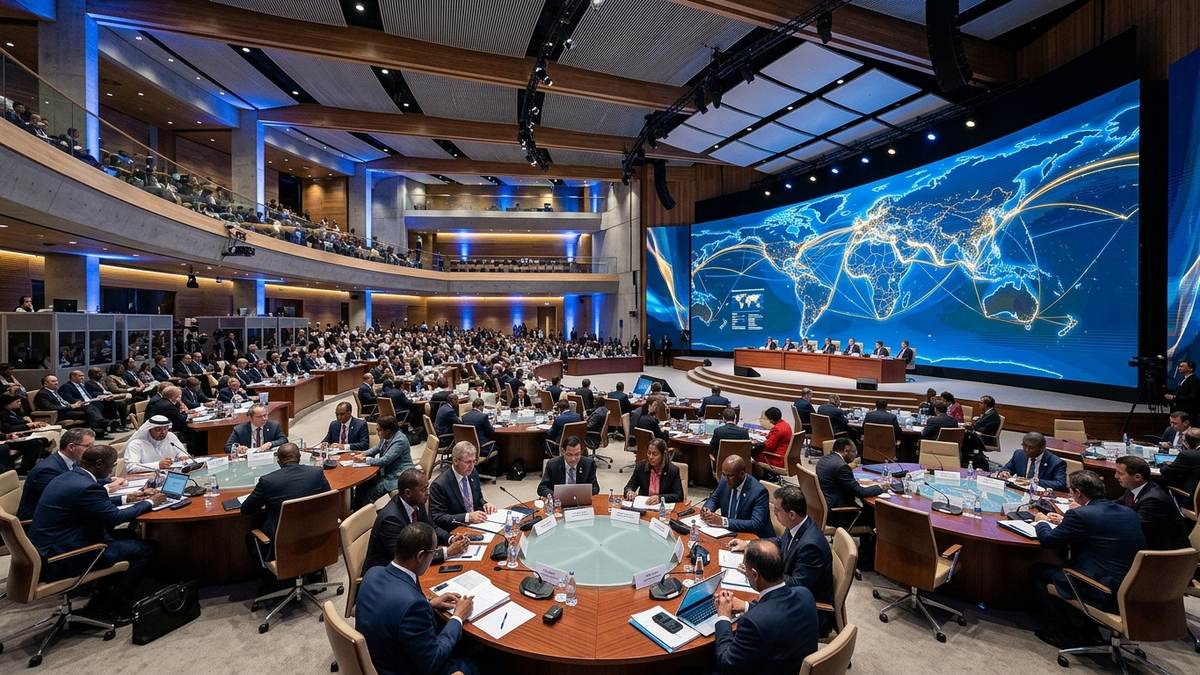
NEW DELHI — As multilateral leaders prepare to convene for the crucial September 12 BRICS Summit, India has formulated a forward-looking economic and technological blueprint designed to recalibrate multilateral cooperation across the Global South. High-level delegations from the Ministry of External Affairs (MEA), the Department for Promotion of Industry and Internal Trade (DPIIT), and the National Security Council Secretariat have finalized a diplomatic agenda centered on three strategic pillars: establishing institutional startup collaboration corridors, diversifying critical supply chains for rare earths and semiconductors, and deploying sovereign green technologies.
With the expanded BRICS bloc now representing more than 45% of the world's population and roughly 36% of global gross domestic product (GDP) in purchasing power parity (PPP) terms, New Delhi is actively positioning its vibrant startup ecosystem as a foundational growth engine for the multilateral grouping. Rather than limiting summit discussions to conventional diplomatic communiqués or bilateral local-currency trade settlements, India is advocating for actionable multilateral frameworks that enable deeptech startups to co-develop intellectual property, harmonize cross-border testing standards, and insulate industrial supply chains against unilateral geopolitical shocks.
This high-level diplomatic push dovetails with India's domestic industrial capacity expansion, detailed in our analyses of Engineering Companies Eye Aerospace, Defence and Semiconductor Growth and strategic deeptech capital commitments highlighted in Piper Serica's Bharat Tech Fund Targeting Deeptech Startups.
The Multilateral Imperative: Moving from Traditional Geopolitics to Tech Alliances
The expansion of the BRICS alliance has dramatically enhanced the bloc's collective resource base, bringing together major energy producers, manufacturing powerhouses, and high-growth consumer demographics across Asia, South America, the Middle East, and Africa. However, geopolitical friction and currency volatility have historically hindered cohesive multilateral trade integration.
India's strategy at the upcoming summit pivots away from purely political posturing toward pragmatic technological interoperability:
1. De-Weaponization of Critical Supply Chains: Global supply shocks over the past four years have exposed the extreme vulnerability of over-concentrated manufacturing and raw material refining nodes. India is championing a "China+1" diversification model within the BRICS framework that establishes distributed processing hubs across member states.
2. Institutional Innovation Corridors: Historically, startups in emerging markets had to establish holding entities in Delaware or London to access global capital and markets. India is proposing the creation of a BRICS Startup Innovation Network (BSIN) to enable bilateral regulatory sandboxes and joint venture formations.
3. Sovereign Green Transition Financing: Accelerating the deployment of green hydrogen, renewable energy storage, and electric mobility without falling into prohibitive debt-trap financing models.
"The fundamental challenge confronting emerging economies today is not a lack of scientific capability, but an over-reliance on single-geography supply corridors for critical inputs,"remarked a senior trade official involved in summit preparations. "India's objective at this BRICS summit is to convert our startup agility, digital public rails, and engineering prowess into shared multilateral infrastructure. By securing raw materials and opening market access across partner nations, we build genuine structural resilience."
Critical Mineral Security and Sovereign Semiconductor Value Chains
At the heart of the supply chain agenda is the race for critical minerals—specifically lithium, cobalt, nickel, and rare earth elements (REEs)—which constitute the foundational inputs for electric vehicle batteries, aerospace components, and semiconductor microelectronics.
Member nations like Brazil, South Africa, and regional partners hold massive reserves of raw unrefined ore, yet lack the advanced refining and chemical processing infrastructure needed to feed domestic high-tech manufacturing. India is proposing an integrated cross-border value chain:
- Upstream Mining & Joint Offtake: Establishing institutional joint ventures between Indian state-backed entities (such as KABIL) and Latin American and African mining operators for sustainable extraction.
- Midstream Chemical Processing: Establishing regional processing hubs equipped with domestic Indian chemical engineering and solvent extraction technologies, reducing dependence on dominant East Asian monopolies.
- Downstream Integration: Channeling processed battery-grade lithium and rare earth magnets directly into domestic EV battery gigafactories and sovereign silicon packaging plants, aligning with the long-term goals of India's ₹13 Billion Semiconductor Mission.
Strategic Action Matrix: India's BRICS Summit Priorities
The comprehensive table below details India's core strategic proposals, multilateral implementation mechanisms, and projected economic deliverables heading into the September 12 summit:
| Strategic Pillar | Core Multilateral Initiative | Key Technology / Resource Vertical | Expected Economic & Industrial Outcome |
|---|---|---|---|
| Startup Corridors | BRICS Startup Innovation Network (BSIN) | Deeptech, AI, Agritech, Healthcare | Bilateral regulatory sandboxes, joint patent filings, cross-border venture syndicate deployments |
| Supply Chain Resilience | Critical Minerals Processing Pact | Lithium, Cobalt, Neodymium, Gallium | Secured long-term offtake agreements, reduced supply volatility for EV and semiconductor fabs |
| Digital Sovereignty | DPI Interoperability Accord | UPI-Style Real-Time Payments, Digital Identity | Direct local-currency cross-border trade settlements, lower transaction fees, reduced FX friction |
| Green Industrialization | Global Biofuels & Green Hydrogen Alliance | Electrolyzers, Green Ammonia, Bio-feedstocks | Shared technology standards, accelerated decarbonization of maritime shipping and fertilizer production |
| Logistics & Multimodal | International North-South Transport Corridor (INSTC) | Automated Customs Clearance, Port Logistics | 30% reduction in maritime transit times between South Asia, the Gulf, and Eurasian trade nodes |
Exporting the India Stack: Sovereign Digital Public Infrastructure
A cornerstone of India's commercial diplomatic leverage is its proven track record in architecting world-class Digital Public Infrastructure (DPI). The success of the Unified Payments Interface (UPI), Aadhaar-based digital identity, Open Network for Digital Commerce (ONDC), and account aggregator frameworks has generated immense interest among BRICS member states seeking to modernize their domestic economies without submitting to proprietary Western financial networks.
At the summit, New Delhi will showcase how modular, open-source DPI rails can be adapted for cross-border trade:
1. Frictionless B2B Trade Clearing
Enabling direct cross-border trade settlements between Indian exporters and BRICS counterparties using linked national payment systems, circumventing costly correspondent banking routes.
2. Digital Product Passports for Green Commodities
Utilizing distributed ledger technology to verify the carbon intensity and supply chain provenance of green hydrogen, biofuels, and certified minerals shipped between member nations.
3. Cross-Border Agritech and Food Security Exchanges
Connecting Indian precision agritech startups with agricultural ministries across Latin America and Africa to improve crop yields, mitigate climate risks, and optimize fertilizer consumption.
The Strategic Outlook for Indian Tech and Industry
As India heads into the September 12 summit, the country's message is unequivocal: sustainable economic security in the 21st century cannot be attained through passive trade reliance or fragmented protectionism. By championing open innovation corridors, institutionalizing critical mineral processing networks, and sharing its battle-tested digital public infrastructure, India is positioning itself as an indispensable bridge between emerging market ambitions and global technological leadership.
For Indian startups, manufacturers, and institutional investors, the BRICS summit represents a historic opportunity to convert domestic engineering excellence into enduring commercial dominance across the world's most dynamic growth markets.