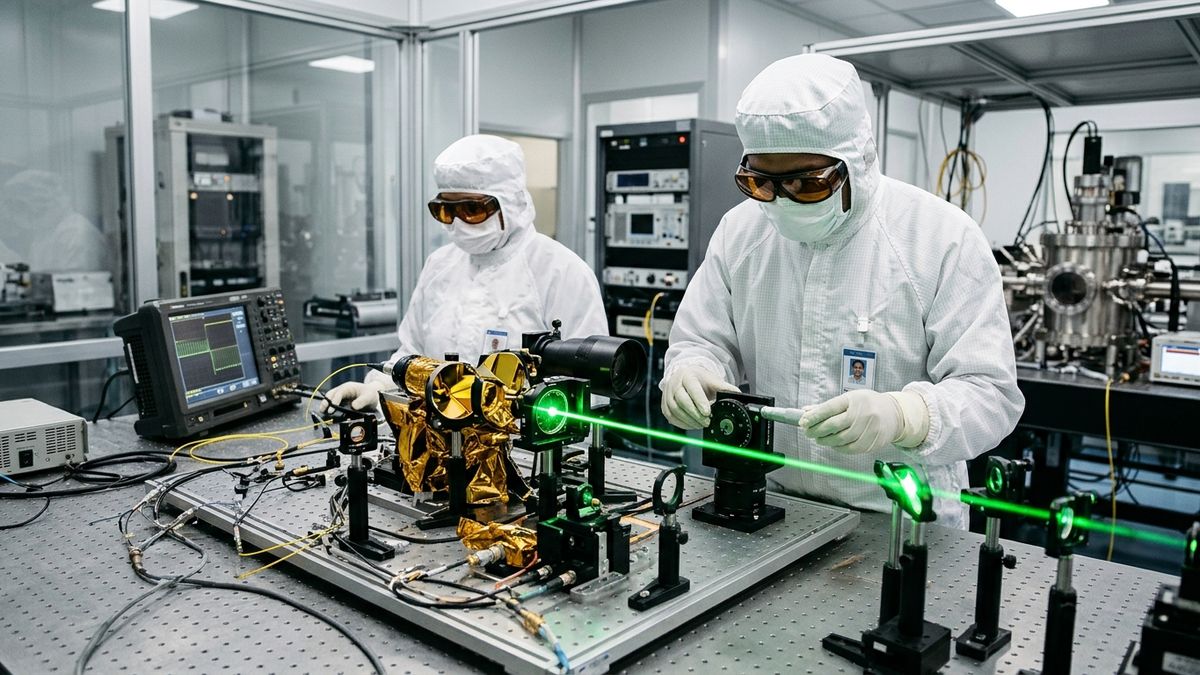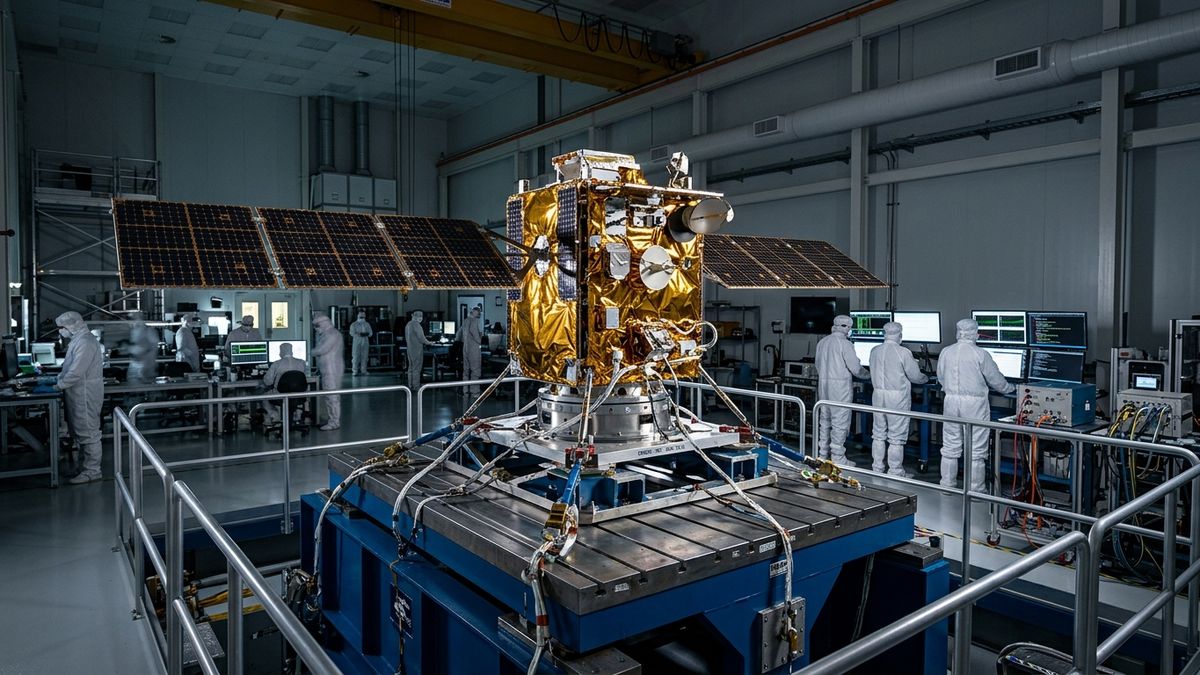
Space-tech pioneers GalaxEye Space and Bellatrix Aerospace have partnered to integrate Hall-effect electric thrusters into OptoSAR satellites, boosting orbital lifespan and LEO constellation agility.
Executive Key Takeaways
- Bengaluru-based space-tech leaders GalaxEye Space and Bellatrix Aerospace have signed a strategic partnership to equip the 'Drishti' Earth observation satellite constellation with advanced electric propulsion.
- Bellatrix's Hall-effect thrusters and green chemical propulsion systems will extend GalaxEye's satellite orbital lifespans by over 40% while enabling sub-meter collision avoidance in Low Earth Orbit (LEO).
- The integration creates an all-indigenous, sovereign aerospace platform combining synchronized optical-radar Earth imaging with ultra-efficient plasma propulsion.
In a landmark collaboration for India's rapidly expanding private space-technology industry, Bengaluru-based Earth observation pioneer GalaxEye Space and satellite propulsion innovator Bellatrix Aerospace have formalized a strategic technology integration partnership. Under the memorandum of understanding, Bellatrix Aerospace will supply its proprietary Hall-effect electric plasma thrusters and green chemical propulsion suites to power GalaxEye's upcoming commercial Drishti constellation—the world's first satellite network utilizing synchronized OptoSAR (Optical + Synthetic Aperture Radar) imaging sensors.
The collaboration represents an important maturation phase for India's sovereign space ecosystem. Rather than procuring satellite subsystems from separate international aerospace vendors across Europe or North America, domestic deeptech pioneers are now co-engineering end-to-end sovereign spacecraft platforms inside India's private aerospace corridor.
By coupling Bellatrix's ultra-high-efficiency electric propulsion with GalaxEye's multi-sensor imaging satellites, the Drishti constellation will achieve an extended operational lifespan exceeding 5.5 years (a 40% improvement over non-propelled SmallSats) while gaining autonomous orbital station-keeping and active space debris avoidance capabilities in Low Earth Orbit (LEO).
The Engineering Challenge: Atmospheric Drag and Agile Constellations
Earth observation satellites operating in Low Earth Orbit (typically 450 to 550 kilometers altitude) face constant atmospheric friction caused by the tenuous outer layers of Earth's atmosphere. This atmospheric drag gradually saps spacecraft velocity, forcing satellites to decay in altitude and prematurely burn up in the upper atmosphere.
Historically, small satellites either carried heavy, toxic hydrazine chemical propellants—which consumed massive payload mass and posed severe ground handling hazards—or flew without propulsion, accepting short operational lifespans of two to three years.
Bellatrix Aerospace's Hall-effect electric thrusters solve this operational trade-off. By ionizing inert gas propellants like xenon and accelerating the resulting plasma through an electrostatic potential, Bellatrix thrusters generate exhaust velocities exceeding 15,000 to 25,000 meters per second. This delivers a specific impulse ($I_{sp}$) five to ten times greater than traditional chemical thrusters, allowing a tiny, five-kilogram fuel tank to keep a 150-kilogram satellite stationed in precise orbit for years.
This achievement builds upon a steady series of private space breakthroughs in India, including GalaxEye securing key US patents for its OptoSAR sensor architecture, Astrogate Labs verifying 10 Gbps laser communications, and Dhruva Space deploying its commercial LEAP-2 mission.
Comparative System Performance: Drishti Satellite Capabilities
The structured engineering matrix below compares the performance parameters of GalaxEye's Drishti satellites with and without Bellatrix electric propulsion integration:
| Engineering Dimension | Standard SmallSat (Without Propulsion) | Traditional Monopropellant Hydrazine System | Drishti with Bellatrix Hall-Effect Electric Thruster |
|---|---|---|---|
| Operational Orbital Lifespan | 2.5 – 3.0 Years (Drag-limited) | 3.5 – 4.0 Years | 5.5 – 6.5+ Years (Active drag compensation) |
| Specific Impulse ($I_{sp}$) | 0 seconds (No thrust) | 220 – 240 seconds | 1,500 – 1,800 seconds (Plasma efficiency) |
| Propellant Mass Overhead | 0 kg | 18 – 25 kg toxic fuel | < 4.5 kg inert, safe propellant |
| Ground Handling Hazard | Zero | Severe (Toxic, pressurized hydrazine) | Zero (Non-toxic, green inert storage) |
| Autonomous Debris Avoidance | Incapable (Passive target) | Slow response | Rapid autonomous maneuver (Sub-30 min response) |
| Constellation Phase Adjustment | Dependent on launch vehicle drop-off | Limited delta-V | Precision multi-satellite orbital phasing |
"The partnership between GalaxEye and Bellatrix is a testament to the compounding strength of India's private space industry. By uniting the world's most advanced dual optical-radar imaging payload with sovereign electric plasma propulsion, we are proving that India can design, assemble, and operate world-leading aerospace platforms entirely indigenously."
Strategic Implications: All-Weather Sovereign Planetary Intelligence
The deployment of the Drishti constellation addresses critical planetary observation requirements for government defense agencies, agricultural ministries, and disaster management authorities:
- All-Weather Optical & Radar Fusion: Traditional optical satellites cannot image Earth through monsoon cloud cover, smoke plumes, or darkness. GalaxEye's OptoSAR captures synchronized radar microwave echoes alongside multispectral visual bands, piercing dense cloud layers to generate day-and-night sub-meter imagery.
- Precision Constellation Phasing: Bellatrix's thrusters allow the Drishti satellites to distribute themselves evenly along orbital planes after a single rocket launch, ensuring predictable 12-hour revisit rates over strategic border sectors and agricultural zones.
- Sustainable Space Deorbiting Protocol: At the end of operational life, the electric thrusters execute controlled de-orbit burns, lowering the satellite into dense atmosphere for complete incineration, preventing the generation of dangerous space debris in accordance with global space sustainability guidelines.
With orbital flight tests slated for the coming quarters, the GalaxEye and Bellatrix partnership provides a powerful blueprint for private aerospace commercialization under India's national IN-SPACe framework.
Frequently Asked Questions
What is the strategic partnership between GalaxEye and Bellatrix Aerospace?
The partnership integrates Bellatrix Aerospace's proprietary electric Hall-effect thrusters and environmentally friendly green chemical propulsion systems into GalaxEye's upcoming 'Drishti' constellation of hybrid Optical and Synthetic Aperture Radar (OptoSAR) imaging satellites.
What is unique about GalaxEye's OptoSAR technology?
OptoSAR is an indigenous hybrid sensor architecture that captures high-resolution optical imagery and synthetic aperture radar (SAR) data simultaneously from a single satellite platform, allowing crystal-clear planetary imaging through heavy cloud cover, smoke, and nighttime conditions.
Why do Earth observation satellites need electric propulsion?
Atmospheric drag in Low Earth Orbit (LEO) causes satellites to steadily lose altitude over time. Electric plasma thrusters use electricity from solar panels to accelerate xenon or iodine propellant to hypersonic velocities, providing continuous station-keeping thrust with 5x higher fuel efficiency than chemical rocket fuel, dramatically extending the satellite's operational life.
How does the partnership enhance orbital safety?
With thousands of commercial satellites and orbital debris crowding LEO, high-agility electric propulsion enables GalaxEye satellites to execute autonomous orbital collision avoidance maneuvers within minutes of receiving space-tracking collision warnings.