GalaxEye secures a landmark USPTO patent for its proprietary OptoSAR technology, fusing SAR and optical satellite sensors to deliver 24/7 all-weather Earth intelligence.
Executive Key Takeaways
- GalaxEye secures a landmark USPTO patent for its proprietary OptoSAR technology, fusing SAR and optical satellite sensors to deliver 24/7 all-weather Earth intelligence.
- Securing the USPTO patent for OptoSAR is a decisive global validation of our engineering architecture, said Suyash Singh, Co-founder and CEO of GalaxEye Space. For decades, commercial and defense analysts had to reconcile disjointed datasets from different satellites taken hours or days apart. OptoSAR delivers synchronized radar and optical data streams instantaneously, providing actionable ground intelligence even through dense monsoonal cloud decks and absolute darkness.
- Key Benchmark: **All-Weather Penetration** — Fails under clouds/fog (>60% blackout)
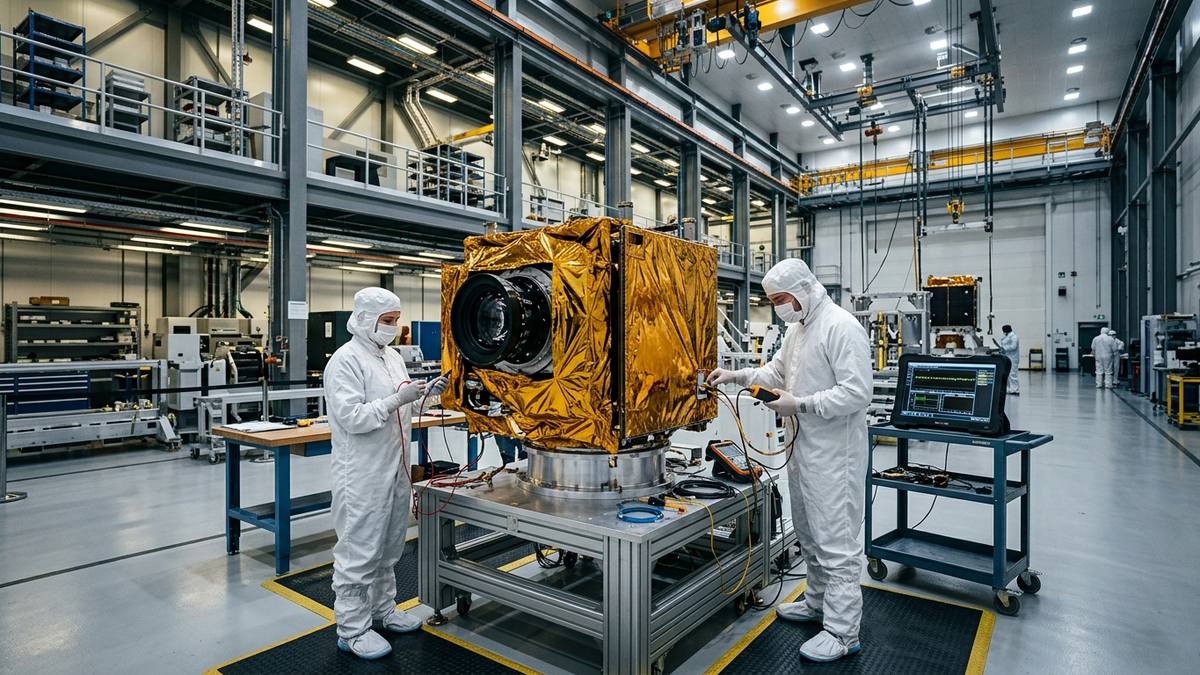
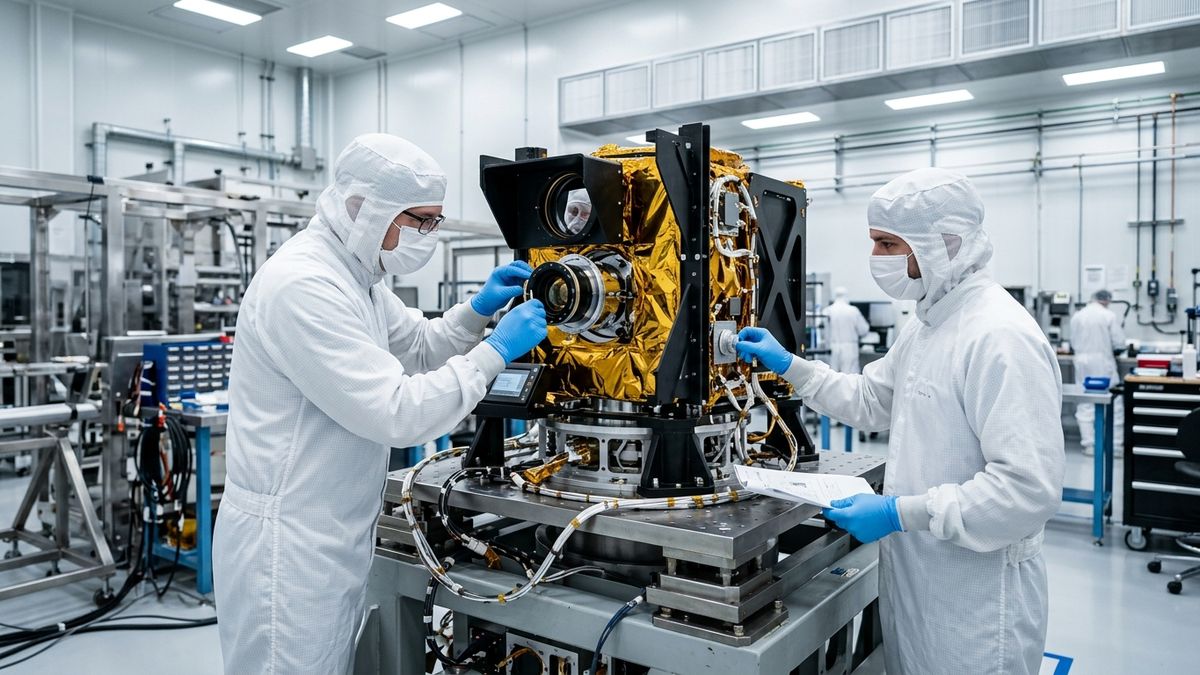
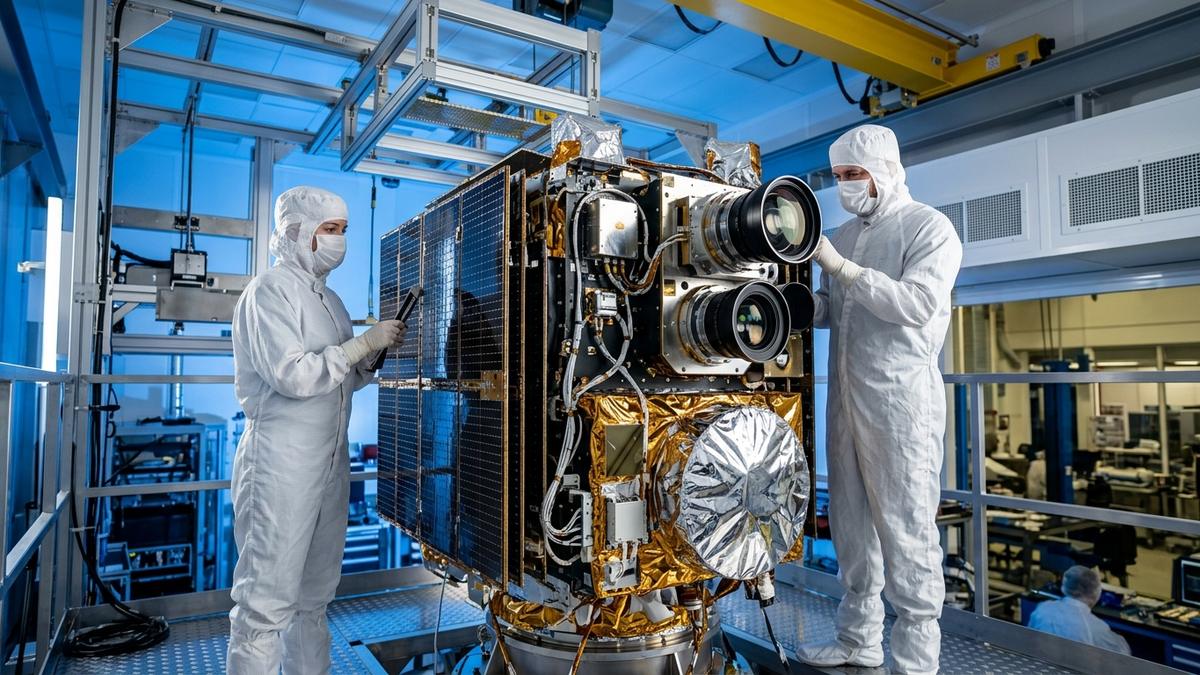
CHENNAI & BENGALURU — In a milestone validation for India's rapidly maturing deep-tech aerospace ecosystem, Chennai-headquartered space-technology startup GalaxEye Space has been formally granted a major patent by the United States Patent and Trademark Office (USPTO) for its flagship satellite imaging architecture, branded as OptoSAR. The proprietary technology synchronizes Synthetic Aperture Radar (SAR) and high-resolution electro-optical (EO) multispectral sensors onto a unified microsatellite bus, overcoming the fundamental physical limitations that have historically forced Earth observation operators to choose between the cloud-penetrating radar scans and color-rich optical photography.
By securing intellectual property protection in the world's most lucrative commercial space market, GalaxEye cements its leadership in hybrid spaceborne sensing. The patent grant directly accelerates the commercial rollout of GalaxEye's upcoming Drishti constellation, providing defense agencies, maritime operators, agricultural underwriters, and infrastructure planners with uninterrupted, all-weather, day-and-night geospatial intelligence at sub-meter spatial precision.
This international IP milestone arrives amidst widespread regulatory and infrastructural tailwinds across the subcontinent. As detailed in our coverage of how ISRO Opens More Doors for India's Private Space Sector, national agencies like IN-SPACe and ISRO have unlocked testing centers and launch slots, enabling homegrown innovators like GalaxEye to commercialize novel space IP on the global stage.
The Physics of OptoSAR: Overcoming the Optical-Radar Dichotomy
Traditional Earth observation (EO) satellites have long suffered from mutually exclusive operational trade-offs:
1. Optical Sensors: Capture exceptionally rich multispectral and panchromatic imagery, enabling visual photo-interpretation, vegetation index calculation, and urban boundary tracking. However, optical payloads are rendered completely ineffective by cloud cover, atmospheric haze, heavy precipitation, and nighttime darkness—conditions that obscure more than 60% of the Earth's surface at any given moment.
2. Synthetic Aperture Radar (SAR): Transmits active microwave electromagnetic pulses that penetrate dense tropical cloud formations, monsoons, dust storms, and darkness. SAR produces precise structural, dielectric, and elevation data. However, standalone SAR imagery is notoriously difficult to interpret, plagued by speckle noise, geometric layover distortions, and an absence of natural spectral color information.
GalaxEye's patented OptoSAR architecture resolves this fifty-year remote sensing bottleneck. Rather than launching separate optical and radar constellations and attempting post-hoc algorithmic alignment on ground servers—an approach crippled by temporal discrepancies, orbital drift, and solar angle variance—OptoSAR captures simultaneous, co-registered optical and radar data from identical orbital vantage points in real time.
"Securing the USPTO patent for OptoSAR is a decisive global validation of our engineering architecture,"said Suyash Singh, Co-founder and CEO of GalaxEye Space. "For decades, commercial and defense analysts had to reconcile disjointed datasets from different satellites taken hours or days apart. OptoSAR delivers synchronized radar and optical data streams instantaneously, providing actionable ground intelligence even through dense monsoonal cloud decks and absolute darkness."
Technical Architecture: Real-Time On-Orbit Sensor Co-Registration
The core innovation recognized by the USPTO covers GalaxEye's synchronized sensor trigger pipeline, shared radio-frequency/optical payload synchronization, and low-latency edge compute calibration:
- Micro-Second Payload Synchronization: OptoSAR synchronizes the pulsed microwave emissions of the X-band SAR with the exposure cycle of the high-resolution optical focal plane array, ensuring zero spatial parallax error between the two datasets.
- Edge-Assisted Radiometric Calibration: Onboard radiation-hardened field-programmable gate arrays (FPGAs) process raw radar backscatter returns and calibrate optical reflectance metrics before downlinking, reducing downlink bandwidth requirements by over 40%.
- Co-Boresighted Optics and Phased-Array Geometry: The mechanical chassis design accommodates lightweight active phased array antenna tiles wrapped alongside folded optical reflective telescopes, fitting within an ultra-compact 150-kilogram satellite form factor.
This compact form factor allows GalaxEye to launch its payloads on commercial small-satellite rideshares and indigenous launch systems, maintaining cost parity while delivering sensor performance previously restricted to multi-ton sovereign satellites costing hundreds of millions of dollars.
Multi-Sensor Benchmarking: OptoSAR vs Legacy Remote Sensing
The structural comparison matrix below outlines the operational advantages of GalaxEye's patented OptoSAR architecture relative to conventional Earth observation platforms:
| Operational Parameter | Conventional Optical Constellations | Standalone Commercial SAR | GalaxEye Patented OptoSAR | Strategic Advantage |
|---|---|---|---|---|
| All-Weather Penetration | Fails under clouds/fog (>60% blackout) | 100% cloud and precipitation penetration | 100% radar penetration with fused optical calibration | Uninterrupted 24/7 data continuity |
| Nighttime Imaging | Zero capability (requires ambient sunlight) | Fully operational (active microwave emission) | Active radar imaging + thermal IR cross-reference | Full day-and-night reconnaissance |
| Data Interpretation | High intuitive clarity, color spectral bands | Complex speckle noise, requires specialist SAR analysis | Automated fused visual overlay with radar dielectric data | Immediate tactical interpretation for end-users |
| Temporal Parallax | Disjointed from radar scans by hours/days | Disjointed from optical scans by hours/days | Synchronized sub-second co-registration | Zero ground-movement or shadow discrepancy |
| Target Applications | Agriculture mapping, urban planning | Maritime vessel detection, surface deformation | Combined ship classification, flood mapping, border defense | Multi-mission versatility on a single satellite bus |
Commercial Traction and the Drishti Constellation
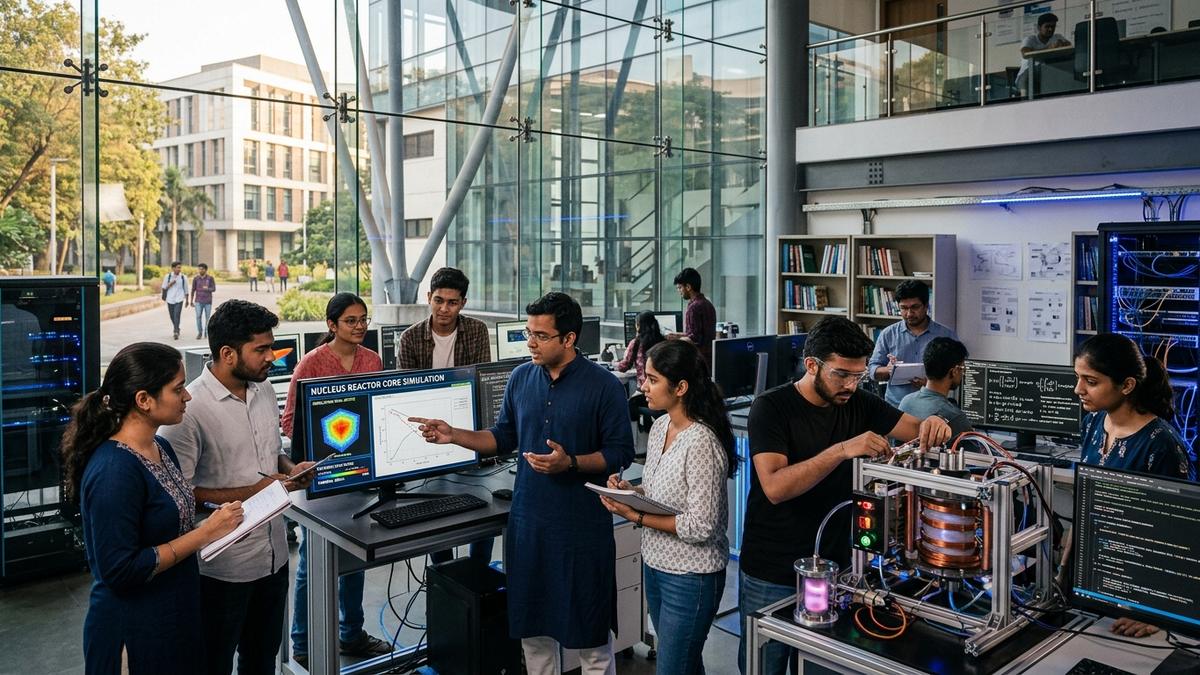
Spun out of the pioneering Avishkar Hyperloop team at the Indian Institute of Technology (IIT) Madras, GalaxEye has transitioned from academic laboratory prototyping to multi-satellite constellation deployment with remarkable speed.
The company's commercial trajectory is anchored by its Drishti satellite series:
1. Maritime Surveillance and Blue Economy
Dark vessels attempting to evade identification by disabling Automatic Identification System (AIS) transponders frequently exploit cloud cover to conduct illegal fishing or unauthorized territorial transits. OptoSAR's microwave beam detects the metallic hull signatures through cloud layers, while the co-registered optical sensor instantly captures vessel superstructure geometry, flag registration, and oil slick discharges.
2. Precision Agriculture and Crop Insurance Underwriting
In monsoonal regions across South Asia and Southeast Asia, agricultural insurers lose billions annually due to fraudulent claims and delayed damage assessments after severe cyclones. OptoSAR allows underwriters to pierce through lingering post-cyclone cloud formations to accurately map flood inundation depths, crop lodging, and standing water moisture content within hours of a storm passing.
3. Critical Infrastructure and Mining Compliance
OptoSAR monitors open-cast mineral extraction, tailings dam structural stability, railway embankments, and highway corridors, tracking millimeter-level ground subsidence through radar interferometry while providing high-resolution visual progress audits for asset managers.
This operational scope has attracted substantial institutional capital from premier deep-tech venture funds, including participation from funds highlighted in Piper Serica's Bharat Tech Fund Targeting Spacetech and Deeptech.
Strengthening India's Sovereign Space Innovation Footprint
GalaxEye's patent victory represents an essential inflection point in how Indian deep-tech ventures are perceived internationally. For decades, Indian aerospace was characterized as an efficient low-cost implementation arm for established international technologies. The USPTO patent demonstrates that Indian startups are now generating foundational, category-defining intellectual property that challenges legacy global aerospace incumbents.
Furthermore, domestic sensor innovations like OptoSAR rely heavily on advanced semiconductor microelectronics, high-frequency RF transceivers, and precision metrology—synergizing directly with national manufacturing pushes detailed in our analysis of India's ₹13 Billion Semiconductor Mission.
As GalaxEye finalizes launch integrations for its commercial constellation, the startup stands as a beacon for India's NewSpace revolution: proving that world-class physics, rigorous proprietary IP, and capital-efficient engineering can redefine how humanity monitors planet Earth from orbit.