Indian Robotics Startup Ottonomy Expands Globally, Scaling Autonomous Delivery Fleet From Noida Manufacturing Base
By Rohan Varma | Published September 21, 2026 | 9 min read
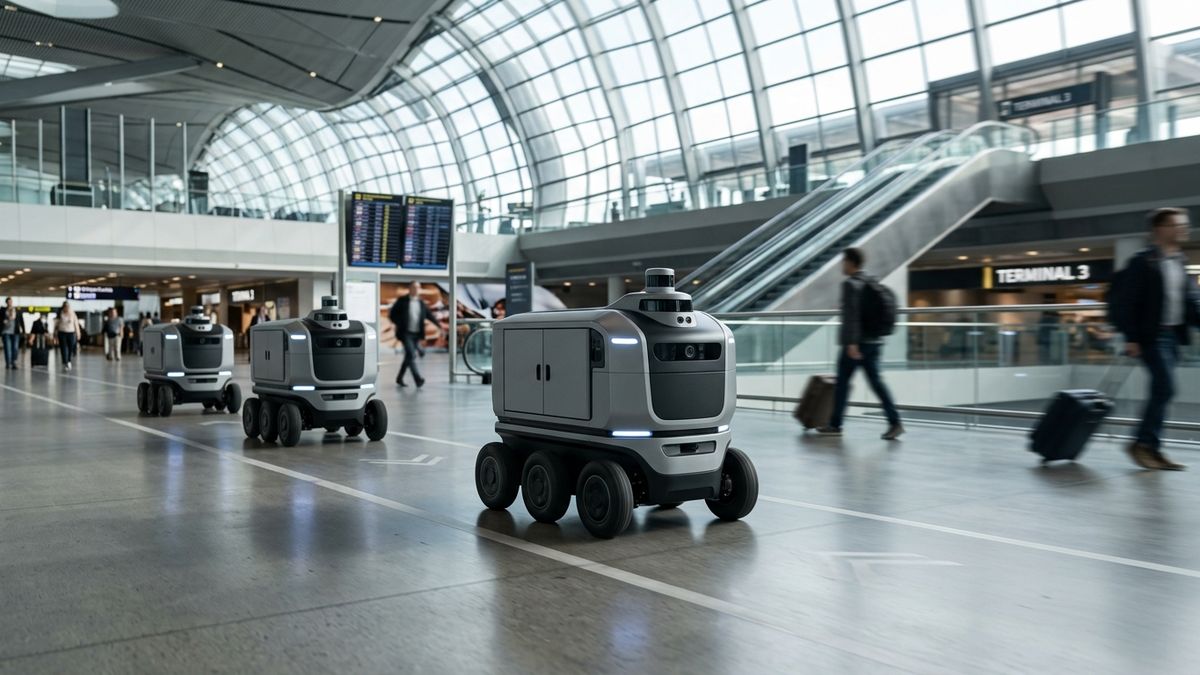
Deeptech robotics pioneer Ottonomy is scaling commercial deployments of its autonomous delivery robots across North America, Europe, and Asia, anchored by its Noida production hub.
In a compelling showcase of Indian deeptech hardware engineering scaling across the international arena, autonomous robotics startup Ottonomy.IO is accelerating the global commercial rollout of its Ottobot fleet. Anchored by its high-tech research, development, and primary production facility in Noida, Uttar Pradesh, the company is deploying its proprietary autonomous logistics robots across premier international airports, healthcare complexes, industrial facilities, and smart retail hubs across North America, Europe, the Middle East, and Asia.
Founded in 2020 by Ritukar Vijay, Hardik Sharma, Pradyot Korupolu, and Ashish Gupta, Ottonomy has disrupted the intralogistics robotics sector by pioneering fully autonomous indoor-outdoor delivery rovers that operate without reliance on satellite GPS signals. By combining high-precision domestic manufacturing in Uttar Pradesh with Silicon Valley commercial partnerships, Ottonomy represents a premier example of Indian hardware startups exporting high-value physical AI solutions to the world.
The Engineering Breakthrough: Level-4 Autonomy Without GPS Dependence
The central barrier that historically hobbled autonomous delivery rovers in indoor transit terminals, multi-story hospital corridors, and subterranean parking structures was their reliance on Global Positioning System (GPS) signals. GPS signals degrade or vanish entirely beneath metal airport roofs and thick reinforced concrete walls, rendering standard delivery robots blind or dangerously erratic.
Ottonomy solved this fundamental challenge by engineering an end-to-end proprietary navigation and perception stack that achieves Level-4 (L4) autonomy indoors and outdoors:
- Contextual AI & 3D LiDAR Fusion: Ottobots construct real-time three-dimensional point-cloud representations of their environments using high-frequency LiDAR sensors, ultrasonic arrays, and stereoscopic optical cameras, dynamically distinguishing between stationary luggage racks, rolling strollers, and hurrying passengers.
- Zero-Infrastructure Deployment: Unlike Automated Guided Vehicles (AGVs) that require magnetic floor strips, optical ceiling QR codes, or external beacon grids, Ottobots map unfamiliar airport terminals or hospital wings in hours using autonomous SLAM (Simultaneous Localization and Mapping).
- Four-Wheel Independent Steering & Zero-Radius Turn: Engineered with custom omnidirectional drivetrain kinematics, Ottobots can execute 360-degree turns on their own central axis, allowing them to slip effortlessly through narrow boarding gate queues, elevator doors, and busy medical corridors.
"Building autonomous software in simulation is one thing; building ruggedized physical hardware that can safely navigate through tens of thousands of stressed passengers rushing to catch flights at international airports is an entirely different order of engineering,"noted autonomous mobility researchers. "Ottonomy's Noida engineering team solved the edge cases of human-robot interaction in physical space, making Indian robotics an export powerhouse."
This hardware leap aligns with how IISc startups commercialize deep science, healthcare robotics, and advanced materials and mirrors how Dehradun and northern corridors are transforming into robotics and AI talent powerhouses.
Technical Specifications: Inside the Ottobot 3.0 Platform
Ottonomy’s latest generation platforms integrate modular payload bays, enabling the same robotic chassis to switch seamlessly between hot food delivery, cold pharmaceutical transport, and secure intra-office parcel dispatch:
| Engineering Parameter | Ottobot 3.0 Specifications | Industry Standard AMR Baseline | Operational Advantage |
|---|---|---|---|
| Autonomy Standard | Level-4 Indoor / Outdoor Autonomous | Level-2 / Level-3 (Teleoperated Assist) | Unsupervised navigation without human remote driving |
| Sensor Suite | 3D Solid-State LiDAR, Depth Vision, Sonar | Single 2D LiDAR + Bump Sensors | Full 360-degree omnidirectional obstacle detection |
| Localization Method | Proprietary Visual-Inertial SLAM & Contextual AI | GPS + Cellular Triangulation | Millimeter-accurate indoor tracking with zero GPS |
| Payload Capacity | Up to 45 kg (Dual Modular Secure Compartments) | 15–20 kg Single Chamber | Temperature-controlled multi-order delivery per trip |
| Turning Radius | Zero-Radius (Crab-Walk & True 360° Pivot) | Fixed Axle Ackerman Steering | Unobstructed navigation in narrow aisles and elevators |
| Commercial Model | Robotics-as-a-Service (RaaS Subscription) | Outright Hardware Purchase (CapEx) | Low barrier to enterprise adoption with ongoing OTA updates |
Noida as the Global Production Engine
While multinational technology conglomerates often outsource assembly to contract manufacturers in East Asia, Ottonomy deliberately built its primary manufacturing footprint and core hardware engineering lab in Noida, Uttar Pradesh.
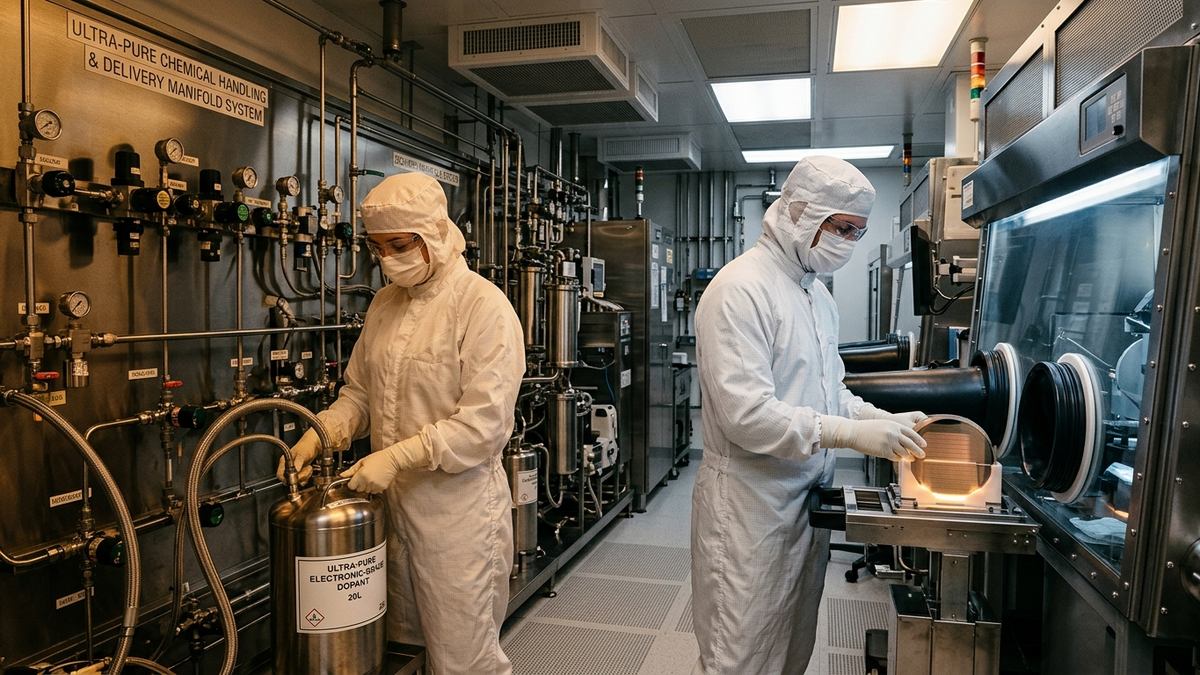
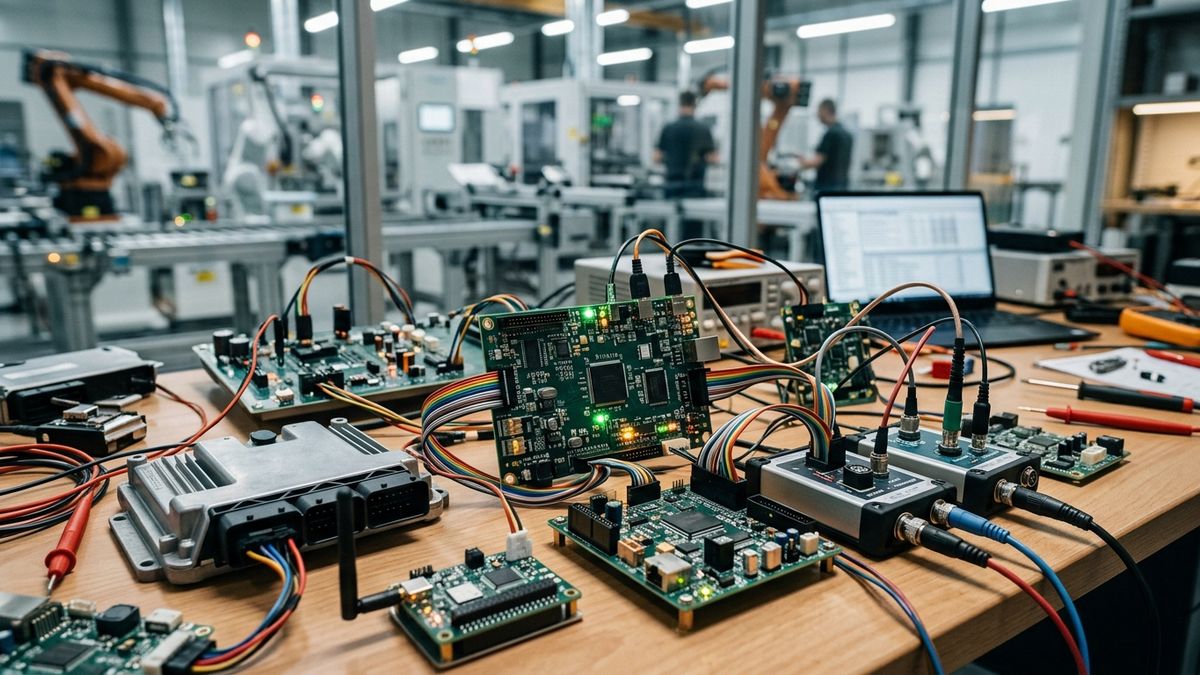
The Noida facility handles mechanical chassis fabrication, CNC precision machining, PCB assembly, sensor calibration benches, and environmental stress testing (evaluating performance under extreme temperatures and wet weather). By leveraging the deep automotive vendor ecosystem across the Delhi National Capital Region (NCR), Ottonomy achieves up to 40% lower bill-of-materials (BOM) costs compared to Western robotics rivals, while maintaining aerospace-grade assembly standards.
As international order books swell, the company is scaling up production throughput in Noida while establishing satellite assembly facilities in the United States to fulfill local municipal procurement rules for federal airports and Department of Defense medical complexes.
Commercial Traction Across Global Transit & Healthcare Corridors
Ottonomy’s Robotics-as-a-Service (RaaS) model has unlocked rapid enterprise adoption across diverse operational verticals:
- International Airport Concessions: At Cincinnati/Northern Kentucky International Airport (CVG), Rome Fiumicino Airport (FCO), and Pittsburgh International (PIT), passengers order gate-side meals, drinks, and retail electronics via mobile apps, with Ottobots autonomously delivering orders directly to departure gates.
- Hospital Logistics & Pharmacy Runs: In North American medical campuses, Ottobots transport sterile surgical kits, laboratory blood samples, and controlled pharmaceuticals between pharmacy vaults and ICU nursing stations, relieving hospital nursing staff of mundane courier duties.
- Smart City Multi-Modal Networks: In India, Ottonomy has partnered with infrastructure innovators including Arrive AI and Skye Air Mobility to establish multimodal drone-to-robot delivery pipelines, where aerial drones drop payloads into smart lockboxes and Ottobots complete the ground delivery run.
As global economies grapple with persistent demographic labor shortages across service and warehousing roles, Ottonomy is proving that high-end physical AI and autonomous hardware designed and assembled in India can define the frontier of international robotics, reinforcing how India is actively shaping global tech expansion forums and complementing deeptech hardware ecosystems taking root across Tamil Nadu and southern clusters.
Frequently Asked Questions
What does Ottonomy do and what makes its Ottobot unique?
Ottonomy designs and deploys fully autonomous mobile robots (Ottobots) engineered for indoor, outdoor, and hybrid delivery. Unlike conventional rovers constrained by open skies and GPS dependencies, Ottobots leverage contextual AI, 3D LiDAR, and stereoscopic vision fusion to achieve Level-4 autonomy even in crowded airport passenger concourses, multistory hospitals, and dense corporate campuses.
Where are Ottonomy's manufacturing and R&D operations based?
While maintaining a corporate executive presence in Sunnyvale, California, Ottonomy's primary research and development laboratories, mechanical engineering workshops, embedded firmware teams, and primary robotic assembly lines are located in Noida, Uttar Pradesh (Delhi NCR).
Which international customers and facilities are currently deploying Ottonomy robots?
Ottonomy has secured commercial contracts with major global transit authorities and logistics operators, including Cincinnati/Northern Kentucky International Airport (CVG), Rome Fiumicino Airport, Pittsburgh International Airport, leading North American healthcare hospital networks, and smart urban pilot developments in the Middle East and India.
What is the Robotics-as-a-Service (RaaS) commercial model?
Under the Robotics-as-a-Service (RaaS) subscription model, enterprise clients do not pay heavy upfront capital expenses (CapEx) to purchase robotic hardware. Instead, Ottonomy provides the rovers, autonomous navigation software, remote fleet telemetry, and ongoing preventive maintenance on a predictable operational expenditure (OpEx) monthly basis.
Primary Sources & Official References
- Ottonomy.IO Commercial Briefing: Global Fleet Telemetry, Ottobot 3.0 Platform Specs, and Airport Automation Deployments: Official corporate and technical disclosures.
- YourStory Deeptech Radar: Inside Ottonomy's Noida Factory Engineering Autonomous Delivery Rovers for Global Terminals: Field reporting on Noida production and export milestones.
- Ministry of Electronics and Information Technology (MeitY): Indian Hardware Deeptech & Advanced Robotics Manufacturing Directory: Policy documentation on domestic deeptech robotics.
- Association for Advancing Automation (A3): Global Autonomous Mobile Robots (AMR) & Intralogistics Industry Benchmarks: Autonomous mobile robot market analysis and RaaS adoption telemetry.