SiMa.ai Raises $150 Million at $1.4 Billion Valuation to Accelerate Physical AI Silicon for Robotics and Autonomous Systems
By Sanjay Patel | Published September 30, 2026 | 8 min read
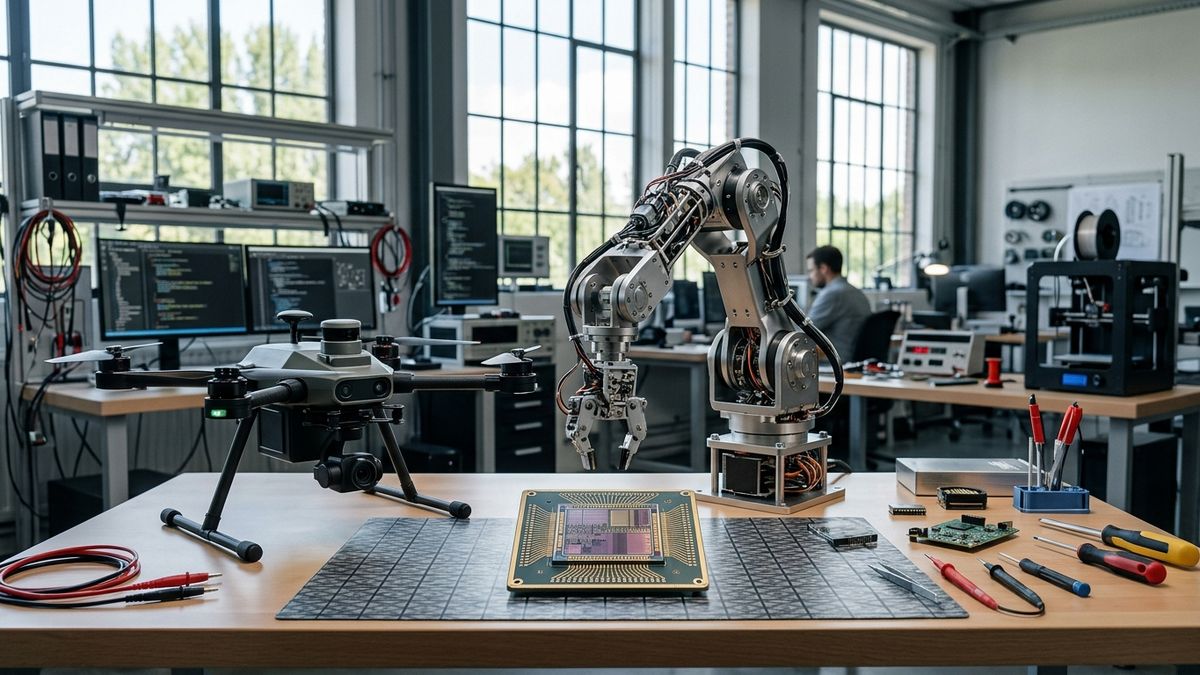
Fabless chipmaker SiMa.ai secures $150M at a $1.4B valuation to advance its Machine Learning SoC and Modalix platform for physical AI, robotics, and edge systems.
Fabless semiconductor innovator SiMa.ai has officially secured $150 million in fresh capital at a valuation of $1.4 billion, crossing the unicorn threshold to cement its leadership in the booming physical AI hardware market. The round reflects intense institutional investor interest in specialized machine learning silicon capable of executing complex neural networks, computer vision algorithms, and generative transformers directly inside physical machines—including industrial robotic manipulators, autonomous delivery drones, surveillance platforms, and smart manufacturing lines.
With corporate headquarters in San Jose and extensive core engineering operations in Bengaluru, SiMa.ai has emerged as a premier example of cross-border semiconductor excellence. Founded by semiconductor veteran Krishna Rangasayee, the enterprise is architecting the hardware and software foundations necessary to emancipate machine learning from power-hungry hyperscale cloud centers and transplant it directly into edge devices that interact with the physical world.
This breakthrough parallels the momentum seen in Netrasemi's 12nm edge AI SoC demonstration and aligns with India's broader semiconductor packaging and fabrication momentum.
The Physical AI Imperative: Bringing Intelligence to Autonomous Hardware
For the past several years, the global artificial intelligence narrative has been dominated by massive cloud-based large language models (LLMs). However, physical devices operating in dynamic real-world environments face strict physical constraints that remote cloud servers cannot resolve:
1. Zero Latency Tolerance: An autonomous drone navigating through dense electrical transmission towers or a collaborative robot operating alongside human assembly workers cannot wait 250 milliseconds for a cloud API response. A split-second delay causes equipment destruction or physical harm.
2. Deterministic Edge Safety: Physical machines require 99.999% uptime regardless of whether cellular or satellite internet connections drop. Intelligence must reside onboard.
3. Severe Thermal and Power Envelopes: Unlike liquid-cooled data center racks drawing 80kW, an industrial camera or agricultural robot must operate on 5W to 25W of power without noisy active cooling fans.
Physical AI is the convergence of multimodal perception, generative transformer models, and real-time physical actuation. SiMa.ai's purpose-built silicon addresses this exact domain.
"Physical AI represents the next massive frontier of computing,"explained Krishna Rangasayee, CEO and Founder of SiMa.ai. "While generative software models live in cyberspace, the physical machines that build our infrastructure, harvest our crops, and inspect our power grids require dedicated silicon that combines maximum neural compute efficiency with effortless software deployment."
Inside the MLSoC and Modalix Software Architecture
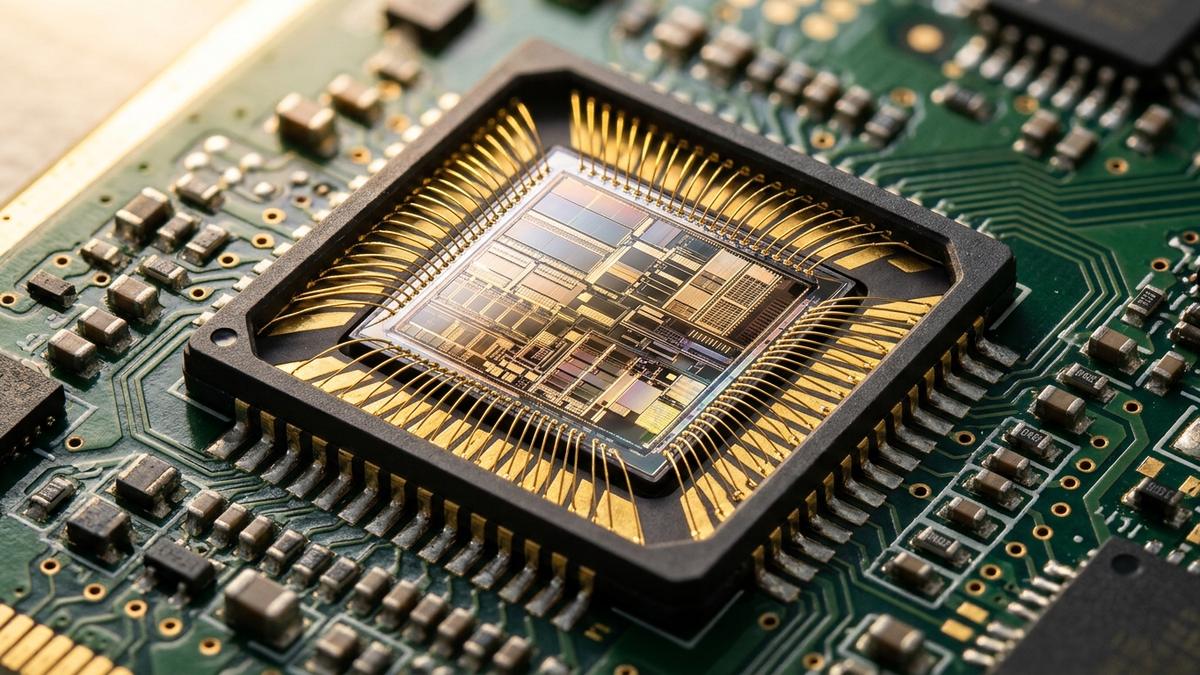
SiMa.ai's flagship technological achievement is its Machine Learning System-on-Chip (MLSoC), a heterogeneous architecture engineered from the ground up for vision-centric machine learning tasks. Rather than repurposing power-hungry graphics processors, SiMa.ai combines:
- Dedicated Neural Processing Units (NPUs): Optimized for matrix multiplication and high-throughput convolution and attention mechanisms, delivering class-leading frames-per-second per watt (FPS/W).
- Arm Cortex Application Cores: Handling general operating system tasks, protocol stacks, and control logic without requiring an external companion CPU.
- Hardware Computer Vision Accelerators: Ingesting and pre-processing multiple 4K high-dynamic-range video streams simultaneously.
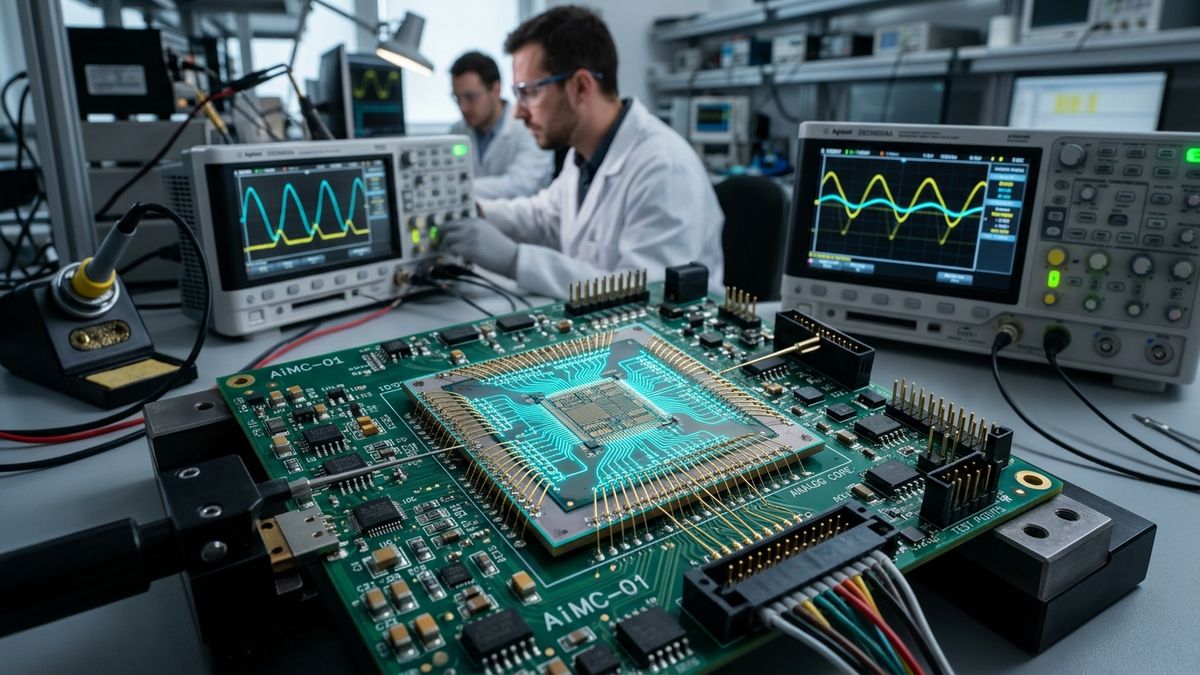
Equally decisive is SiMa.ai's Modalix software platform. Historically, deploying neural models onto edge silicon required months of manual C++ optimization, quantization debugging, and hardware register tuning. Modalix eliminates this friction through automated push-button compilation, enabling machine learning engineers to deploy models trained in PyTorch, TensorFlow, or ONNX directly to the silicon in hours rather than quarters.
The platform's extreme power efficiency also makes it an ideal candidate for constrained environments such as orbital edge computing deployments.
Hardware Efficiency Matrix: SiMa.ai vs. Alternative Edge Solutions
The structured benchmark matrix below contrasts SiMa.ai's purpose-built Physical AI architecture with alternative edge computing paradigms:
| Architectural Metric | SiMa.ai MLSoC Platform | General-Purpose Mobile GPU | Legacy Industrial DSP / NPU | Hyperscale Cloud Inference |
|---|---|---|---|---|
| Typical Power Budget | 5W – 15W | 20W – 60W | 3W – 10W | Hundreds of kW (Rack Level) |
| FPS / Watt Efficiency | Industry Leading (Highest) | Moderate | Moderate / Low | Not Applicable (Cloud) |
| Transformer Model Support | Native Edge Multi-Modal | Supported (High Power) | Very Limited | Full Support |
| Host CPU Requirement | Fully Integrated SoC | Often requires host CPU | Requires external CPU | Cloud Server Architecture |
| Software Onboarding | One-Click Modalix Pipeline | CUDA / TensorRT Complexity | Manual Firmware Coding | Web REST / gRPC API |
| Offline Autonomy | 100% Autonomous Onboard | 100% Autonomous Onboard | 100% Autonomous Onboard | 0% (Fails on Network Loss) |
The Indo-US Engineering Synergy
A substantial share of SiMa.ai's design innovation stems from its high-density engineering center in Bengaluru. Indian microelectronics architects, verification engineers, and software compiler scientists play an indispensable role in developing the MLSoC silicon architecture, physical tape-outs, and compiler toolchains.
This $150 million capital infusion provides a powerful validation of India's evolving deeptech identity: advancing from offshore outsourced development into primary architectural ownership of foundational global hardware technologies.
Commercial Deployment Vectors: Robotics, Drones, and Autonomous Systems
With fresh capital in hand, SiMa.ai is ramping volume production to satisfy global tier-1 customer demand across three critical verticals:
- Smart Logistics and Autonomous Mobile Robots (AMRs): Enabling warehouse robots to navigate dynamic aisles, track moving personnel, and manage pallet transfers with zero network lag.
- Autonomous Aerospace and Drones: Powering long-range survey and cargo drones that detect power line faults, wildfire perimeters, and agricultural anomalies in real time.
- Factory Automation & Industrial Metrology: Deploying high-speed inspection cameras on automotive and electronics assembly lines that catch microscopic surface flaws at full manufacturing line speeds.
Frequently Asked Questions
What is SiMa.ai and what milestone did the company announce?
SiMa.ai is a leading fabless semiconductor company founded by Krishna Rangasayee with deep engineering roots in Bengaluru and Silicon Valley. The company closed a $150 million funding round, achieving a $1.4 billion valuation and unicorn status to lead the emerging 'Physical AI' chip market.
What is 'Physical AI' and how does it differ from traditional generative AI?
While traditional generative AI generates text and media in remote data centers, Physical AI operates within physical machines—such as autonomous drones, factory robotics, and self-driving vehicles—requiring real-time multimodal sensor processing, sub-millisecond latency, and deterministic safety within tight thermal limits.
What is the primary technological advantage of SiMa.ai's MLSoC architecture?
SiMa.ai's Machine Learning System-on-Chip (MLSoC) pairs high-performance neural accelerators with integrated application processors, delivering up to 10x higher frames-per-second per watt compared to legacy GPUs, paired with its Modalix software that compiles computer vision pipelines with one click.
How does this development align with India's semiconductor ecosystem?
SiMa.ai maintains a major engineering and R&D hub in Bengaluru, where Indian silicon architects and software engineers design core MLSoC IP, proving the immense commercial value of India's fabless chip design talent in high-performance hardware markets.
Primary Sources & Official References
- SiMa.ai Corporate Announcement: $150M Growth Financing & Physical AI Market Expansion
- India Electronics and Semiconductor Association (IESA): Edge AI Silicon Market Analysis
- IEEE Micro: Purpose-Built Edge Silicon Architectures for Vision Transformers and Robotics
- NASSCOM DeepTech Club: High-Growth Semiconductor & Hardware Ecosystem Report