Digital Divide Data opens an advanced AI and robotics Global Capability Center in Dehradun, targeting up to 1,000 deeptech jobs across physical AI and LLMs.
Executive Key Takeaways
- Digital Divide Data opens an advanced AI and robotics Global Capability Center in Dehradun, targeting up to 1,000 deeptech jobs across physical AI and LLMs.
- The frontier of AI is expanding into physical embodiments—robotics, multi-modal perception, and spatial intelligence, said senior engineering leadership at DDD during the inauguration ceremony. Dehradun provides the ideal synthesis of intellectual rigor, world-class university pipelines, and an inspiring environment for engineers to solve humanity's most demanding computational problems.
- Key Benchmark: **Physical AI & Manipulation** — ROS2, PyTorch, Isaac Sim, Mujoco
Global social enterprise and technology services pioneer Digital Divide Data (DDD) has inaugurated a state-of-the-art Artificial Intelligence and Robotics Global Capability Center (GCC) in Dehradun, Uttarakhand. The newly established center is slated to generate between 800 and 1,000 high-skilled deeptech jobs over the next 24 months, focusing on cutting-edge disciplines including physical AI, large language model (LLM) fine-tuning, autonomous robotics simulation, and synthetic data engineering. The development cements Dehradun’s rapid transition from an administrative and academic capital into one of North India’s premier tier-2 technological innovation hubs.
The establishment of this advanced engineering center reflects a broader, profound decentralization of India's technology ecosystem, proving that sophisticated AI research and robotics validation can thrive well beyond the traditional metropolitan clusters of Bengaluru, Hyderabad, and Pune.
The Decentralisation Thesis: Why Dehradun Is Attracting Deeptech GCCs
The decision to anchor an advanced AI and robotics facility in Dehradun is grounded in compelling structural and talent advantages. The Doon Valley boasts an exceptional concentration of premier academic and technical institutions, including IIT Roorkee, the University of Petroleum and Energy Studies (UPES), Graphic Era University, and premier defense and survey research bodies. Historically, the elite engineering graduates produced by these institutions migrated immediately to southern tech hubs or overseas markets.
By bringing high-complexity physical AI and robotics workflows directly to Uttarakhand, DDD is tapping into an eager, highly capable talent pool while capitalizing on operational costs that are 35% to 45% lower than tier-1 tech metros. Furthermore, Dehradun's superior air quality, lower cost of living, and high quality of life have proven to be powerful levers for retaining top-tier engineering talent and minimizing attrition.
"The frontier of AI is expanding into physical embodiments—robotics, multi-modal perception, and spatial intelligence,"said senior engineering leadership at DDD during the inauguration ceremony. "Dehradun provides the ideal synthesis of intellectual rigor, world-class university pipelines, and an inspiring environment for engineers to solve humanity's most demanding computational problems."
Dehradun Deeptech Pipeline: University Research & Talent → Multi-Sensor Data Capture → Physical AI Simulation → Model Evaluation → Global Enterprise Deployment
Core Engineering Focus: Physical AI, Teleoperation, and LLM Data Infrastructure
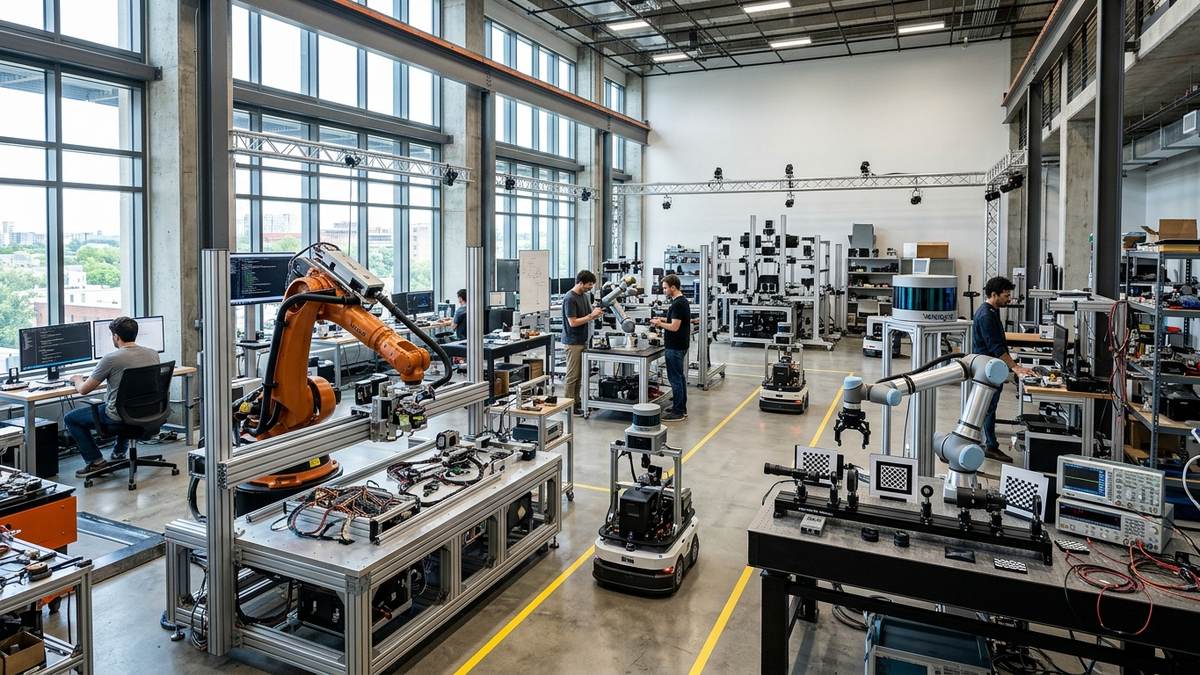
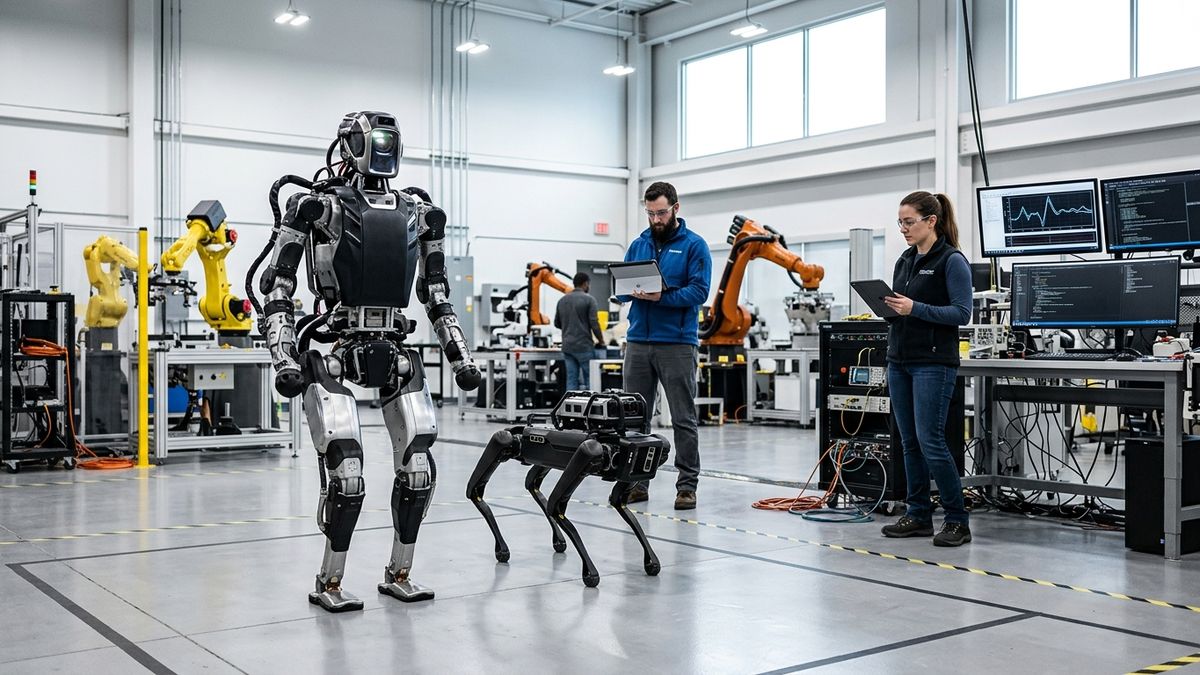
Unlike traditional BPO operations that focused on low-complexity data annotation, the Dehradun GCC is purpose-built for high-dimensional machine intelligence. The center houses custom testing tracks for autonomous mobile robots (AMRs), robotic arm manipulation rigs, and spatial computing workstations equipped with low-latency GPU edge nodes.
Key technical mandates assigned to the Dehradun facility include:
1. Physical AI & Embodied Intelligence: Training and validating vision-language-action (VLA) models that enable robotic manipulators to interact with real-world objects under dynamic lighting and unstructured environmental conditions.
2. Synthetic Data Synthesis: Generating hyper-realistic 3D simulation environments to train autonomous navigation algorithms without physical wear and tear.
3. LLM Red-Teaming and Safety Evaluation: Conducting deep domain evaluations, multilingual safety testing, and RLHF (Reinforcement Learning from Human Feedback) for enterprise-grade generative intelligence.
Dehradun GCC Operational Matrix & Technical Workstreams
The matrix below highlights the specific engineering functions, technology stacks, and target industry applications spearheaded at the Dehradun campus:
| Workstream | Core Technology Stack | Headcount Target | Industrial Application & Impact |
|---|---|---|---|
| Physical AI & Manipulation | ROS2, PyTorch, Isaac Sim, Mujoco | 250 Engineers | Autonomous manufacturing lines & precision logistics |
| Multimodal LLM Evaluation | LangChain, vLLM, DeepSpeed, HuggingFace | 300 Researchers | Regulated enterprise AI, sovereign language models |
| Synthetic Environment Generation | Unreal Engine 5, Blender, Omniverse | 200 Specialists | Autonomous driving simulation & warehouse automation |
| Autonomous Teleoperation | WebRTC, low-latency edge inference | 150 Technicians | Hazardous industrial site monitoring & remote surgery |
Beyond Metro Clusters: India’s Emerging Hardware and Deeptech Map
Dehradun's emergence is not an isolated phenomenon; it represents a nationwide recalibration. As detailed in our comprehensive analysis of how India looks beyond Bengaluru for its next hardware startups, regional innovation corridors are leveraging local strengths to capture niche deeptech domains.
Furthermore, industrial initiatives such as LTTS launching its new platform to help deeptech startups scale ensure that regional GCCs can interface directly with commercial enterprise procurement channels.
Academic-Industry Synergies Across the Uttarakhand Tech Corridor
The Dehradun GCC will establish formalized joint research initiatives and co-op apprenticeship tracks with local universities. Master's and doctoral researchers from IIT Roorkee and regional engineering faculties will gain direct access to proprietary robotics hardware benches, high-performance computing clusters, and real-world industrial problem sets.
This tight feedback loop between academia and commercial deployment ensures that the local curriculum evolves in lockstep with the rapid advancements occurring in foundation models and autonomous systems.
Economic Impact and the Blueprint for Tier-2 Deeptech Scaling
The creation of up to 1,000 high-compensation technical positions in Dehradun will deliver substantial economic multipliers to the Uttarakhand regional economy. Beyond direct employment, the demand for high-speed fiber connectivity, co-working infrastructure, specialized hardware supply chains, and ancillary hospitality will stimulate robust regional growth.
As global enterprises continue to re-evaluate their geographic footprint, Digital Divide Data’s Dehradun GCC serves as an authoritative proof-of-concept: world-class physical AI and robotics innovation can flourish wherever visionary infrastructure, exceptional talent, and forward-thinking leadership intersect.