Tata Consultancy Services and HyperVault commit up to ₹62,000–₹70,000 crore to build a 1 GW AI data centre campus in Hyderabad's Bharat Future City, powering sovereign compute.
Executive Key Takeaways
- Tata Consultancy Services and HyperVault commit up to ₹62,000–₹70,000 crore to build a 1 GW AI data centre campus in Hyderabad's Bharat Future City, powering sovereign compute.
- AI computation at the Gigawatt scale is no longer an incremental IT upgrade; it is heavy electrical, civil, and thermal engineering, noted senior infrastructure architects involved in the campus master plan. By designing HyperVault around native liquid cooling and low-loss distribution topologies from day one, we are establishing the most energy-efficient computing sanctuary in the APAC region.
- Key Benchmark: **Power Envelope** — 20 MW – 50 MW total facility load
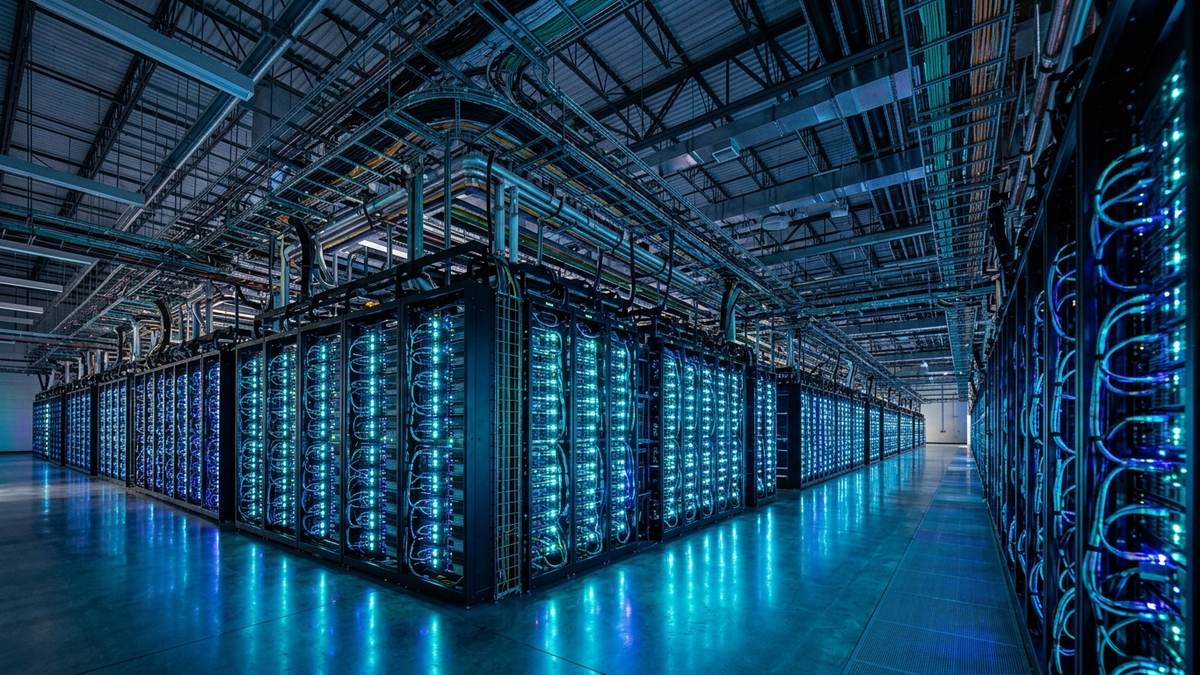
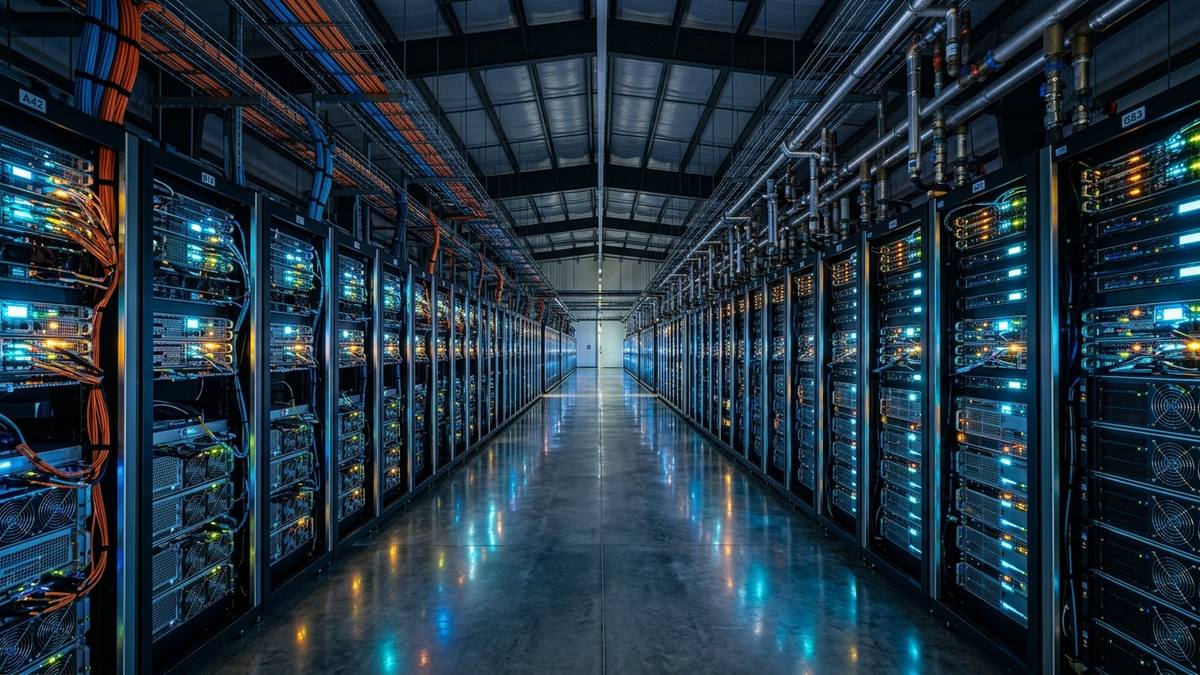
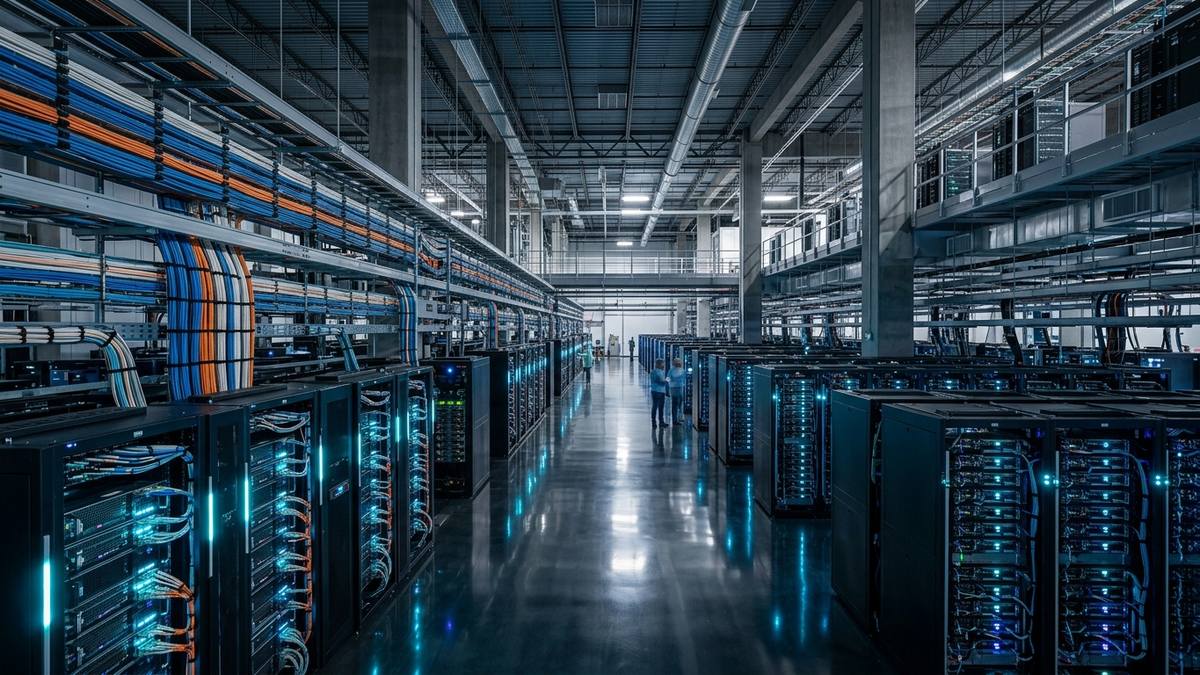
HYDERABAD & MUMBAI — In what marks one of the single largest digital infrastructure commitments in Indian corporate history, Tata Consultancy Services (TCS), through its dedicated infrastructure venture HyperVault, has announced plans to establish a mammoth 1-Gigawatt (GW) artificial intelligence data centre campus in Hyderabad with an estimated capital outlay of up to ₹62,000 to ₹70,000 crore. The flagship hyperscale compute project, spanning 264 acres inside the newly notified "Bharat Future City" corridor in the Maheshwaram–Mucherla industrial belt of Telangana, is engineered from the ground up to host high-density GPU clusters, enterprise AI inference fabrics, and frontier large language model training pipelines for global hyperscalers and domestic tech giants.
The multi-phased mega development directly accelerates India's sovereign AI capabilities, following earlier infrastructure capital expansions covered in Yotta Eyes $1.5 Billion IPO Amid India’s AI Infrastructure Boom and complementing domestic silicon initiatives detailed in Agrani Labs Eyes ₹475 Crore Funding for Sovereign AI Chips.
Engineering the 1 GW Hyperscale Frontier: Architecture and Specifications
Traditional enterprise data centres have long operated within conservative electrical and thermal limits, typically provisioning 8 kW to 15 kW of power per rack for conventional x86 CPU workloads. However, the meteoric rise of foundational generative AI architectures—powered by liquid-cooled accelerator clusters such as NVIDIA Blackwell B200s, H100/H200 nodes, and custom hyperscale ASIC accelerators—demands an entirely reimagined facility design.
The upcoming HyperVault Hyderabad campus will feature ultra-dense computing halls designed to support continuous rack densities exceeding 80 kW to 120 kW per rack, necessitating advanced thermal dissipation topologies:
1. Direct-to-Chip Liquid Cooling: Closed-loop dielectric fluid manifolds delivering direct liquid cooling to processor dies, supplemented by smart rear-door heat exchangers to eliminate thermal hot spots.
2. Zero Net Water Consumption: Closed-circuit evaporative cooling towers and on-site industrial greywater recycling facilities, ensuring that operations maintain water-neutral status even during peak summer ambient temperatures in the Deccan plateau.
3. Dedicated 400 kV Power Corridors: High-voltage direct grid interconnects engineered in partnership with Telangana state transmission utilities, coupled with utility-scale Battery Energy Storage Systems (BESS) for seamless microgrid failover.
4. 100% Round-the-Clock (RTC) Renewable Procurement: Power purchase agreements (PPAs) tied to dedicated solar-wind hybrid parks to ensure compliance with global ESG mandates and domestic green energy open access frameworks.
"AI computation at the Gigawatt scale is no longer an incremental IT upgrade; it is heavy electrical, civil, and thermal engineering,"noted senior infrastructure architects involved in the campus master plan. "By designing HyperVault around native liquid cooling and low-loss distribution topologies from day one, we are establishing the most energy-efficient computing sanctuary in the APAC region."
Strategic Infrastructure Matrix: Legacy Colocation vs. HyperVault 1 GW AI Campus
The table below outlines how the HyperVault Hyderabad campus fundamentally alters the technological and operational economics of data centre development in India:
| Architectural Dimension | Traditional Enterprise Colocation | HyperVault Hyderabad AI Campus | Strategic Enterprise Impact |
|---|---|---|---|
| Power Envelope | 20 MW – 50 MW total facility load | Up to 1,000 MW (1 GW) multi-phased campus | Capable of hosting national-scale sovereign AI clusters |
| Rack Power Density | 8 kW – 15 kW per rack | 80 kW – 120 kW+ per rack (Ultra-dense GPU pods) | Maximum compute density per square metre of floor space |
| Thermal Dissipation | Standard chilled water CRAC / air cooling | Direct-to-chip liquid cooling & closed-loop chillers | Target Power Usage Effectiveness (PUE) below 1.18 |
| Interconnect Topology | Standard Top-of-Rack 100GbE switching | Non-blocking 800GbE / InfiniBand optical spine fabrics | Sub-microsecond latency across distributed training jobs |
| Capital Expenditure | ₹1,500 – ₹3,000 Crore per facility | ₹62,000 – ₹70,000 Crore total capital outlay | Unprecedented private digital asset creation in India |
| Employment Generation | 150 – 300 operational staff | 7,000+ direct and indirect engineering & ops roles | Catalyzes regional high-tech employment cluster |
Telangana’s "Bharat Future City" and Southern India’s Compute Corridor
The selection of Hyderabad for this monumental capital deployment underscores the city's meteoric ascent as India’s foremost deeptech and cloud capital. The Telangana government has zoned 264 acres inside "Bharat Future City" with pre-approved environmental clearances, dedicated right-of-way infrastructure for optical fiber trunk lines, and guaranteed dual-source electrical grid feeder lines.
Furthermore, Hyderabad’s geographical location on the stable Deccan Plateau offers minimal seismic risk compared to coastal locations, while maintaining low-latency dark fiber connectivity to subsea cable landing stations situated in Chennai and Mumbai.
"This historic investment by the Tata Group and HyperVault establishes Hyderabad not merely as the IT services capital of the nation, but as the premier high-compute engine of Southern Asia,"stated Telangana Chief Minister A. Revanth Reddy during the official state briefing. "By generating over 7,000 skilled technology jobs and bringing 1 Gigawatt of specialized AI infrastructure to Bharat Future City, we are laying the bedrock for India's technological sovereignty over the next three decades."
The project complements software automation shifts taking place across the Tata Group ecosystem, including the deployment of multi-agent engineering platforms explored in The Agentic Shift in Indian IT.
Sovereign AI Compute and the Global Hyperscale Supply Crunch
Globally, artificial intelligence developers are grappling with an acute shortage of specialized data centre space equipped to handle high-density GPU clusters. While global hyperscalers such as Microsoft Azure, Amazon Web Services, Google Cloud, and Oracle Cloud Infrastructure are investing billions into custom AI infrastructure, enterprise demand for compute has severely outpaced available capacity across North America and Europe.
In India, this supply crunch is further intensified by regulatory mandates under the Digital Personal Data Protection Act (DPDPA 2023) and Reserve Bank of India data localization norms, which require sensitive customer data, national health records, and banking transactions to reside strictly within domestic borders.
By delivering 1 Gigawatt of dedicated AI infrastructure, HyperVault provides global cloud providers and sovereign AI initiatives with an immediately scalable, compliance-ready domestic footprint. This development dovetails with domestic hardware independence drives covered in India Semiconductor Mission 2.0, creating a tightly integrated domestic pipeline spanning silicon design, packaging, and hyperscale cloud compute.
Phased Execution Roadmap and Regional Multiplier Effect
The project will be executed in four structured phases to match evolving silicon generations and hyperscale customer onboarding schedules:
- Phase 1 (2026–2027): Site grading, construction of dedicated 400 kV substations, and commissioning of the initial 250 MW compute module supporting early enterprise training clusters.
- Phase 2 (2028): Deployment of secondary 250 MW capacity with advanced direct immersion cooling pods and integrated solar-battery microgrid synchronization.
- Phases 3 & 4 (2029–2031): Progressive scaling to the full 1,000 MW target capacity, integrating next-generation photonic interconnects and sovereign supercomputing nodes.
Beyond physical server racks, the ₹62,000 to ₹70,000 crore capital deployment is projected to create a massive industrial multiplier effect across Telangana. Over 7,000 direct and indirect jobs will be generated across specialized electrical engineering, HVAC refrigeration management, network security, and AI facility operations.
As global competition for artificial intelligence dominance intensifies, TCS and HyperVault’s Hyderabad mega-campus ensures that India is not merely a consumer of global AI models, but an indispensable foundation stone of world-class computing power.