India's Engineering Exports Surge to $13.77 Billion in FY2024–25
By Sanjay Patel | Published August 16, 2026 | 7 min read
India's engineering services exports hit a record $13.77 billion in FY2024–25 — a nearly 8x surge from $1.77 billion a decade ago, signaling a structural shift in global supply chains.
India's Engineering Exports Surge to $13.77 Billion in FY2024–25, marking a nearly eightfold increase from $1.77 billion a decade earlier and establishing the country as a rising force in global engineering services and advanced manufacturing supply chains. The data, released by the Engineering Export Promotion Council (EEPC India), underscores a structural transformation in India's export profile — from labour-intensive outsourcing toward high-value technical design, embedded systems engineering and precision manufacturing.
The milestone comes as global manufacturers accelerate their 'China-plus-one' diversification strategies, rerouting engineering procurement and contract manufacturing to India, Vietnam and Mexico. India's unique combination of deep engineering talent pools, competitive labour costs and improving intellectual property protections has positioned it as the preferred destination for complex engineering outsourcing.
Decade of Transformation: The Numbers Tell the Story
The trajectory of India's engineering exports over the past decade reveals a sustained compound annual growth rate (CAGR) of approximately 22.8% — far outpacing both the overall merchandise export growth (8.2% CAGR) and the IT services export growth (11.4% CAGR) over the same period.
"India's engineering exports crossing $13 billion is not an incremental milestone — it represents a fundamental repositioning of India in the global engineering value chain,"said Arun Kumar Garodia, Chairman of EEPC India. "We are no longer just providing low-cost draughtsmen; Indian firms are designing complete automotive platforms, aerospace subsystems and semiconductor packaging architectures for global OEMs."
Engineering Exports Growth Trajectory: FY2015 to FY2025
| Fiscal Year | Engineering Exports ($B) | YoY Growth | Key Growth Drivers |
|---|---|---|---|
| FY2014–15 | $1.77B | — | IT-adjacent technical services |
| FY2016–17 | $2.85B | +28% | Automotive design outsourcing begins |
| FY2018–19 | $4.12B | +22% | Aerospace MRO and embedded systems |
| FY2020–21 | $5.60B | +18% | Pandemic-driven digital engineering demand |
| FY2022–23 | $8.94B | +27% | China-plus-one acceleration, PLI scheme impact |
| FY2023–24 | $11.23B | +26% | Semiconductor design, EV platform engineering |
| FY2024–25 | $13.77B | +22.6% | Full-stack engineering services maturation |
Sector-by-Sector Breakdown
The $13.77 billion figure encompasses engineering services across multiple high-value verticals, with automotive, aerospace and semiconductor design accounting for the largest shares.
Automotive Engineering Services
India's automotive engineering exports — covering powertrain design, ADAS algorithm development, EV battery management systems and vehicle platform architecture — grew 31% year-over-year to reach $4.2 billion. Global OEMs including Stellantis, BMW, Hyundai and Toyota now maintain significant engineering centres in Pune, Chennai and Bengaluru that function as integral nodes in their global product development workflows.
Aerospace and Defence
Aerospace engineering services exports crossed $2.1 billion, driven by growing participation in global MRO (Maintenance, Repair and Overhaul) supply chains and the Indian government's offset policy requiring foreign defence contractors to source a percentage of contract value from Indian engineering firms. Companies like HAL, Tata Advanced Systems and L&T Defence are increasingly embedded in Airbus, Boeing and Lockheed Martin supply chains.
Semiconductor Design and VLSI
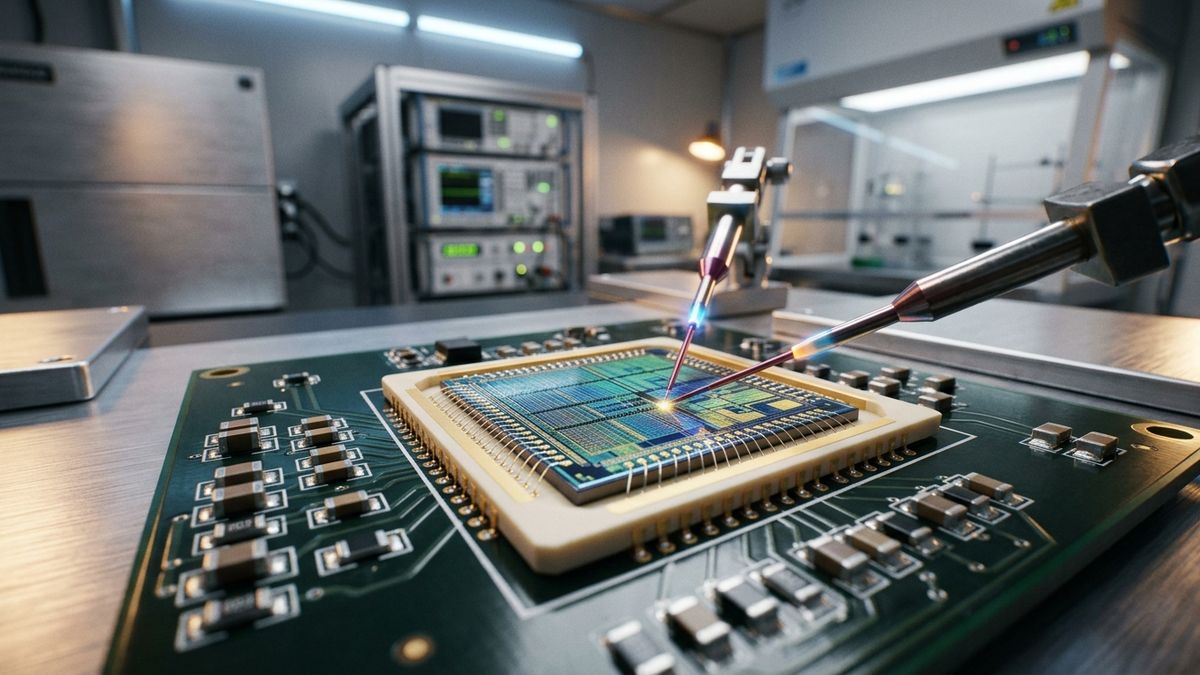
India's semiconductor design exports — encompassing chip architecture, RTL design, verification and physical design services — reached $3.4 billion, making it the fastest-growing subsegment at 38% year-over-year growth. India now employs over 120,000 semiconductor design engineers, representing approximately 20% of the global chip design workforce.
"India designs more chips than any country outside the United States. The missing link has been fabrication — but the design IP alone generates enormous export value,"noted a senior executive at a leading Indian semiconductor services firm.
Policy Tailwinds Driving Growth
Several government initiatives have catalyzed the engineering exports boom:
1. Production-Linked Incentive (PLI) Schemes: ₹1.97 lakh crore allocated across 14 manufacturing sectors, directly stimulating engineering services demand from PLI beneficiary companies.
2. India Semiconductor Mission: ₹76,000 crore earmarked for semiconductor manufacturing and design ecosystem development.
3. National Deep Tech Startup Policy: Provides tax incentives and procurement preferences for engineering-intensive startups.
4. Bilateral Trade Agreements: Enhanced market access through trade agreements with UAE, Australia and the EU.
Global Competitive Positioning
India's engineering services export performance must be contextualized against global competitors:
| Country | Engineering Services Exports (FY2025 est.) | Core Strengths | Growth Rate |
|---|---|---|---|
| India | $13.77B | Design, VLSI, automotive, IT-engineering convergence | +22.6% |
| China | $18.2B | Manufacturing-integrated engineering, industrial robotics | +8.4% |
| Germany | $11.8B | Automotive OEM, precision manufacturing, Industry 4.0 | +3.1% |
| South Korea | $7.9B | Semiconductor, display technology, shipbuilding | +6.7% |
| Vietnam | $3.4B | Electronics assembly engineering, emerging design | +34.2% |
Outlook for FY2025–26
EEPC India projects engineering exports to cross $17 billion in FY2025–26, driven by accelerating demand for AI infrastructure engineering, electric vehicle platform design and semiconductor packaging services. The convergence of India's engineering services capabilities with its expanding AI and deeptech startup ecosystem positions the country for sustained double-digit growth in high-value technical exports through the decade.