Peak XV Backs 18 Early-Stage Startups in Surge Cohort: Half Deploy AI-Native Architectures Across Robotics, Space, and Fintech
By Aarav Sharma | Published September 29, 2026 | 8 min read

Peak XV Partners selects 18 cutting-edge ventures for its latest Surge cohort, with over 50% building foundational AI-native systems in physical robotics, aerospace, and finance.
Peak XV Partners, the preeminent venture capital firm in India and Southeast Asia (formerly Sequoia Capital India & SEA), has officially unveiled its latest Surge cohort, inducting 18 early-stage startups into its prestigious company-building program. Each selected venture receives up to $3 million in seed financing alongside bespoke operational mentorship, cloud compute credits, and direct access to Peak XV's global network of technology leaders and corporate partners.
The composition of the new cohort signals an unmistakable maturation in South Asian venture capital. For nearly a decade, early-stage cohorts were dominated by consumer internet marketplaces, D2C retail brands, and light fintech wrappers. In contrast, over half of the 18 ventures in this cohort are built on "AI-native" foundations—deploying machine intelligence not as an ancillary marketing feature, but as the core operating system powering industrial robotics, orbital space systems, autonomous banking pipelines, and computational healthcare.
The Evolution of Surge: From Seed Accelerator to DeepTech Incubator
Since launching in 2019, Surge has transformed the seed-stage ecosystem across South Asia, backing more than 140 companies across 10+ cohorts that have collectively raised over $2 billion in follow-on funding. However, the macro venture environment has experienced a structural recalibration: growth-stage capital now demands demonstrable unit economics, proprietary technological defensibility, and clear global product-market fit.
In response, Peak XV has recalibrated its early-stage selection criteria. The newly announced 18-company cohort reflects a deliberate focus on engineering-heavy teams solving acute technical bottlenecks.
"The software era was defined by digitizing paper and workflows; the intelligence era is defined by automating decisions and physical labor,"stated senior partners at Peak XV. "The founders in this Surge cohort are not building thin wrappers around public APIs. They are designing proprietary model architectures, deploying physical robots into factories, and launching compute hardware into space."
Cohort Composition: Vertical Distribution and Capital Allocation
The 18 companies span several distinct technology vectors, demonstrating that institutional seed capital is diversifying across frontier engineering disciplines:
| Sector Vertical | Cohort Share | Primary Technology Focus | Strategic Market Opportunity |
|---|---|---|---|
| AI-Native Enterprise Software | 35% | Autonomous agent swarms, developer workflow compilers, multimodal analytics | Enterprise efficiency and automated code generation |
| Physical AI & Industrial Robotics | 20% | Vision-guided manipulation, autonomous mobile robots (AMRs), warehouse fulfillment | Manufacturing automation and global supply chain resilience |
| Aerospace & Space Technology | 15% | Orbital compute modules, satellite telemetry intelligence, launch subsystem design | Commercial space data processing and defense communication |
| Autonomous Fintech & Risk Tech | 15% | Algorithmic fraud mitigation, real-time credit underwriting, automated compliance | BFSI digital transformation and cross-border settlement |
| HealthTech & Computational Biology | 15% | Protein design algorithms, automated diagnostic pathology, clinical workflow copilots | Accelerated drug discovery and decentralized healthcare delivery |
The AI-Native Paradigm: Beyond Feature Bolt-Ons
What unites nearly half of the cohort is their architectural philosophy. In previous technology waves, established software-as-a-service (SaaS) companies added machine learning algorithms to legacy databases—treating AI as a feature.
The startups in Peak XV's newest cohort represent "AI-native" ventures:
- Autonomous Agentic Loops: Rather than presenting human users with complex dashboards and manual input forms, these platforms deploy autonomous agents capable of perceiving context, formulating multi-step plans, calling external tools, and executing complex workflows without human intervention.
- Proprietary Data Moats: Instead of relying exclusively on open-source weights or public frontier models, these ventures capture bespoke operational telemetry from day one, using feedback loops to continuously fine-tune small, domain-specific models that drastically lower inference costs.
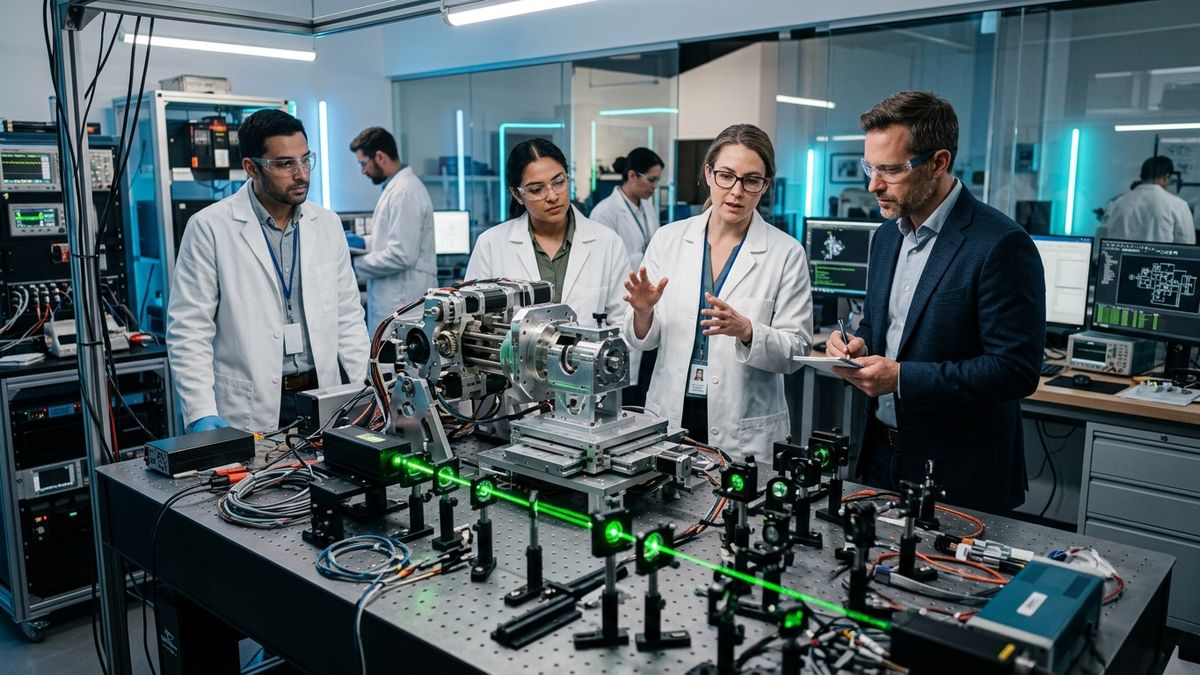
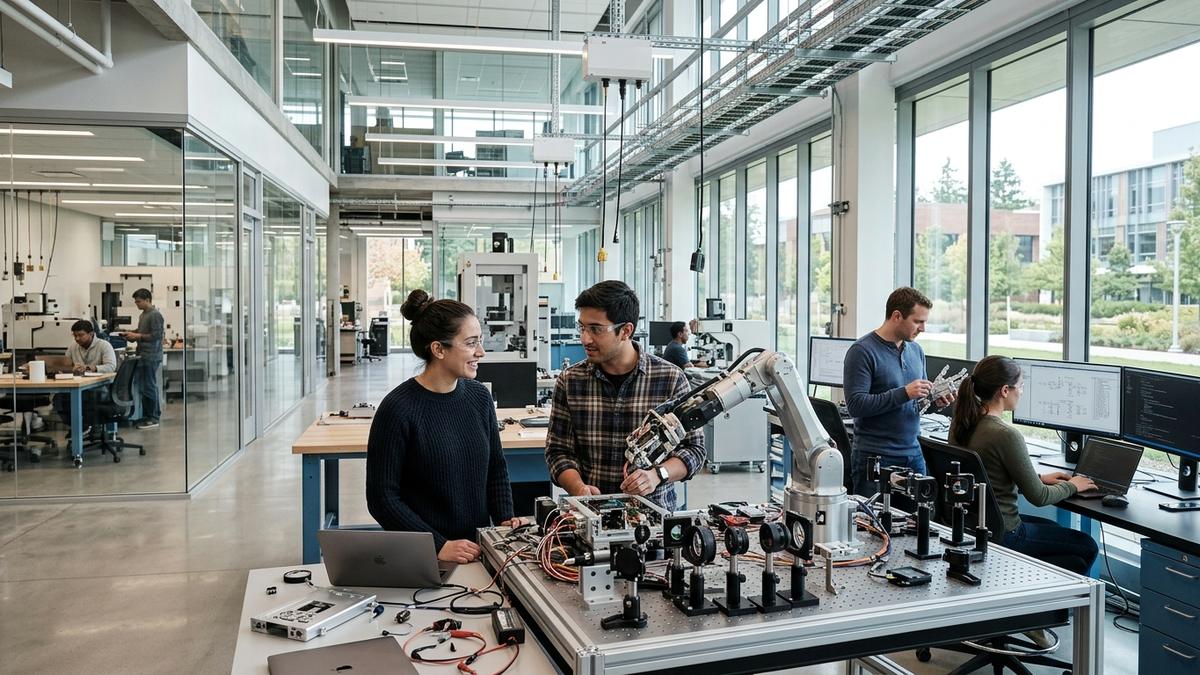
- Physical-Digital Convergence: Several cohort members bridge digital machine learning with physical hardware, deploying embedded neural processors on robotic arms, autonomous drones, and orbital satellites.
To understand how traditional banking institutions are concurrently restructuring their human capital around artificial intelligence, explore our report on /post/axis-bank-plans-12500-campus-hires-ai-push.
Global Ambition from Day One
A distinguishing characteristic of the cohort is its day-one international orientation. Over 70% of the companies are designing their products for global enterprises in North America, Europe, and the Middle East, while taking advantage of India's world-class engineering talent and cost-effective development cycles.
Through Surge's cross-border immersion modules, founders participate in intensive design sprints and institutional investor showcases in Silicon Valley, Singapore, and Bengaluru. They work directly with accomplished technology operators on unit economic modeling, enterprise sales playbooks, and organizational design.
For a comprehensive view of how India's broader deeptech funding landscape is expanding across commercial space and quantum processors, see our detailed feature on /post/indias-deep-tech-funding-momentum-builds-space-quantum-batteries.
Future Trajectory for Early-Stage Venture Building
The induction of these 18 companies demonstrates that despite broader macro volatility, institutional seed capital remains exceptionally abundant for technical founders tackling high-barrier problems. As these ventures complete their Surge curriculum over the coming months, their ability to convert early technical prototypes into scalable enterprise revenue will set the benchmark for South Asia's next generation of technology unicorns.
Frequently Asked Questions
What is Peak XV's Surge program and what does it offer founders?
Surge is Peak XV Partners' flagship rapid scale-up program for early-stage startups across India, Southeast Asia, and beyond. It provides up to $3 million in seed capital, bespoke company-building support, global immersion trips, and access to a community of top-tier founders and operators.
How many startups were selected in the latest Surge cohort?
The latest cohort features 18 startups spanning multiple geographies and technology verticals, with a strong focus on technical founders building deeptech and software infrastructure.
What distinguishes the companies in this Surge cohort from previous batches?
Nearly half the cohort is explicitly 'AI-native'—meaning their products are built from the ground up around machine intelligence and autonomous agents. The cohort also marks an aggressive pivot toward physical engineering, including autonomous robotics and space infrastructure.
How does Surge assist portfolio companies with subsequent fundraising?
Surge culminates in institutional investor showcases and curated pitch meetings with global venture funds. Historically, Surge companies have raised over $2 billion in follow-on financing from leading international institutional investors.
Primary Sources & Official References
- Peak XV Partners Institutional Press Release: Surge Cohort Official Inductions and Sector Breakdown
- Tracxn Early-Stage Venture Report: Seed Capital Velocity and DeepTech Valuations in South Asia
- Ministry of Commerce and Industry: Startup India Annual Seed Capital Impact Analysis
- Bain & Company India Venture Capital Report: The Strategic Ascent of AI-Native Software and Hardware