Deep-Tech Startups Receive ₹2,170 Crore Investment: India Deep Tech Alliance Deploys Capital Across 56 High-Impact Ventures
By Meera Krishnan | Published September 22, 2026 | 9 min read
Members of the India Deep Tech Alliance deployed ₹2,170 crore across 56 pioneering companies between Sept 2025 and Aug 2026, marking a record year for sovereign hardware, robotics, and advanced materials.
In a decisive validation of India's maturing frontier science and hardware ecosystem, members of the India Deep Tech Alliance deployed ₹2,170 crore ($260 million) across 56 companies between September 2025 and August 2026. The milestone represents the most aggressive twelve-month capital deployment into domestic hard-tech ventures in the nation's startup history, reflecting a structural reorientation of venture capital from consumer internet applications toward high-barrier engineering IP.
For years, Indian venture capital was dominated by rapid-cycle consumer apps, hyper-local delivery services, and B2B aggregators. While these business models created substantial liquidity and digital rails, they left capital-intensive hardware and deep science ventures starved of growth equity.
The latest data from the India Deep Tech Alliance—comprising over 30 specialized venture funds, family offices, and sovereign coinvestment entities—confirms that institutional investors are finally writing large, patient checks to back sovereign technical frontiers.
Sectoral Capital Distribution: The Rise of Physical AI and Hardware
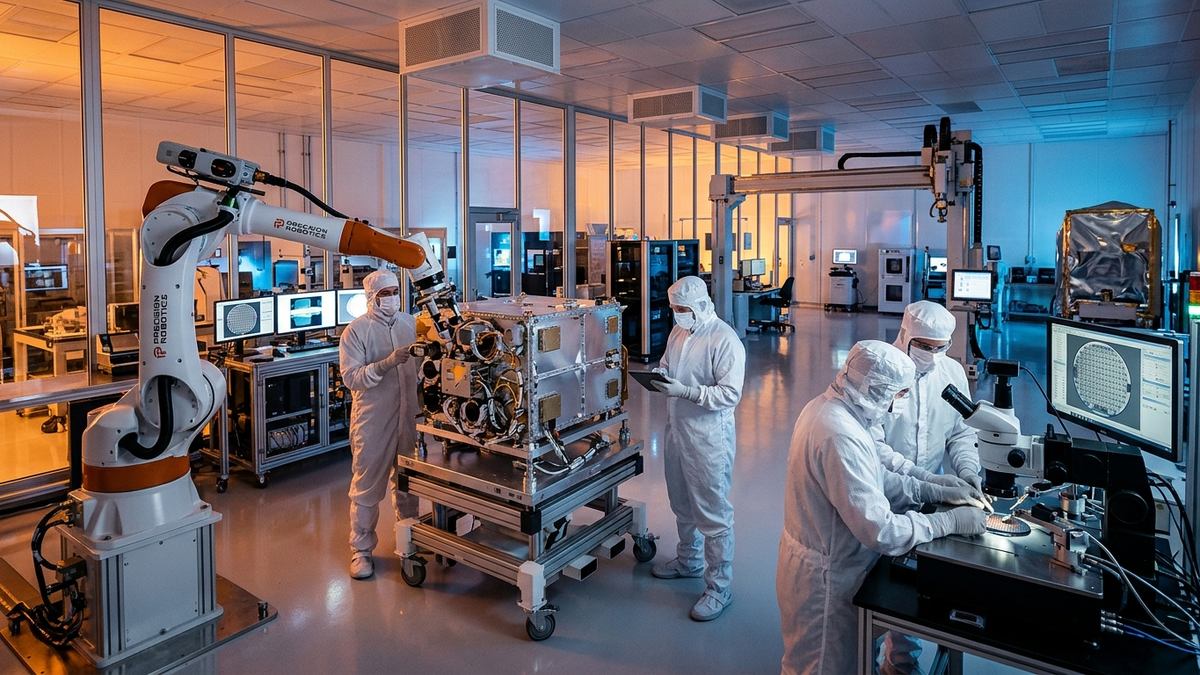
Unlike digital SaaS ventures that scale with minimal capital expenditure, deeptech companies build physical systems: multi-axis industrial robots, sub-nanometer chip designs, electric aircraft powertrains, advanced satellite payloads, and novel electrochemical cells.
The deployment of ₹2,170 crore was strategically concentrated across five high-impact engineering disciplines:
- Autonomous Robotics & Physical AI (₹608 Crore / 28%): Deployments targeted industrial warehouse rovers, autonomous agricultural drones, automated surgical platforms, and defense robotics.
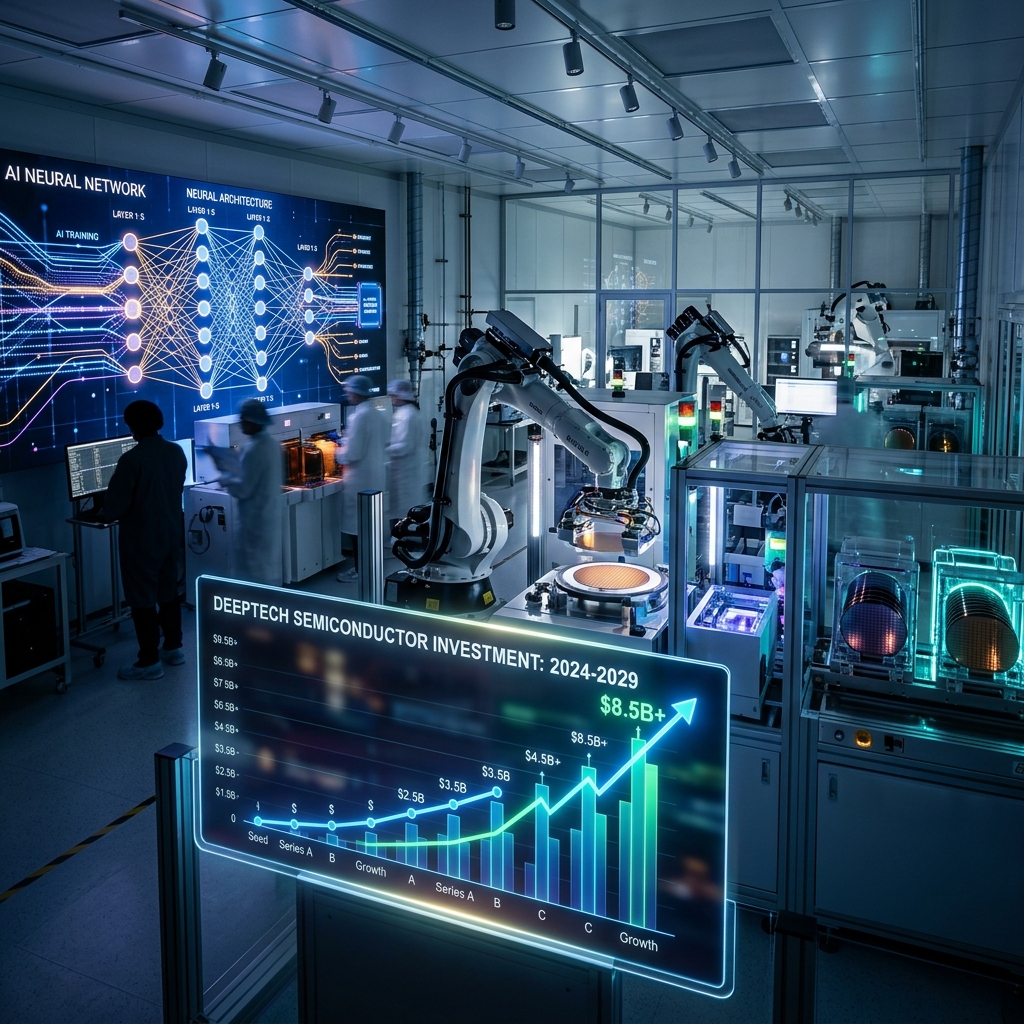
- Fabless Semiconductors & Advanced Hardware (₹477 Crore / 22%): Seed and Series A financing for domestic RISC-V edge processors, power management ICs (PMICs), and photonic interconnect designs.
- Clean Energy & Advanced Battery Materials (₹391 Crore / 18%): Funding for solid-state battery electrolytes, sodium-ion cathode synthesis, and green hydrogen electrolysis stacks.
- Commercial Spacetech & Satellite Systems (₹347 Crore / 16%): Expansion capital for private launch vehicle avionics, optical earth-observation constellations, and space situational awareness tracking.
- Synthetic Biology & Quantum Technologies (₹347 Crore / 16%): Precision genomic editing tools, industrial bio-manufacturing enzymes, and quantum key distribution (QKD) hardware.
"Deeptech venture building in India has crossed the inflection threshold from exploratory lab prototypes to enterprise scale,"noted senior partners at member funds during the alliance summit. "Five years ago, finding domestic investors willing to back a five-year hardware development roadmap was nearly impossible. Today, sovereign strategic imperatives and massive domestic industrial markets are driving unprecedented appetite for high-moat engineering companies."
Capital Deployment Metrics: India Deep Tech Alliance Breakdown
The table below summarizes the sectoral deployment metrics, average funding tranches, and operational focus areas across the 56 financed enterprises:
| Technology Vertical | Capital Deployed | Companies Financed | Average Deal Size | Primary Commercial Application |
|---|---|---|---|---|
| Robotics & Physical AI | ₹608 Crore | 15 Startups | ₹40.5 Crore | Airport logistics, industrial automation, healthcare delivery |
| Fabless Semiconductors | ₹477 Crore | 12 Startups | ₹39.8 Crore | Edge AI accelerators, automotive microcontrollers, RF chips |
| Clean Energy & Storage | ₹391 Crore | 10 Startups | ₹39.1 Crore | Grid-scale energy storage, sodium-ion cells, hydrogen stacks |
| Commercial Spacetech | ₹347 Crore | 10 Startups | ₹34.7 Crore | Microsatellite buses, propulsion engines, orbital communications |
| SynBio & Quantum Tech | ₹347 Crore | 9 Startups | ₹38.6 Crore | Fermentation enzymes, diagnostic biosensors, quantum encryption |
| Aggregate Ecosystem | ₹2,170 Crore | 56 Startups | ₹38.8 Crore | Sovereign Deeptech Industrial Transformation |
Bridging the Capital "Valley of Death"
The primary historical failure point for deeptech ventures has been the notorious "valley of death"—the precarious phase between completing a laboratory proof-of-concept and achieving full commercial manufacturing. Hardware startups frequently exhaust initial university grants on tooling and specialized test equipment before demonstrating commercial recurring revenue, leading to catastrophic shutdown rates.
The India Deep Tech Alliance has tackled this vulnerability by pioneering syndicated, multi-stage coinvestment structures. Member funds partner with corporate venture capital arms and state-backed fund-of-funds, providing structured follow-on equity tranches contingent on technical milestones (such as silicon tape-out verification or flight qualification) rather than near-term quarterly revenue.
This patient approach mirrors the broader maturation of Indian hardware champions, complementing how Ottonomy scaled its autonomous delivery robotics fleet from its Noida manufacturing facility and reinforcing national momentum behind 200 indigenous chip-design ventures equipped with enterprise EDA tooling.
Furthermore, institutional capital allocation is balancing domestic consumer venture rounds, such as CityMall securing ₹400–500 crore for value commerce, by directing substantial balance sheet strength toward hard technical assets.
The Role of Government Policy and Testing Infrastructure
The surge in private deployment has been catalyzed by purposeful government intervention. Under the National Deep Tech Startup Policy (NDTSP) and MeitY’s specialized funding vehicles, domestic deeptech startups benefit from:
- Subsidized Shared Infrastructure: Access to expensive testing facilities, such as high-temperature wind tunnels, semiconductor metrology suites, and cleanroom prototyping bays, saving startups millions in upfront CapEx.
- Defense & Public Procurement Mandates: Fast-track procurement corridors under the iDEX (Innovations for Defence Excellence) scheme, providing startups with initial, creditworthy government purchase orders.
- Intellectual Property Fast-Tracking: Accelerated patent examination queues, reducing patent grant timelines from five years down to less than twelve months for qualified deeptech applicants.
As these 56 startups deploy their ₹2,170 crore capital over the coming 18 to 24 months, India is poised to transition from a consumer of global technologies into a net exporter of high-value, sovereign deeptech innovations.
Frequently Asked Questions
What is the India Deep Tech Alliance and who are its members?
The India Deep Tech Alliance is a collaborative consortium of early-stage venture capital funds, institutional angel networks, corporate venture arms, and government-backed innovation funds dedicated to funding and nurturing high-barrier science and engineering startups in India.
Which sectors received the largest share of the ₹2,170 crore capital pool?
Autonomous robotics and physical AI received the largest single allocation (28%), followed closely by fabless semiconductors and microelectronics (22%), clean energy and advanced battery chemistry (18%), space technology and aerospace (16%), and synthetic biology and quantum technologies (16%).
Why is deeptech investing fundamentally different from software or consumer VC?
Deeptech startups require extensive upfront research, custom hardware prototyping, cleanroom fabrication, and rigorous regulatory certification. Consequently, they require 'patient capital' with 7-to-10-year investment horizons and larger initial capital outlays, contrasting sharply with the rapid iteration and low CapEx of consumer software.
How are government initiatives supporting this private capital surge?
Initiatives such as the National Deep Tech Startup Policy (NDTSP), the Anusandhan National Research Foundation (ANRF) fund-of-funds, and MeitY's Design-Linked Incentives provide non-dilutive grants, subsidized testing infrastructure, and matching equity commitments that substantially lower early commercialization risk for private investors.
Primary Sources & Official References
- India Deep Tech Alliance: Annual Capital Deployment & Sectoral Performance Report (2025-2026): Formal consortium release detailing fund participation, deal counts, and round stages.
- Department for Promotion of Industry and Internal Trade (DPIIT): National Deep Tech Startup Policy Implementation Audit: Policy progress tracking fiscal incentives and public testing facilities.
- Indian Private Equity and Venture Capital Association (IVCA): Deep Tech Investment Landscape & LP Commitments: LP allocation data and private capital trends in hardware ventures.
- NITI Aayog: Frontier Science Commercialization & R&D Translation Framework: National guidelines for translating laboratory intellectual property into commercially viable enterprises.