India’s Deep-Tech Funding Momentum Builds
By Aarav Sharma | Published September 26, 2026 | 8 min read
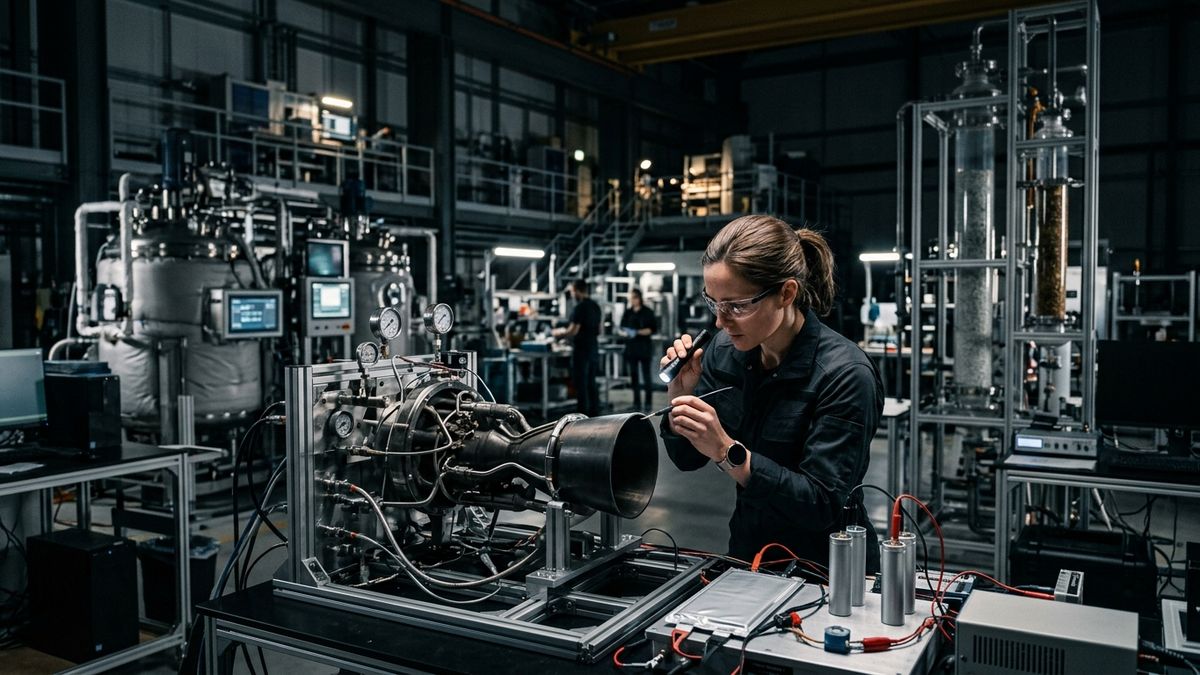
Venture capital surges into engineering-heavy Indian startups, deploying over $1.2B into commercial space, quantum processors, batteries, and carbon capture.
India's venture capital ecosystem is undergoing a historic structural transformation, with institutional capital pouring into engineering-heavy deeptech startups at an unprecedented rate. Surpassing $1.2 billion in aggregate capital deployment across the first nine months of 2026, the Indian deeptech sector has decisively broken away from the shadows of consumer internet to establish itself as a primary driver of high-value venture capital returns.
This momentum is not distributed across superficial software wrappers; it is concentrated in capital-intensive physical sciences and hard engineering. From commercial satellite propulsion systems and cryogenic quantum computing processors to solid-state sodium-ion batteries and industrial carbon capture filtration columns, Indian founders are commercializing foundational patents and building defensible global hardware franchises.
The Paradigm Shift: From Code to Atoms
For over a decade, Indian venture capital was overwhelmingly defined by the economics of software: low upfront capital requirements, instantaneous digital distribution, and rapid customer feedback loops.
However, as consumer internet markets matured and customer acquisition costs skyrocketed across e-commerce, quick delivery, and digital payments, institutional investors faced diminishing returns from copycat models.
Simultaneously, global geopolitical tensions exposed the vulnerability of international supply chains in microelectronics, defense hardware, and energy transition minerals. Institutional Limited Partners (LPs) began demanding portfolio diversification into high-barrier, IP-defensible physical technologies.
"Investing in deeptech requires a fundamental shift in venture psychology,"observed an anchor investor in frontier technologies. "When you back an aerospace propulsion startup or a solid-state battery chemistry lab, you are not betting on a marketing campaign; you are betting on immutable laws of physics and chemical engineering. Once a company proves a 10x breakthrough in thermal efficiency or energy density, competitors cannot simply replicate it with venture subsidy."
This hard-tech transformation is underscored by dedicated capital vehicles like the ₹450 crore first close of the IIT Madras Deep-Tech Fund and state-backed infrastructure frameworks like India's trifecta AI, semiconductor, and quantum push.
The Four Frontier Pillars Driving DeepTech Capital
The current capital wave is anchored by four high-barrier engineering sectors:
- Commercial SpaceTech & Propulsion: Following the historic liberalization of the Indian space sector, private launch vehicle manufacturers, Hall-effect electric satellite thruster developers, and synthetic aperture radar (SAR) operators are securing growth equity from domestic and global funds.
- Quantum Computing & Cryogenic Systems: Startups developing room-temperature diamond nitrogen-vacancy quantum sensors, photonic quantum processors, and post-quantum cryptographic algorithms are securing non-dilutive defense grants and early-stage equity under the National Quantum Mission.
- Advanced Battery Chemistries: Addressing the acute thermal runaway challenges of tropical electric vehicles and grid storage, electrochemistry labs are scaling non-flammable solid-state electrolytes, sodium-ion cells, and indigenous cathode active materials.
- Carbon Capture & Industrial Decarbonization: Engineering firms manufacturing modular direct air capture (DAC) contactors, industrial point-source flue gas scrubbers, and electrochemical CO2-to-syngas conversion systems are finding eager corporate buyers among steel, cement, and chemical conglomerates.
Deep-Tech Frontier Engineering Verticals in India
The structured matrix below illustrates the technology focus, capital raised, and commercial milestones across India's primary deeptech verticals:
| Frontier Engineering Vertical | 2026 Capital Inflow | Primary Technical Innovation | Average Round Size | Target Commercial Horizon |
|---|---|---|---|---|
| Commercial SpaceTech | $380 Million | 3D-Printed Cryogenic Rocket Engines & Electric Thrusters | $15M – $40M (Series A/B) | Commercial orbital launches & satellite constellation servicing |
| Quantum Hardware & Security | $210 Million | Photonic QPU Architecture & Quantum Key Distribution | $5M – $15M (Seed/Series A) | Quantum-safe defense networks & financial data encryption |
| Advanced Energy Storage | $390 Million | Solid-State & Sodium-Ion Battery Cell Architectures | $20M – $50M (Series B/Growth) | Automotive gigawatt manufacturing & utility renewable storage |
| Carbon Capture & CleanTech | $240 Million | Modular DAC Contactors & CO2 Mineralization Plants | $10M – $25M (Series A/B) | Industrial cement & steel emissions compliance by 2028 |
Academic Incubators as Industrial Launchpads
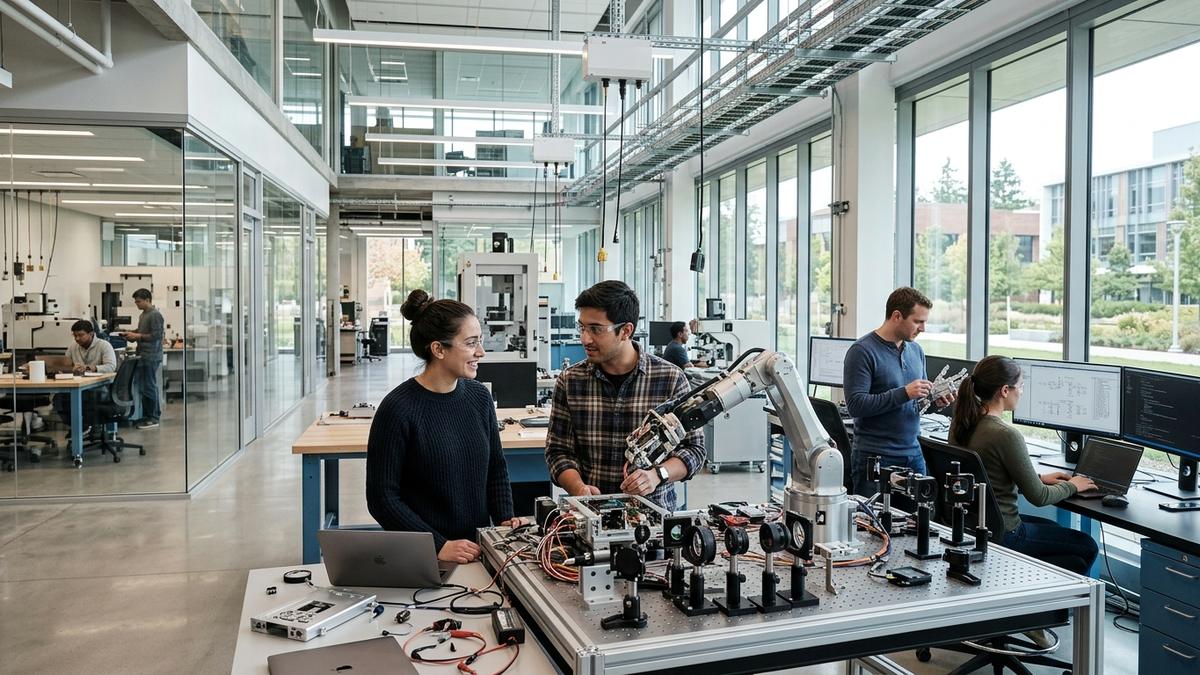
A defining attribute of India's deeptech surge is the symbiotic partnership between venture capital and premier academic research parks.
Institutions like the IIT Madras Research Park, IISc's Foundation for Science Innovation and Development (FSID), and IIT Bombay's SINE have transformed from academic paper factories into high-throughput commercial innovation hubs. By granting startups access to multi-million-dollar electron microscopes, cleanroom lithography suites, and wind tunnels for nominal fees, these institutions dramatically compress upfront capital expenditure for early-stage founders.
Furthermore, academic faculty members are increasingly taking active roles as co-founders and chief scientific officers, ensuring that breakthrough laboratory discoveries are translated into commercially viable, patent-protected enterprise products.
This engineering pipeline also feeds specialized talent into broader ecosystems, as demonstrated by the rise of Forward-Deployed Engineers deploying complex technical systems and domestic innovations in AI-native semiconductor engineering tools.
Sustaining the Momentum: Patient Capital for Generational Impact
While the influx of $1.2 billion represents an exhilarating milestone, sustained leadership in global deeptech requires long-term commitment.
Unlike consumer applications that can achieve rapid profitability, engineering hardware requires multi-year testing regimes, complex safety certifications, and substantial capital expenditures to scale pilot factories into commercial manufacturing facilities.
The emergence of sovereign innovation pools—such as the government's ₹1 lakh crore Research and Innovation Fund—alongside dedicated private vehicles will ensure that Indian deeptech founders possess the patient, resilient capital needed to build world-defining hardware powerhouses over the decades ahead.
Frequently Asked Questions
What is driving the current momentum in Indian deeptech funding?
The surge is propelled by the maturation of academic research parks, government incentives (like the Rs 1 lakh crore Research Fund and the National Quantum Mission), rising global demand for resilient hardware supply chains, and investor exhaustion with crowded, copycat consumer internet startups.
Which deeptech sub-sectors are receiving the most capital?
Four primary frontier sectors dominate investment: commercial space launch vehicles and satellite propulsion, quantum computing processors and cryptography, next-generation solid-state and sodium-ion batteries, and industrial carbon capture and decarbonization systems.
How do deeptech investment timelines differ from traditional software venture capital?
Traditional software startups can iterate and scale within 3 to 5 years with minimal initial capital expenditure. Deeptech ventures require physical prototyping, cleanroom access, safety certifications, and specialized manufacturing tooling, demanding 7 to 10-year patient capital horizons.
What role are academic research institutions playing in this boom?
Academic institutions like IIT Madras, IISc Bengaluru, and IIT Bombay serve as the foundational research engines. They provide startups with subsidized testing equipment, advanced cleanrooms, patents, and faculty scientific leadership, significantly de-risking early-stage hardware engineering.
Primary Sources & Official References
- NASSCOM DeepTech India Ecosystem Report: Frontier Science & Venture Capital Capitalization
- Indian Space Association (ISpA): Commercial Space Investment & Launch Vehicle Telemetry
- Central Electricity Authority (CEA): Energy Storage & Advanced Battery Chemistry Market Outlook
- MeitY Technology Transfer Directorate: Commercialization of Sovereign Academic Intellectual Property