Indian Physical AI Startups Form Consortium to Establish Unified Real-World Robotics Data Standards
By Elena Rostova | Published October 6, 2026 | 8 min read
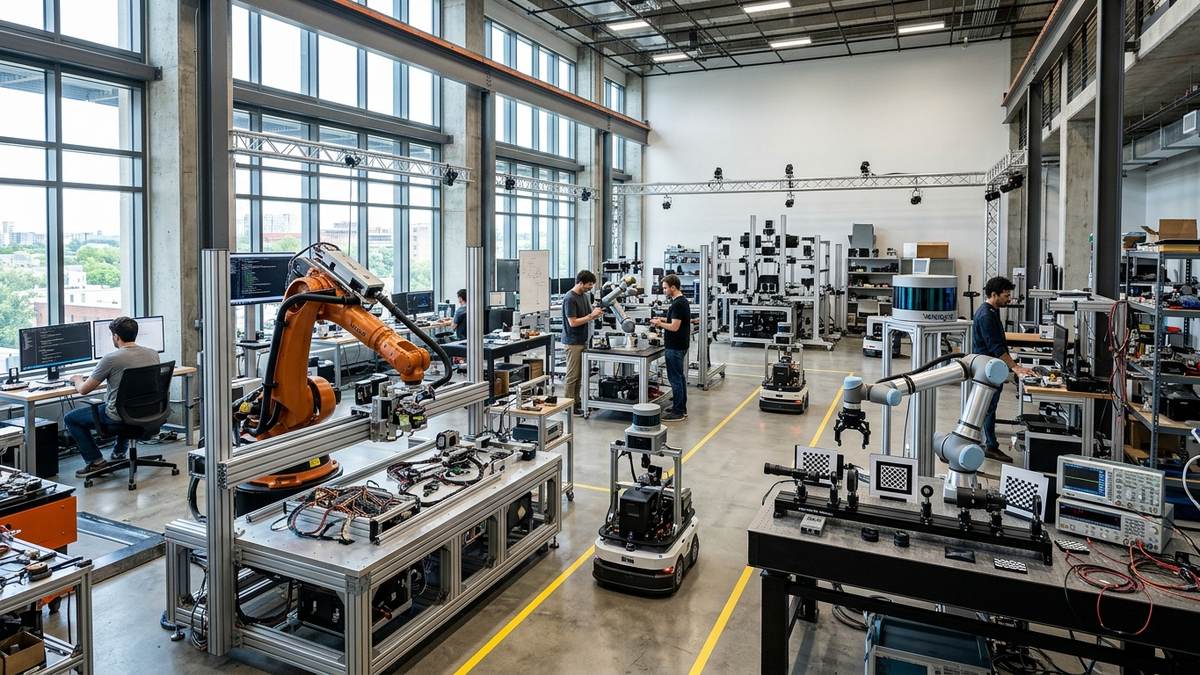
A consortium of Indian physical AI and robotics startups is establishing open standards for real-world multimodal sensor datasets, accelerating embodied foundation models.
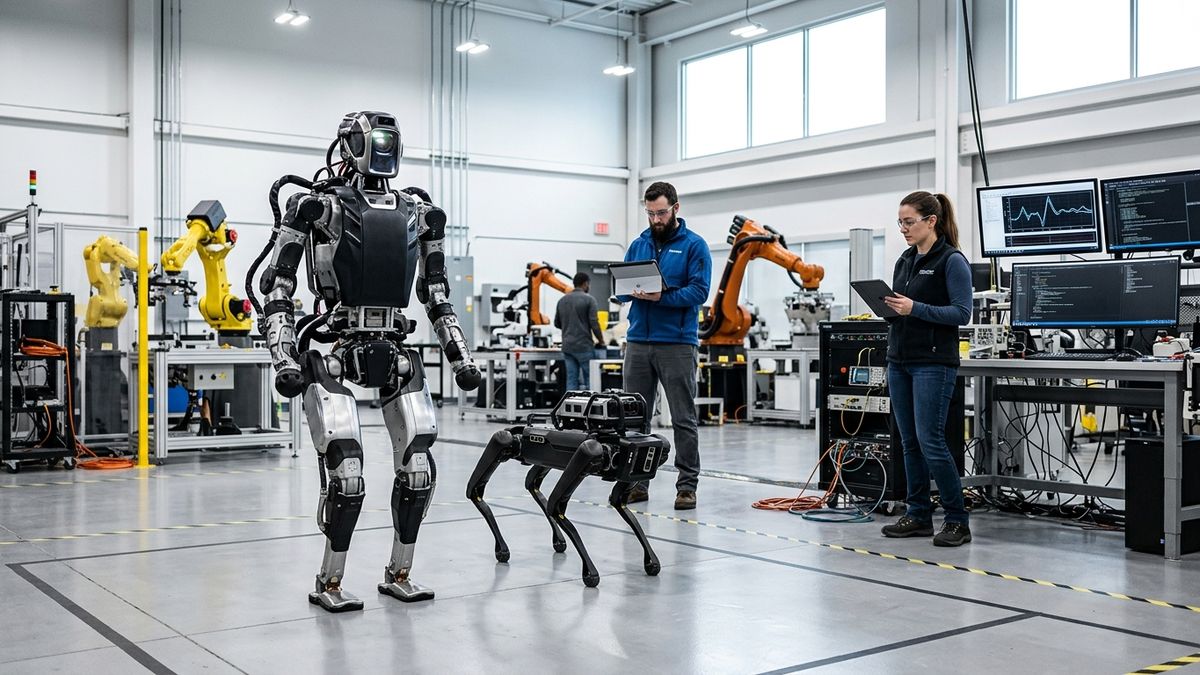
A pioneering coalition of Indian physical AI and robotics ventures has initiated formal industry negotiations to formulate unified, open-standard data collection protocols, addressing one of the most critical bottlenecks inhibiting the commercial deployment of autonomous machines. The consortium, bringing together developers of autonomous mobile robots (AMRs), bipedal humanoids, drone fleets, and industrial manipulators, aims to standardize how multimodal sensor streams—including 3D LiDAR point clouds, high-frame-rate stereo depth, inertial telemetry, and tactile force-torque feedback—are captured, annotated, and shared across the Indian hardware ecosystem.
As artificial intelligence transitions from purely digital software screens into embodied physical machines, data requirements have undergone a structural paradigm shift. While digital Large Language Models (LLMs) achieved exponential breakthroughs by ingesting billions of publicly available internet text tokens, Physical AI foundation models suffer from an acute global shortage of high-fidelity, real-world physical interaction data.
Overcoming the "Sim-to-Real" Chasm in Unstructured Indian Environments
Historically, robotics researchers attempted to bypass physical data collection by training reinforcement learning agents inside synthetic physics simulators. However, machines trained exclusively in digital simulations frequently experience catastrophic failure when confronted with the physical world—a phenomenon known as the "Sim-to-Real" gap.
In India, this gap is uniquely pronounced:
- Environmental Complexity: Extreme variations in ambient particulate matter (dust, monsoon rainfall), intense solar glare, and non-standardized industrial floor surfaces create severe sensor noise that synthetic simulators fail to reproduce.
- Unstructured Mixed Environments: Indian factory floors, municipal warehouses, and outdoor construction sites frequently feature non-deterministic traffic patterns, spontaneous pedestrian movement, and unscripted spatial obstacles.
- Mechanical Diversity: Dozens of proprietary robot end-effectors, gripper geometries, and motor actuator gearboxes produce non-interoperable telemetry feeds that cannot be directly aggregated into a single foundation model.
"If every robotics startup in India collects sensor data in its own proprietary silo using fragmented schemas, no single company will ever achieve the trillion physical tokens required to train a true generalist Vision-Language-Action foundation model,"stated leaders from the emerging industry alliance. "Open, standardized data exchange is the single greatest competitive lever for India's physical robotics ecosystem."
Standardization Taxonomy: Multimodal Sensory Streams
The table below outlines the proposed technical standards, acquisition frequencies, and serialization formats being drafted by the Physical AI consortium:
| Sensor Stream & Modality | Target Sampling Rate | Raw Data Representation | Proposed Open Serialized Standard | Critical Edge Case Addressed |
|---|---|---|---|---|
| 3D LiDAR Point Cloud | 20 Hz - 50 Hz | Spatio-temporal $(x, y, z, I)$ arrays | Apache Arrow / OpenPCDet V2 | Dynamic dust, atmospheric aerosol scattering |
| Stereo RGB-Depth Video | 60 fps (1080p) | Synchronized color & depth maps | H.265-D with unified intrinsics header | Extreme direct sunlight glare & variable shadows |
| Tactile & Force-Torque | 500 Hz - 1,000 Hz | Multi-axis normal and shear vectors | Protobuf Robotic Telemetry Stream (RTS) | Delicate slip detection & object compliance |
| Kinematic Joint Encoders | 250 Hz - 500 Hz | Normalized angular positions/torques | Unified Robot Action Space (URAS-Schema) | Motor backlash & thermal drift calibration |
| Spatial IMU Telemetry | 200 Hz | 6-DOF linear acceleration & angular rate | Standardized ROS2 sensor_msgs/Imu | High-vibration industrial chassis movement |
Engineering the Data Pipeline: From Edge Hardware to VLA Foundation Models
The standardization charter prioritizes three architectural layers to ensure practical adoption across resource-constrained startups:
1. Microsecond Precision Hardware Timestamping: Mandating precision time protocol (PTP / IEEE 1588) synchronization between camera shutters, LiDAR laser pulses, and motor encoder ticks, eliminating dangerous temporal desynchronization during high-speed robot maneuvers.
2. Automated On-Device Edge Redaction: An embedded neural filter that identifies and blurs human faces, private license plates, and sensitive industrial blueprints locally on edge processors before telemetry is archived or transmitted.
3. Normalized Action Tokenization: Mapping continuous motor commands into discrete, normalized tokens compatible with state-of-the-art Vision-Language-Action (VLA) foundation models, enabling robots to interpret conversational voice commands into physical motion primitives.
This ecosystem-level alignment directly complements sovereign engineering hardware efforts, reinforcing breakthroughs such as Addverb Technologies' national physical AI and humanoid roadmap, domestic edge computer vision silicon developed by BigEndian Semiconductors, and foundational language efforts pioneered by Sarvam AI's Indic models.
Roadmap to Commercial Scalability and Global Competitiveness
The consortium plans to release an alpha version of the "Bharat Embodied Data Protocol" (BEDP) by the end of Q4 2026, accompanied by an open-source benchmarking suite and a curated 100-terabyte seed repository of diverse Indian operational environments.
By establishing common standards early in the commercialization curve, India's robotics sector positions itself to bypass decades of proprietary fragmentation, building an open, compounding data flywheel that enables domestic physical AI systems to operate reliably anywhere in the world.
Frequently Asked Questions
What is Physical AI and why does it require specialized data standards?
Physical AI refers to AI models embodied in physical robotic agents that perceive dynamic environments and manipulate physical matter. Unlike text LLMs trained on Internet text, physical AI requires synchronized multimodal telemetry (LiDAR, depth cameras, force-torque sensors, joint encoders) that currently lack unified formats across manufacturers.
Why can't Indian robotics startups rely solely on Western or Chinese robotics datasets?
International datasets are collected in highly structured, sanitized environments. India's physical operating conditions—ranging from high dust, mixed road traffic, variable ambient lighting, and non-standard factory layouts—introduce distinct edge cases that cause imported models to fail without domestic fine-tuning data.
What core technical formats are being harmonized under the proposed standard?
The consortium is standardizing spatio-temporal timestamping, unified ROS2 message wrappers, tokenized action spaces for robot actuators, and privacy-preserving automated edge anonymization pipelines for public and industrial spaces.
How will these standards impact commercial robotics adoption in India?
Common standards enable cross-company dataset pooling, shared benchmark leaderboards, accelerated model transfer learning, and faster regulatory compliance for industrial collaborative robots and autonomous mobile platforms.
Primary Sources & Official References
- NITI Aayog: Frontier Technologies and Robotics Working Group Report
- IEEE Robotics and Automation Society (RAS): Recommended Data Exchange Practices
- All India Robotics Consortium: Working Draft on Embodied Multimodal Schemas
- Bureau of Indian Standards (BIS): AI and Autonomous Systems Committee Guidelines